The short answer: the things to do in Georgia, the country in the South Caucasus on the Black Sea, fit into a small space. On a first trip, see Tbilisi's Old Town, the old capital Mtskheta, Kazbegi and Gergeti Trinity Church under Mt Kazbek, the wine country of Kakheti with Sighnaghi, and the rock-cut town of Uplistsikhe. With more time, add Svaneti's tower villages, Vardzia, Kutaisi with its caves and canyons, and Batumi on the Black Sea. Below are 15 places worth the trip, with the drive time from Tbilisi, what you do there and what to know before you go.
Tbilisi and around
1. Tbilisi Old Town
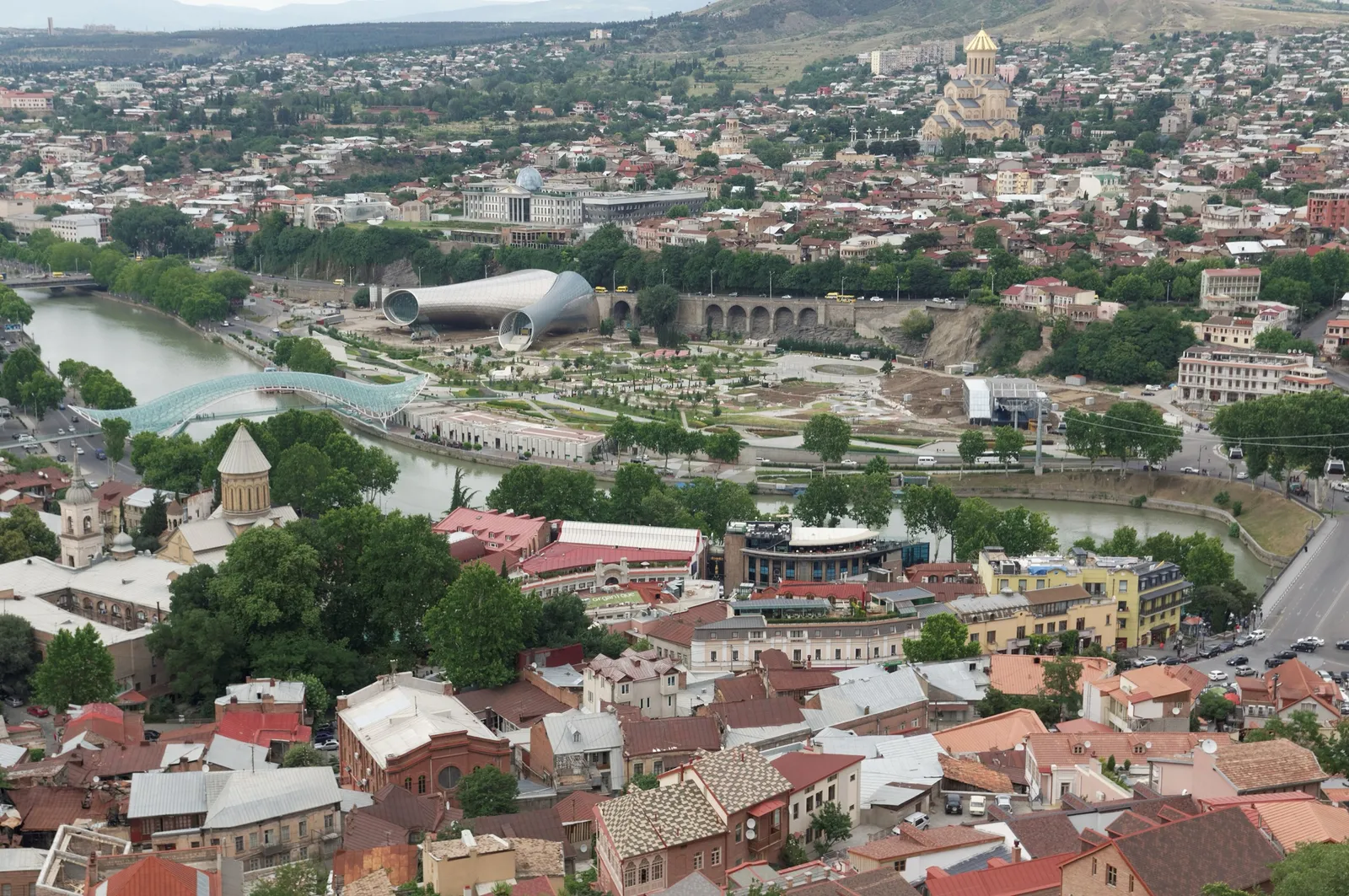
The capital is the start of almost every trip: the cable car to Narikala fortress, the brick domes of the sulphur baths in Abanotubani, the wooden balconies of the Old Town and the 19th-century streets of Sololaki. One full day covers the Old Town; two or three days let you add museums, Rustaveli Avenue and day trips. Book a private bath room by the hour, find the 6th-century Anchiskhati Basilica, the oldest surviving church in the city, and see the gold jewellery from Colchis and Vani in the Georgian National Museum (more on our Tbilisi page). Our plan for Tbilisi in 1, 2 or 3 days goes street by street.
2. Mtskheta
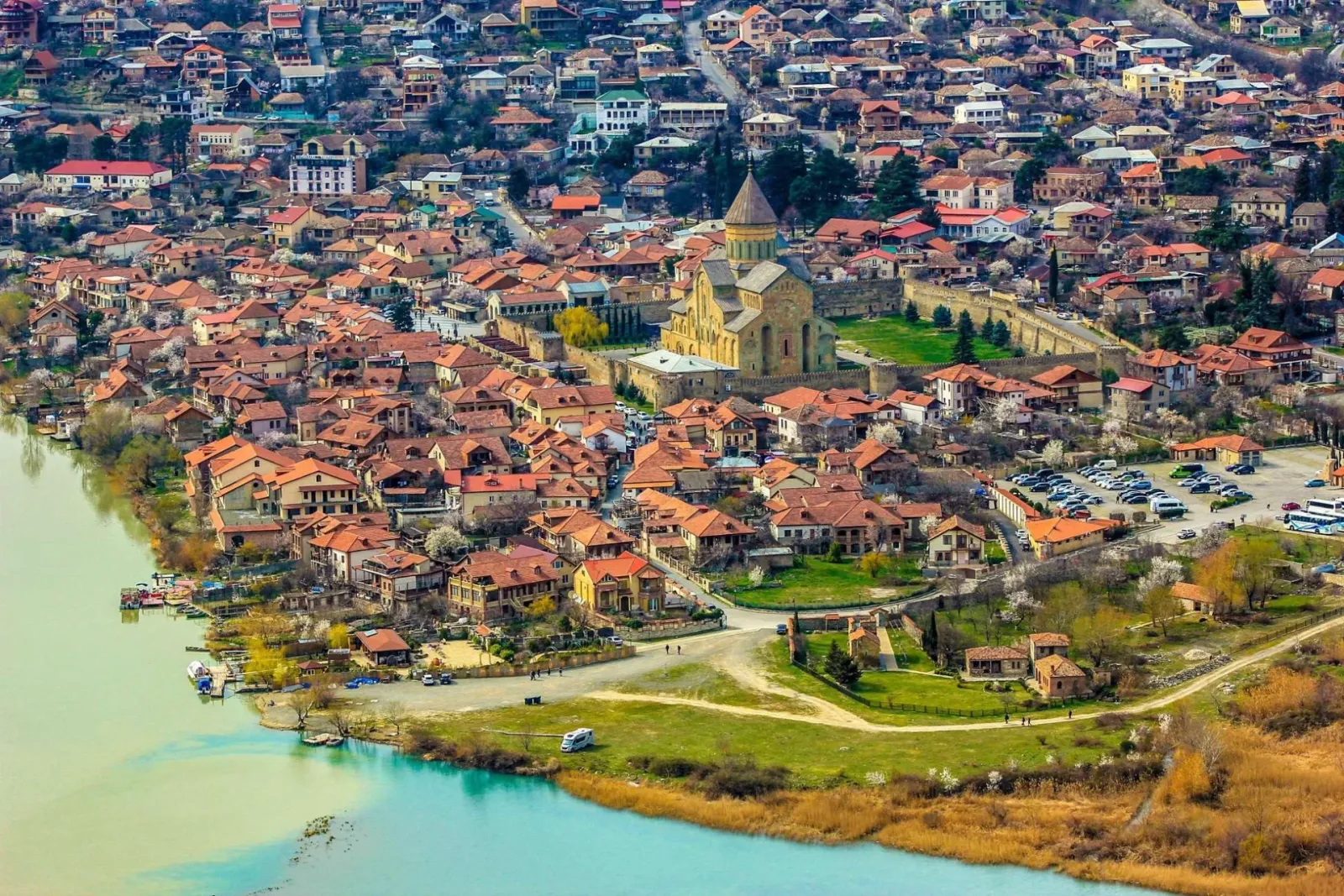
Georgia's old royal capital is about 20 km north of Tbilisi, roughly 30 minutes by car. Jvari Monastery on its hill and Svetitskhoveli Cathedral in the town are part of the UNESCO World Heritage site "Historical Monuments of Mtskheta"[1], and they fit in half a day. Add Samtavro, the working convent in Mtskheta with the tombs of King Mirian and Queen Nana, and the three churches take 3–4 hours. Here and at every church in this list, cover shoulders and knees; women cover their hair, and our church etiquette guide has the rest. See our Mtskheta guide.
3. Uplistsikhe and Gori
Uplistsikhe, about 100 km west of Tbilisi (1.25–1.5 hours), is a town carved into the rock, with traces of people going back to the end of the 2nd millennium BC. Give it 1.5–2 hours. You climb the rock-cut main street past Tamar's Hall to a 9th–10th-century basilica on the ridge, on sloping rock with little shade and no railings at many edges, so wear shoes with grip and come early in summer. Gori and its Stalin Museum are 12–15 km away, so the two make an easy day with Mtskheta. The museum has six halls, Stalin's birth house and his armoured railway carriage, and says very little about the purges or the Gulag. Read Uplistsikhe or Vardzia to choose between the cave towns, and our guide to Gori and the Stalin Museum.
The mountains of the north
4. Kazbegi and Gergeti Trinity Church
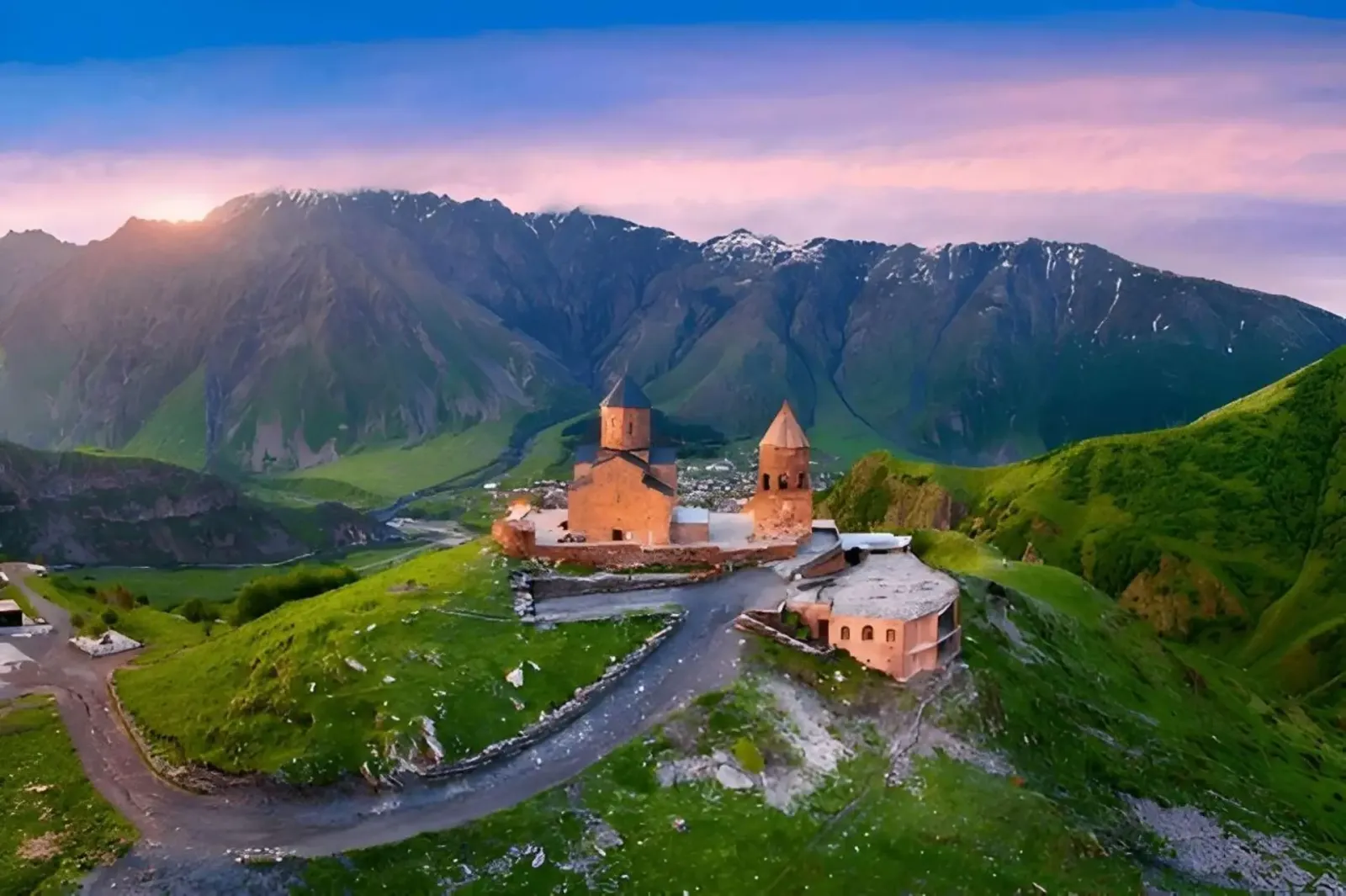
The picture most people have of Georgia: the 14th-century Gergeti Trinity Church at 2,170 m, with Mt Kazbek (5,054 m) behind it. Stepantsminda, the town below, is 152 km north of Tbilisi on the Georgian Military Highway, about 3–3.5 hours without stops, over the Jvari Pass (2,379 m). As a day trip it takes 10–12 hours in all; a night in Stepantsminda is easier. The church is 6 km up a sealed road, 10–15 minutes by car in dry weather, or a walk of 1–1.5 hours up and 45–60 minutes down. Kazbegi is often 8–10 °C cooler than Tbilisi, so bring layers and a rain jacket in any month. From the town, the Truso and Juta valleys make good walks: see Truso or Juta. See also our Kazbegi day-trip guide and the Gergeti Trinity Church hike.
5. Ananuri and the Georgian Military Highway
On the way to Kazbegi, the fortress of Ananuri stands over the Zhinvali reservoir, about an hour from Tbilisi. A stop of 30–45 minutes covers the carved Church of the Mother of God of 1689, the walls and the Sheupovari tower, whose inner stairs are narrow and steep. The road beyond it climbs past Gudauri and the Friendship Monument to the pass; with the stops worth making, the drive takes closer to 6 hours. Our guide to the Georgian Military Highway lists them in order.
6. Svaneti: Mestia and Ushguli
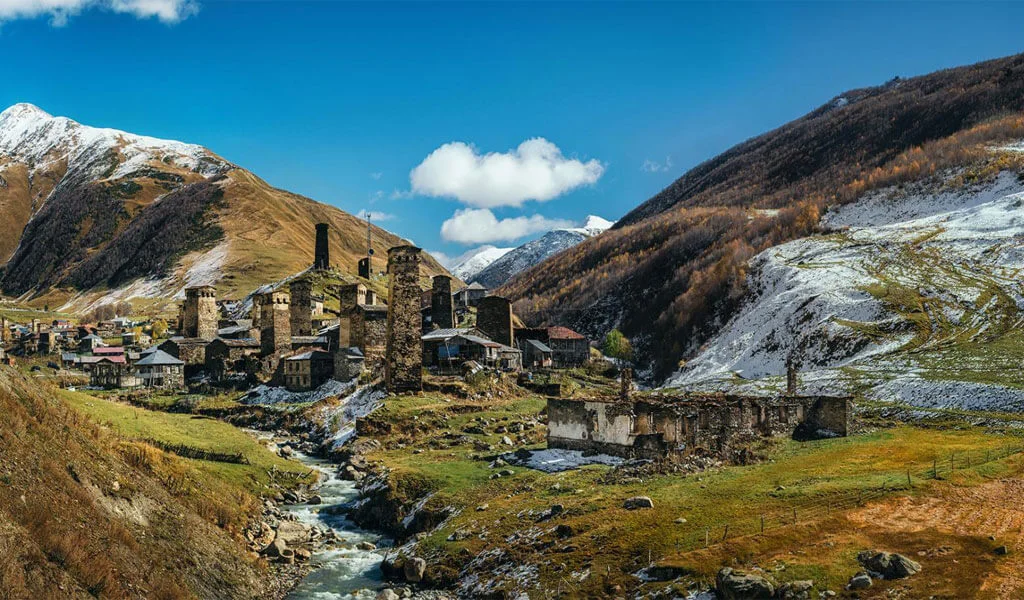
A high valley of stone tower houses under Georgia's highest peaks; Upper Svaneti has been a UNESCO World Heritage site since 1996[2]. Mestia is about 460 km from Tbilisi, 8–10 hours by road, so most people take the train to Zugdidi or break the drive in Kutaisi. A short flight from Natakhtari near Tbilisi also serves Mestia, but it is often cancelled in bad weather. In the town, see the icons and manuscripts of the Svaneti Museum, or walk through forest to a viewpoint below the Chalaadi Glacier, 1–1.5 hours each way. Ushguli, one of Europe's highest villages, is 47 km further. That road takes 1.5–2 hours each way, and Ushguli has no ATM, so bring cash from Mestia. Walk the lanes of Chazhashi, its UNESCO-listed village of joined tower houses, or follow the Enguri valley towards Mt Shkhara, about 16–18 km return in 5–6 hours. Give Svaneti at least three nights. Read our Mestia guide and the Svaneti guide.
7. Tusheti
Georgia's most remote region, with tower villages and sheep pastures near the Dagestan border. The only road crosses the Abano Pass (2,826 m), unpaved and 4x4-only, and is usually open from late June to the end of September. Local drivers cross it only in daylight and dry weather. From Tbilisi to Omalo is 7–8 hours door to door. Walk up to the restored Keselo towers above the village, or visit Dartlo, a village of slate houses about 12 km away. There are no ATMs, so bring cash for guesthouses, and keep a buffer day, because landslides or snow can close the pass for a day or more. Plan at least three nights. See our Tusheti guide.
8. Khevsureti: Shatili and Mutso
Two fortress villages on the northern side of the Caucasus, at least 4–5 hours from Tbilisi, the last part on a dirt road over the Datvisjvari pass (about 2,600 m). Go by 4x4 with a local driver, from about July to September, and stay a night in Shatili. You walk the stairways and wooden balconies between Shatili's joined stone houses and reach Mutso by 4x4 and a steep walk. This is a border zone with no ATMs and limited mobile signal, so carry your passport and bring cash from Tbilisi. Our guide to Shatili and Mutso covers the road.
Kakheti, the wine country
9. Sighnaghi and Bodbe
A hill town ringed by 18th-century walls, about 113 km and 1.5–2 hours east of Tbilisi, looking over the Alazani Valley to the Caucasus. Walk a section of the wall between the towers, and see the hall of Niko Pirosmani paintings in the Sighnaghi Museum. Stay overnight if you want sunrise over the mountains. Two kilometres away is Bodbe, the convent where St Nino, who brought Christianity to Georgia, is buried. The church and gardens take 30 minutes; Bodbe's spring, down a long flight of steps, takes it to 1–1.5 hours. See our Sighnaghi and Bodbe guide.
10. Telavi, Alaverdi, Gremi and the qvevri cellars
Around Telavi, about 2 hours from Tbilisi over the Gombori pass, are the 11th-century cathedral of Alaverdi, the royal citadel of Gremi and the Chavchavadze estate at Tsinandali. In Telavi itself, go to the market before 11:00 for churchkhela, spices and cheese. Tsinandali takes 1.5–2 hours with a tasting; its enoteca holds bottles from 1814, and the famous one is an 1841 Saperavi. This is also the place to taste wine made in qvevri, clay jars buried in the ground, a method on UNESCO's intangible heritage list since 2013[3]. In harvest season, book tastings and guesthouses in advance. Read Telavi, Alaverdi and Gremi and our guide to Kakheti wine tours.
11. David Gareja
Cave monasteries founded in the 6th century in the semi-desert of south-east Kakheti, about 100–110 km from Tbilisi (1.5–2 hours). The lower monastery, the Lavra, is open; the painted caves of Udabno on the ridge above sit on an undemarcated stretch of the border with Azerbaijan and are often closed. When they are open, the loop is about 3 km with a steep climb of about 150–200 m on rocky, exposed paths. The site has no ATM or shop. Go in spring or autumn. In summer, start early and carry at least 2 litres of water each, and stay on the paths, because vipers are active from May to September. See our David Gareja guide.
The south and west
12. Vardzia
A 12th-century monastery carved into a cliff above the Mtkvari, from the time of Queen Tamar, 4–5 hours from Tbilisi. Give it 2–3 hours, less while the path is shortened. Since a rockfall on 27 May 2026 part of the visitor path has been closed, so check what is open at Vardzia before you go. The route now ends shortly after the Church of the Dormition, whose frescoes of the 1180s include portraits of King George III and Queen Tamar. The caves involve many steep steps and some low, dark passages, which is hard on bad knees. Most people combine it with Borjomi and a night on the way.
13. Borjomi
A spa town in a forested gorge, about 160 km west of Tbilisi (2.5–3 hours), famous for its naturally fizzy mineral water. Taste it at the spring in Central Park, walk up to the open-air sulphur pools, or hike in the national park. An hour covers the park and spring; the pools, about 3 km each way on a mostly gentle path, make it half a day, so bring a bottle, a swimsuit and a towel. Likani Palace can only be seen from outside, and the Kukushka train has not been running since 2020. See our Borjomi guide.
14. Kutaisi, Gelati and the canyons
Georgia's third city is 3–3.5 hours from Tbilisi. Gelati Monastery, a UNESCO World Heritage site[4], is just outside it; Prometheus Cave is about 20 km away and Martvili Canyon about 50 km. A night in Kutaisi gives you a day for the caves and canyons. Gelati, founded by David the Builder in 1106, takes about an hour, and in 2026 parts of its main church are under scaffolding. It is the city's only UNESCO listing, since Bagrati Cathedral was removed in 2017. Prometheus Cave is about 14 °C inside, so bring a light jacket, and its route ends with about 15 minutes by boat when the water level is safe. Martvili's boats do not run in rain or high water. Read our Kutaisi day-trip guide.
15. Batumi and the Black Sea
Georgia's summer resort, near the Turkish border, about 4 hours from Tbilisi by train: a seafront of new towers in front of a 19th-century old town, with the Botanical Garden and the green hills of Adjara behind. Walk or cycle Batumi's Boulevard, about 7 km along the sea, past the moving steel sculpture Ali and Nino and the 130 m Alphabetic Tower. The Botanical Garden, about 9 km north on Green Cape, covers 111 hectares. The swimming season runs from about June to September, with the warmest water in August. The beaches are pebbles, so water shoes help. See our Batumi guide.
If you have more time
- Racha: a quiet mountain region north of Kutaisi, with the carved cathedral of Nikortsminda and Khvanchkara wine. See our Racha guide.
- Dmanisi: the site of early human remains dated to about 1.8 million years ago, 1.5–2 hours south-west of Tbilisi. See our Dmanisi guide.
- Winter: Tbilisi, its sulphur baths and Kakheti's wine cellars work all year, and Gudauri's ski slopes are about 2 hours from Tbilisi. See Georgia in winter.
- Vashlovani: a semi-desert national park in the far east of Kakheti, reached by 4x4 in spring and autumn. See our Vashlovani guide.
Things to do in the country of Georgia, by interest
Where to travel in Georgia depends on what you came for. For walking, take the path up to Gergeti, the Truso and Juta valleys, Chalaadi Glacier or the marked trails of Borjomi-Kharagauli National Park. For wine, go to Tsinandali and the family cellars of Kakheti, above all during the harvest in September and October. Uplistsikhe, David Gareja, Vardzia and Prometheus Cave are the caves and rock-cut sites; Ananuri, Ushguli, Dartlo, Shatili and Mutso are the towers and fortresses. For warm water and the sea, there are the baths of Abanotubani, Borjomi's sulphur pools and the beaches at Batumi.
Many museums close on Mondays, among them the Georgian National Museum, the Tsinandali house-museum and the Svaneti Museum, so keep Monday for churches, markets and outdoor sights.
What the sights cost
Many of the main sights are free, including Gergeti Trinity, Jvari, Svetitskhoveli, Ananuri, Bodbe and David Gareja[5]. So are Gelati and the walls of Sighnaghi. These are typical tickets for foreign adults, in Georgian lari (GEL); they change, so treat them as a guide.
- Borjomi Central Park and the sulphur pools cost about 5 GEL each; the cable car is paid separately.
- Tsinandali costs about 10 GEL, with the enoteca and tastings extra.
- Uplistsikhe, the Georgian National Museum and the full Stalin Museum ticket are about 15 GEL each, and so is Vardzia, plus about 2 GEL for the shuttle[5].
- Prometheus Cave is 40 GEL, plus 30 GEL for the boat[5]. Martvili Canyon is about 40 GEL, plus about 20 GEL for the boat. Combo tickets save money.
For a 7–10 day classic route, allow roughly 100–200 GEL per person for entry fees, more if you add the western caves and canyons. A wine tasting of 5–7 wines runs about 30–60 GEL per person. Our guide to how much a trip to Georgia costs covers hotels, food and transport.
Getting between the places
Georgia is small, but mountain roads are slow, so plan by the drive times above rather than by distance.
- Double-decker trains run between Tbilisi and Batumi, four a day in the September 2026 timetable[6]. They stop at Kutaisi International Airport station, about 2.5 hours from Tbilisi, not in the city.
- Marshrutkas (shared minibuses) are cheap and frequent on main routes, but they are cramped and don't stop at sights on the way.
- With a car and driver you stop where you like and leave the mountain roads to someone else. Many rental agreements exclude the high mountain tracks. Our guide to hiring a private driver-guide in Georgia compares the options.
- Kutaisi's airport, with low-cost flights from Europe, and Batumi's airport let you finish in the west without going back to Tbilisi.
For visas, money, SIM cards and insurance, see our tips for a first trip to Georgia.
Day trip or a night away?
Mtskheta, Uplistsikhe with Gori, Sighnaghi with Bodbe, and David Gareja all work as day trips from Tbilisi; our list of day trips from Tbilisi compares them. Vardzia does not: at 4–5 hours each way it makes a 12–14 hour day, so sleep in Borjomi or in Akhaltsikhe, about 60 km (1–1.25 hours) from the caves. Sighnaghi and Telavi are 1–1.25 hours apart, so Kakheti can fill two days. To choose between the two big mountain trips, read Kazbegi or Svaneti.
How many days do you need?
- 5 days: Tbilisi, Mtskheta, Kakheti and Kazbegi. See our 5-day itinerary.
- 7–8 days: add Uplistsikhe, Borjomi and Vardzia, or Kutaisi. See the 7-day itinerary.
- 10–14 days: add Svaneti and Batumi. See the 10-day itinerary.
The mountains decide the season: Tusheti, Khevsureti and the road over the Zagari Pass from Ushguli open only in summer, and the Jvari Pass to Kazbegi can close after snow in winter. Our guide to the best time to visit Georgia goes through the year month by month.
What each season suits
In spring, David Gareja has green hills and wild flowers. July and August are hot in Tbilisi, often above 30 °C, and hot and humid around Kutaisi, so go up to the high valleys or down to the Black Sea, and use the caves as a cool break. September and October bring the grape harvest in Kakheti and clearer air for views of Kazbek, while Batumi gets wet. In winter the rock at Uplistsikhe and the steps at Vardzia and Ananuri can be icy, and the Jvari Pass can close for hours to 1–3 days after snow, so keep a spare day before a flight.
Seeing it on a private tour
Georgia Highlights in 5 days covers Tbilisi, Mtskheta, Kakheti, Kazbegi and Uplistsikhe. Classic Georgia in 8 days adds Borjomi and Vardzia, and the Grand Tour of Georgia in 10 days goes from the mountains to the Black Sea. Each is private, with your own car and driver-guide. Day trips and longer routes are in our full list of private tours. See each tour page for the current price, or plan your own route and we send you a private itinerary with a price. Nothing to pay now.
Sources
- UNESCO World Heritage Centre, "Historical Monuments of Mtskheta": whc.unesco.org
- UNESCO World Heritage Centre, "Upper Svaneti": whc.unesco.org
- UNESCO, "Ancient Georgian traditional Qvevri wine-making method": ich.unesco.org
- UNESCO World Heritage Centre, "Gelati Monastery": whc.unesco.org
- Entry fees: Agency of Protected Areas, Prometheus Cave tariffs: apa.gov.ge; Sakhva Travel, "Gori and Uplistsikhe guide": sakhva-travel.com; Red Fedora Diary, "Visiting Vardzia": redfedoradiary.com; Wander-Lush, "Tbilisi to Kazbegi in 2026": wander-lush.org
- The Georgian Guide, "Trains in Georgia 2026: Batumi fares, times and tickets" (September 2026): thegeorgianguide.com
Last checked: October 2026. Distances and drive times are approximate; mountain roads open and close with the weather.