Mtskheta
Tbilisi & Surroundings · History
About Mtskheta
Tours Including Mtskheta
See all 11 tours Moderate
 Easy
EasyMtskheta, Gori & Uplistsikhe — Private Day Trip from Tbilisi
Private · 1 day
$69/person · 4 travellers Easy
Easy Easy
EasyGeorgia Highlights in 5 Days — Private Tour: Tbilisi, Kakheti & Kazbegi
Private · 5 days
$640/person · 4 travellers Easy
Easy Easy
EasyMtskheta, Jvari & Château Mukhrani — Private Half-Day Wine Trip
Private · 1 day
$94/person · 4 travellers Moderate
Georgia Archaeology Tour — 5 Days, Private: Cave Cities & Dmanisi
Private · 5 days
$670/person · 4 travellers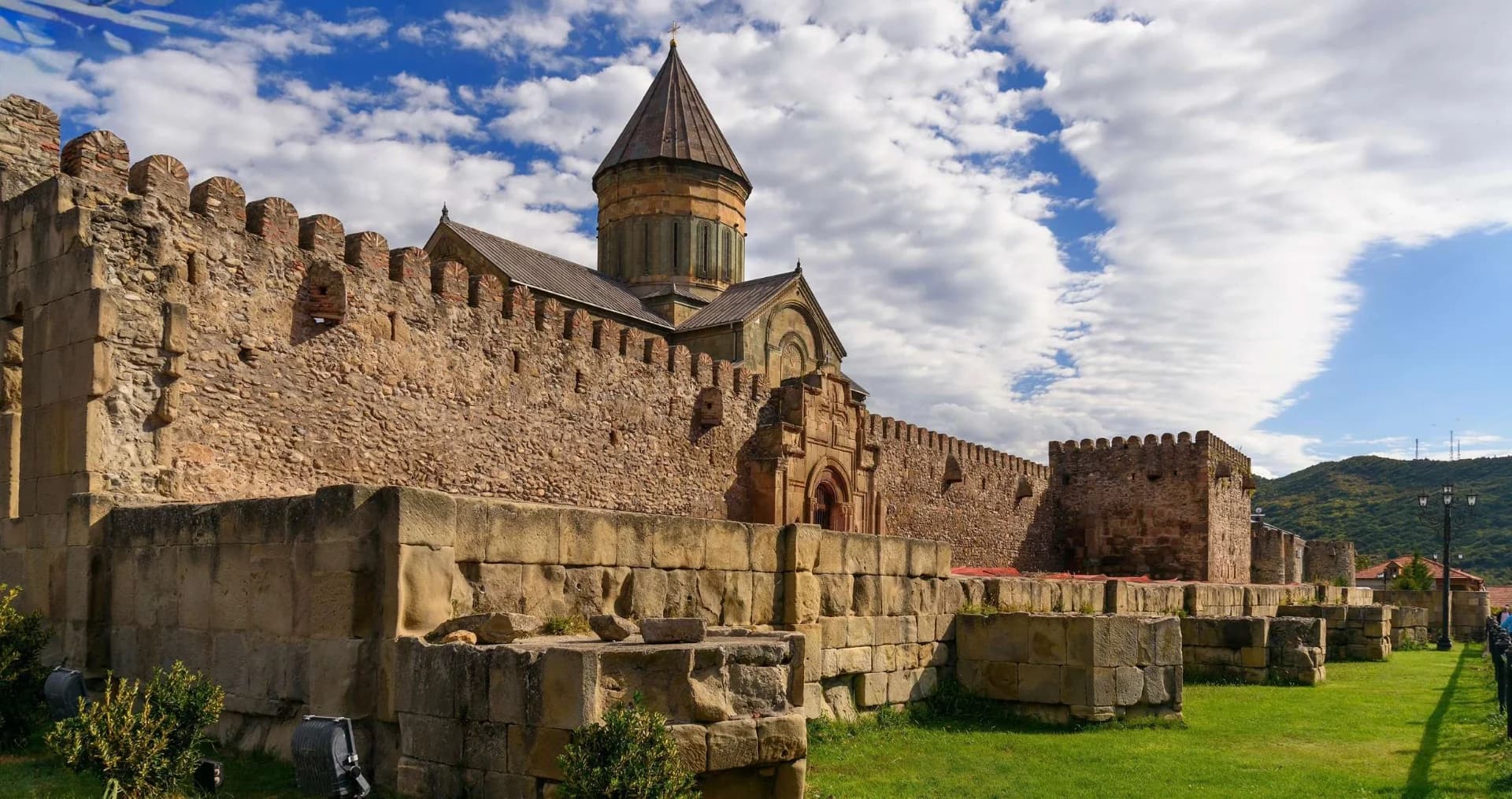 Easy
Easy
Must-See Attractions
Svetitskhoveli Cathedral
11th-century cathedral where tradition places the burial of Christ's robe, with the tombs of kings Vakhtang Gorgasali and Erekle II and large frescoes; inside a fortified wall.
Jvari Monastery
Late 6th-century church on the hill across the Aragvi, a model for later Georgian churches, with the classic view of Mtskheta and the river confluence.
Samtavro Monastery
Working convent with the 11th-century Transfiguration church, the tombs of King Mirian and Queen Nana, and a small chapel on the site of St Nino's bramble garden.
Old town streets
The restored lanes around Svetitskhoveli with cafés and craft shops.
Nearby
Armazi and Bagineti
Remains of the ancient royal acropolis across the Mtkvari, about 5 km (10 min).
Shio-Mgvime Monastery
6th-century cave monastery in a quiet gorge, about 12 km (25 min).
Mukhrani
Wine valley with Château Mukhrani and other estates, about 25 km (30 min).
Ananuri Fortress
17th-century fortress on the Zhinvali reservoir, about 45 km (50 min) north.
Good to know
- Getting there
About 25 km (30 min) from Tbilisi on the four-lane highway; Jvari is reached by a paved side road from the highway.
- Best time
Year-round
- Best time
Spring and autumn are the most pleasant for walking the old town and for the view from Jvari, summer afternoons are hot, and winter is quiet and still fine for a visit.
- Recommended stay
Half a day
- Getting there
About 25 km (30 min) from Tbilisi; the old town is walkable, but Jvari is on a separate hilltop about 10 km by road.
- Fees
The churches are free.
- Dress code
Shoulders and knees covered; women cover their hair in churches (scarves are usually available at the entrance).
- Heads-up
Svetitskhoveli is busy on Sundays and feast days during services; weekday mornings are quieter.
- Time needed
3–4 hours for all three churches.