Photos: Moahim (CC BY-SA 4.0) · Wikimedia Commons
Mutso
Tusheti & Khevsureti · History
About Mutso
Tours Including Mutso
See all 2 tours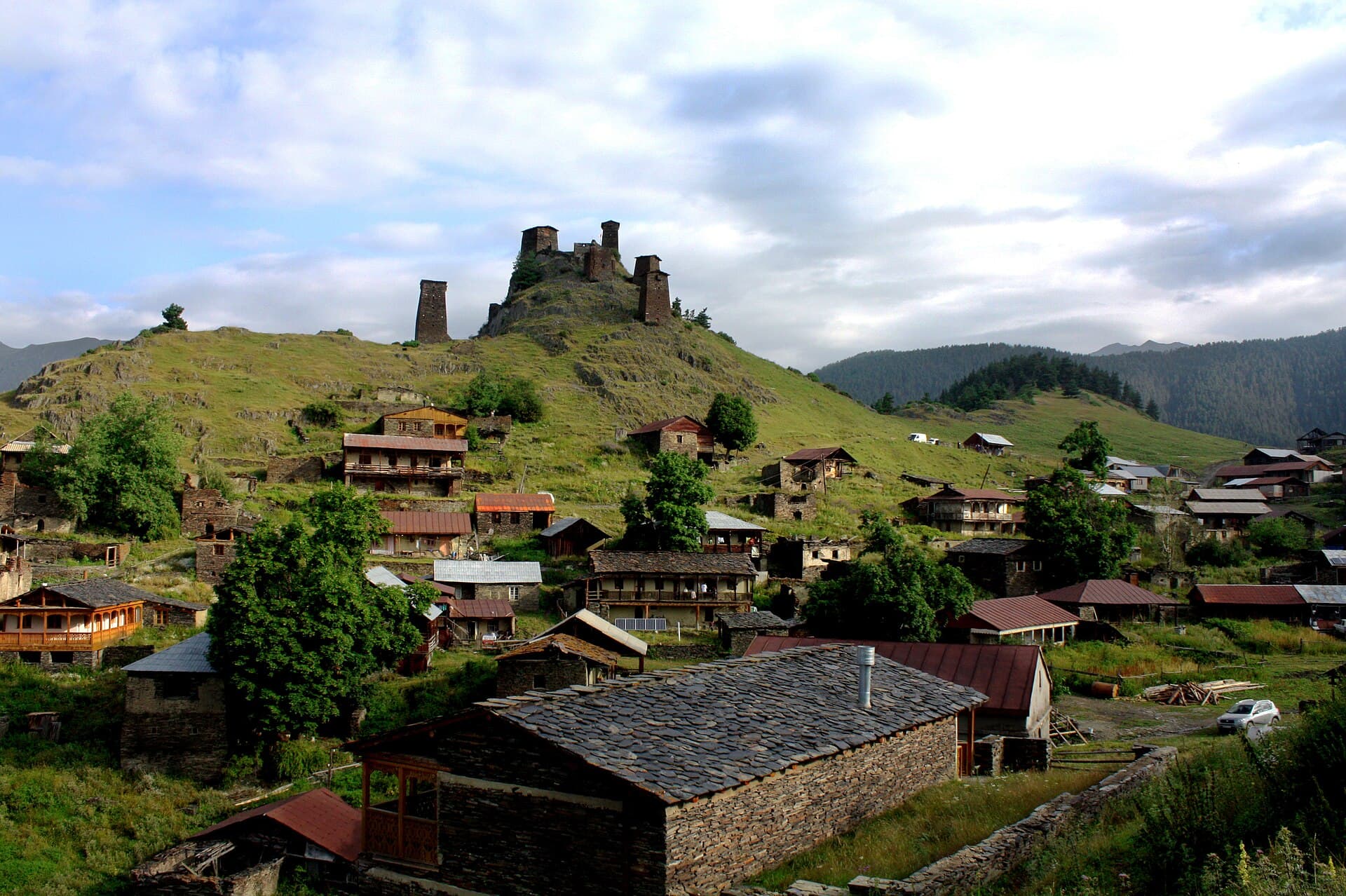 Moderate
Caucasus 4x4: Tusheti, Khevsureti & Kazbegi — 8-Day Private Expedition
Private · 8 days
$1,095/person · 4 travellers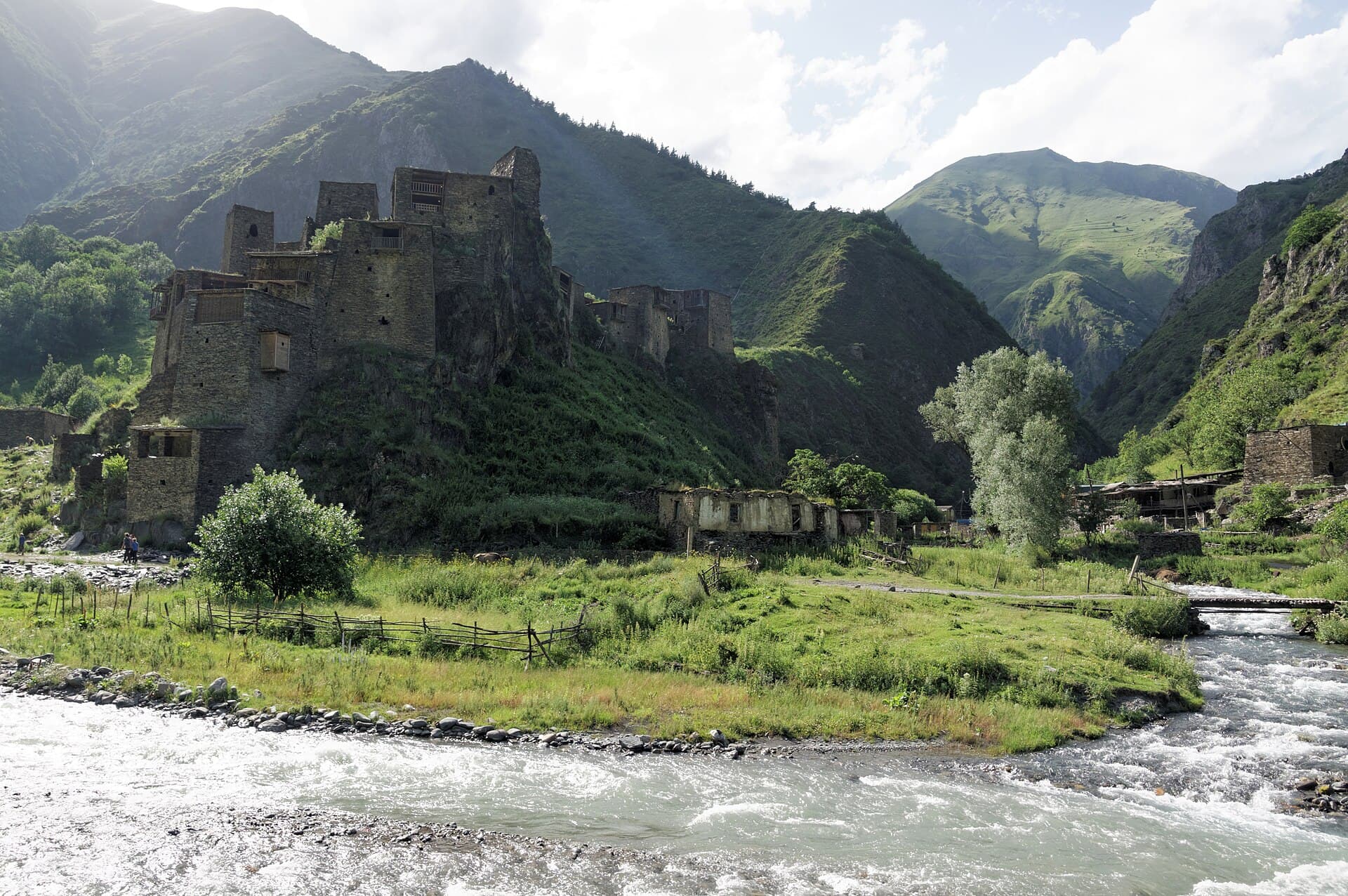 Moderate
Must-See Attractions
Tower village
About 30 fortified houses and four towers on three terraces up the ridge, rebuilt in dry stone.
Shrines
Khevsur shrines near the village; view them from outside.
Ridge viewpoint
From the top towers you look down the Ardoti valley towards the Argun and the border.
Nearby
Shatili
Fortress village of joined slate towers above the Argun, about 11–12 km (40 min by 4x4).
Anatori crypts
Medieval stone burial houses above the Argun, on the road between Shatili and Mutso.
Ardoti
Small village with a few guesthouses, a short drive further up the valley from Mutso.
Good to know
- Getting there
About 11–12 km from Shatili by 4x4 on a dirt road, then a 20–30 min steep walk; Shatili is about 150 km (4.5–5 h) from Tbilisi over the Datvisjvari Pass.
- Best time
July–September
- Best time
The pass road and the Shatili–Mutso track are most reliable in high summer and early autumn; June can bring late snow and muddy tracks, and from October snow closes the region.
- Recommended stay
Half a day
- Getting there
By 4x4 on the dirt road from Shatili (about 40 min), then a steep walk of 20–30 minutes up to the towers.
- Season/Access
The road to Khevsureti crosses the Datvisjvari Pass and is usually open only from about June to October, depending on snow.
- Documents
Carry your passport; the valley is in the border zone and border police may check documents.
- Walking
The path is steep, narrow and loose in places; wear boots and avoid it in rain.
- Fees
Free.