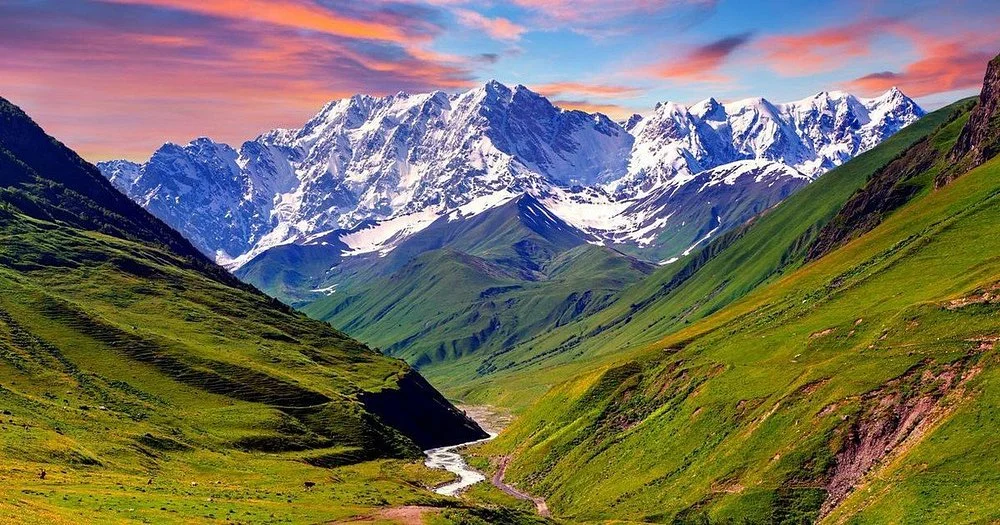
Shatili and Mutso are the two famous fortress villages of Khevsureti, a remote valley on the northern side of the Greater Caucasus near the border with Chechnya. You reach them from Tbilisi in at least 4–5 hours, the last part on a mountain dirt road over the Datvisjvari pass, which is only reliably open in summer. The comfortable way is a 4x4 with a local driver, from about July to September, with at least one night in a Shatili guesthouse.
Getting there: the Datvisjvari pass
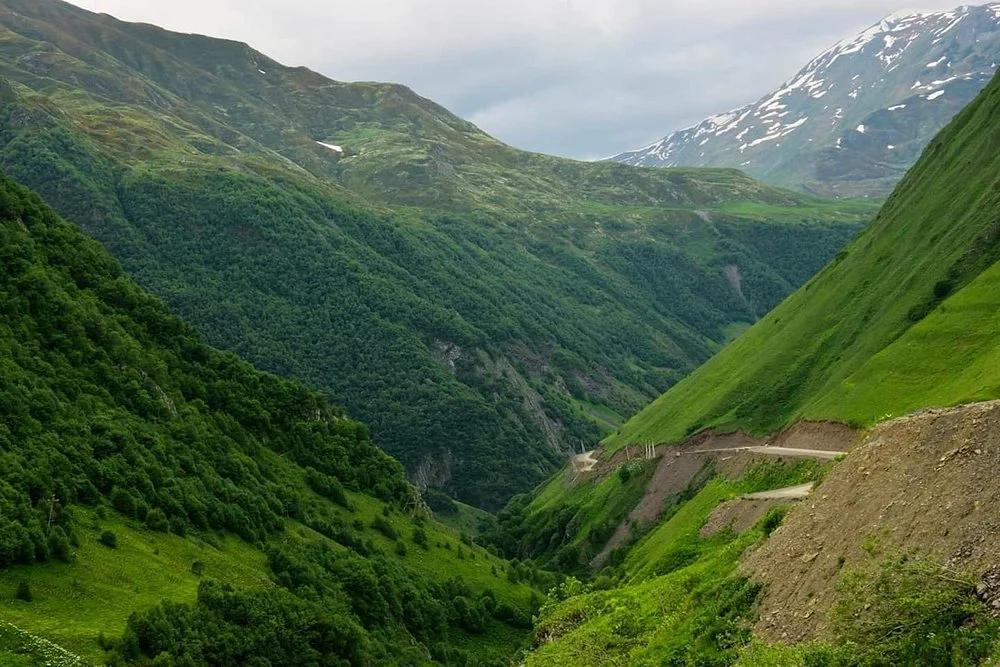
Shatili is about 150 km north-east of Tbilisi. The road follows the Aragvi past the Zhinvali reservoir to Barisakho and Korsha, and is sealed for much of that stretch. After Korsha it becomes a narrow, unsealed track that climbs to the Datvisjvari pass at about 2,600 m and drops down the northern side to the Argun valley. There are steep drops without barriers, and the track can be muddy or rutted after rain. A high-clearance 4x4 is needed beyond Korsha, and most rental companies don't allow their cars on this road.
There is also a marshrutka (minibus) from Didube station in Tbilisi twice a week, which suits backpackers with time to spare but not a short trip.
When to go
The pass usually opens between mid-May and mid-June and closes again in autumn, somewhere between October and December depending on snow. Even in summer it can be blocked by snow or a landslide for a day or two. July, August and September are the most reliable months, with the least rain, and that is when we run our trips; June is possible on request. From late autumn to spring, Khevsureti beyond the pass is cut off by road.
Shatili
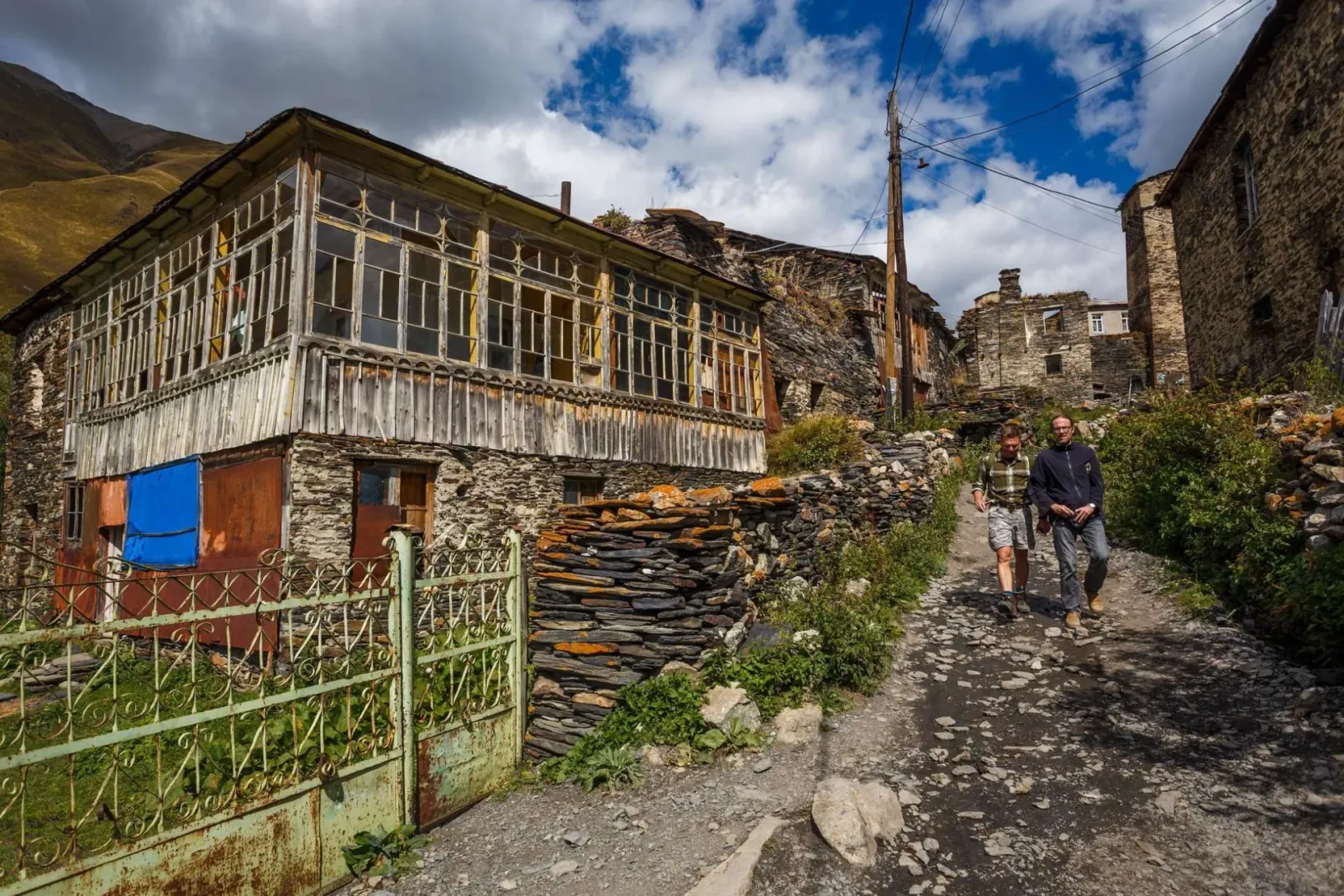
Shatili sits at about 1,400 m in the Argun gorge. It is not a village with a castle but a village that is itself a fortress: dozens of stone tower-houses, around 60 by most counts, built so close together that they form one wall, linked by passages and flat roofs. It guarded Georgia's north-eastern frontier for centuries.
In the early 1950s the Soviet authorities moved almost all of Khevsureti's people down to the lowlands, and Shatili emptied. Some families came back from the 1980s. Today a small number of families live in newer houses around the old village, and several of the towers have been restored as guesthouses. Walk through the lanes in the evening light, and look for the Lebaiskari tower nearby.
Mutso
Mutso is about 12 km further down the Argun valley, some 45 minutes' drive. Its towers stand on a sharp ridge at about 1,880 m, and from the road they look almost unreachable. Many had fallen into ruin. A major restoration began in 2014, rebuilding the towers with traditional dry-stone masonry, and in 2019 the project won a European heritage award (the EU Prize for Cultural Heritage / Europa Nostra).
The path up from the road is short but steep and loose: allow 20 minutes to an hour up, depending on your pace, and wear shoes with good grip. It is not suitable for anyone with knee or balance problems. On the way back, stop at the Anatori crypts, stone burial houses above the river close to Shatili.
Ardoti and the trekking routes
Beyond Mutso a rough track continues towards Ardoti, a small village deeper in the valley, and from there trekking routes lead on towards the Chechen border and over the Atsunta pass to Tusheti, a hard multi-day trek. These routes run through the border zone, and hikers must register with the border police and carry their passport. There is no road between Khevsureti and Tusheti; they are linked only on foot.
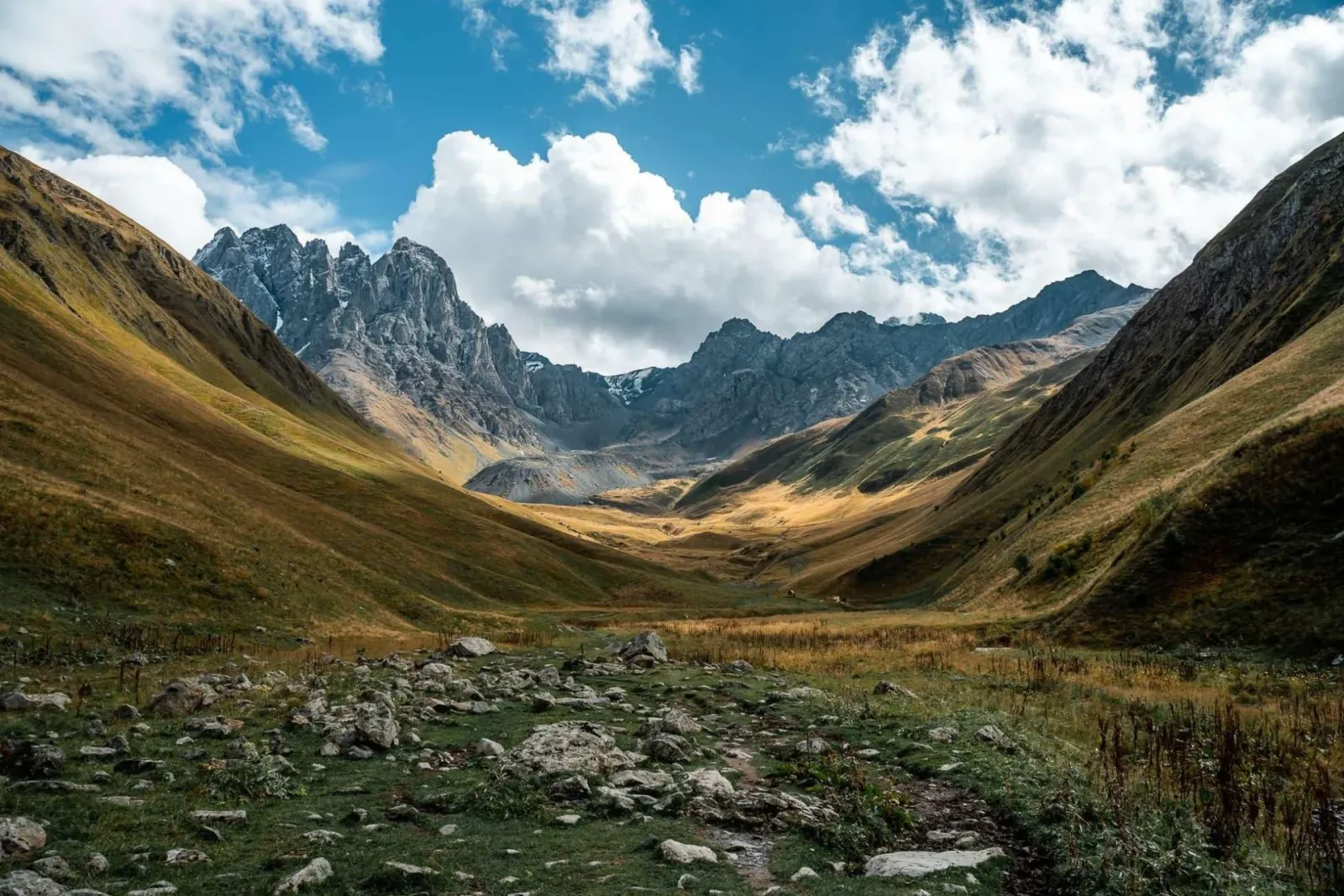
On the southern side of the Datvisjvari pass, the village of Roshka is the end point of the hard trek from Juta over the Chaukhi pass (3,341 m). If you are weighing up walks around Kazbegi instead, see Truso or Juta valley.
Passport and the border zone
Khevsureti lies close to the border with Russia (Chechnya). Carry your passport, as the border police may check it on the road around Shatili and Mutso. Visiting the two villages normally needs no special permit, but rules in border areas can change, and we check the current position before each trip.
Where to stay and what to bring
Accommodation in Shatili is in family guesthouses, some inside restored towers: simple rooms, sometimes with shared bathrooms, and home-cooked dinners and breakfasts. Don't expect Wi-Fi, and mobile signal is patchy. Bring:
- Cash in lari: there are no ATMs in Khevsureti.
- Warm layers and a rain jacket: evenings are cool even in August.
- A remedy for car sickness if you need one: the last few hours are slow and winding.
- A headlamp for the guesthouse and the lanes after dark.
Is it worth it?
If you like wild mountain country and don't mind two long drives on rough roads, yes: few places in the Caucasus look like Shatili and Mutso. If you have a short trip, get car-sick easily or want comfortable hotels, Kazbegi gives you big mountains on a sealed road, and Khevsureti can wait for a second visit.
Seeing Khevsureti with us
Our Shatili and Mutso 2-day private trip crosses the pass in our 4x4, with a night in a Shatili guesthouse and dinner included, and visits Mutso and the Anatori crypts on day two. For a longer expedition, the Caucasus 4x4 private expedition combines Kazbegi, two nights in Shatili and the Tusheti highlands in eight days. Both run July–September; see the tour page for the current price. Or plan your own mountain route. Nothing to pay now.
Sources
- Wander-Lush: how to get from Tbilisi to Shatili
- Wander-Lush: how to visit Mutso
- Caucasus Trekking: Khevsureti
- Wikipedia: Shatili
- Georgia National Tourism Administration: Mutso
- Agenda.ge: Mutso restoration
Last checked: September 2026. The Datvisjvari road depends on snow and landslides; we check it before every trip.