Photos: Vyacheslav Argenberg (CC BY 4.0) · Mostafameraji (CC BY-SA 4.0) · Mostafameraji (CC BY-SA 4.0) · Vyacheslav Argenberg (CC BY 4.0) · Vyacheslav Argenberg (CC BY 4.0) · Vyacheslav Argenberg (CC BY 4.0) · Wikimedia Commons
Tbilisi
Tbilisi & Surroundings · City
About Tbilisi
Tours Including Tbilisi
See all 15 tours Moderate
 Easy
Easy Easy
Easy Easy
EasyGeorgia Highlights in 5 Days — Private Tour: Tbilisi, Kakheti & Kazbegi
Private · 5 days
$640/person · 4 travellers Easy
Easy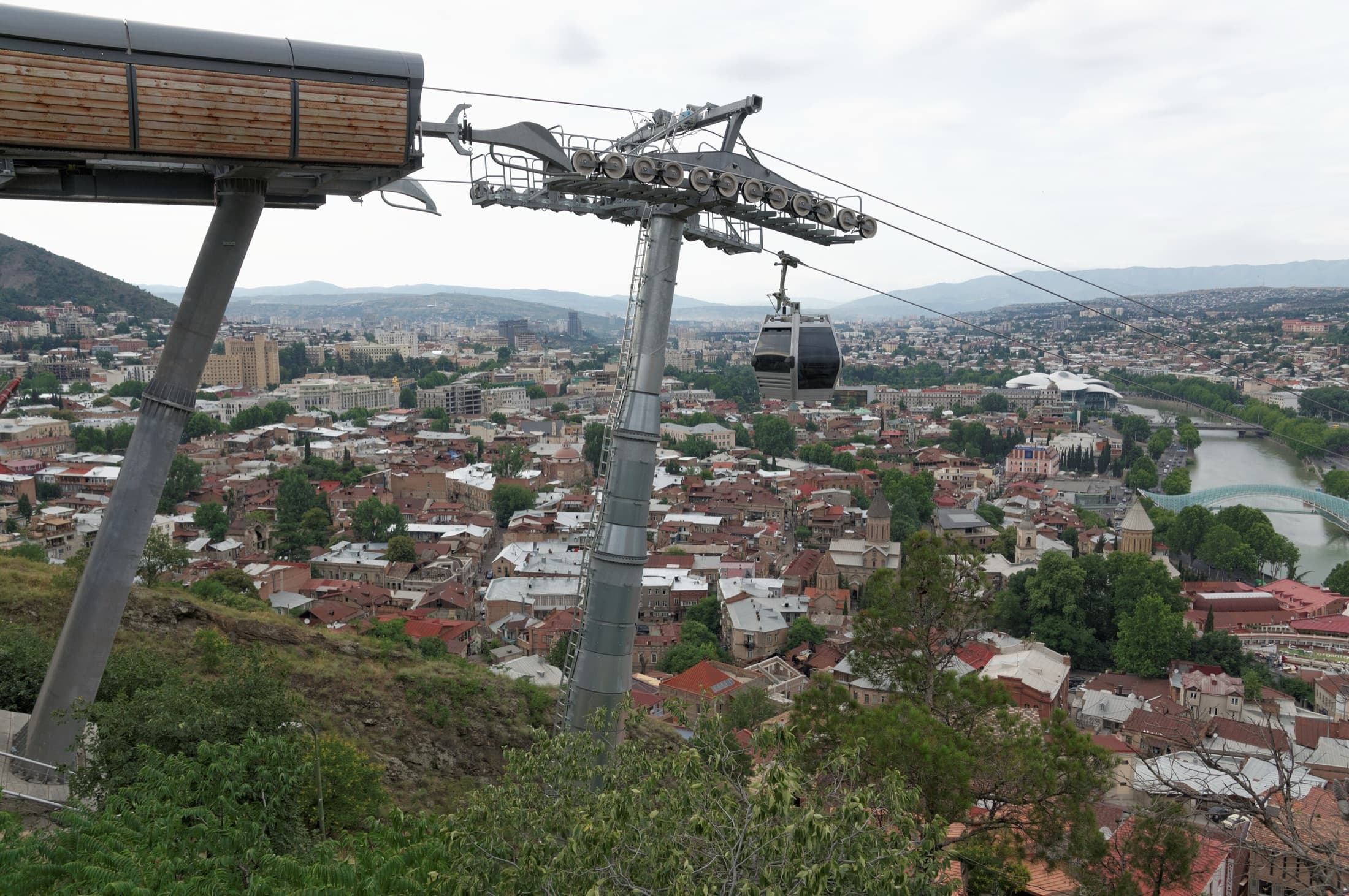 Easy
EasyGeorgian Supra & Polyphonic Singing — Private Evening from Tbilisi
Private · 1 day
$127/person · 4 travellers Easy
EasyGeorgian Wine Tour: Kakheti & Kartli — 7-Day Private Tour
Private · 7 days
$1,115/person · 4 travellers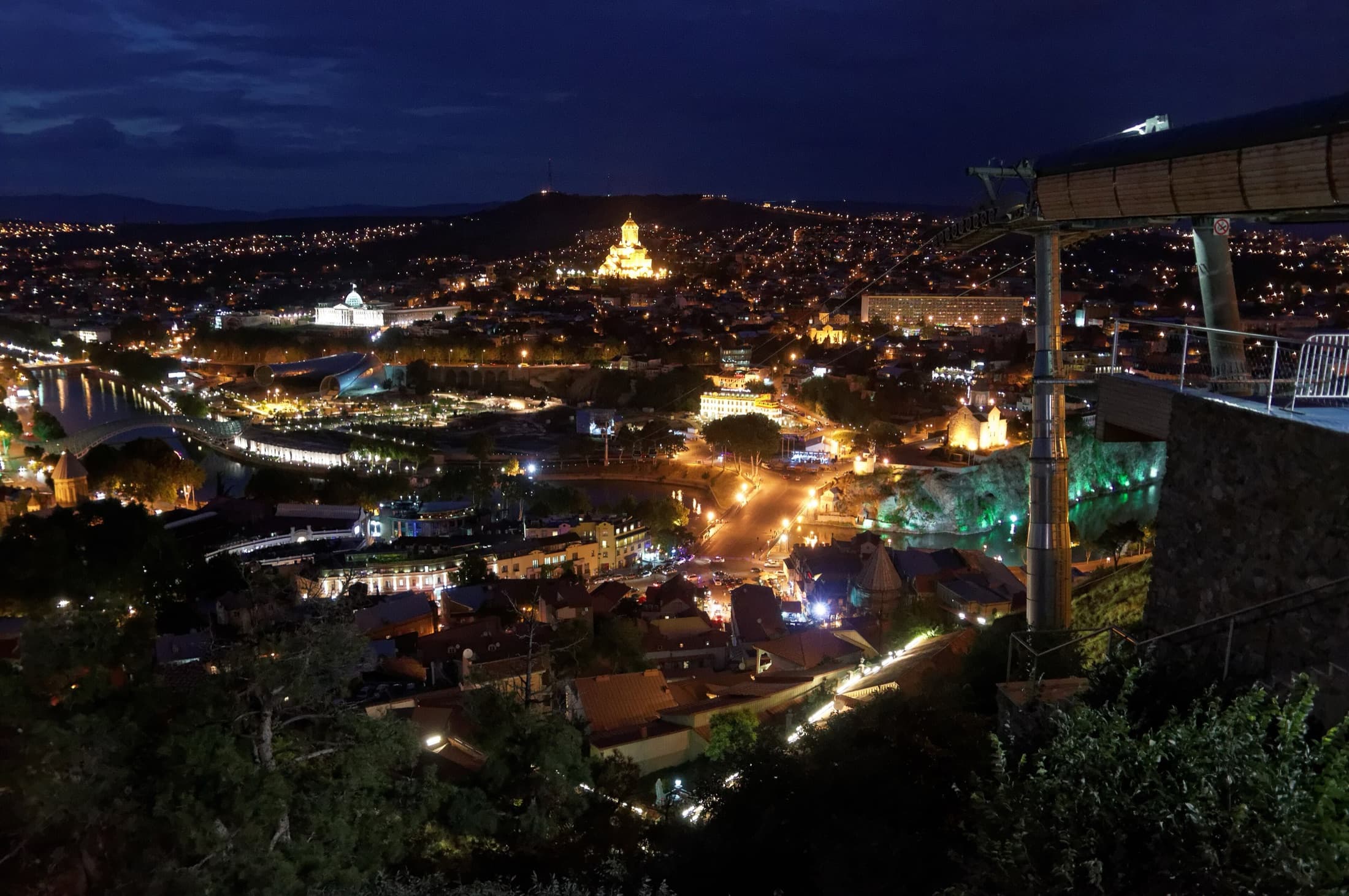 Easy
EasyGeorgia in Winter — 6-Day Private Tour: Tbilisi, Kakheti & Gudauri Snow
Private · 6 days
$755/person · 4 travellers
Must-See Attractions
Old Town and Abanotubani
Lanes of wooden balconies above the domed sulphur baths, where you can book a private bath room by the hour.
Narikala fortress
The 4th-century fortress on the ridge above the Old Town, reached on foot or by cable car from Rike Park, beside the Kartlis Deda statue.
Georgian National Museum
The archaeology treasury on Rustaveli Avenue shows gold jewellery from Colchis and Vani. Holy Trinity Cathedral (Sameba): The large cathedral consecrated in 2004 on Elia hill.
Anchiskhati Basilica
The oldest surviving church in Tbilisi, from the 6th century, in the Old Town.
Rustaveli Avenue
The 19th-century avenue with the Opera and Ballet Theatre, Parliament and the Dry Bridge flea market nearby.
Nearby
Mtskheta
The ancient capital with Jvari monastery and Svetitskhoveli Cathedral (UNESCO), about 25 km (30–40 min).
David Gareja
Cave monasteries in the semi-desert on the Azerbaijan border, about 100 km (2 h).
Ananuri
The fortress on the Georgian Military Highway above the Zhinvali reservoir, about 70 km (1–1.25 h).
Sighnaghi
The walled wine town above the Alazani Valley, about 113 km (2 h).
Good to know
- Getting there
International airport about 17 km (25–30 min) from the centre; trains and roads connect it with Kutaisi, Batumi, Zugdidi and Yerevan, and it is the starting point for all our day trips.
- Best time
April–June, September–October
- Best time
Spring and autumn are warm and dry for walking; July and August are hot, often above 30 °C, and winter is mild with occasional snow and few crowds.
- Recommended stay
2–3 days
- Getting there
Tbilisi International Airport is about 17 km (25–30 min) from the centre.
- Getting around
The metro and buses take contactless bank cards; taxis are cheap through apps such as Bolt.
- Walking
The Old Town is hilly with steep cobbled lanes; the cable car saves the climb to Narikala.
- Heads-up
Many museums close one day a week and hours change, so we check them for your dates.
- Time needed
Allow at least two full days for the city.