The short answer: a Tbilisi to Kazbegi day trip is long but very doable. Stepantsminda, the town at the end of the road, is 152 km north on the Georgian Military Highway, about 3–3.5 hours each way without stops, and a day with sightseeing takes 10–12 hours. In return you cross the main Caucasus range at the Jvari Pass (2,379 m) and stand at Gergeti Trinity Church (2,170 m) under Mt Kazbek (5,054 m). Here is how the day actually runs, what you see, what the weather does, and when it's worth staying the night instead.
Kazbegi, Stepantsminda, Kazbek: the names
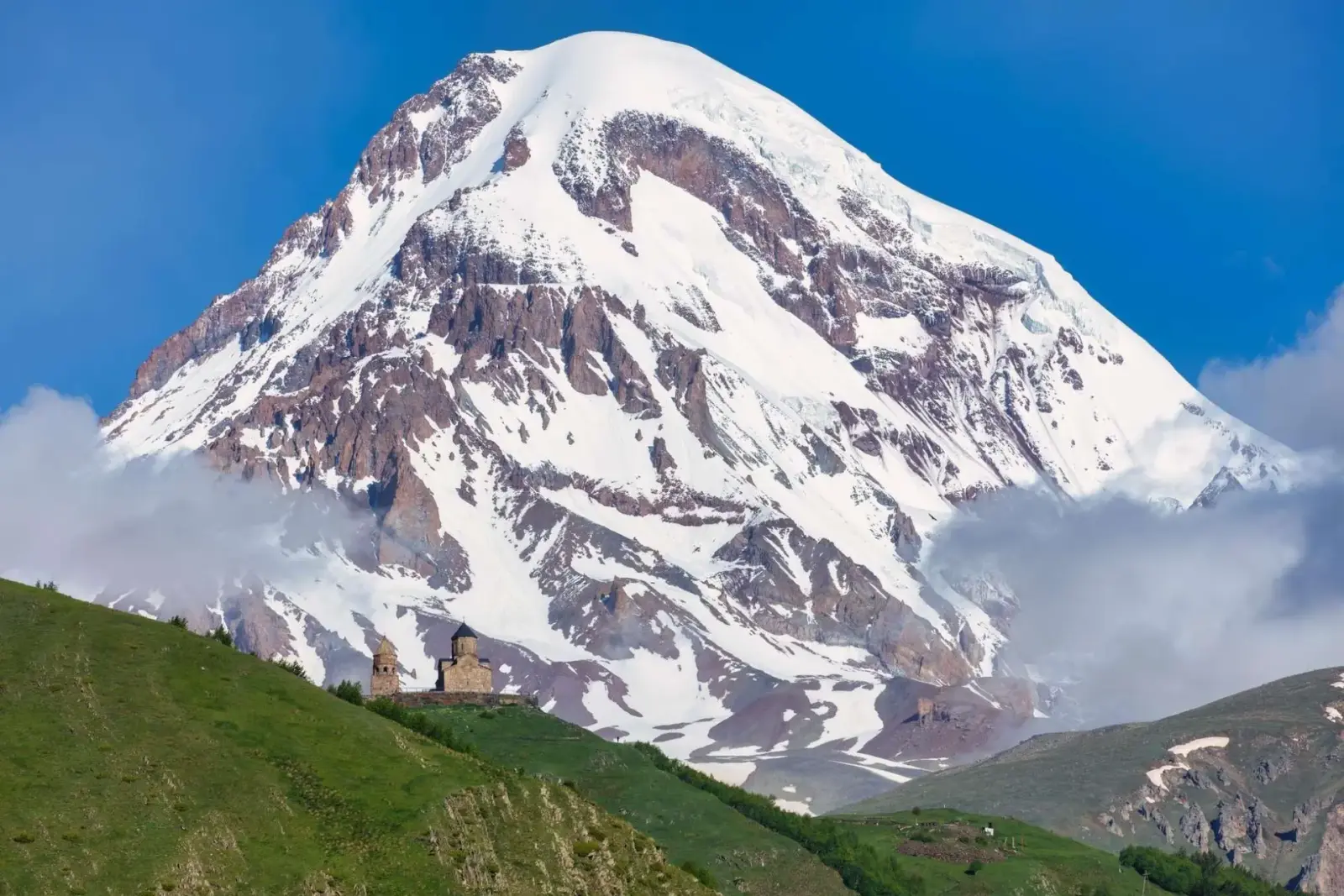
Stepantsminda is the town's official name. Kazbegi is its older name, still used for the town and for the whole district, and it's what most people search for. Kazbek is the mountain: a dormant volcano on the border with Russia, the highest peak in eastern Georgia and the third-highest in the country[1]. In Georgian legend, Amirani, the local Prometheus, was chained to it for giving fire to mortals[1].
The Tbilisi to Kazbegi day trip, hour by hour
This is a realistic timetable for a private day trip, based on how ours usually runs:
- 08:30 Pickup in Tbilisi.
- 09:30 Zhinvali reservoir viewpoint, a short photo stop.
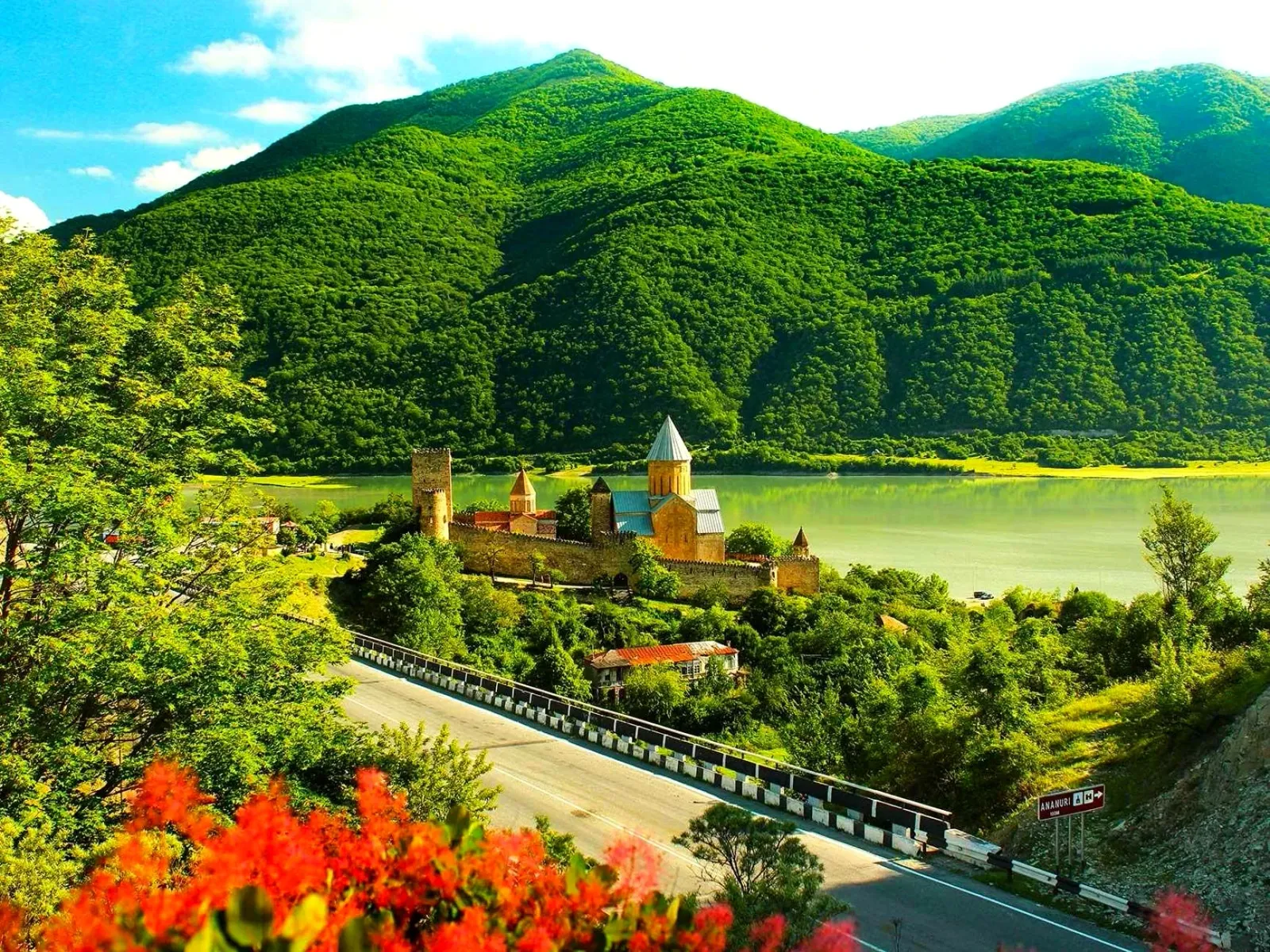
- 09:45–10:30 Ananuri, the fortress of the Aragvi dukes on the edge of the reservoir, about 70 km from Tbilisi.
- 11:30 The Friendship Monument viewpoint past Gudauri, then over the Jvari Pass.
- 12:30 Arrive in Stepantsminda.
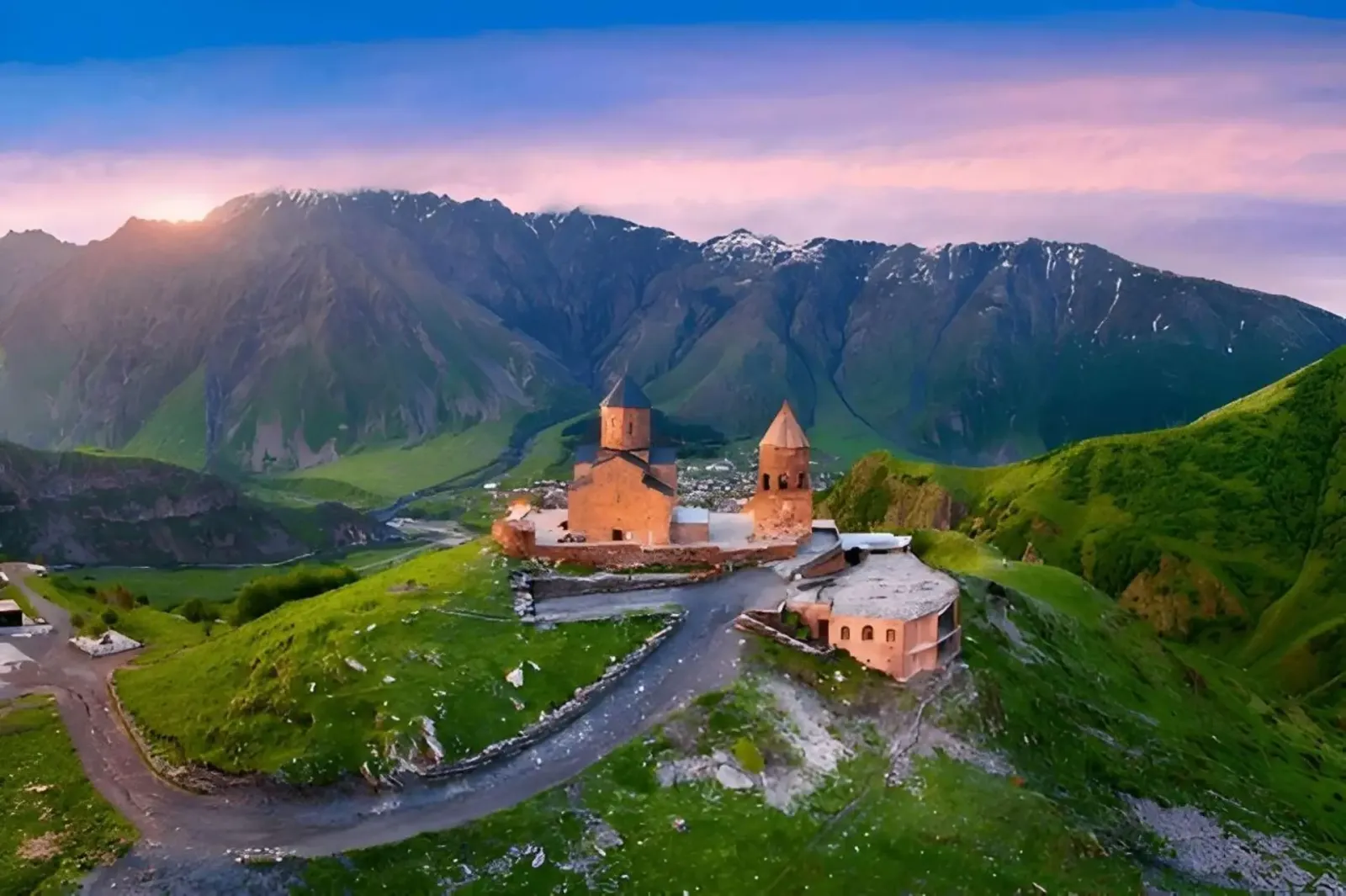
- 12:45–14:00 Gergeti Trinity Church.
- 14:00–15:00 Lunch in Stepantsminda.
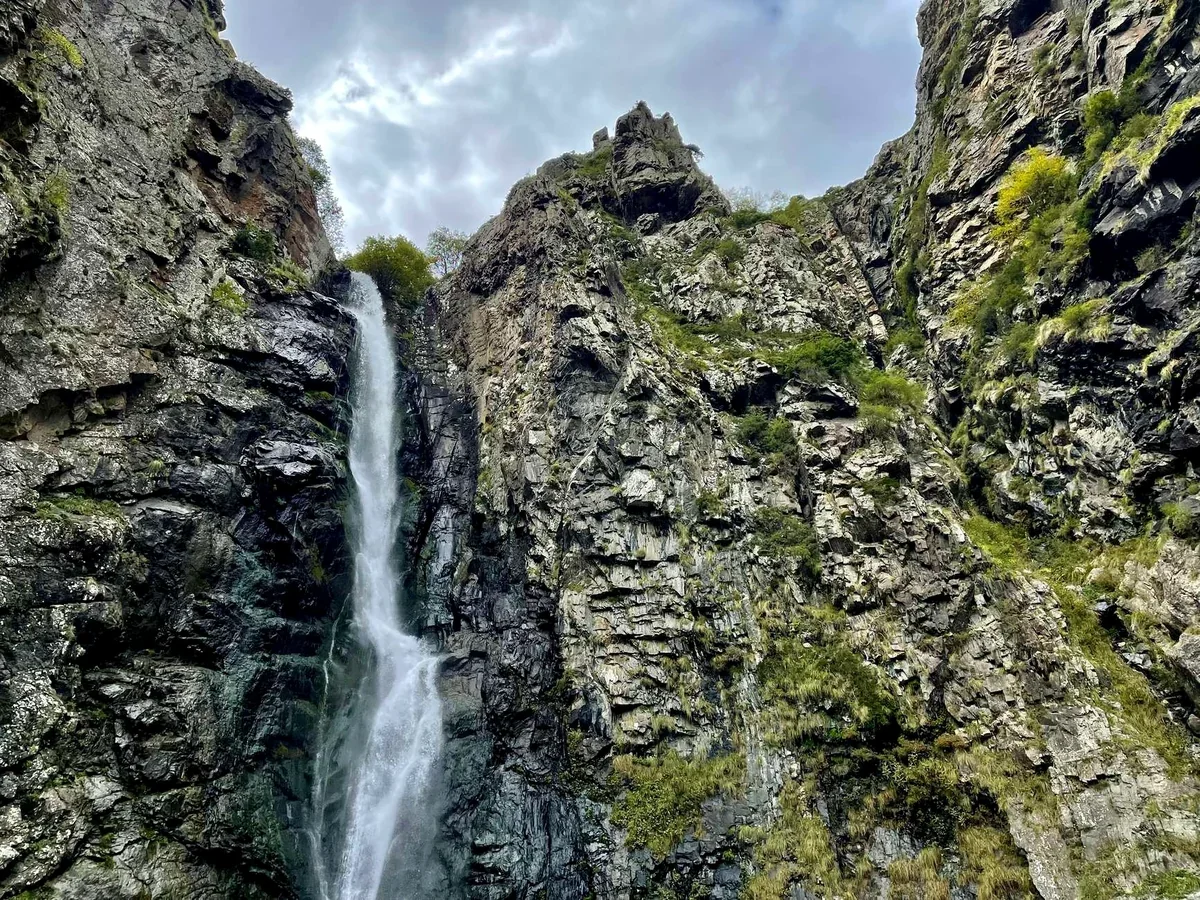
- 15:00–16:15 From May to October, time allowing: the Gveleti waterfall, or a shorter photo stop in the Dariali gorge.
- 16:15 Drive back, reaching Tbilisi around 19:45–20:15.
That is 6–7 hours in the car, broken by a stop roughly every hour. Weekend evenings and queues of trucks heading to and from the Upper Lars border crossing can add 1–3 hours to the return, so a weekday is kinder.
This timetable assumes your own car. A marshrutka makes no sightseeing stops, and doing the trip in a day means the first van up and one of the last back, which makes for a long, rushed day. Our guide to getting from Tbilisi to Kazbegi by marshrutka, taxi or private driver compares the options.
What you see on the way
- The Zhinvali reservoir, turquoise water on the Aragvi about an hour out of Tbilisi.
- Ananuri, a 17th-century fortress with two churches inside its walls. Climb the tower for the view over the water.
- Gudauri, Georgia's largest ski resort, and just past it the Friendship Monument (1983), a semicircular viewpoint with a tiled mosaic, perched above a deep valley.
- The Jvari Pass (2,379 m), the highest point of the road and the part that closes in winter.
- The Tergi (Terek) valley on the way down to Stepantsminda, with mineral springs staining the rocks orange beside the road.
Our guide to the stops on the Georgian Military Highway takes the road in order, stop by stop.
Gergeti Trinity Church
The 14th-century Gergeti Trinity Church stands on a ridge at 2,170 m, with a separate bell tower beside it and Kazbek behind[2]. It's the picture most people come for, and the view down over Stepantsminda is as good as the view up.
- By car: a sealed road climbs from town to a car park just below the church. Outside winter it's suitable for ordinary cars; a 4x4 isn't needed[3]. In snow it needs a 4x4, and some days it's impassable.
- On foot: the trail from town is about 7 km return with roughly 430 m of climbing, 60–75 minutes up for a fit walker. On a day trip, walking up adds at least an hour to an already long day, so most people drive up, and some walk down.
- Dress code: it's a working church. Men wear long trousers; women cover shoulders, knees and hair. Wrap skirts and scarves are usually available at the entrance.
Beyond Gergeti: Gveleti and Dariali
If the day goes to plan and the season allows, there's time for one more stop north of Stepantsminda, towards the Russian border.
- The Gveleti waterfall is about 8 km north of town. From the road it's a rocky walk of 30–40 minutes each way to the falls, so wear proper shoes. It's usually possible from May to October.
- The Dariali gorge is the narrow, sheer-sided canyon of the Tergi river just before the Upper Lars border crossing. A short photo stop is enough to see why this road was so hard to build.
Neither is essential. If the weather closes in or you'd rather have a long lunch, skip them and head back earlier.
Weather: what to expect
- It's colder up there. Stepantsminda is at about 1,740 m and Gergeti is often about 10 °C cooler than Tbilisi. Bring a warm layer and a rain jacket even in August.
- Mornings are clearer. In summer, cloud often builds around Kazbek from late morning, so on some days you won't see the summit at all. Nobody can promise the view.
- May to October is the easiest season: the road is reliable and the side trips (Gveleti, Dariali) are open.
- December to April the Jvari Pass can close for a few hours, and occasionally 1–3 days, after heavy snow or when the avalanche risk is high[3]. Check the road the evening before. Our guide to the Kazbegi road in winter explains how closures work.
Is it worth it as a day trip?
Yes, if you like mountains, don't mind the car and have only one day for the Caucasus. The drive is part of the experience, and the stops break it up well.
Probably not, if anyone in your group gets carsick on mountain roads, you're travelling with small children who hate long drives, or what you really want is to hike. A day trip gives you a couple of hours in Stepantsminda, not a walk in the mountains.
Day trip or overnight?
With a night in Stepantsminda, the same drive feels quite different. You can see Gergeti in the evening light after the coach groups have gone, catch Kazbek at sunrise when it's most often clear, and spend the second morning walking in the Truso valley (May–October) or towards Juta (in high summer) before driving back. If you have two days to spare, we'd usually recommend this over the day trip. That's what our 2-day private Kazbegi trip does.
A new road with tunnels between Kvesheti and Kobi, avoiding the highest stretch of the pass road, is being built in stages, with completion expected around 2027[4]. When it fully opens it should shorten the drive and make winter closures less of a problem; until then, plan on the old road.
Practical tips
- Stepantsminda has cafés and ATMs; the church and the viewpoints don't. Bring cash for lunch.
- Wear shoes with grip; the ground around the church is uneven.
- Since 1 January 2026, travel insurance with at least 30,000 GEL of cover is mandatory for visitors to Georgia.
- Kazbegi also fits into a longer route: see our 7-day Georgia itinerary.
Tours for this: Kazbegi with us
Our private Kazbegi day trip from Tbilisi follows the timetable above, with Ananuri, the Friendship Monument, Gergeti Trinity Church and, in season, the Gveleti waterfall, in your own car with an English-speaking driver-guide, stopping wherever you like. From May to October our car drives up to the church; when there is snow, a local 4x4 takes you up. The 2-day private Kazbegi trip adds a night in Stepantsminda, Gergeti in the evening light and a walk in the Truso or Juta valley with a local guide. In winter we check the pass the evening before and suggest another trip if it's closed. See each tour page for the current price, or build your own route. Nothing to pay now.
Sources
- Wikipedia, "Mount Kazbek": en.wikipedia.org
- Wikipedia, "Gergeti Trinity Church": en.wikipedia.org
- Wander-Lush, "How to Travel From Tbilisi to Kazbegi in 2026" (updated May 2026): wander-lush.org
- Kvesheti–Kobi Road Project, official site: kveshetikobiroad.ge; Georgia Today, "First section of Kvesheti-Kobi road to open in 2025": georgiatoday.ge
Last checked: September 2026. Road conditions on the Jvari Pass change quickly in winter.