The short answer: the Joseph Stalin Museum is in the centre of Gori, about 86 km west of Tbilisi (1–1.25 hours by road). It has three parts: a large museum building with six halls of photographs, documents and gifts, the small wooden house where Stalin was born, and the armoured railway carriage he used from 1941 [1]. A guided tour in English, of about 45 minutes, is included in the ticket [2]. Expect a museum that still largely shows Stalin as the Soviet Union presented him, with only a small room on the repressions. Most visitors combine it with Uplistsikhe, 12–15 km away.
Gori in brief
Gori is the main town of Shida Kartli, on the Mtkvari river in the middle of Georgia. Stalin, born Ioseb Jughashvili, grew up here, the son of a shoemaker, before going to the seminary in Tbilisi [1]. Today it is an ordinary provincial town with a hilltop fortress, a central avenue and a busy market, and most travellers see it on the way to or from Uplistsikhe and western Georgia.
What's inside the museum
The main building
The museum building on the central square was begun in 1951, while Stalin was still alive, and opened in 1957 [1]. Inside, you climb a grand staircase lined with stone busts of Stalin into halls of red carpet, chandeliers and parquet [2]. The six halls run in order through his life [1]:
- His life to the Second World War: his childhood in Gori, the seminary in Tbilisi, the revolutionary years, his rise to power and the war, told through photographs, documents and paintings.
- Personal effects and gifts: furniture and personal belongings, and gifts he received from foreign leaders and delegations.
- The death mask: the tour ends in a dim round room where one of the bronze death masks made after his death in 1953 lies on a cushion [1][2].
The birth house
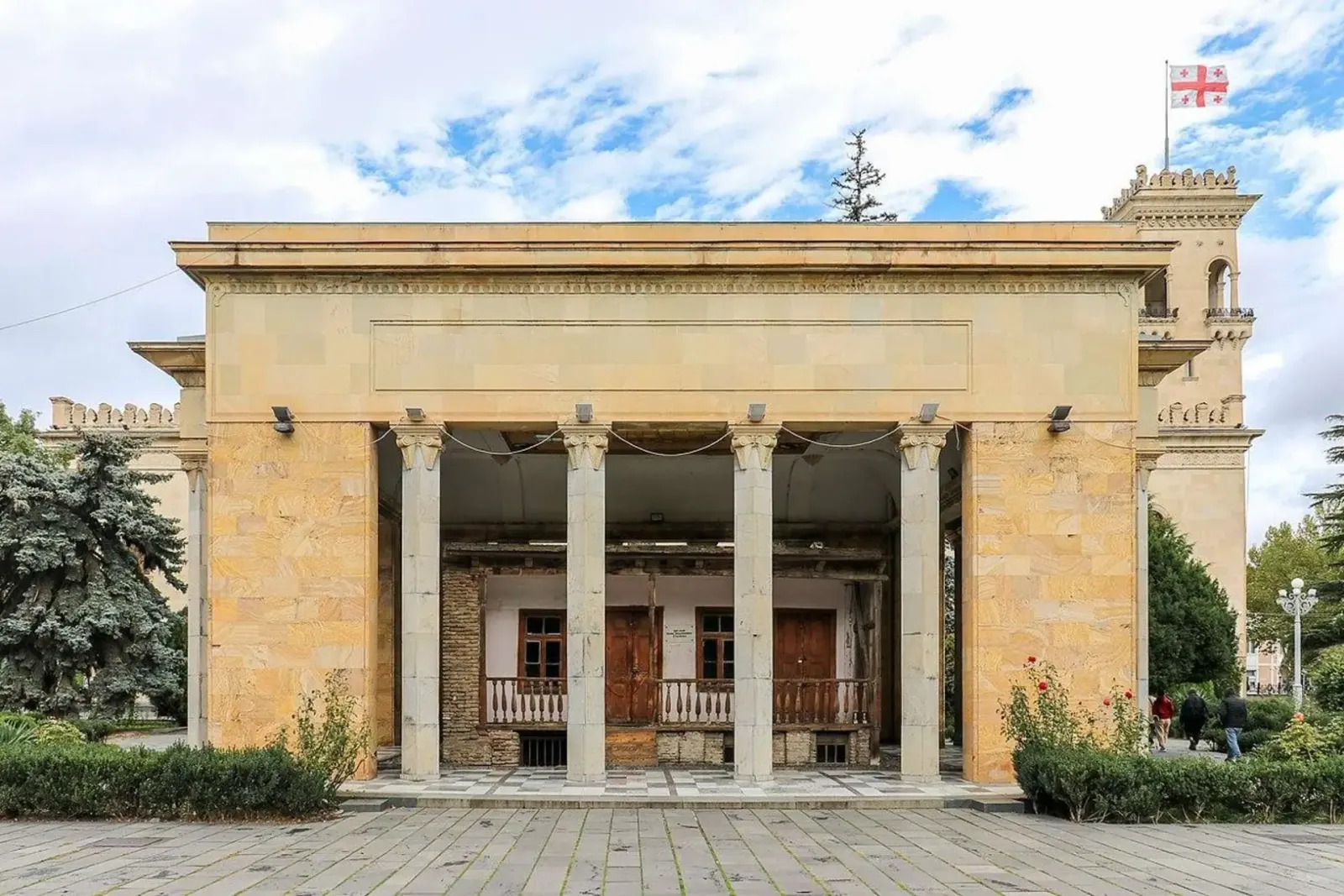
In the park in front of the museum stands the small wooden and brick house where Stalin was born in 1878 and lived for his first four years. It is covered by a stone pavilion with columns, built in the 1930s to protect and honour it [1][3]. It had two small rooms, one of them his father's shoemaking workshop [1]. You see it from outside and through the doorway.
The railway carriage
Beside the museum is Stalin's green armoured Pullman carriage, weighing 83 tonnes, which he used from 1941, including for the journeys to Tehran and Yalta. It was brought here from Rostov-on-Don in 1985 [1]. It is kept with its original furnishings, and you can look inside [3]. It is included in the full ticket [2][4].
How the museum presents history
This is the part that surprises most visitors. The museum was created as a memorial in the Soviet period, and the main exhibition has changed little since. It tells the story of Stalin's life and career, and says very little about the famine, the purges or the Gulag, in which millions of people died [1][3].
There have been attempts to change it. After the 2008 war with Russia, the Georgian culture ministry announced plans to turn it into a museum of Soviet occupation and put up a sign at the entrance describing the exhibition as Soviet propaganda. In 2012 the Gori council voted to keep it as a Stalin museum [1]. Since then a small room in the basement has been given over to the repressions, with a reconstructed interrogation room and objects from families who were persecuted [2][3].
How you read the museum is up to you. Some travellers find it disturbing; others find it a revealing piece of history in itself, a memorial kept almost as it was. Your driver-guide can fill in what the exhibition leaves out. Georgians hold a range of views on Stalin, and it is a subject to approach with some care in conversation.
Practical details
- Tickets: as of early 2026, 15 GEL for the full ticket with the halls, birth house and carriage; tickets without the carriage cost less [4].
- Hours: 10:00–18:00, and 10:00–17:00 in winter; closed on 1 January and Easter Sunday [2]. Some sources say it can close on Mondays in the low season [3], so we check before a Monday visit.
- Time: 45 minutes for the guided tour, about an hour with the carriage and birth house [2].
- Photos: allowed [2].
- In winter: the building can be cold inside; keep a jacket on [2].
Gori Fortress
Above the town, a short walk from the museum, is Gori Fortress, a medieval citadel on a rocky hill. Its walls have been rebuilt over the centuries, and today it is an open site with free entry and wide views over Gori, the Mtkvari valley and, on a clear day, the Caucasus [3]. Allow 30–45 minutes, and wear shoes with grip for the climb.
Combining Gori with Uplistsikhe and Mtskheta
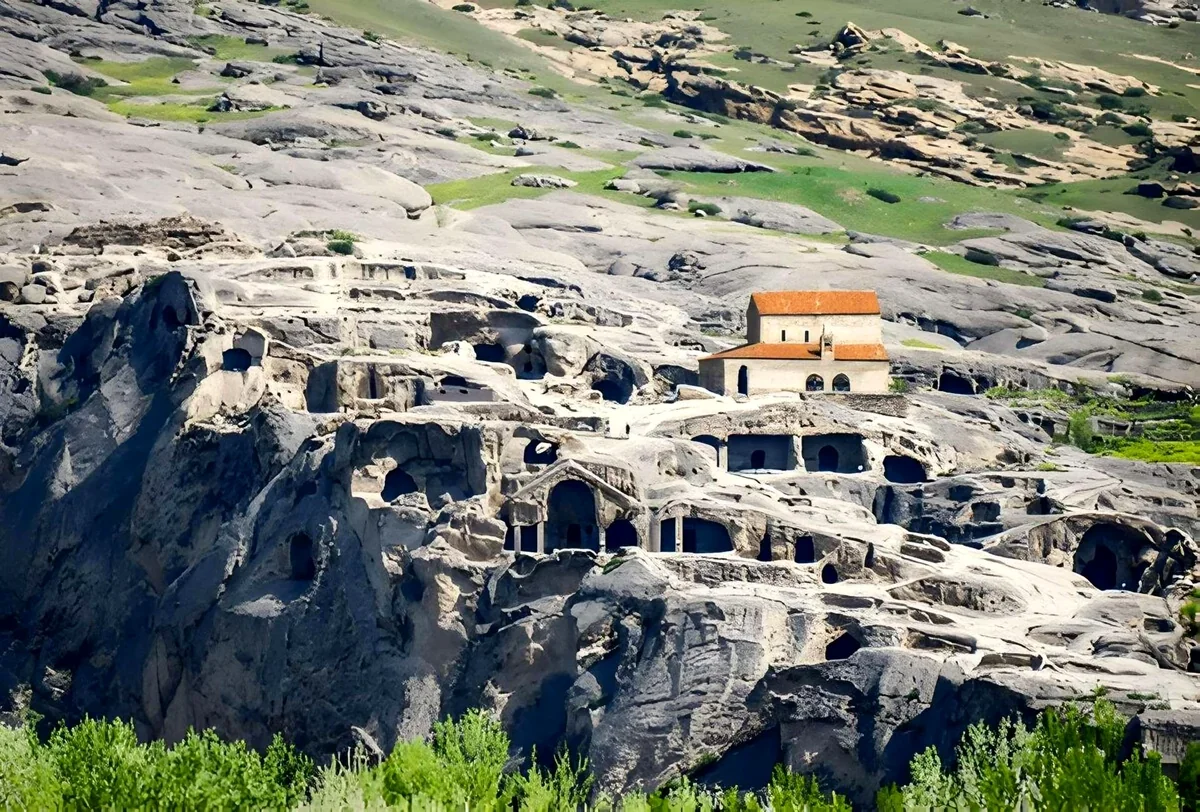
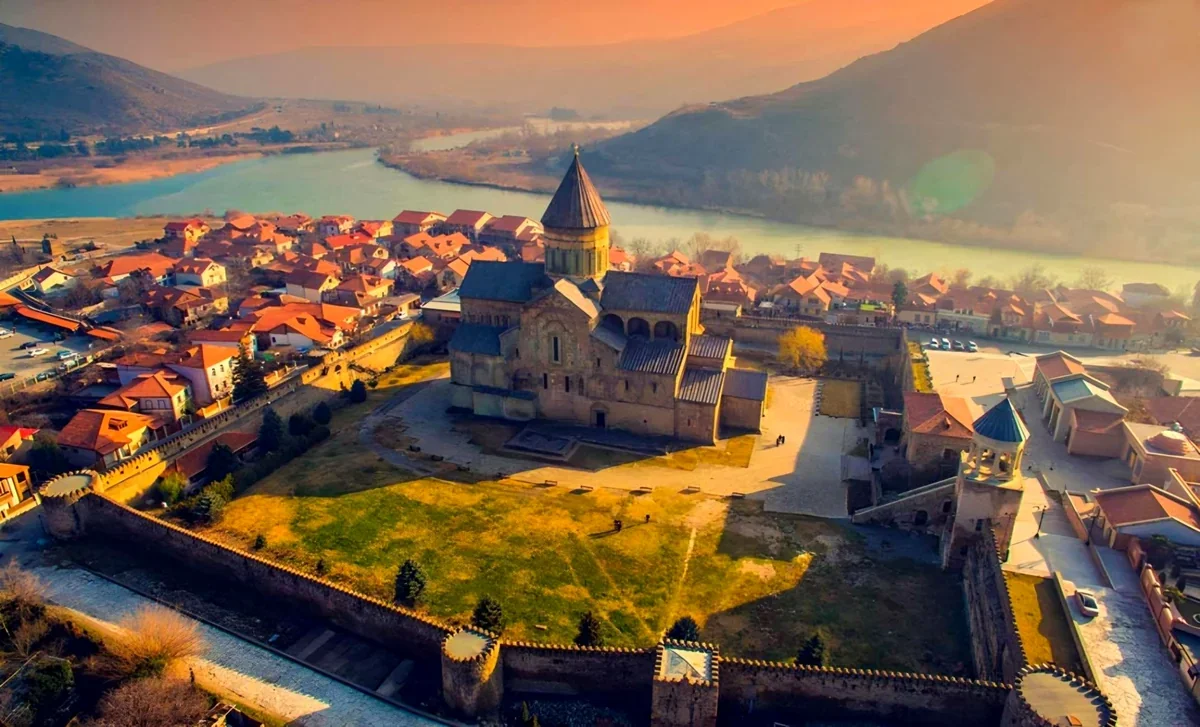
Uplistsikhe, the rock-cut town above the Mtkvari, is 12–15 km east of Gori and takes 1.5–2 hours on site. With Mtskheta, the old capital, on the way, the three make a classic day west of Tbilisi of about 9–9.5 hours. In July and August we go to Uplistsikhe first, before the rock heats up. For more on the cave towns, read Uplistsikhe or Vardzia, and for Jvari and Svetitskhoveli, our Mtskheta guide. Gori also lies on the main road to Borjomi, Kutaisi and Batumi, so it fits on the way west.
Is it worth it?
If you are interested in the 20th century, yes: there is nothing quite like it, and the carriage and the birth house are genuine. If you are short of time and not drawn to Soviet history, Uplistsikhe and Mtskheta are the stronger sights, and you can skip the museum and have a longer lunch in Gori instead. On our day trip it is optional.
Seeing Gori with us
Our trips are private: your own car and English-speaking driver-guide, for 1–8 travellers. The Mtskheta, Gori and Uplistsikhe private day trip from Tbilisi takes 9–9.5 hours, with Jvari, Svetitskhoveli, Uplistsikhe, lunch in Gori and an hour at the Stalin Museum. The Heart of Georgia, 5-day private heritage tour stops in Gori on the way from Mtskheta and Uplistsikhe to Kutaisi and Gelati. See each tour page for the current price, or build your own route. Nothing to pay now.
Sources
- Wikipedia, "Joseph Stalin Museum, Gori": en.wikipedia.org
- Wander-Lush, "Visiting the Stalin Museum in Gori": wander-lush.org
- Georgia Spirit, "The Stalin Museum in Gori: a complete visitor guide" (July 2026): georgia-spirit.com
- Sakhva Travel, Gori and Uplistsikhe guide (May 2026): sakhva-travel.com
Last checked: September 2026. Ticket prices and opening days change; we confirm them before each trip.