The short answer: Dmanisi is an archaeological site in Kvemo Kartli, 85–93 km south-west of Tbilisi (1.5–2 hours by road), where excavators found the fossil remains of early humans dated to about 1.8 million years ago: the earliest dated human remains in Eurasia and the oldest found anywhere outside Africa [1]. You can visit the dig under its protective pavilion, a small site museum and the ruins of a medieval town on the same promontory. The museum-reserve is closed on Mondays [2][3]. Combine it with Bolnisi Sioni, Georgia's oldest standing church, for a full day.
Why Dmanisi matters
For a long time the story of human origins had early humans leaving Africa only much later, and with bigger brains and better tools than the Dmanisi people had. Between 1991 and 2005, excavations here turned up the remains of several individuals, together with animal bones and simple stone tools, all from the same layers [1][4]. One of them, Skull 5, published in 2013, is the most complete skull of an adult early human of that age found anywhere. Its mix of a small braincase and a large face led some researchers to argue that several early Homo "species" may have been one variable lineage [4].
The finds were first named Homo georgicus; most researchers now treat them as an early form of Homo erectus [1]. "Europe's oldest" is how Georgian tourism usually describes them [5]; strictly, Dmanisi is in the Caucasus, on the edge between Europe and Asia, and scientists call them the oldest humans outside Africa.
What you see at the site
The excavation pavilion
A covered pavilion protects part of the excavation area, so you can look down into the layers where the bones were found [5]. It is not dramatic in the way a castle is: you are looking at earth, stone and marked squares. A good guide makes the difference, explaining what came out of which spot and why it upset the textbooks.
The skulls: casts here, originals in Tbilisi
The original fossils are kept by the Georgian National Museum. What you see on public display, both at Dmanisi and in the museum on Rustaveli Avenue in Tbilisi, are casts of the skulls and jaws [6]. If you are in Tbilisi before or after, the National Museum's archaeology halls make a good companion visit.
The medieval town
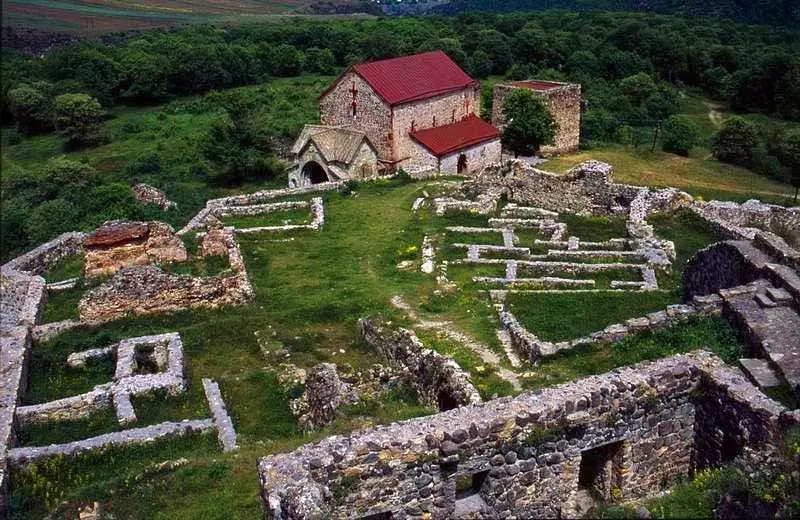
The same promontory, above the Mashavera river valley, held a medieval town that was a busy trading centre on the routes through the South Caucasus. It first appears in records in the 9th century, under the Emirate of Tbilisi; the Georgian kings David the Builder and Demetrius I took it in 1123–1125, and Timur's armies wrecked it in the 14th century, after which it declined [1]. You walk past the remains of the citadel, baths and houses to Dmanisi Sioni, a 6th-century church with a later porch, still standing in the middle of the ruins [1][5]. The site museum also shows finds from the medieval town, including a gold hoard [5].
Practical details
- Getting there: 85–93 km from Tbilisi, 1.5–2 hours each way, through Marneuli or Bolnisi.
- Opening days: Tuesday to Sunday, 10:00–18:00; closed on Mondays [2][3]. Guided tours in English are offered at the site for a fee [2]. Hours and fees change, and the ones published online are several years old, so we confirm them before each visit.
- Season: the site is on an open hillside. From April to October the paths are dry; in winter it is cold and windy and the paths can be muddy.
- Walking: gravel paths on a slope, with some uneven ground in the medieval town. Wear shoes with grip, and in summer bring a hat and water: there is little shade.
- Time on site: allow 1.5–2.5 hours with a guided tour of the excavations, the museum and the medieval town.
Combining Dmanisi with Bolnisi
Bolnisi Sioni lies on the way back towards Tbilisi. Built in 478–493, it is the oldest church building still standing in Georgia, and its stone inscriptions are among the oldest dated texts in the Georgian alphabet [7]. It was also the first Georgian building to carry its completion date on the outside. The decoration of vine scrolls and animals shows strong Persian influence [7]. Allow 30–45 minutes.
Kvemo Kartli is also wine country: some of the oldest known traces of winemaking anywhere, Neolithic residues in clay jars, were found at Gadachrili Gora and Shulaveris Gora south of Tbilisi, not in Kakheti [8]. A cellar tasting on the way home fits well.
Other archaeology in Georgia
- Uplistsikhe: a rock-cut town above the Mtkvari, about 100 km west of Tbilisi, lived in from the late 2nd millennium BC until the Mongol raids. Read Uplistsikhe or Vardzia to decide between the two cave towns.
- Grakliani Hill: near Kaspi, on the main road west, found in 2007 during highway construction. Excavators from Tbilisi State University have uncovered Bronze Age burials, a temple of the 7th century BC and, in 2015, an inscription on an altar in a script not yet deciphered [9]. It is a working dig, so what you see depends on the season.
- Mtskheta: the old capital, with Svetitskhoveli, Jvari and the Samtavro burial grounds. See our Mtskheta guide.
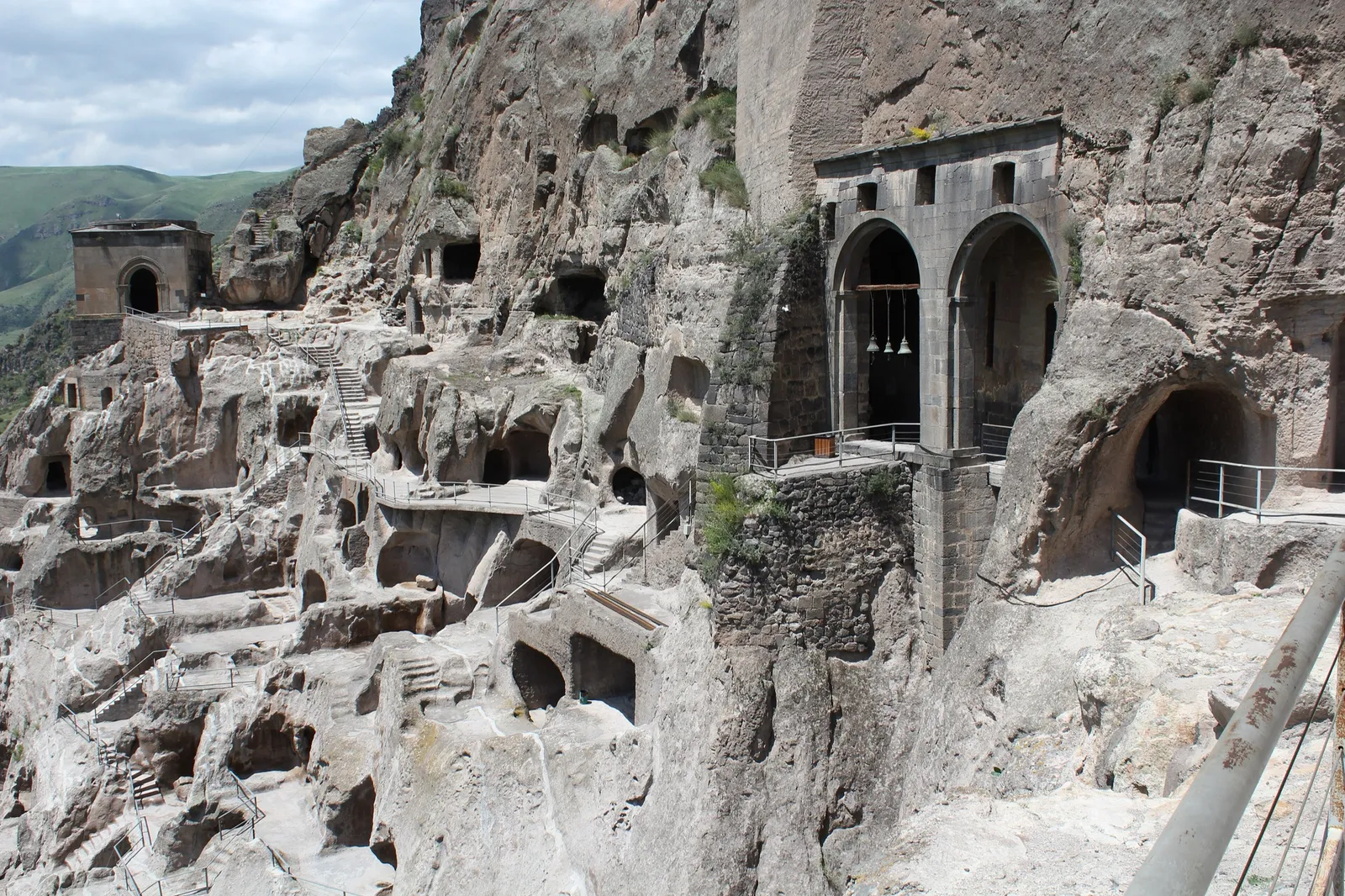
- Vardzia: the 12th-century cave monastery in the south; part of the path has been closed since the 27 May 2026 rockfall.
Who Dmanisi suits
Dmanisi is for travellers who find human origins or archaeology exciting, and it is quiet compared with Mtskheta or Kazbegi. If you want mountain views or a monastery in a dramatic setting, it will feel low-key, and children under ten may find the excavation pavilion dull, although the medieval town is fun to explore.
Seeing Dmanisi with us
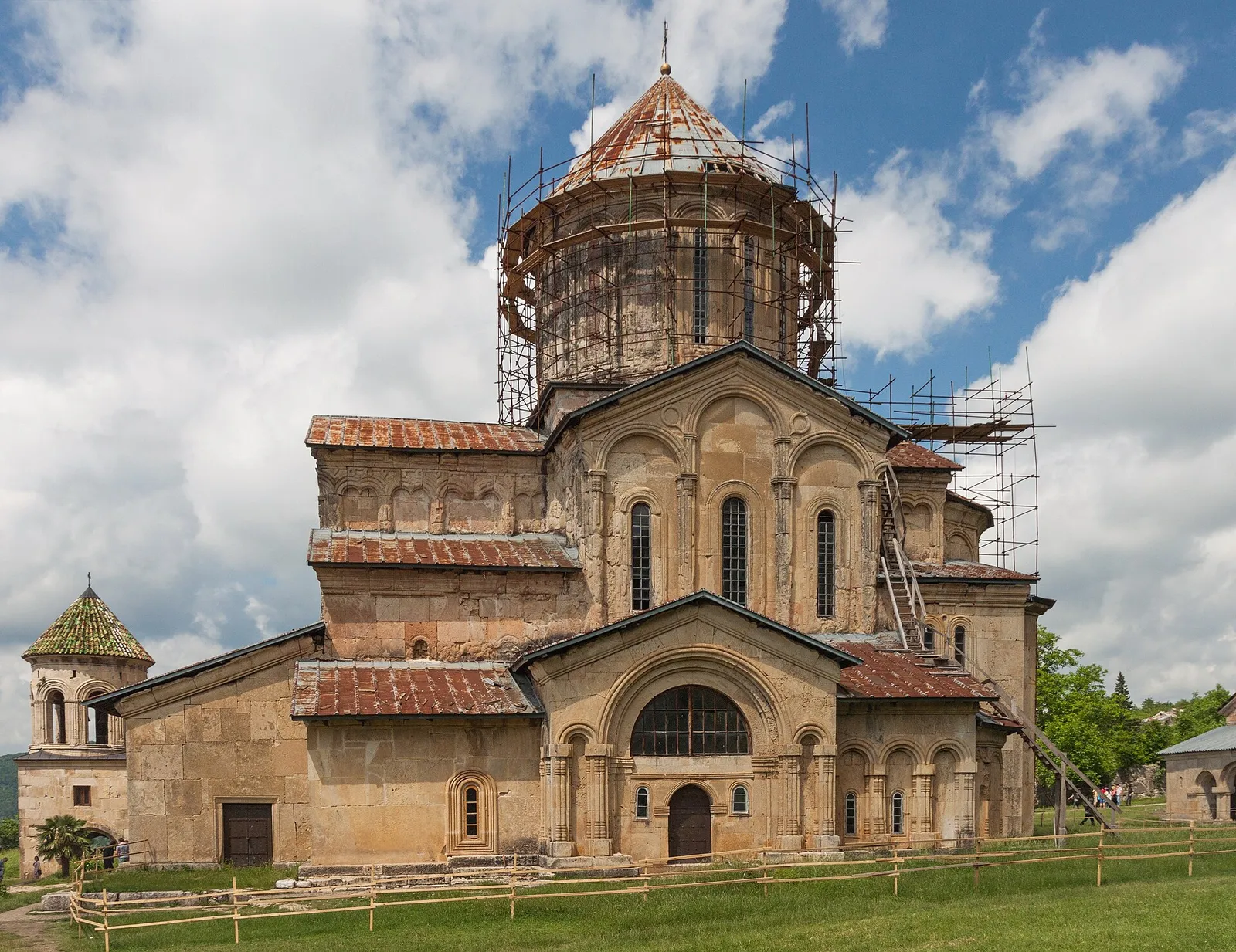
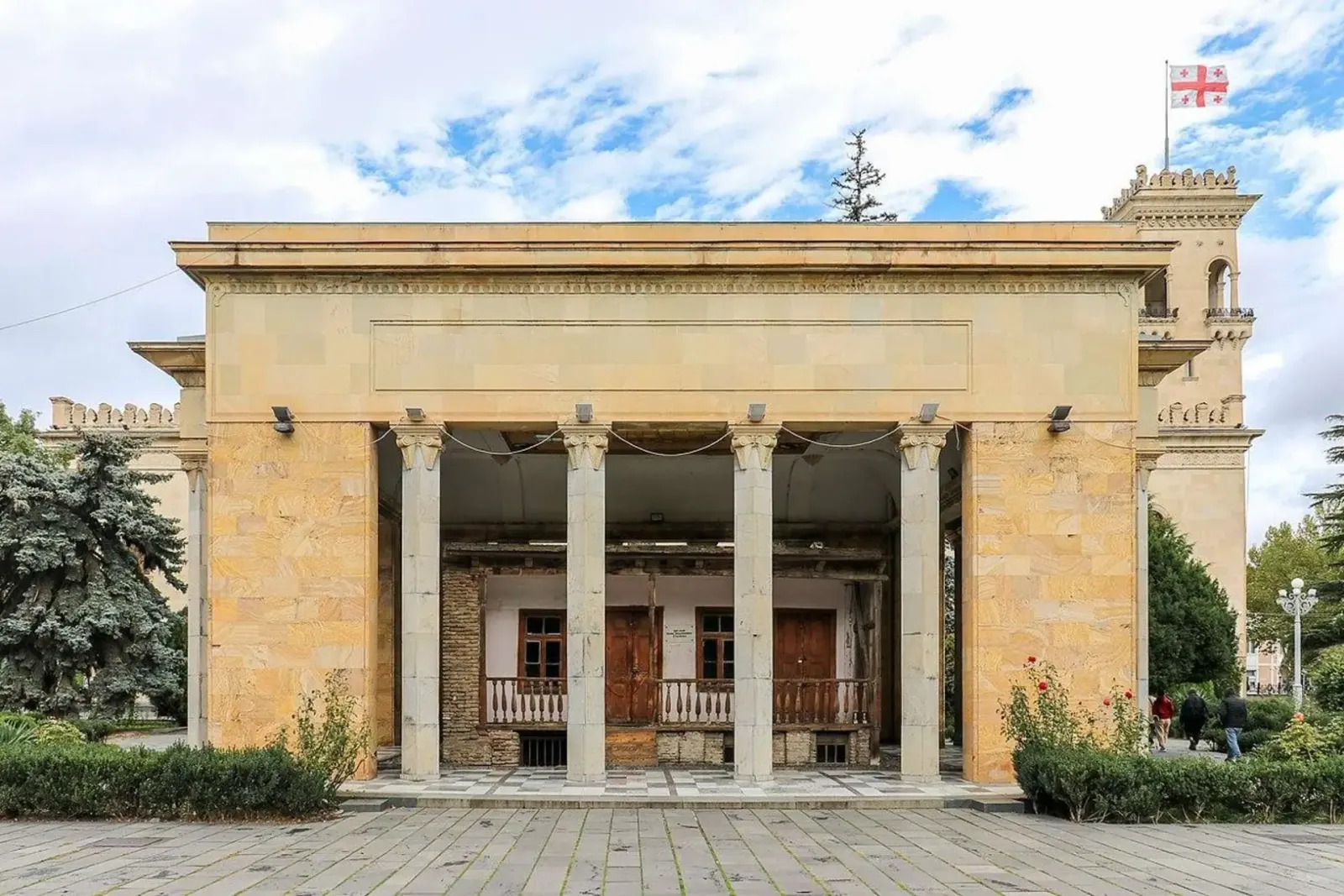
Our trips are private: your own car and English-speaking driver-guide, for 1–8 travellers. The Georgia Archaeology Tour, 5 days, private ends with a day at Dmanisi, with an extended guided tour of the excavations and museum, then Bolnisi Sioni and a Kvemo Kartli cellar; the earlier days cover the National Museum, Grakliani Hill, Uplistsikhe and Vardzia. It runs from April to October, and in November on request. The Heart of Georgia, 5-day private heritage tour covers Mtskheta, Uplistsikhe, Gori, Gelati and Kakheti, and we can swap a day for Dmanisi and Bolnisi. We plan the order of days around the Monday closure. See each tour page for the current price, or build your own route with a Dmanisi day. Nothing to pay now.
Sources
- Wikipedia, "Dmanisi": en.wikipedia.org
- GeorgianMuseums.ge, Dmanisi Historical and Architectural Museum-Reserve: georgianmuseums.ge
- Madloba, Dmanisi museum-reserve: madloba.info
- Lordkipanidze et al., "A complete skull from Dmanisi, Georgia", Science (2013): science.org
- Georgian National Tourism Administration, "Dmanisi": georgia.travel
- Wikipedia, "Dmanisi skull 5": en.wikipedia.org
- Wikipedia, "Bolnisi Sioni": en.wikipedia.org
- McGovern et al., early Neolithic wine of Georgia, PNAS (2017): pnas.org
- Wikipedia, "Grakliani Hill": en.wikipedia.org
Last checked: September 2026. Opening days and guided-tour fees change; we confirm them before each visit.