Photos: Alexkom000 (CC BY 4.0) · Wikimedia Commons
Truso Valley
Kazbegi & Mtskheta · Nature
About Truso Valley
Tours Including Truso Valley
See all 4 tours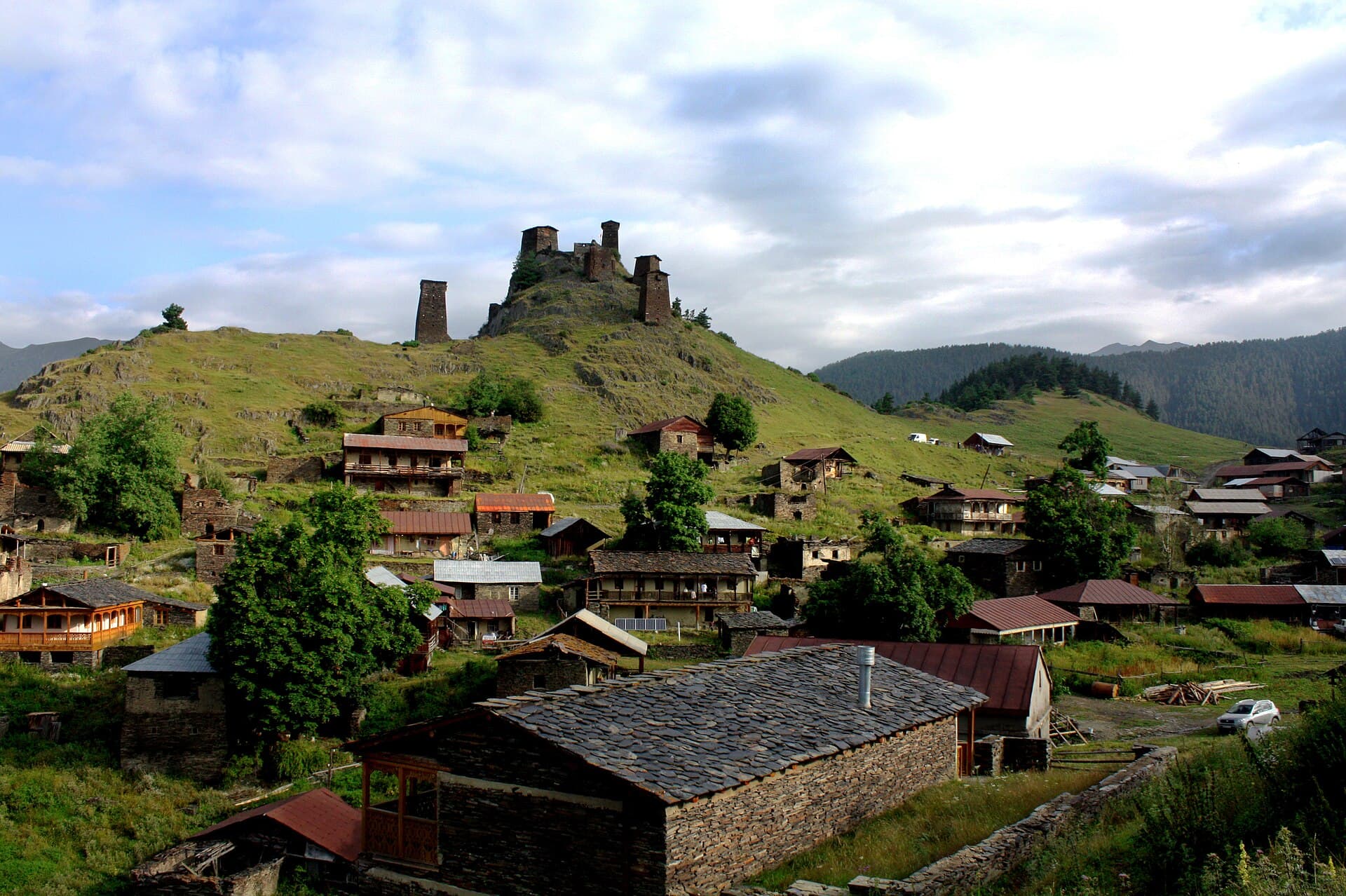 Moderate
Caucasus 4x4: Tusheti, Khevsureti & Kazbegi — 8-Day Private Expedition
Private · 8 days
$1,095/person · 4 travellers Moderate
Kazbegi Adventure Weekend: Rafting, Hiking & Paragliding — 3-Day Private Tour
Private · 3 days
$575/person · 4 travellers- Moderate
Kazbegi & Truso Valley by 4x4 — Private Day Trip from Tbilisi
Private · 1 day
$93/person · 4 travellers - Moderate
Kazbegi with a Truso or Juta Valley Hike — 2-Day Private Tour
Private · 2 days
$225/person · 4 travellers

Must-See Attractions
Travertine terraces
Orange, white and rust-coloured mineral deposits where springs run down to the river, about 1.5 hours' walk in from Kvemo Okrokana.
Abano mineral lake
A small lake of fizzing mineral water beside the track.
Ketrisi
An almost deserted village with stone towers and an old church.
Zakagori fortress
Tower ruins on a crag at the head of the accessible valley, about 11 km in; this is where you turn back.
Nearby
Stepantsminda (Kazbegi): The main town under Mount Kazbek, with Gergeti Trinity Church above it, about 30 km (45 min).
Jvari Pass and the Friendship Monument
The 2,379 m pass and the Soviet-era mosaic viewpoint above Gudauri, about 20 km south (30 min).
Gudauri
The ski resort, about 25 km south (35 min).
Good to know
- Getting there
About 140 km (2.5–3 h) from Tbilisi to Kvemo Okrokana via the Georgian Military Highway and Kobi; the last few kilometres are a rough dirt road, and inside the valley you walk or use a local 4x4.
- Best time
May–October
- Best time
June to September is the most reliable time, with green meadows and a dry track; in May and October snow and mud are possible, and the valley is usually impassable in winter.
- Recommended stay
Half a day–1 day
- Documents
Bring your passport; there is a border police post below Zakagori fortress, where visitors turn back.
- Walking
From Kvemo Okrokana it is about 22 km return to Zakagori on a mostly flat dirt track (5–6 h); the travertines, about 1.5 hours' walk in, make a shorter walk of about 3 hours return. A local 4x4 can shorten the walk.
- Heads-up
Do not go past Zakagori or approach the occupation line, and follow the border police's directions.
- What to bring
Sun protection, water, a warm layer and waterproof shoes; the track crosses streams and the valley floor is at about 2,000–2,250 m.