Uplistsikhe Cave Town
Kartli · History
About Uplistsikhe Cave Town
Tours Including Uplistsikhe Cave Town
See all 8 tours Moderate
 Easy
EasyMtskheta, Gori & Uplistsikhe — Private Day Trip from Tbilisi
Private · 1 day
$69/person · 4 travellers Easy
EasyGeorgia Highlights in 5 Days — Private Tour: Tbilisi, Kakheti & Kazbegi
Private · 5 days
$640/person · 4 travellers Moderate
Georgia Archaeology Tour — 5 Days, Private: Cave Cities & Dmanisi
Private · 5 days
$670/person · 4 travellers Easy
Easy Moderate
Georgia in 14 Days — Private Tour incl. Svaneti & Batumi
Private · 14 days
$2,025/person · 4 travellers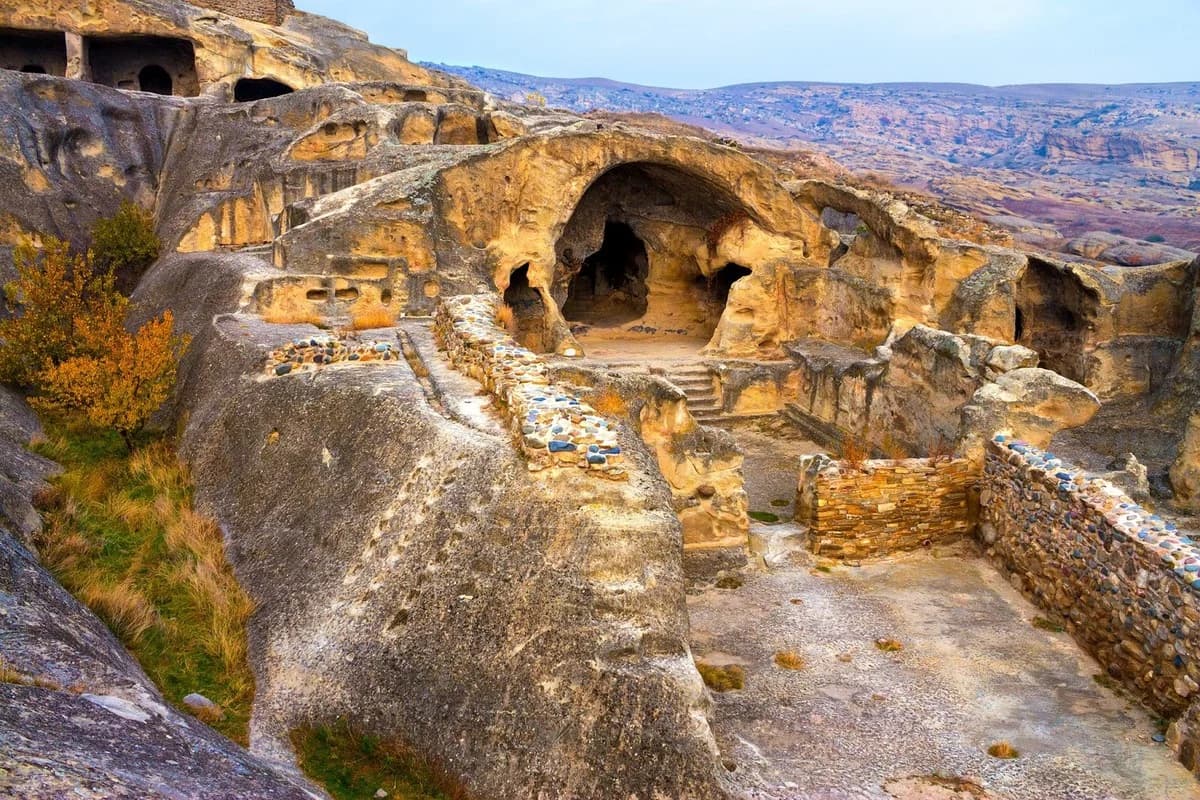 Moderate
- Moderate
Grand Tour of Georgia — 10-Day Private Tour, Mountains to the Black Sea
Private · 10 days
$1,365/person · 4 travellers

Must-See Attractions
Main street
The rock-cut street that climbs through the heart of the town, with drainage channels and steps.
Theatre-like hall
A large hall with a stepped front and carved ceiling, whose original purpose is still debated.
Tamar's Hall
A columned cave hall with a coffered ceiling, traditionally linked to Queen Tamar.
Uplistsulis Eklesia
The 9th–10th-century three-nave brick basilica on the top of the ridge.
Secret tunnel
A long rock-cut passage leading down toward the Mtkvari, used to bring water in a siege.
Nearby
Gori
The Stalin Museum and Gori fortress, about 12–15 km (20 min).
Mtskheta
The UNESCO-listed ancient capital with Svetitskhoveli and Jvari, about 75 km east (1–1.25 h).
Ateni Sioni
A 7th-century church with 11th-century frescoes in a vineyard valley south of Gori, about 25 km (35 min).
Good to know
- Getting there
About 95 km (1.25–1.5 h) from Tbilisi: the E60 motorway toward Gori, then about 12 km on a paved local road through Kvakhvreli.
- Best time
April–June, September–October
- Best time
Spring and autumn are comfortable for walking on the open rock; July and August afternoons are very hot, and in winter the rock can be icy.
- Recommended stay
1–1.5 hours
- Fees
About 15 GEL for adults; an audio guide or a site guide costs extra.
- Hours
Opening hours vary by season; we plan around them.
- Walking
About 1–1.5 hours on smooth, sloping rock and uneven steps with little shade; wear shoes with grip, as the rock is slippery when wet.
- What to bring
Sun hat and water in summer, when the rock gets very hot at midday; come in the morning if you can.
- Heads-up
There are no railings at many edges; keep children close.