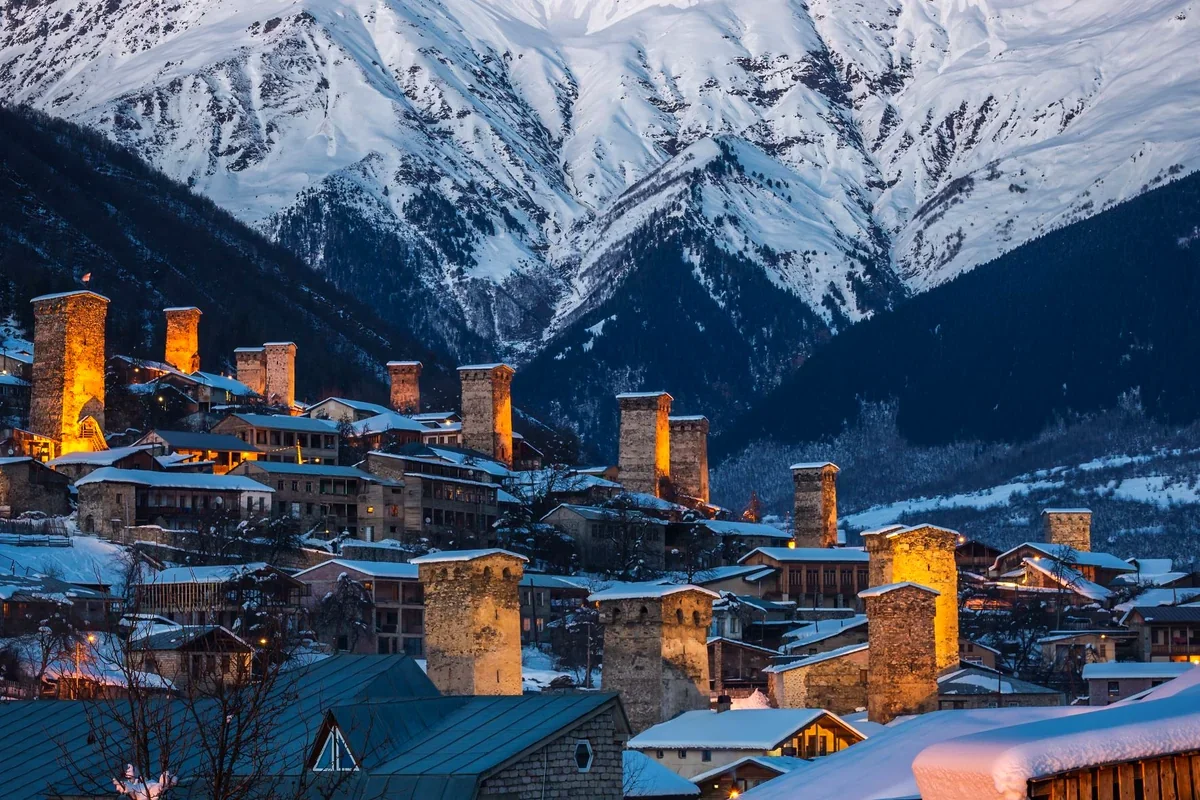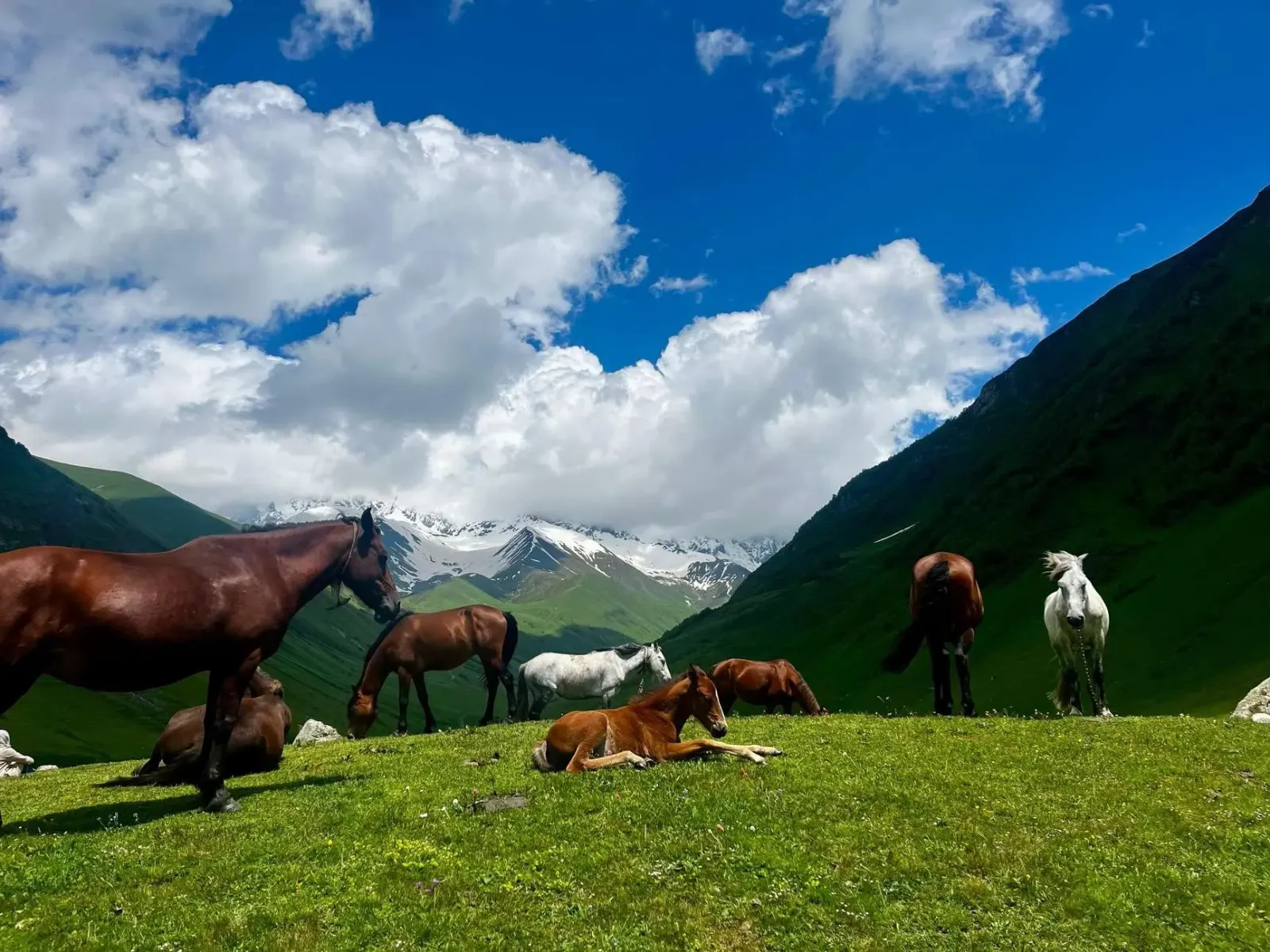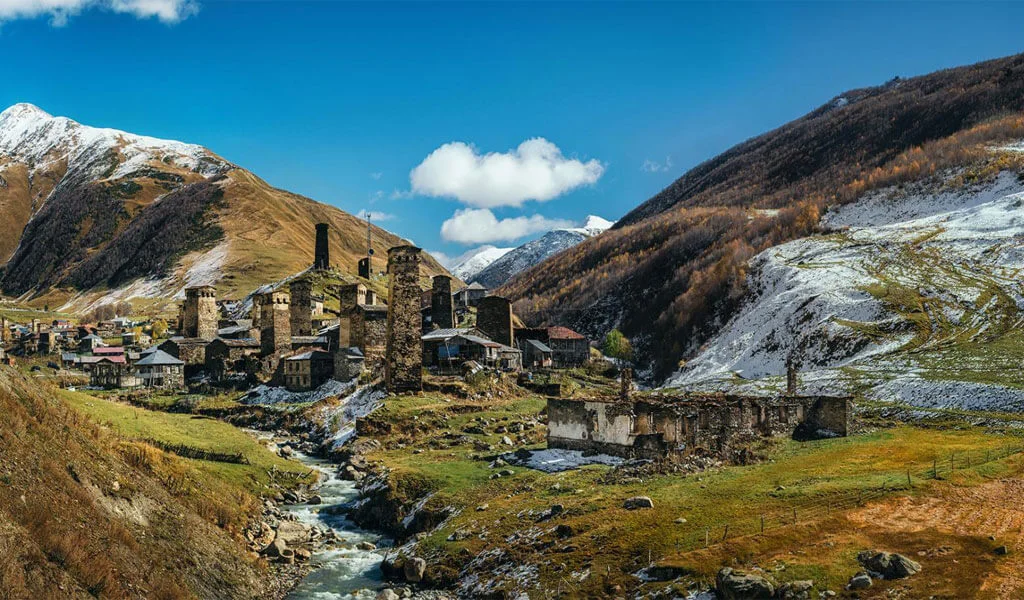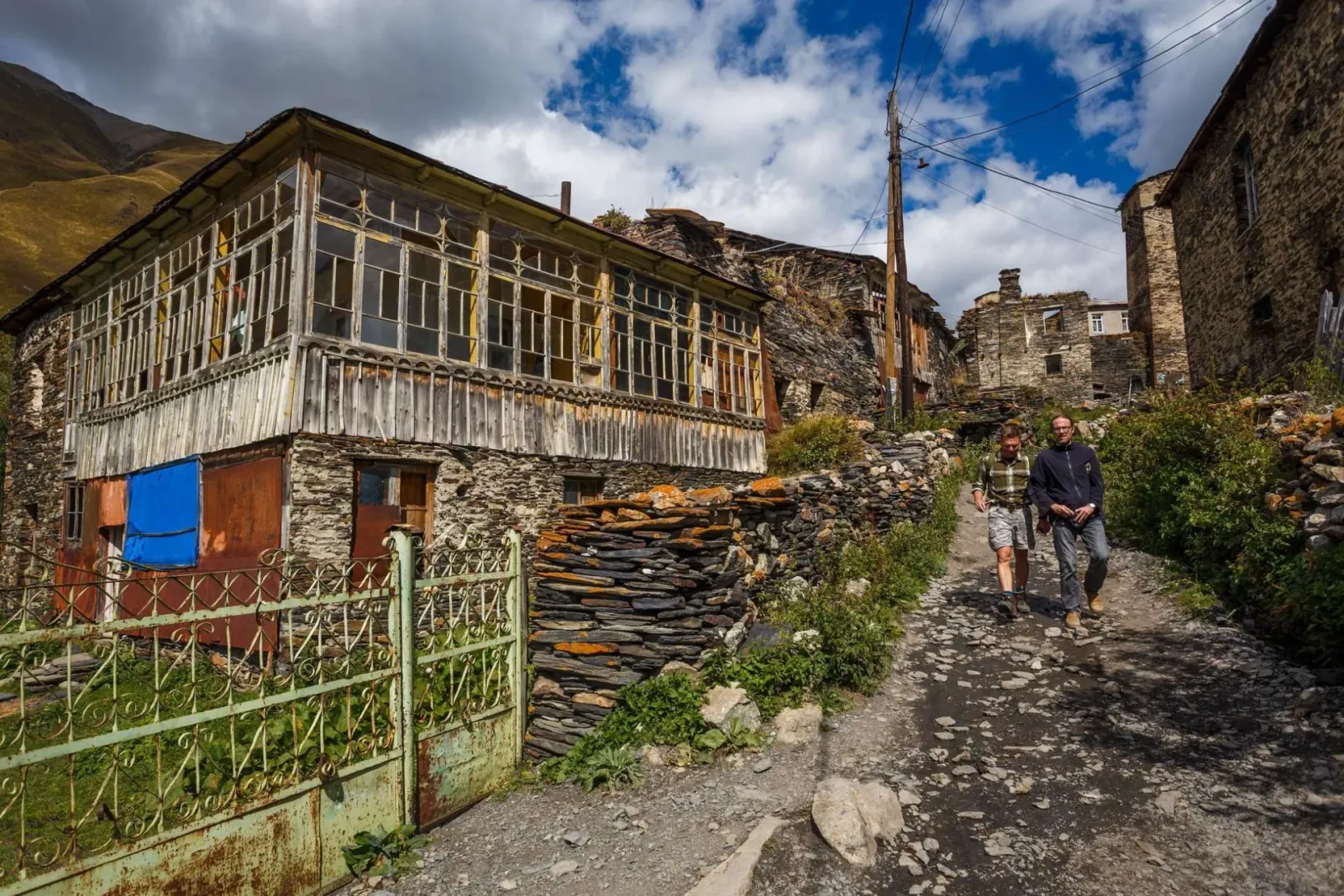
The short answer: the Mestia to Ushguli trek is a four-day, village-to-village walk through Upper Svaneti: about 57 km with roughly 3,100 m of ascent, sleeping in guesthouses in Zhabeshi, Adishi, Iprali (or Khalde) and Ushguli [1]. It is rated moderate, with one hard day that includes a cold river ford and a pass at about 2,650–2,700 m. The trail runs from June to late October; July to September is the most reliable window [1]. You don't need a tent or technical skills, but you do need to be comfortable walking 5–9 hours on consecutive days.
The four stages
Figures are from Caucasus Trekking's route description and rounded [1]; times are walking times at a steady pace.
Day 1: Mestia to Zhabeshi
About 16 km, +760 m / −520 m, 6–7 hours. From Mestia (about 1,400 m) the path climbs over the ridge south of town, with views of Mt Tetnuldi, then drops into the Mulakhi valley and its tower villages [1]. A steady, long first day that lets you find your pace.
Day 2: Zhabeshi to Adishi
About 11 km, +910 m / −530 m, 5–6 hours. A long climb through meadows and past the edge of a ski area, then a steep descent through forest into Adishi [1]. Adishi is a small, remote village with only a handful of guesthouses, so beds need booking in summer [1].
Day 3: Adishi to Iprali over the Chkhutnieri pass
About 19 km, +860 m / −1,070 m, 8–9 hours: the hardest day. Soon after leaving Adishi you reach the Adishi river. It is fed by the glacier above, so it is lowest in the early morning and rises through the day; cross early [1]. The water is fast, very cold and can be above the knee. You can wade (with sandals and poles) or pay a local horseman to carry you across, about 20–25 GEL per person according to recent reports [1].
From the river the trail climbs to the Chkhutnieri pass (also spelled Chkhunderi), at roughly 2,650–2,700 m depending on the source [1], with the Adishi glacier falling down the mountainside opposite. It is the high point of the trek. A long descent follows to Khalde or on to Iprali in the Enguri valley.
Day 4: Iprali to Ushguli
About 12 km, +680 m / −440 m, 4–5 hours. The shortest day. You can follow the valley road, or take a higher path with better views of Shkhara, Georgia's highest mountain [1]. The walk ends among the towers of Ushguli, one of Europe's highest villages. Leave the afternoon free for the Chazhashi towers and Lamaria church.
When to go
- July–September: the most reliable months. The pass is usually snow-free and every guesthouse is open. August is the busiest [1].
- June: possible, but snow can linger near the pass and the river runs high with snowmelt.
- October: clear and quiet, with cold nights; the first snow can come early.
Afternoon thunderstorms are common in July and August, so plan early starts, especially on day 3.
Guesthouses and food
Each night is in a village guesthouse, usually on half board: dinner and breakfast, often with a packed lunch available for the trail [1]. Rooms are simple and sometimes shared. You don't need to carry a tent or stove. Mestia has the last ATMs on the route, so take enough cash for drinks, the horse crossing and small fees; at the end, some families charge a small fee to walk through their land into Ushguli [1].
Do you need a guide?
The trail is well marked and many people walk it independently [1]. A guide helps most on day 3: judging the river, finding the horseman, keeping to the right line if cloud comes down on the pass, and adjusting the day if a storm is forecast. A guide also handles the guesthouse bookings and your bag transfer, which makes the trip much simpler in August.
How fit do you need to be?
Moderately fit. You should be able to walk 15–20 km a day in hills and repeat it the next day. The main challenges are the long descents, which are hard on knees, and the altitude near the pass, which is modest but noticeable. In the weeks before, do a few long hill walks with a day pack. Trekking poles help both on the descents and in the river.
What to pack
- Broken-in walking boots, plus sandals or water shoes for the river.
- Waterproof jacket and trousers, a warm layer, hat and gloves: it is cold on the pass even in summer.
- Sun cream, sunglasses and a hat.
- A day pack of about 25–35 litres if your main bag is sent ahead by car.
- Travel insurance that covers trekking; insurance with at least 30,000 GEL of cover has been mandatory for visitors to Georgia since 1 January 2026.
Getting there and back
Most trekkers reach Mestia by train to Zugdidi and a 3-hour drive, and spend a night there before starting; see our Mestia guide for what to see on that day. From Ushguli, the road over the Zagari Pass to Lentekhi and Kutaisi is usually open only in summer; outside that window you return via Mestia and Zugdidi, which takes longer. For more on the region, read Svaneti trekking and Ushguli's towers.
Trekking Svaneti with us
Our private Mestia to Ushguli trek is seven days: the train and drive to Mestia, four walking days with a mountain guide and half board in guesthouses, your main bag taken by car to Ushguli, then the Zagari Pass to Kutaisi and back to Tbilisi. It runs July–September, with June and October on request. If four days on foot is too much, the private 5-day Svaneti tour covers Mestia and Ushguli by car, with shorter walks to the Chalaadi glacier and the Koruldi lakes. See each tour page for the current price, or plan your own Svaneti route. Nothing to pay now.
Sources
- Caucasus Trekking, "Trek from Mestia to Ushguli": caucasus-trekking.com
- Wander-Lush, "Ushguli to Kutaisi via the Zagari Pass": wander-lush.org
- Wander-Lush, "Tbilisi to Svaneti: how to get to Mestia" (September 2026): wander-lush.org
Last checked: September 2026. River levels, guesthouse prices and the Zagari Pass change every season; check before you go.