Photos: Vyacheslav Argenberg (CC BY 4.0) · Wikimedia Commons
Shatili
Tusheti & Khevsureti · History
About Shatili
Tours Including Shatili
See all 2 tours Moderate
Caucasus 4x4: Tusheti, Khevsureti & Kazbegi — 8-Day Private Expedition
Private · 8 days
$1,095/person · 4 travellers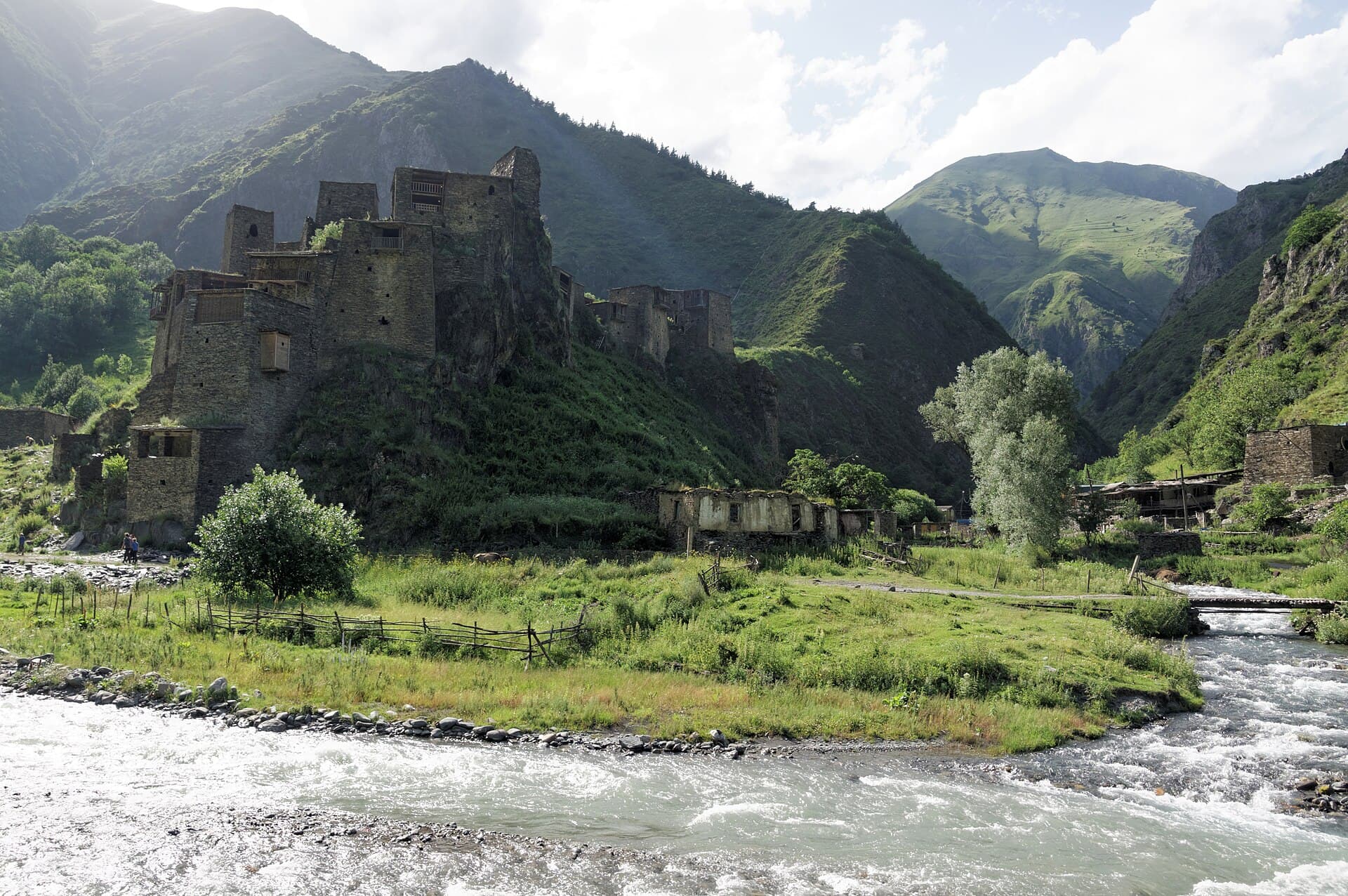 Moderate
Must-See Attractions
The tower complex
Walk the lanes, stairways and wooden balconies between the joined stone houses above the Argun river.
Upper viewpoint
The slope above the village gives the classic view of the towers stacked against the hillside.
Anatori crypts
Stone burial houses on the bank of the Argun a few kilometres downstream, linked to a plague epidemic.
Mutso
A restored fortress village on a crag above the Andaki valley, reached by 4x4 and a steep walk.
Nearby
Mutso
Restored fortress village about 11–12 km from Shatili (40 min by 4x4, then a 20–30 min steep walk).
Datvisjvari pass
The about 2,700 m pass on the road in, with views over the main Caucasus ridge, about 1.5 h south.
Roshka
A Khevsur village below the Chaukhi massif and start of the Abudelauri lakes walk, a side trip near Korsha on the Tbilisi side of the pass.
Good to know
- Getting there
About 150 km and about 4.5–5 h from Tbilisi via Zhinvali, Barisakho and the Datvisjvari pass; paved to about Korsha, then a mountain dirt road that needs a 4x4.
- Best time
Late June–September
- Best time
July to September gives the most reliable pass and the driest road; in June there can still be snow near the top, and autumn weather can close the pass early.
- Recommended stay
1–2 days
- Season/Access
The Datvisjvari pass usually opens between mid-May and mid-June and closes with the first heavy snow in October–December; after Korsha the road is a mountain dirt track that needs a 4x4.
- Documents
Carry your passport in this border zone; walks beyond Mutso toward Ardoti or the Atsunta pass need registration with the Border Police, which we arrange.
- Money
No ATMs; bring enough cash from Tbilisi for guesthouses and extras.
- Heads-up
This is not a day trip from Tbilisi; plan at least one night. Mobile signal is limited.