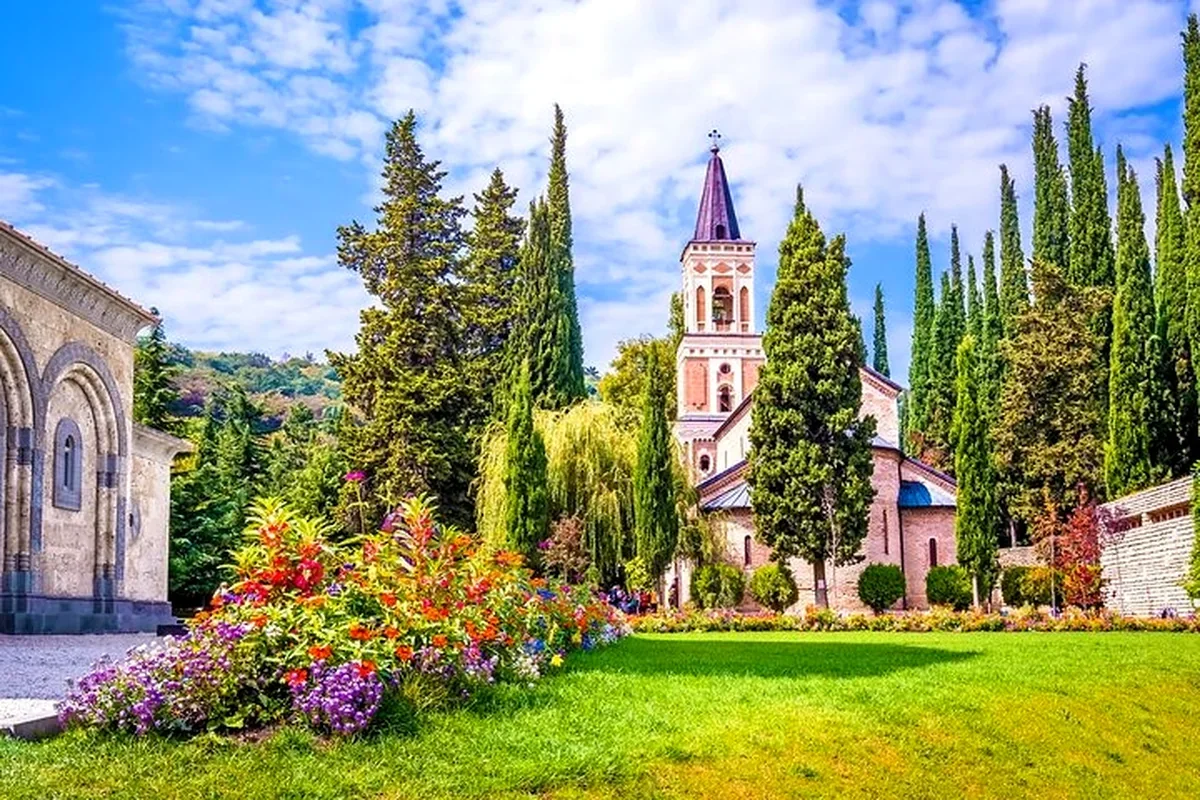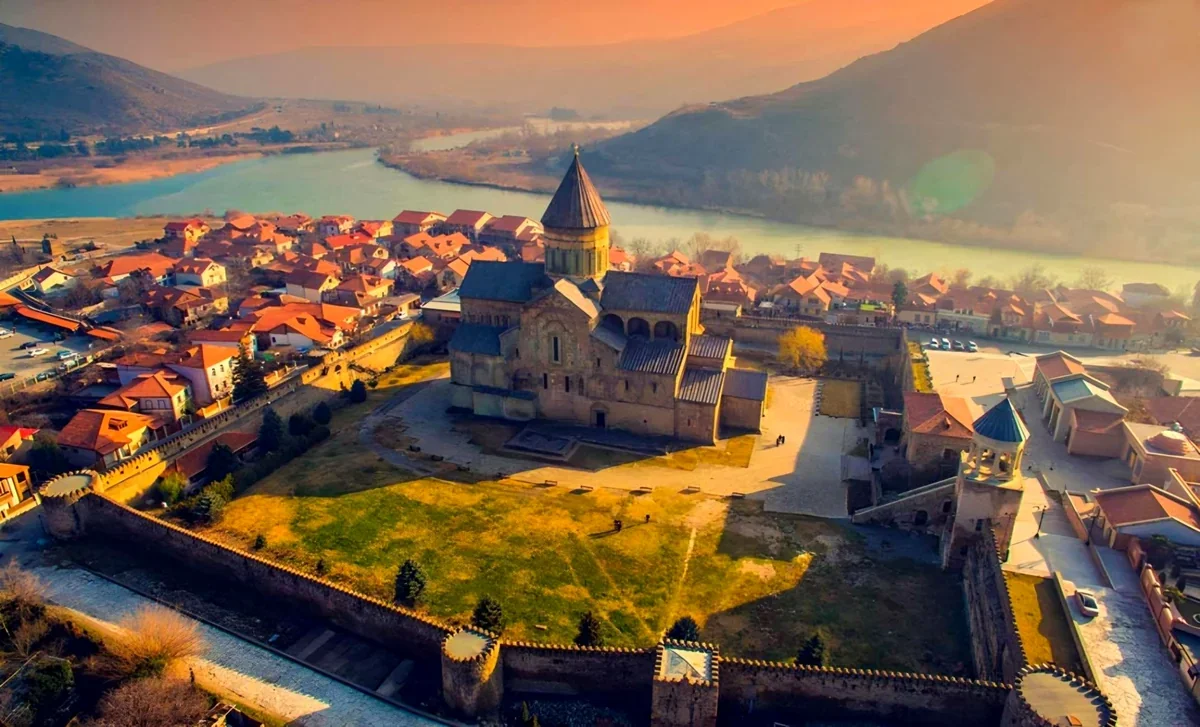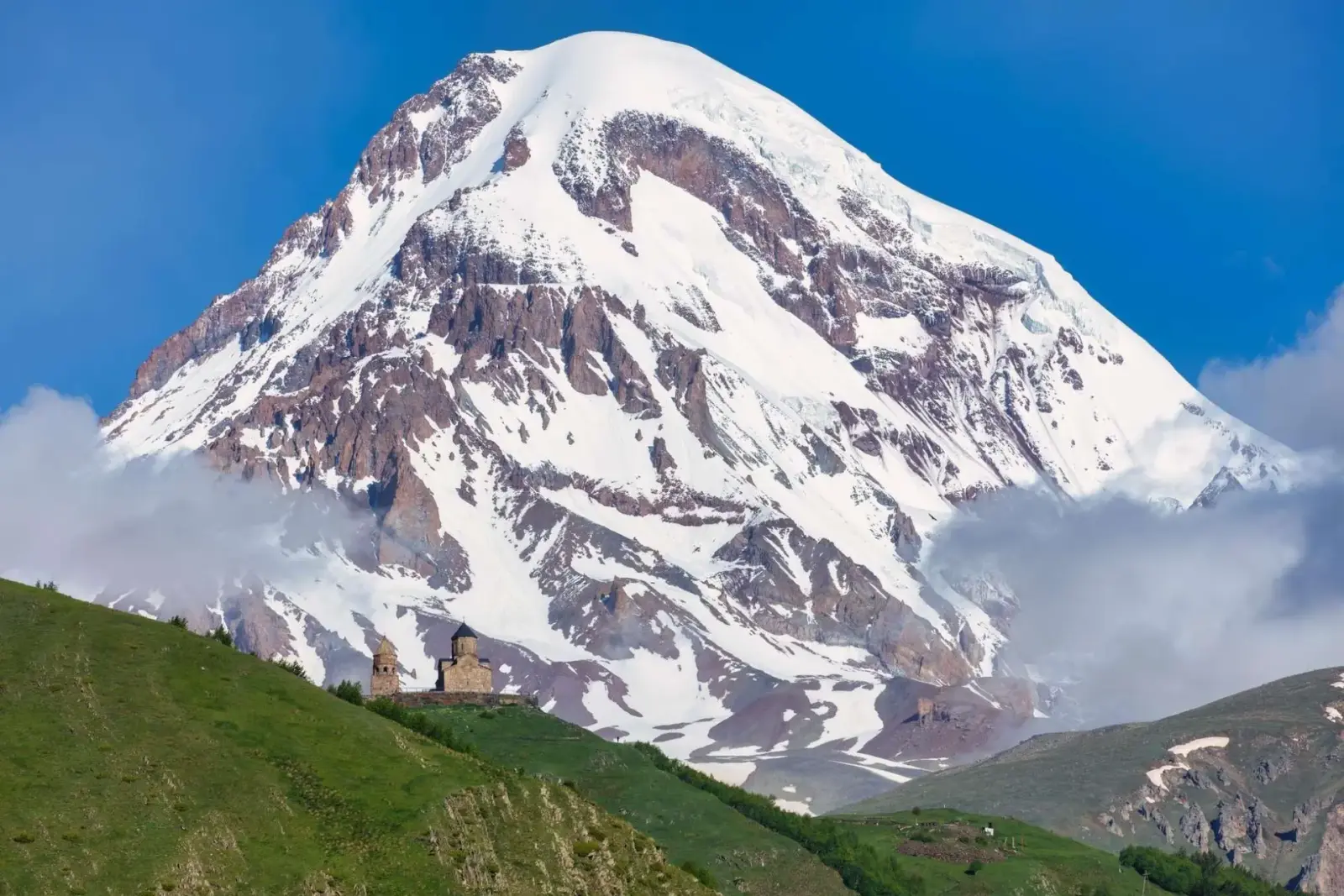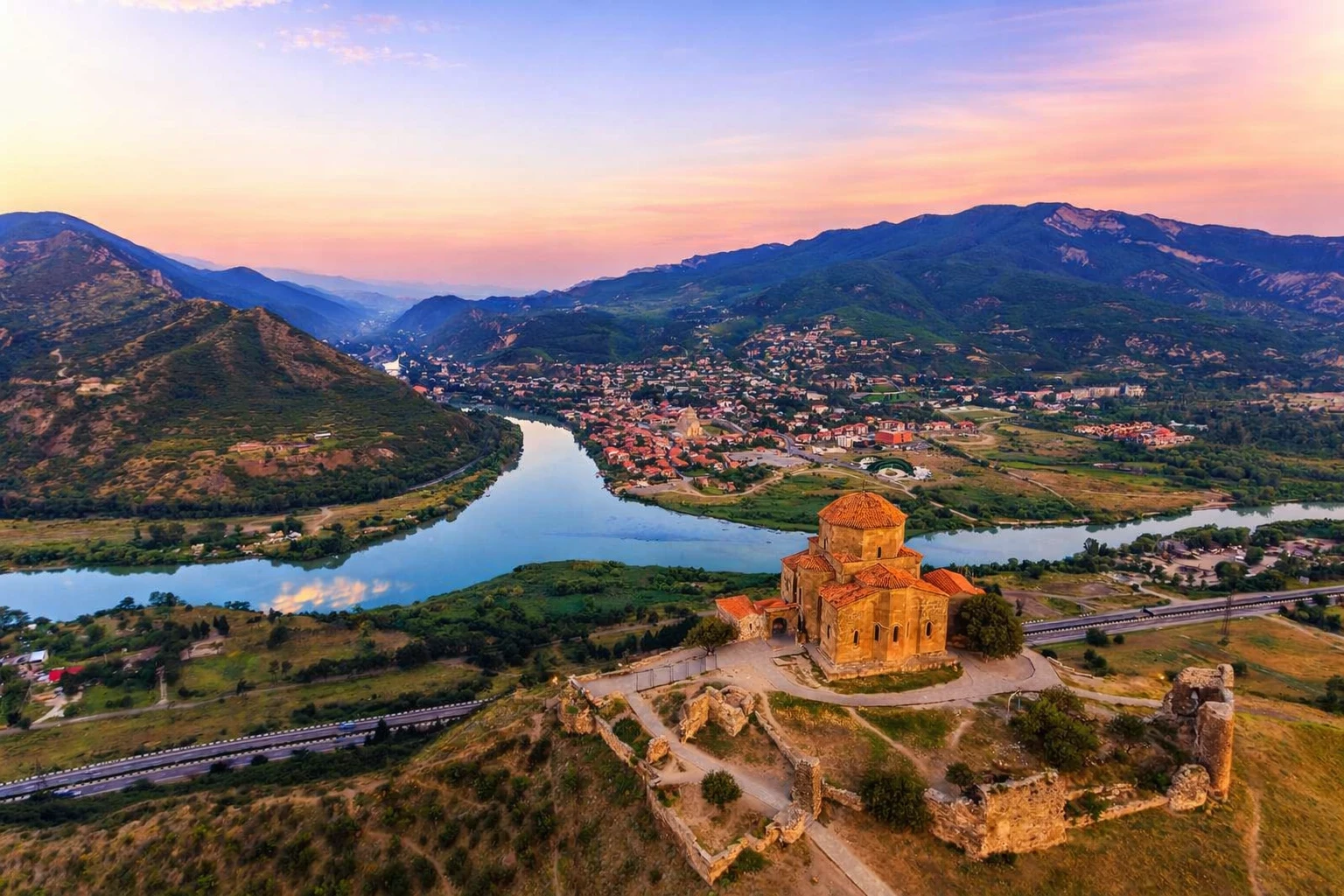
The short answer: Georgian churches are working Orthodox places of worship, not museums, and visitors are welcome if they dress and behave with respect. Everyone covers shoulders and knees. Women cover their hair and wear a skirt or a wrap over trousers; most churches lend headscarves and wrap skirts at the door. Men wear long trousers and take off their hats. Keep your voice down, don't photograph services or people praying, and follow any signs. Monasteries can be stricter than town churches. The details below will keep you out of trouble almost everywhere.
What to wear
Women
- Head covered: a scarf over the hair. Carry a light one in your bag; loaner scarves are usually at the entrance, but not always.
- Skirt below the knee: at many churches women in trousers are expected to put a wrap skirt on over them. Some priests object to tight trousers in particular. Wraps are usually hanging by the door.
- Shoulders and chest covered: no strappy tops or low necklines.
Men
- Long trousers: shorts are not appropriate, and at the major cathedrals, such as Sameba in Tbilisi and Svetitskhoveli in Mtskheta, you may be asked to cover up.
- No hats inside, and no sleeveless vests.
Enforcement varies. A village church may say nothing; an active monastery may turn you away. David Gareja's Lavra, for example, is a working monastery with a strict code: long trousers for men, long skirts and headscarves for women, covered shoulders for everyone. The simplest plan on a touring day is to dress for the strictest place on the route.
How to behave inside
- Quiet: speak softly or not at all, and turn your phone to silent.
- Services: Orthodox worshippers stand through the liturgy; there are usually no pews. If a service is on, stay at the back or along the edges and don't walk through the middle. Weekend mornings and feast days are the busiest times.
- Don't cross in front of people praying. Avoid walking between a worshipper and the icon they are praying to, or in front of the iconostasis, the screen of icons before the altar. The area behind it is for clergy only.
- Food, drink and dogs stay outside.
Photographs
Rules differ from church to church. Many allow photos of the building but not of the interior, the icons or the services; some monasteries ban photography altogether. The safe rules:
- Never photograph during a service.
- Never photograph people praying, priests, monks or nuns without asking.
- No flash on old frescoes.
- Look for a sign, and when in doubt, don't.
Candles and icons
Anyone may light a candle, Orthodox or not, and you don't have to. Thin beeswax candles are sold just inside the door for a small sum or a donation. Place them in the sand trays in front of the icons; a stand with a crucifix on it is where candles are lit in memory of the dead. If you're unsure, watch what people around you do, or ask your guide.
You'll see Georgians cross themselves, bow and kiss the icons. Visitors aren't expected to do any of this, and unless you are Orthodox it is better not to touch or kiss the icons.
Monasteries: monks' and nuns' areas
Many of Georgia's famous sites, such as David Gareja, Bodbe, Alaverdi and Gelati, are also homes to monastic communities. The church is open to visitors, but the living quarters, gardens and some chapels are private, so respect "no entry" signs and closed gates. Speak quietly in the courtyards too.
A few places are closed to women by tradition. The most famous is the Katskhi Pillar in Imereti, a small church on top of a tall rock column: only the monks climb it, and the monastery's rule does not allow women up. At some other men's monasteries, particular chapels or areas may be closed to women; these are usually signposted, and your guide will know them. The main visitor areas of the places on the usual tourist routes, including Jvari, Svetitskhoveli, Gergeti, Bodbe and the David Gareja Lavra, are open to everyone who dresses appropriately.
Cemeteries, springs and feast days
- Holy springs, such as St Nino's spring below Bodbe, are places of prayer; the same dress code applies, and ask before taking photos.
- Feast days (Christmas on 7 January, Easter, and many saints' days) bring big crowds and long services. Worth seeing from the back, but slow for sightseeing.
- Fasting: in Lent many Georgians eat no meat or dairy. It doesn't apply to visitors, but restaurants near monasteries may have simpler menus then.
A quick checklist for a church day
- A light scarf and a wrap skirt or long skirt (women), long trousers (men), something to cover shoulders.
- Shoes you can walk in: many churches are on hilltops or reached by steps.
- Small change for candles.
- Phone on silent; camera away during services.
Mtskheta is the easiest place to practise, and its churches are central to Georgian history; read our guide to Jvari and Svetitskhoveli. For the desert monastery, see our David Gareja guide.
Tours for this: churches and monasteries with us
Our driver-guides carry spare scarves and know each church's customs. The Mtskheta, Jvari and Château Mukhrani half day visits Georgia's two most important churches before a palace-cellar tasting. The private Tbilisi city tour takes in Metekhi, Sioni Cathedral and the Anchiskhati Basilica on a walk through the Old Town. The David Gareja and Sighnaghi day trip combines the Lavra monastery with Bodbe convent. All are private, with your own car and English-speaking driver-guide. See each tour page for the current price, or plan your own route. Nothing to pay now.
Sources
- The Georgian Guide, "Georgian culture and etiquette": thegeorgianguide.com
- EasyGeorgian, "The Georgian Orthodox Church: a guide for visitors": easygeorgian.com
- Georgian Holidays, "Dress code in Orthodox Christian church in Georgia" (PDF): georgianholidays.com
- First Things Foundation, "Learning from the Georgian candles": first-things.org
- Atlas Obscura, "Katskhi Pillar": atlasobscura.com; CNN Travel, "Katskhi pillar": cnn.com
- Wander-Lush, "Tbilisi to David Gareja day trip in 2026": wander-lush.org
Last checked: September 2026. Customs vary between churches; when a priest or a sign asks otherwise, follow it.