The short answer: a week is the right length for wine tours in Georgia (the country in the South Caucasus, not the US state). It gives you three nights in Kakheti, the main wine region, split between Telavi and Sighnaghi, plus a palace cellar in Kartli near Tbilisi, an evening in Tbilisi's natural-wine bars and a day in Kvemo Kartli, south of the capital, where archaeologists found the oldest known traces of grape wine. No single drive needs to be longer than about 2 hours, and one or two tastings a day is plenty. Here is the route day by day, with what each kind of cellar is like.
First, the kinds of cellar you'll visit
- Family marani. A home cellar with qvevri set into the floor, where the family pours its own wine at the kitchen table, often with bread, cheese and churchkhela. The most personal tastings, and they need someone local to arrange them.
- Qvevri makers. Workshops where the big clay jars are still made by hand. Qvevri winemaking has been on UNESCO's Intangible Heritage list since 2013.
- Natural-wine producers. Small wineries working with qvevri and little or no intervention, many of them known internationally. Sighnaghi has several.
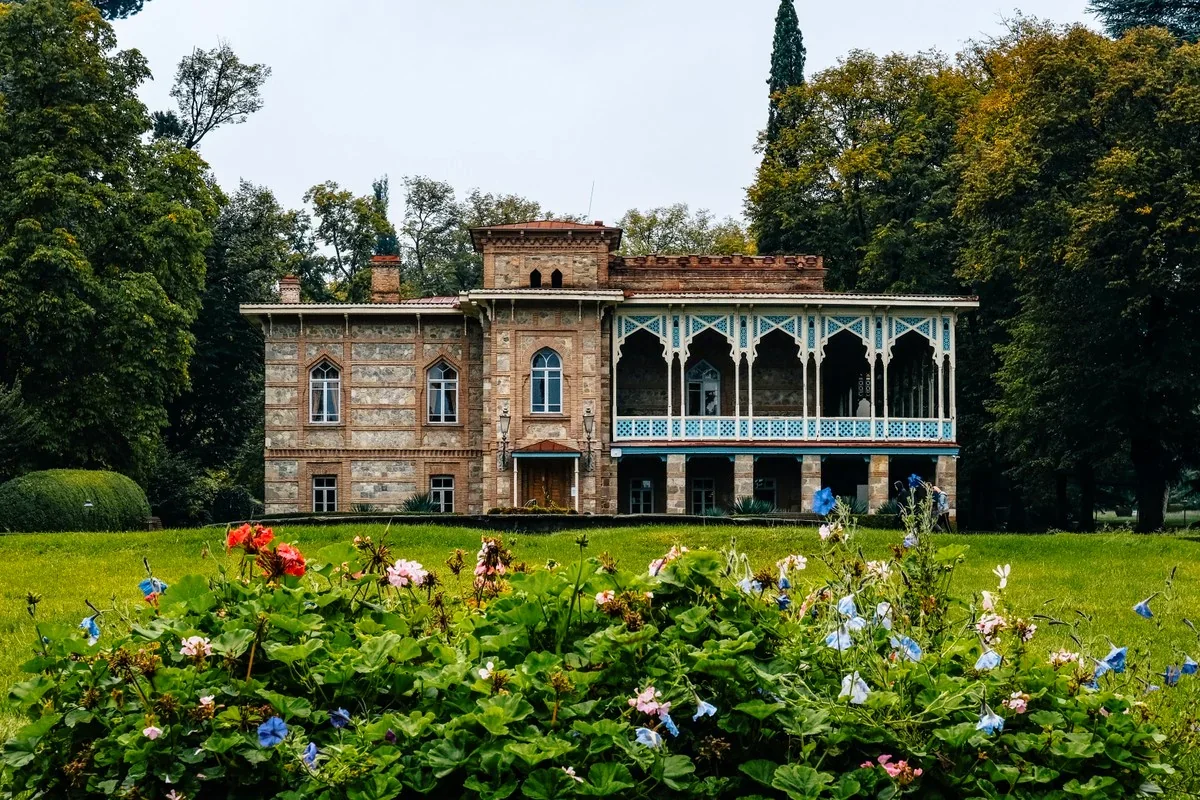
- Historic estates. Tsinandali, the Chavchavadze family home near Telavi, and Château Mukhrani in Kartli, with museums, parks and set tastings.
- Large wineries. The Khareba tunnel cellar at Kvareli, cut 7.7 km into the rock, is one. Busy with groups, but an easy add-on.
If you're new to the grapes and the amber wines, read our guide to Georgian grapes and amber wine before you go. One thing surprises most visitors: some of Georgia's most famous wines are semi-sweet, such as Kindzmarauli and Akhasheni. If you prefer dry, ask for mshrali. See our beginner's guide to Georgian wine.
The route, day by day
Day 1: Arrival and Château Mukhrani
Mukhrani is about 45 minutes west of Tbilisi, in Kartli. The estate has a restored palace and cellars, with guided tours and tastings, and makes a gentle first afternoon: on our tour you arrive at about 15:00 and allow 1.5–2 hours. Château Mukhrani was the home of Prince Ivane Mukhranbatoni, who brought French winemaking ideas back to Georgia and released his first vintage in 1878. Today the estate's wines come from both Georgian and French grape varieties. A welcome dinner in Tbilisi follows at 19:30. If you land after midday, Mukhrani moves to the free afternoon of day 5.
Day 2: Qvevri makers and Tsinandali
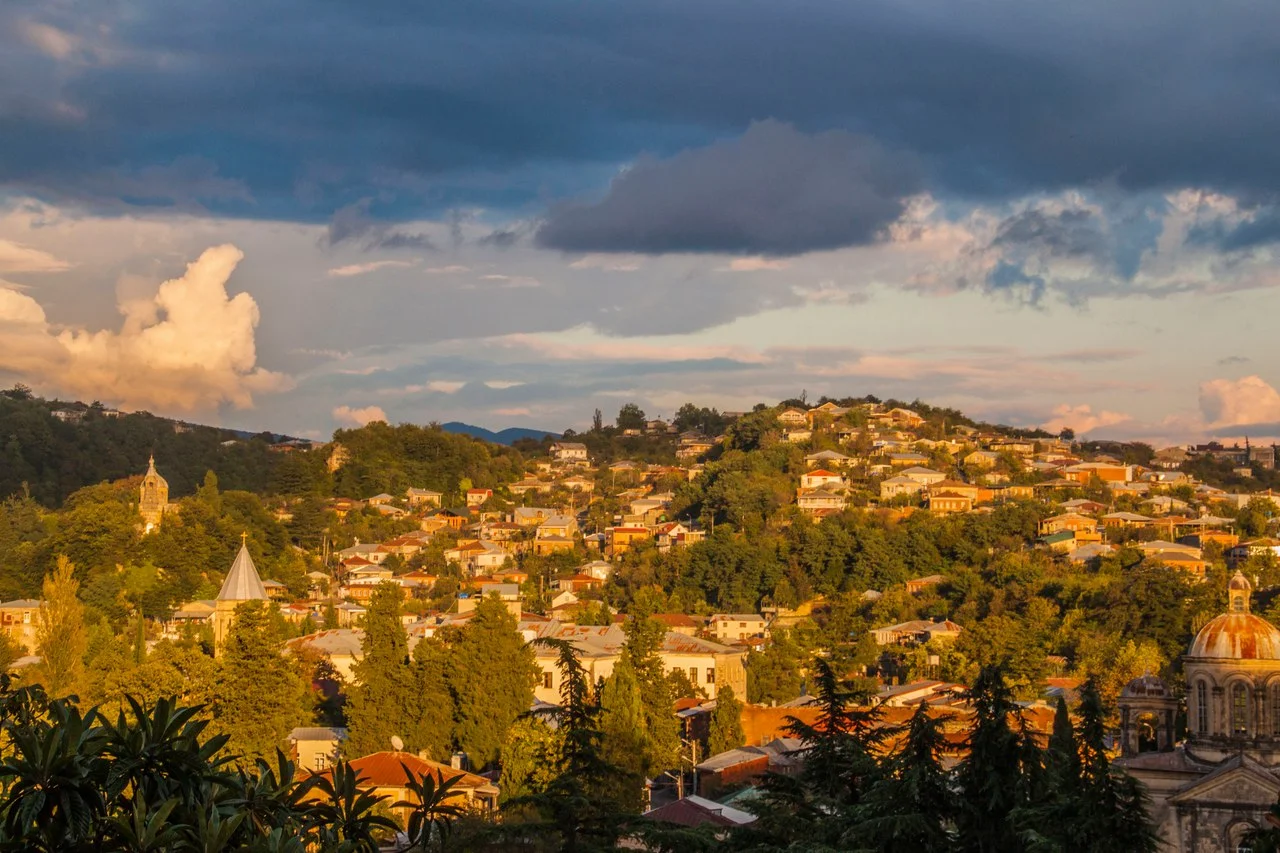
Over the Gombori pass to Kakheti, about 2 hours to Telavi. The pass tops out at 1,620 m, and the Kakheti side has many hairpins through beech and oak forest, so sit in front if you get carsick. At Vardisubani, just outside Telavi, the Kbilashvili family workshop is one of the leading qvevri makers in Georgia, and you see the jars being built by hand. In the afternoon, Tsinandali, about 10 km from Telavi: the house-museum, the park and a tasting, which take 1.5–2 hours together. The estate's enoteca holds bottles going back to 1814, the famous one an 1841 Saperavi. In early September the Tsinandali Festival of classical music may close parts of the park. Night in Telavi.
Day 3: Twins, Alaverdi and a family supra
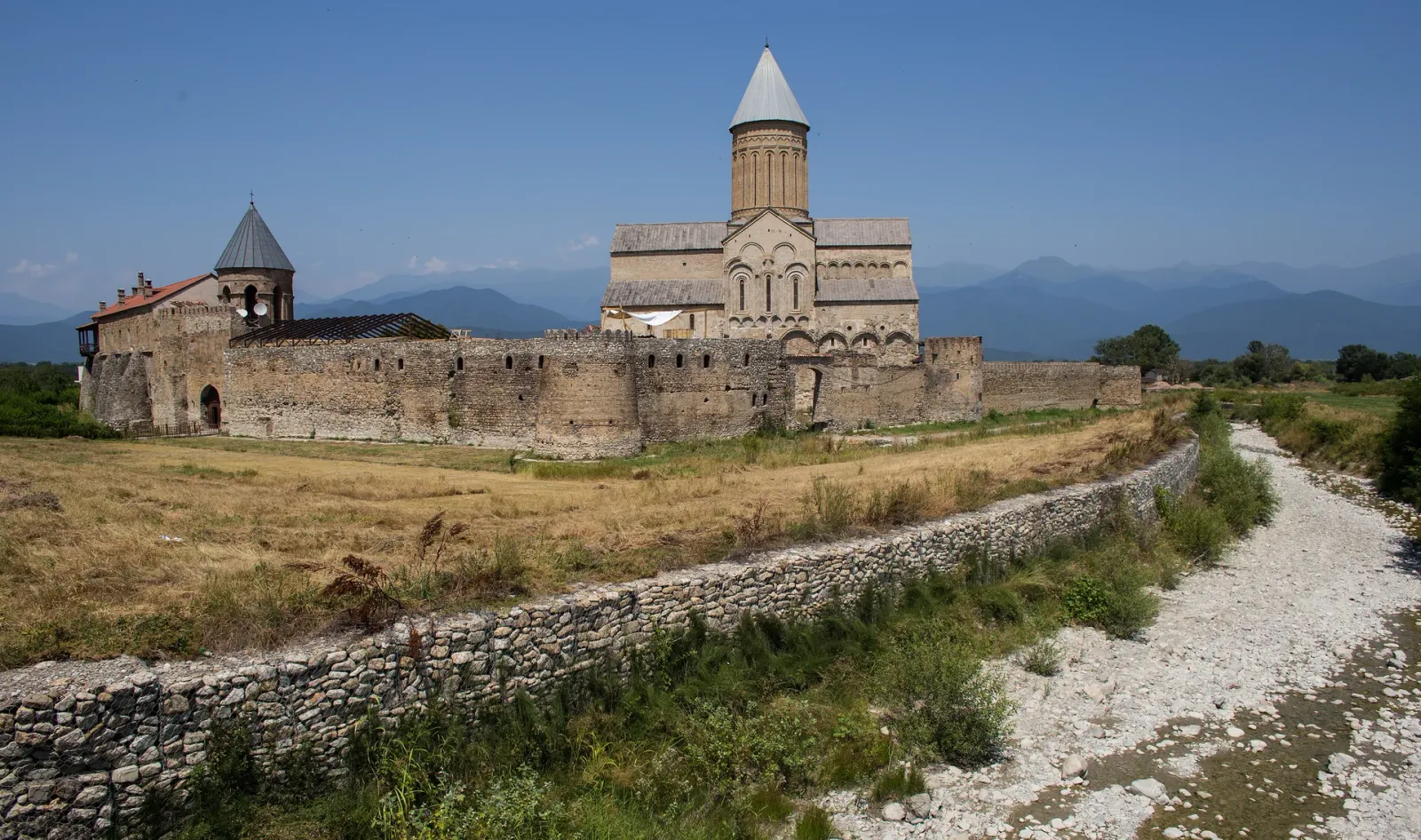
Short drives around Telavi. At Napareuli, the Twins cellar has a qvevri museum that explains the method from clay to cup. Then Alaverdi Cathedral, whose monastery also makes wine. It stands about 20 km from Telavi, an 11th-century church about 50 m tall, and the monks sell their qvevri wine on site. Cover shoulders and knees, and women cover their hair. The cathedral is crowded around 27 September, the feast of Alaverdoba.
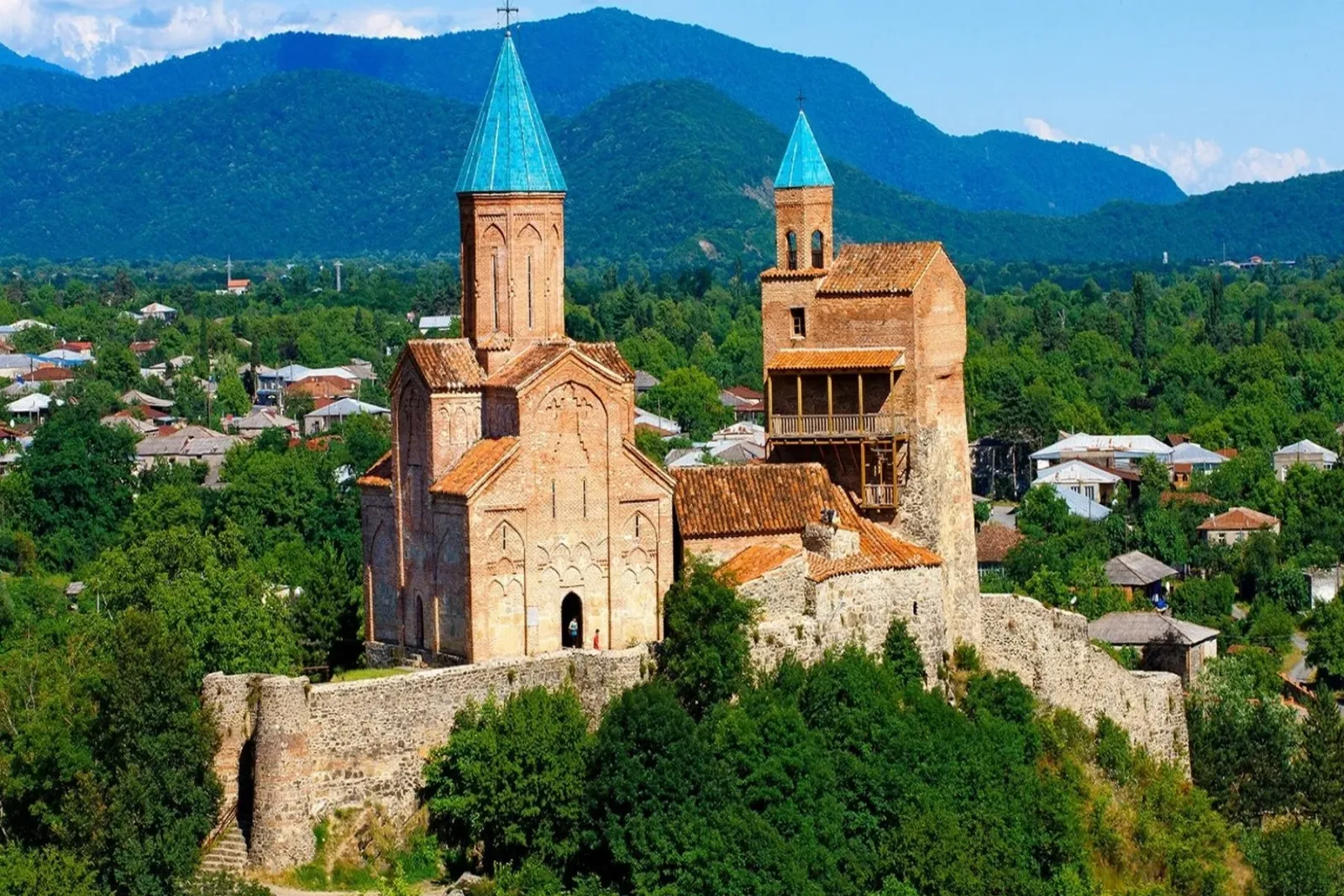
The afternoon is free (the Khareba tunnel is optional), and in the evening a family supra with a tamada, the toastmaster who leads a Georgian feast. For the free hours, Gremi, the 16th-century royal citadel, is about 25 minutes from Telavi, and with Nekresi and the tunnel it fills half a day. See our guides to Telavi, Alaverdi and Gremi and to Kvareli and Nekresi.
Day 4: Sighnaghi's natural-wine cellars
About 1.5 hours to Sighnaghi via Gurjaani, leaving at about 10:00. Lunch and a tasting at Pheasant's Tears at about 12:30, then Okro's Wines at about 16:00, a family tasting room with a terrace over the Alazani Valley. In the gap, walk a section of the walls of the town King Erekle II fortified in 1762, or see the Niko Pirosmani paintings in the Sighnaghi Museum. The town is hilly and cobbled, so wear flat shoes. Sunset from the town walls. Night in Sighnaghi. More in our Sighnaghi and Bodbe guide.
Day 5: Bodbe and Tbilisi's wine bars
A morning visit to Bodbe convent, where St Nino is buried, then about 2 hours back to Tbilisi. The convent is 2 km from Sighnaghi, with the same dress code as Alaverdi. The church and gardens take about 30 minutes; with the steep steps down to St Nino's Spring, allow 1–1.5 hours. After a free afternoon, your guide takes you to two of the city's natural-wine bars at about 19:00, which pour small producers from all over the country.
Day 6: Kvemo Kartli wine hills
South of Tbilisi into Kvemo Kartli, about 3 hours of driving in total. This is where the oldest known traces of grape wine were found: residue in Neolithic pottery jars from two village sites, Gadachrili Gora and Shulaveris Gora, about 50 km south of the city, published in 2017. Note the detail that often gets lost: the finds are from Kvemo Kartli, not Kakheti, and from pottery, not qvevri. The day includes Bolnisi Sioni, built in 478–493 and the oldest standing church in Georgia, with some of the oldest inscriptions in the Georgian alphabet. You leave at about 09:30 and reach the church, about 70 km from Tbilisi, by about 10:45. It needs about an hour, entry is free, and vine scrolls are carved on its stone capitals. Bolnisi was also a German settlers' colony, founded by Swabian families in 1818, who grew vines here until their deportation in 1941, and small wineries still work in their old cellars. Lunch and a tasting at a family cellar at about 12:30, and back in Tbilisi by about 16:00.
Day 7: Departure
Airport transfer at any hour.
For a wine region in the mountains, a 2-day extension to Racha, home of the semi-sweet Khvanchkara, can be added on request. It runs June to October, and Racha is roughly 5 hours from Tbilisi; our Racha guide has the roads and the wineries.
Where to sleep
Three nights are in Tbilisi (1, 5 and 6). Telavi takes nights 2 and 3: it is a working town with family guesthouses, often with their own cellar, and small and mid-range hotels, and nearby villages have wine-estate hotels such as the Tsinandali Estate and Schuchmann Wines Château in Kisiskhevi. Night 4 is in Sighnaghi, in a family guesthouse or a small hotel. Ask for a room with a terrace over the Alazani Valley; weekends in September and October are busy.
What to swap
With a morning to spare on day 1, add Mtskheta, about 30 minutes from Mukhrani. For fewer tastings, replace a cellar with Ikalto, the 6th-century monastery and ruined academy about 10 km from Telavi. On day 6, Dmanisi, where 1.8-million-year-old human fossils were found, is about 45 minutes from Bolnisi Sioni; its museum-reserve is closed on Mondays. And from mid-September to October we can add grape picking with a family: keep one or two days spare so it can move, and see our guide to rtveli.
When to go
- Harvest (rtveli): about mid-September to October in Kakheti. The most atmospheric time, and the busiest; picking days depend on grapes and weather, so they're confirmed a few days ahead. Rooms in Sighnaghi and Telavi fill up, so book early.
- May to September: green vines and long evenings; July and August are hot in the Alazani Valley, often 30–35 °C, so see churches in the morning.
- Winter: bare vines, but the cellars, food and supra are the same, and it is quiet. In snow the Gombori pass may be swapped for the Sagarejo road. Snow and ice are common on the pass from December to March, and the lower road adds about 40 minutes.
How much tasting is too much?
Georgian hospitality is generous, and a family marani rarely stops at one glass; chacha, the grape spirit, usually follows. One or two tastings a day is a good rhythm. Spit if you want to; nobody minds. On our tours the driver-guide does not drink, so you can taste freely, and if you'd prefer fewer tastings and more churches or walks, the route bends. At the supra you drink after each toast, and for later toasts a sip is enough; our guide to the supra, tamada and toasts explains the order.
Taking wine home
Bottles must travel in checked luggage, not in the cabin. Wrap them well (protective bottle sleeves are sold in Tbilisi), and check both your airline's allowance and your home country's duty-free limit for alcohol before you buy a case. Cellar-door prices are often lower than in Tbilisi shops, so it's worth buying where you taste.
Can you drive the route yourself?
You can, but not while tasting. The legal blood alcohol limit in Georgia is 0.03%, so someone in the car has to stay off the wine or you need a driver; see our guide to driving in Georgia. Most family cellars have no website or sign on the gate, so they need arranging by phone. If you plan it alone, the palace tour at Château Mukhrani costs about 15 GEL and entry to Tsinandali about 10 GEL, with tastings extra at both. Alaverdi, Bodbe and Bolnisi Sioni are free.
Our wine tours in Georgia
The Georgia wine tour, 7 days is the route above, private, with hotels, breakfasts, the tastings, the supra and the Kvemo Kartli cellar lunch included. With less time, the 3-day private Kakheti wine tour covers Sighnaghi, Tsinandali, a qvevri maker and a family supra, and the Mtskheta and Château Mukhrani half day pairs Georgia's old capital with a palace-cellar tasting close to Tbilisi. For planning a single day in the east, see our guide to Kakheti wine day tours.
All three are private, in a sedan for 1–3 travellers or a minivan for 4–8, with an English-speaking driver-guide (Russian-speaking on request for the 7-day tour). Not in the 7-day price:
- Lunches and dinners not listed as included, about 30–50 GEL per person per meal
- The Khareba tunnel, if you choose it (the price depends on the tasting)
- Bottles you buy, flights and optional tips
- The Racha extension, quoted on request, and the single room supplement
- Travel insurance, mandatory for visitors to Georgia since 1 January 2026, with at least 30,000 GEL of cover
See each tour page for the current price, or build your own wine route and we send a private itinerary with a price. Nothing to pay now.
Sources
- McGovern et al., "Early Neolithic wine of Georgia in the South Caucasus", PNAS, November 2017: pnas.org
- UNESCO, "Ancient Georgian traditional Qvevri wine-making method" (2013): ich.unesco.org
- Tsinandali Estate museum: tsinandali.ge
- Winery Khareba, Kvareli wine cave: winery-khareba.com
- Wikipedia, "Bolnisi Sioni": en.wikipedia.org; "Bolnisi": en.wikipedia.org
- TripBox, "Wine Tours in Kakheti 2026": tripbox.ge
- Wikipedia, "Alaverdi Monastery": en.wikipedia.org
- Wikipedia, "Gremi": en.wikipedia.org
- Wikipedia, "Sighnaghi": en.wikipedia.org
- Wikipedia, "Bodbe Monastery": en.wikipedia.org
- Wikipedia, "Dmanisi": en.wikipedia.org
- GeorgianMuseums.ge, Dmanisi Historical and Architectural Museum-Reserve: georgianmuseums.ge
- Wander-Lush, "Renting a Car in Tbilisi and Driving in Georgia in 2026": wander-lush.org
Last checked: September 2026. Cellar opening hours vary; we book every tasting in advance.