The short answer: you don't need to know much to enjoy wine in Georgia. Decide first whether you want dry or semi-sweet, because Georgia makes a lot of both and menus don't always make it obvious. Then choose between a red (usually Saperavi), a crisp white (often Rkatsiteli), and an amber wine, a white made with its skins in a clay qvevri. The house wine, often poured from a jug, is cheap and usually honest. Here is how to read a list, order, and taste without feeling lost.
First: dry or semi-sweet?
This is the question that surprises most visitors. Some of Georgia's most famous wines are naturally semi-sweet: Kindzmarauli and Akhasheni from Kakheti, and Khvanchkara from Racha. They are soft, fruity reds, popular at the table and as gifts. If you prefer dry wine, say so. The Georgian word is mshrali (dry); most waiters in tourist areas also understand "dry" and "semi-sweet".
The sweetness is natural: fermentation stops before all the sugar has turned to alcohol, which leaves a soft, fruity wine. It isn't only a red style, either. Tvishi, from Lechkhumi in the mountains north of Kutaisi, is a fragrant semi-sweet white made from Tsolikouri.
Names that usually mean dry: Mukuzani (a red from Saperavi), Tsinandali (a white, mainly Rkatsiteli), Napareuli, and most bottles that simply name the grape. If in doubt, ask before you order.
The three styles
- Red: almost always Saperavi, a grape with red flesh as well as red skin, giving dark, full wines with fresh acidity.
- White (European style): made in steel tanks, crisp and light. Rkatsiteli, Mtsvane and, from the west, Tsolikouri and Tsitska.
- Amber: white grapes fermented with their skins, often in qvevri, the clay vessels buried in the ground. Deep gold, with some tannin and flavours of dried fruit, tea and nuts. Outside Georgia it is called orange wine. Qvevri winemaking has been on UNESCO's Intangible Heritage list since 2013.
Try at least one amber wine on your trip, even if you're not sure you'll like it. Some are gentle, some are bold; a Kakhetian Rkatsiteli or Kisi is the classic, and an Imeretian one is lighter. Our guide to Georgian grapes and amber wine goes into more detail, and Imereti wine explains the lighter western style.
Rkatsiteli is a useful grape to learn first, because it shows what the method does. It is the most widely planted Georgian grape: crisp and apple-like from a steel tank, firm and savoury as an amber wine. Many wineries use steel and oak as well as qvevri, so ask which one you're drinking.
Reading a wine list
- Place name first (Mukuzani, Tsinandali, Kindzmarauli): these are appellations and tell you the grape and the style.
- Grape name (Saperavi, Rkatsiteli, Kisi): a varietal wine. Spellings vary, so Mtsvane may appear as Mtsvani.
- "Qvevri", "amber" or "Kakhetian" on a white: made with skin contact.
- Dry, semi-dry, semi-sweet, sweet: read this line carefully.
Georgia has 29 registered wine appellations, so you won't recognise every name. Kakheti makes most of the country's wine, and Kartli, Imereti and Racha make smaller amounts. As a rough map, look to Kartli for sparkling wine, Imereti for fresher whites and Racha-Lechkhumi for semi-sweet bottles. Our guide to wine regions beyond Kakheti covers each one.
Glass, jug or bottle?
In ordinary Georgian restaurants, the house wine is usually local wine poured from a jug or carafe, by the glass or by volume. Wander-Lush reports house wine at about 3–5 GEL a glass; bottles cost more, and prices in smart Tbilisi restaurants and wine bars are higher again. House wine is often home-made or from a nearby cellar, and quality varies from very good to rough. Ask whether it is dry, and try a glass before ordering a jug.
Bottles are the way to try a specific producer. In natural-wine bars in Tbilisi, staff are usually happy to pour a taste and explain; tell them what you normally drink at home and let them suggest.
For a sense of the bill, our guide to trip costs puts dinner for two with wine in a mid-range restaurant at about 80–130 GEL.
Where to taste Georgian wine for the first time
A tasting can mean very different things, so choose the setting first. Two or three in a day is plenty; after that the wines blur together.
- A wine bar in Tbilisi: no drive at all, and the likeliest place to meet small-production grapes from the Black Sea side, such as Chkhaveri from Guria and Ojaleshi from Samegrelo.
- Château Mukhrani, Kartli: about 45 km from Tbilisi, 45–55 minutes by road. The palace and cellar tour with a tasting takes 1.5–2 hours, or half a day with lunch. The palace tour costs about 15 GEL and tastings are priced separately; reserve ahead, especially at weekends.
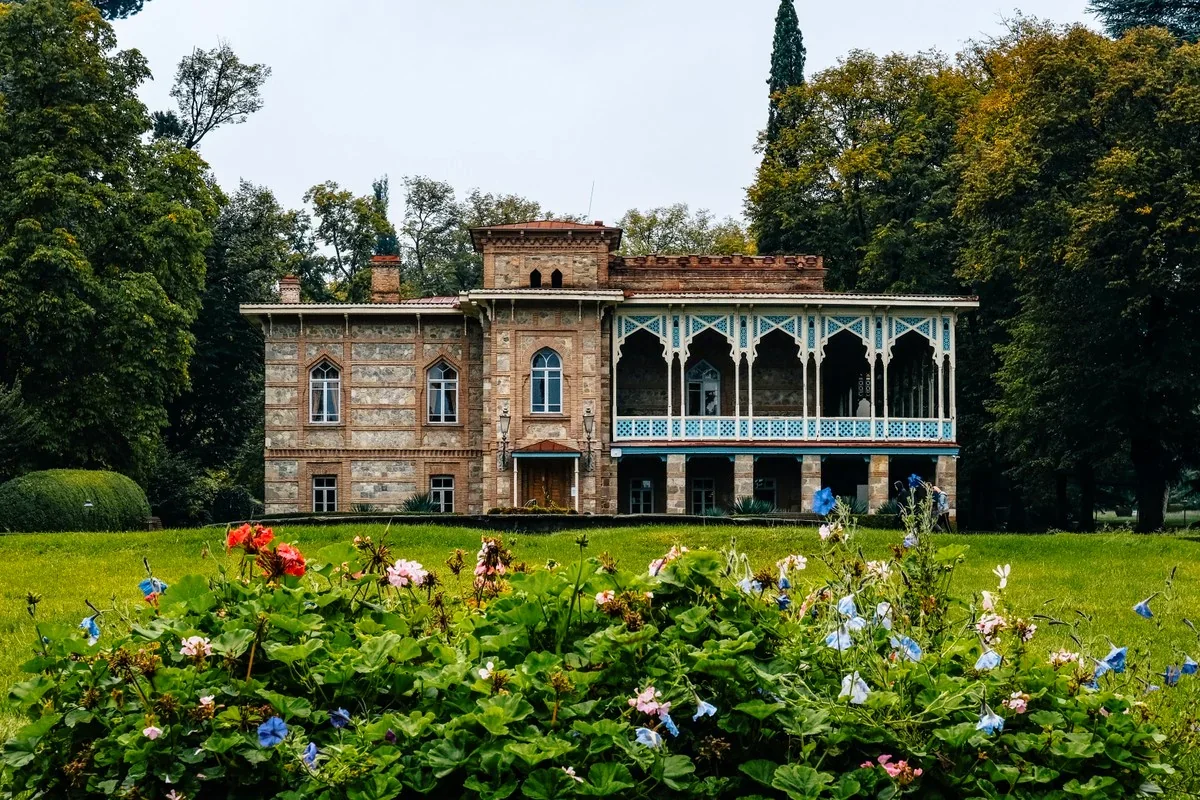
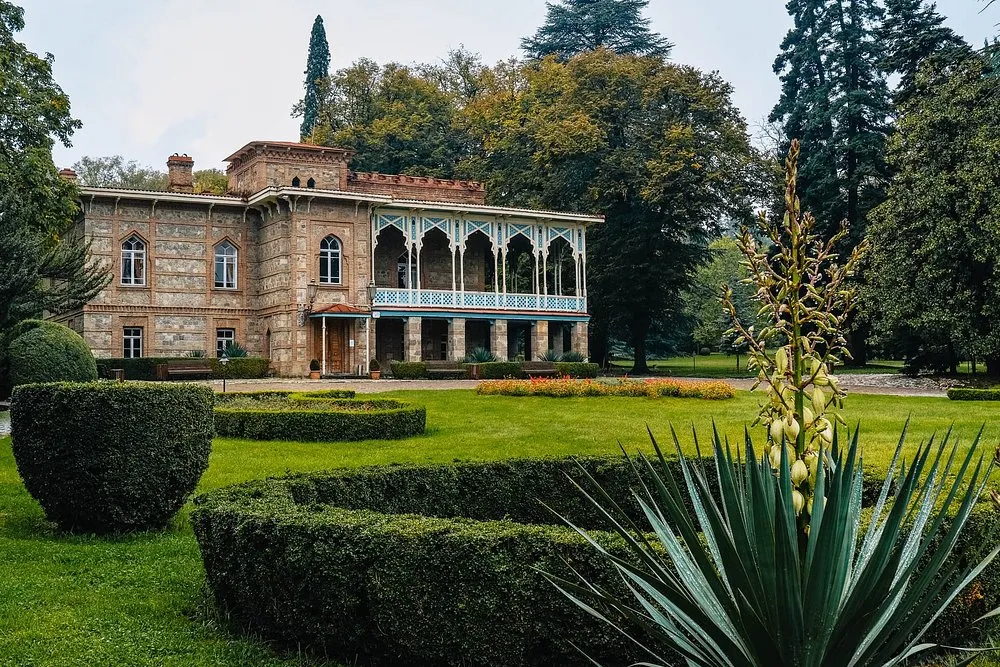
- The Tsinandali estate, Kakheti: about 2 hours from Tbilisi over the Gombori pass. Tastings here are structured, and one usually includes a Tsinandali white, a qvevri wine, Saperavi and chacha, a neat lesson in the styles above. The enoteca keeps bottles from 1814; the famous one is an 1841 Saperavi.
- A small natural-wine cellar: expect qvevri wine with little or nothing added. In Sighnaghi, try Okro's Wines, a family tasting room whose terrace looks over the Alazani Valley, or Pheasant's Tears, a natural-wine producer with its own restaurant.
- A family marani: you usually sit at the kitchen table with bread, cheese and churchkhela and drink what the family made in its own qvevri. No tasting is more personal, but most families have neither a website nor a sign on the gate, so it takes a guide to phone ahead.
- A large winery: around Kvareli, big producers such as Khareba, with its tunnel cellar, are geared to coach groups, with tours and tasting packages. You know what you'll get, but it is less personal.
Allow about 30–60 GEL per person for a tasting of 5–7 wines. Kakheti works as a day trip from Tbilisi, though combining Sighnaghi and Tsinandali means about 280 km and 5 hours of driving. A night in Sighnaghi or Telavi takes the rush out of it, and our guide to Kakheti wine tours and qvevri compares the two sides of the region.
When to go
Cellars are open all year, so you don't need to plan around the harvest. If you would like to see it, Rtveli, the grape harvest, runs in Kakheti from late August into October; in 2026 it officially began on 10 September, and western regions such as Imereti and Racha pick later. Aim for mid-September to early October and book rooms early, because harvest weekends are busy in Sighnaghi and Telavi. In winter the vines are bare, but the cellars and tastings carry on and you'll have them largely to yourself.
How to taste in a cellar
- Look: hold the glass against something white. Amber wines range from pale gold to deep orange.
- Smell: swirl and sniff. Qvevri wines often smell of dried apricot, walnut, black tea or honey.
- Taste: notice the acidity (does your mouth water?) and, in amber and red wines, the tannin (does it dry your gums?).
- Ask: which grape, how long on the skins, how long in the qvevri. Winemakers love the questions.
- Pace yourself: family tastings can include five or six wines and then chacha, the grape spirit. It is fine to sip and leave the rest.
Cellar words worth knowing
Four words come up again and again. A qvevri is the egg-shaped clay vessel, lined with beeswax and buried up to its neck, where traditional wine stays for around five to six months. A marani is the wine cellar, often a family's own. A churi is the Imeretian name for the vessel; winemakers there use far less skin and stem and take the wine off them after about two months. Chacha means the skins and stems in the fermenting juice as well as the grape spirit.
The spirit deserves respect. Commercial chacha is usually around 40% alcohol, and home-made can be much stronger, with figures of up to 85% quoted. Hosts will keep pouring, but refusing politely is accepted: ask for just a little, keep your glass half full so it can't be topped up, or raise water or juice for a toast. Tastings and chacha are for adults. Our guide to chacha has more.
Wine with food
Georgian food is rich in walnuts, herbs, garlic and cheese, and the local wines were made for it. A few easy pairings: a crisp Rkatsiteli or Tsolikouri with salads, pkhali and trout; an amber wine with khachapuri, walnut dishes and grilled vegetables; and a dry Saperavi with mtsvadi (grilled meat) or lamb stew. Serve amber wines cool rather than cold, a little warmer than a crisp white; very cold, they taste harsh. The Georgian word for wine is gvino.
At a supra
At a Georgian feast, wine is drunk to toasts led by the tamada, the toastmaster. You generally drink wine after a toast, not whenever you like. The common toast is gaumarjos, "victory". You don't have to drain your glass each time; nobody minds a sip. Our guide to the supra, tamada and toasts explains the order.
Buying and carrying wine
- Family cellars sell bottles and chacha at cellar-door prices; larger wineries have shops.
- Bottles go in checked luggage. Wrap them well or buy protective sleeves in Tbilisi.
- Check your home country's allowance before you buy a case.
- Duty-free limits differ widely. Arriving in the EU, the limit is 4 litres of still wine and 1 litre of spirits over 22%; arriving in Great Britain, it is 18 litres of still wine and 4 litres of spirits per adult.
- For chacha, buy labelled bottles to travel. They are simpler to explain at customs than home-made spirit.
Common beginner mistakes
- Ordering Kindzmarauli expecting a dry red.
- Judging all amber wine by one bottle; the style is very wide.
- Drinking chacha like wine. It is a strong spirit; small sips.
- Driving after a tasting. On a private tour your driver doesn't drink, so you can.
Tasting with us
For an easy introduction, the private Tbilisi food and wine walk starts at the Dezerter Bazaar and ends in a natural-wine bar with three glasses of Georgian wine, with a guide to explain what you're drinking. To taste at the source, the private Kakheti wine day trip includes a tasting at Tsinandali and a family qvevri cellar, with Bodbe and Sighnaghi on the way. With only a morning or an afternoon, the Mtskheta and Château Mukhrani half day adds a palace-cellar tasting to Jvari and Svetitskhoveli, and you are back in Tbilisi after 5.5–6 hours. With more time, the 3-day private Kakheti wine tour has nights in Sighnaghi and Telavi, a qvevri workshop and a family supra, with about 1.5–2.5 hours of driving a day. All four are private; see the tour pages for the current price. Or plan your own wine days. Nothing to pay now.
Sources
- Wander-Lush, "Traditional Georgian drinks": wander-lush.org
- UNESCO Intangible Cultural Heritage, "Ancient Georgian traditional Qvevri wine-making method" (2013): ich.unesco.org
- Wikipedia, "List of Georgian wine appellations": en.wikipedia.org
- Wikipedia, "Kvevri": en.wikipedia.org
- Sakhva Travel, "Georgia Trip Cost 2026" (5 May 2026): sakhva-travel.com
- Wander-Lush, "Georgia Travel Budget 2026" (updated 20 September 2026): wander-lush.org
- TripBox, "Wine Tours in Kakheti 2026": tripbox.ge
- Tsinandali Estate, museum and enoteca: tsinandali.ge
- Wander-Lush, "Where to Go for the 2026 Rtveli": wander-lush.org
- National Wine Agency of Georgia, "Viticulture and winemaking regions": wine.gov.ge
- Georgia Spirit, "Château Mukhrani" guide: georgia-spirit.com
- Wikipedia, "Chacha (brandy)": en.wikipedia.org
- Your Europe (European Union), "Rules for carrying alcohol and tobacco in the EU and leaving and entering the EU": europa.eu
- GOV.UK, "Bringing goods into the UK for personal use: arriving in Great Britain": gov.uk
Last checked: September 2026. Wine prices vary a lot by place; the figures here are a rough guide. Customs allowances change; check yours before you fly.