The short answer: Kakheti produces most Georgian wine, but three other regions are worth knowing. Kartli, around Tbilisi and Gori, makes crisp whites, sparkling wine and European-style reds, and has the easiest wine visit from the capital. Imereti, around Kutaisi, makes lighter, fresher whites in its own clay vessels, called churi. Racha-Lechkhumi, in the mountains to the north, makes the naturally semi-sweet Khvanchkara (red) and Tvishi (white). Each has its own grapes and its own way of making wine.
Kartli: sparkling wine and a palace near Tbilisi
Kartli covers the valleys of the Mtkvari and its tributaries west and south of Tbilisi, with vineyards at about 450–700 m [1]. Its white grapes are Chinuri, Goruli Mtsvane and Budeshuri; its reds include Tavkveri, Shavkapito and Saperavi. Winemakers here use both qvevri and European methods, and the region is known for classic European-style wines and for sparkling wine [1].
- Atenuri is Kartli's flagship appellation: a white sparkling wine from Chinuri, Goruli Mtsvane and Aligoté, grown around Ateni near Gori [1][2].
- Okami and Asuretuli Shala are two smaller appellations, the second a red from Asuretuli Shavi, Tavkveri and Shavkapito [2].
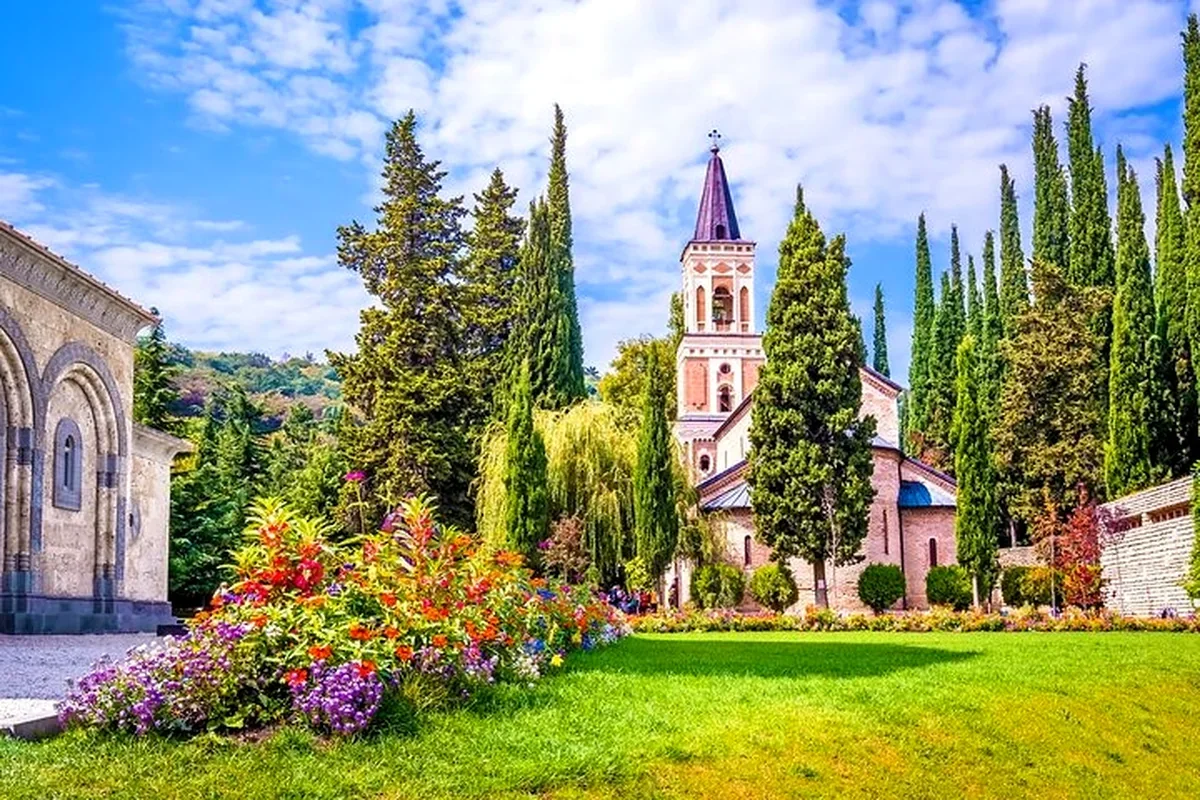
The easiest visit is Château Mukhrani, an estate about 45 minutes from Tbilisi, with a palace, cellars and tastings [3]. It pairs neatly with Mtskheta. South of Tbilisi, in Kvemo Kartli, archaeologists found some of the oldest known traces of grape wine, in pottery from Neolithic village sites; today the area has family cellars and the old church at Bolnisi [3].
Imereti: churi and lighter whites
Imereti, the region around Kutaisi, has its own winemaking tradition. The clay vessel is called a churi rather than a qvevri, and Imeretian winemakers add far less of the grape skins and stems (chacha) to the fermenting juice than Kakhetians do. After about two months the wine is taken off the skins [1]. The result is wine that is lighter and fresher than Kakheti's deep amber style, with more acidity [1][4].
- Grapes: Tsolikouri, Tsitska and Krakhuna for whites; Otskhanuri Sapere and Dzelshavi for reds [1][3].
- Sviri is Imereti's appellation: a dry white blended from Tsitska, Tsolikouri and Krakhuna [2].
- Qvevri makers: several Imeretian villages, including Shrosha and Makatubani, still make the clay vessels by hand [3]. Qvevri winemaking has been UNESCO Intangible Heritage since 2013.
Imereti is also on the way to many other things: Kutaisi, Gelati, the Prometheus cave and the canyons. See our Kutaisi city guide.
Racha-Lechkhumi: semi-sweet mountain wines
Racha and Lechkhumi are mountain districts north of Kutaisi, with small vineyards on the slopes of the Rioni gorge [1]. They are known above all for naturally semi-sweet wines, where fermentation stops before all the sugar has turned to alcohol.
- Khvanchkara (Racha): a dark semi-sweet red made only from Aleksandrouli and Mujuretuli [2]. It is the region's famous bottle.
- Tvishi (Lechkhumi): a fragrant semi-sweet white from Tsolikouri [1][2].
- Okureshis Usakhelouri: a rare red, dry or semi-sweet, from the Usakhelouri grape [2].
Family wineries around Ambrolauri offer tastings. Racha is a slow region to reach, about 5 hours from Tbilisi or 90 minutes from Kutaisi, and it suits June to October. Our Racha guide has the details.
And the west coast
Guria, Samegrelo and Adjara, on the Black Sea side, have their own grapes, such as Chkhaveri in Guria and Ojaleshi in Samegrelo. They were once known for "high vineyards", where vines climbed up trees [1]. Production is small, so you are more likely to meet these wines at a Tbilisi wine bar than on a winery visit.
How the regions compare
- For fresh whites: Imereti.
- For sparkling wine or an easy half day from Tbilisi: Kartli.
- For something sweet: Khvanchkara or Tvishi from Racha-Lechkhumi.
- For deep amber qvevri wine: still Kakheti; read our guide to Georgian grapes and amber wine.
Georgia has 29 registered wine appellations in total [2].
When to go
Cellars are open all year, but harvest dates differ: Kartli picks in September–October, Imereti from late September into October, and Racha in October [3]. In winter, Kartli and Imereti are easy to visit, but Racha's higher roads and guesthouses are quieter or closed.
A western wine route
If you are travelling from Tbilisi to the west anyway, the three regions line up neatly. Start with Château Mukhrani and Mtskheta, drive west through Kartli past Gori, and spend the night in Kutaisi, about 3 hours from Tbilisi. The next day, visit a family cellar in the Imeretian hills and, if you like, a qvevri maker at work. With a third day, carry on north into Racha for Khvanchkara at the source.
Expect family wineries rather than grand estates in Imereti and Racha: a cellar under the house, wine poured from a jug, and usually some bread, cheese and pickles on the table. Few have signs or fixed opening hours, so they need arranging in advance, which is where a local driver-guide helps.
Wine tours beyond Kakheti
All our tours are private, with a driver-guide who doesn't drink, so you can taste freely. The Mtskheta and Château Mukhrani half day pairs Georgia's oldest churches with a palace-cellar tasting. The Georgia wine tour, 7 days starts at Mukhrani, spends three days in Kakheti and ends with a day in the wine hills of Kvemo Kartli. The Racha 3-day private trip (June–October) ends with Khvanchkara tastings at two family wineries. For Imereti, build your own route and we add a churi cellar and a qvevri maker near Kutaisi. See each tour page for the current price. Nothing to pay now.
Sources
- National Wine Agency of Georgia, "Viticulture and winemaking regions": wine.gov.ge
- Wikipedia, "List of Georgian wine appellations": en.wikipedia.org
- Geotour research on wine regions, citing georgia-spirit.com (Château Mukhrani) and PNAS (2017): georgia-spirit.com
- Wines of Georgia UK, "Visiting Georgia's wine regions: Imereti, Racha and more": winesgeorgia.uk
Last checked: September 2026.