The short answer: for a three-day Kakheti wine region tour, spend the first night in Sighnaghi and the second in Telavi, so that no day has more than about 2–2.5 hours of driving. Day 1 is Bodbe, Sighnaghi and a natural-wine cellar; day 2 is Tsinandali, a qvevri maker, Telavi and Alaverdi; day 3 goes north-east to Gremi, Nekresi and Kvareli before the drive back over the Gombori pass. You will taste every day, and you will see the Alazani Valley in the morning and evening light that day-trippers miss. If you only have one day, our guide to one-day Kakheti wine tours covers that option.
Drive times on this route
The first and last drives are the long ones. In between, Sighnaghi to Tsinandali is about 60 km and about an hour, Tsinandali to Telavi is about 10 km and 15 minutes, and Telavi to Alaverdi or Gremi is about 25 minutes each way. From Telavi, Tbilisi is about 95 km and 2 hours over the Gombori pass, or about 150 km and 2.5–3 hours by the lower road through Gurjaani and Sagarejo. Our Sighnaghi and Telavi pages list the distances to everything nearby.
Day 1: Bodbe and Sighnaghi
Tbilisi to Sighnaghi is about 110 km and 1.5–2 hours. Stop on the way for bread from a tone oven at Badiauri.
- Bodbe convent stands in cypress trees 2 km from Sighnaghi, over the grave of St Nino, who brought Christianity to Georgia. The nuns ask for quiet; cover shoulders and knees, and women cover their hair. Entry is free and wraps are usually available at the gate. St Nino's Spring is in a chapel downhill, and the walk back up is steep[7]. Arrive before the midday groups.
- Sighnaghi is a small walled town founded in 1762 by King Erekle II, at about 790 m above the Alazani Valley. Walk a section of the walls and climb a tower. It costs nothing, but the stones are uneven and some steps have no railing. Park at the edge of the old town, where the lanes are narrow.
- Sighnaghi Museum, near the centre, has a permanent exhibition of paintings by Niko Pirosmani[8]. An hour is enough, and there is an entrance fee.
- A tasting in the afternoon at one of the town's natural-wine cellars, such as Pheasant's Tears or Okro's Wines, which both work with qvevri. Pheasant's Tears is also a restaurant, and Okro's pours on a terrace over the valley[9].
- Sunset from the walls, with the Caucasus lined up across the valley on clear evenings.
Night in Sighnaghi. Look at the view again in the morning, when it is usually clearer than at midday. More in our Sighnaghi and Bodbe guide.
Day 2: Tsinandali, a qvevri maker, Telavi and Alaverdi
About 1.5–2 hours of driving in total, mostly in short hops.
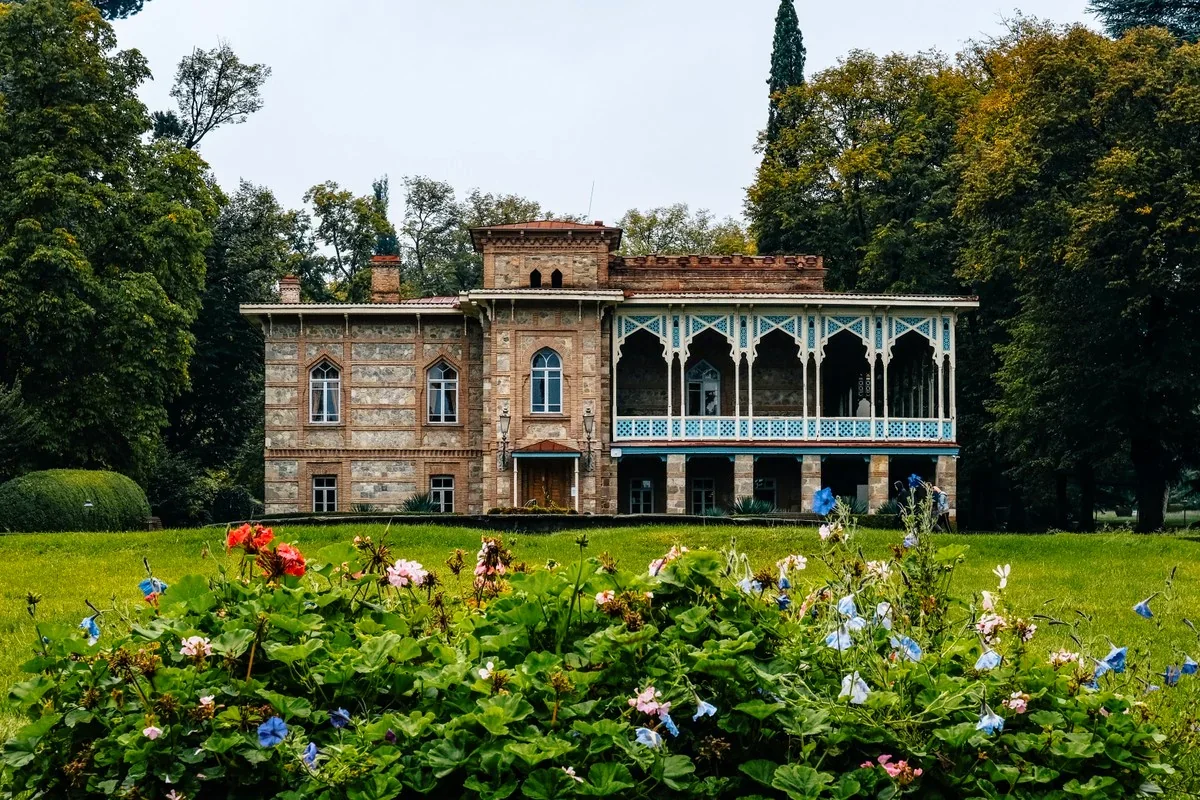
- Tsinandali, the estate of the poet and prince Alexander Chavchavadze, has an Italianate house, a large landscape park and an enoteca with bottles from 1814; the famous one is an 1841 Saperavi. A tasting follows the house tour, usually a Tsinandali white, a qvevri wine, Saperavi and chacha. Allow about two hours with the park. The museum usually opens 10:00–18:00[10], but sources disagree on whether it closes on Mondays. Our Tsinandali estate guide has the details.
- A qvevri workshop in Vardisubani, near Telavi, where the Kbilashvili family still make the clay jars by hand. You can see vessels at different stages and then taste the wine made in them[9]. Qvevri winemaking has been on UNESCO's Intangible Heritage list since 2013.
- Lunch at a family marani (cellar), with wine from their own qvevri.
- Telavi: Batonis Tsikhe, the walled residence of King Erekle II, and the giant plane tree, thought to be about 900 years old. The fortress charges a small fee.
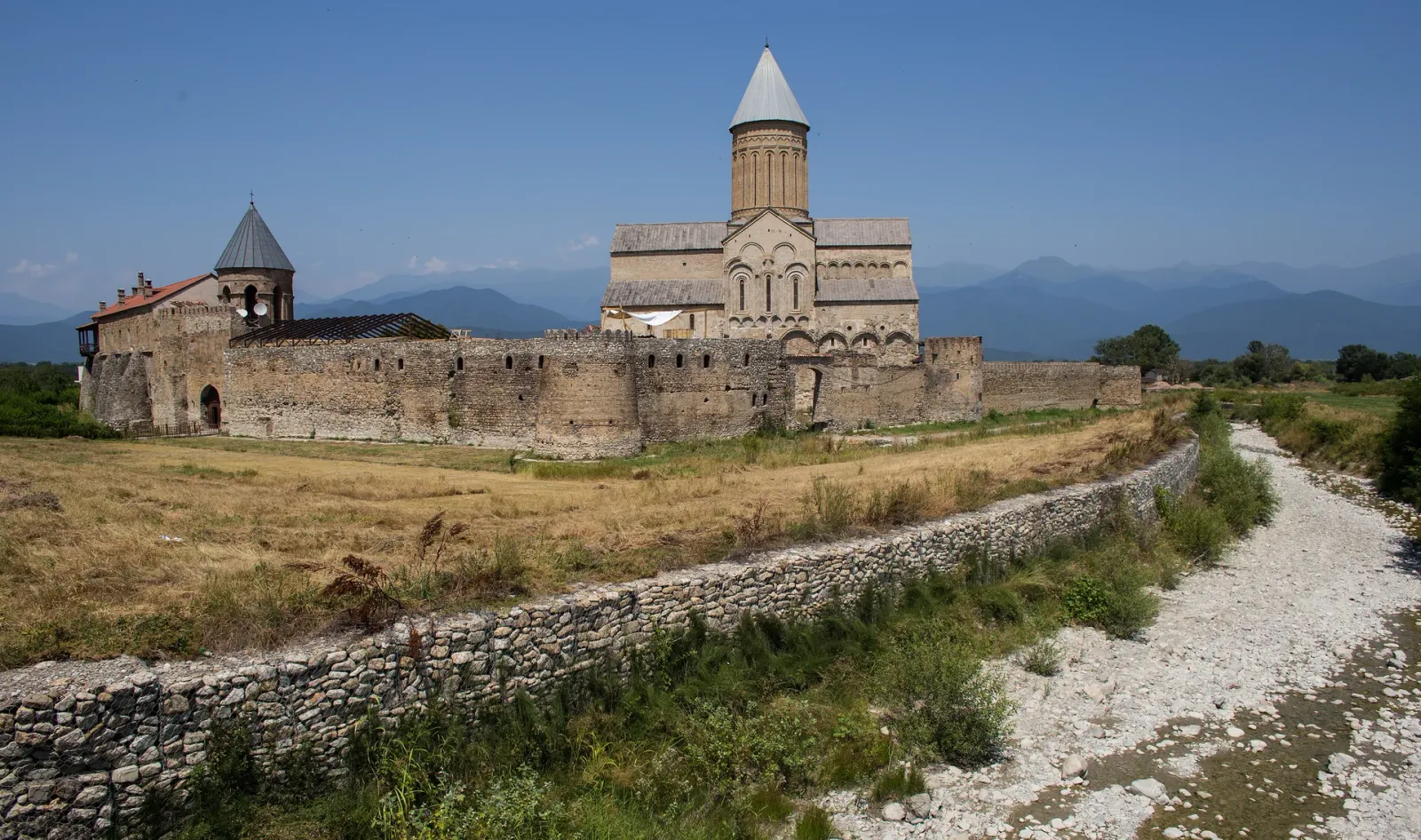
- Alaverdi Cathedral, about 20 km from Telavi, an 11th-century church rising from the flat valley floor with the mountains behind. The monks still make wine, and the cellar has been dated to between the 10th and 12th centuries[4]. Whether it receives visitors varies, and the dress code is the same as at Bodbe.
Night in Telavi. If you have an evening free, this is the night for a family supra with a tamada, who leads the table through the toasts. A long one can run for several hours, and you don't have to drink at all: tell the host at the start, and water or juice is fine. Our guide to the supra explains the order of toasts.
Day 3: Gremi, Nekresi and Kvareli
These sights sit close together, and a half day from Telavi covers them before the drive home.
- Telavi market first thing, for churchkhela, spices and cheese; it is liveliest before 11:00.
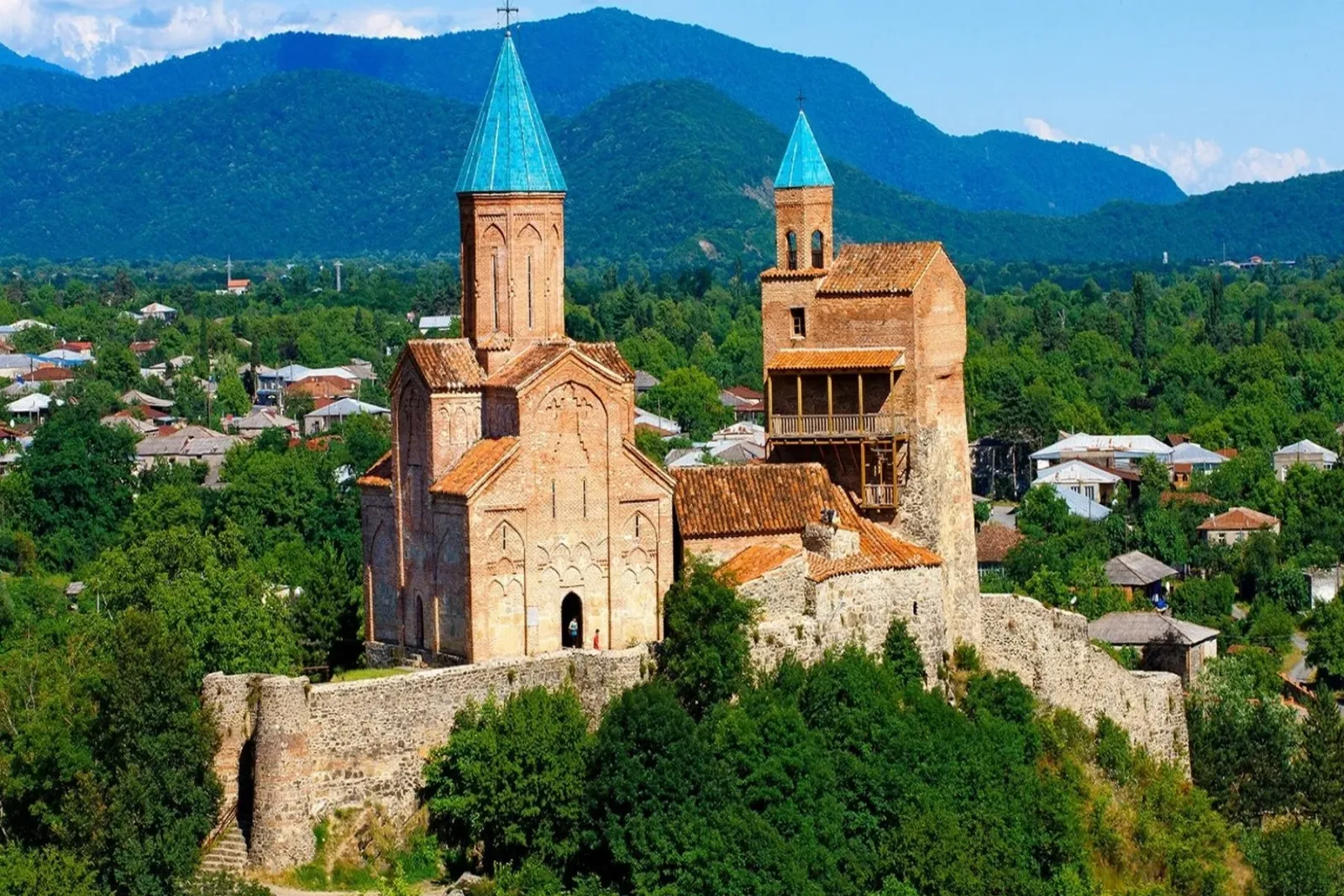
- Gremi, the 16th-century royal citadel built by King Levan of Kakheti and razed by Shah Abbas's army in 1615. The Church of the Archangels and the royal tower survive; climb the tower for the view. There is a small fee. Allow about 45 minutes, including the small museum in the tower[2].
- Nekresi, on a wooded hill between Kvareli and Shilda at the foot of the Caucasus. Its small basilica has been carbon-dated to about 387, making it one of the earliest Christian buildings in the region, and a monastery grew up around it in the 6th century[1]. The last stretch up is steep. Cars are not allowed on it, so you leave the car at the bottom and take a minibus for a small fee, which runs from about mid-April to mid-December[11]; outside those months you walk.
- Kvareli: the Khareba winery's wine tunnel, cut into the hillside, is an easy optional stop with tastings. It stays at 12–16 °C all year and opens daily, 10:00–20:00[12]. Tastings are sold as packages, roughly 25–50 GEL for the usual options[13]. Coach groups use it too, but it suits a hot day or children.
From there, back over the Gombori pass to Tbilisi, about 2.5 hours; in snow we take the lower Sagarejo road. Near the Telavi end of the Gombori road, the old monasteries of Ikalto and Shuamta make a quiet last stop, 30–45 minutes at each; see Ikalto and Shuamta. For the Kvareli side in more depth, read Kvareli, Nekresi and Gremi.
If you have a fourth day
Add David Gareja from Sighnaghi at the start (the Lavra monastery is open; the Udabno cave monastery on the ridge is closed or unpredictable because of the border), or stay a second night in Telavi and spend a slow day with a cooking class or the Twins cellar and qvevri museum in Napareuli. David Gareja is about 2 hours from Sighnaghi; our David Gareja guide covers what is open.
What to swap
- If day 2 looks full, move Alaverdi to the last morning, between Telavi market and Gremi. Our 3-day tour runs it that way.
- If natural wine is your main interest, you may find Tsinandali polished, so spend the time at a family marani instead. Most families have no website or sign on the gate, and a visit needs someone who can arrange it by phone.
- To meet a winemaker, skip the Khareba tunnel for a small cellar. Or stay in Kvareli for the Ilia Chavchavadze house-museum, which takes about 45 minutes and is usually closed on Mondays[14].
- Short of time, or not keen on the climb at Nekresi? Ikalto is about 10 km from Telavi, with a ruined medieval academy and old qvevri in the grass.
- With children or non-drinkers, replace a tasting with a morning in a family kitchen, as on our Kakheti village cooking day.
- In harvest season a picking day with a family can go in. The host confirms the date 7–10 days ahead, so keep a day or two flexible.
Where to sleep
- Sighnaghi: small hotels and guesthouses in the old town, many with balconies over the valley. The first night here gives you the sunset and a quiet morning. Ask for a room with a terrace over the valley.
- Telavi: a working town with a good choice of hotels and family guesthouses, and a better base for the north of the valley. Some guesthouses have their own wine cellar.
- Wine estates: several estates in the valley have their own hotels, if you would rather not move, such as the Tsinandali Estate hotel and Schuchmann Wines Château in Kisiskhevi.
When to go
- September–October: the grape harvest (rtveli). The liveliest time, and rooms in Sighnaghi and Telavi fill up, so book early. Weekdays are quieter than weekends. The official start moves each year (2 September in 2025, 10 September in 2026)[15], so aim for mid-September to early October and read our guide to Rtveli. Tsinandali hosts a classical music festival in early September[16].
- May–June: green vines, mild days and snow still on the Caucasus behind Alaverdi.
- July–August: hot in the valley, often 30–35 °C; plan churches for the morning.
- Winter: the vines are bare from December to March, but cellars, food and the supra are the same, and it is quiet. The Gombori pass can be icy.
Tips
- Pace the tastings: three days of wine adds up. Spit, share, or skip one; nobody minds. Two or three a day is plenty. If you prefer dry wine, ask for mshrali.
- Don't drive: on a private trip your driver doesn't drink, so you can. Marshrutkas to Telavi leave from Tbilisi's Navtlughi (Samgori) bus station and take 2–3 hours[6], but the stops on this route are spread across the valley.
- Buying wine: family cellars sell bottles at cellar-door prices; think about how you will carry them home. Wrap them well for checked luggage and check your airline's limits.
- Museums: opening hours vary, especially on Mondays, so check before you set the order of the days.
- Insurance: since 1 January 2026, visitors to Georgia need insurance with at least 30,000 GEL of cover.
A private Kakheti wine region tour with us
Our trips are private: your own car and English-speaking driver-guide, for 1–8 travellers. The 3-day private Kakheti wine tour follows this route, with a night in Sighnaghi and a night in Telavi, a qvevri workshop, a family supra and Gremi on the last day. The Khareba tunnel is an option that day; ask and we add Nekresi. It includes a sedan for 1–3 travellers or a minivan for 4–8, hotel pickup and drop-off in Tbilisi, breakfast, Tsinandali entry and degustation, the tastings, and the day 2 lunch and supra. We name the wineries in your quote once they are confirmed for your dates. For a longer wine trip, the 7-day Georgia wine tour adds Château Mukhrani, Tbilisi's natural-wine bars and the Kvemo Kartli wine hills, and with only a day there is the Kakheti wine day trip. See each tour page for the current price, or build your own Kakheti route. Nothing to pay now.
Sources
- Wikipedia, "Nekresi": en.wikipedia.org
- Wikipedia, "Gremi": en.wikipedia.org
- Wikipedia, "Telavi": en.wikipedia.org
- Wikipedia, "Alaverdi Monastery": en.wikipedia.org
- UNESCO, "Ancient Georgian traditional Qvevri wine-making method": ich.unesco.org
- Wander-Lush, "How to travel from Tbilisi to Sighnaghi or Telavi": wander-lush.org
- Wikipedia, "Bodbe Monastery": en.wikipedia.org
- Georgian National Tourism Administration, "Sighnaghi Museum": georgia.travel
- TripBox, "Wine Tours in Kakheti 2026": tripbox.ge
- Georgian Travel Guide, "Tsinandali museum complex": georgiantravelguide.com
- Eurasia Travel, "Nekresi Monastery": eurasia.travel
- Winery Khareba, "Kvareli Wine Cave": winery-khareba.com
- TripAdvisor, "Tunnel Winery Khareba" reviews: tripadvisor.com
- GeorgianMuseums.ge, "Ilia Chavchavadze Kvareli State Museum": georgianmuseums.ge
- Wander-Lush, "Where to Go for the 2026 Rtveli": wander-lush.org
- Wikipedia, "Tsinandali": en.wikipedia.org
Last checked: September 2026. The Gombori pass can be icy in winter; we switch to the Sagarejo road when needed.