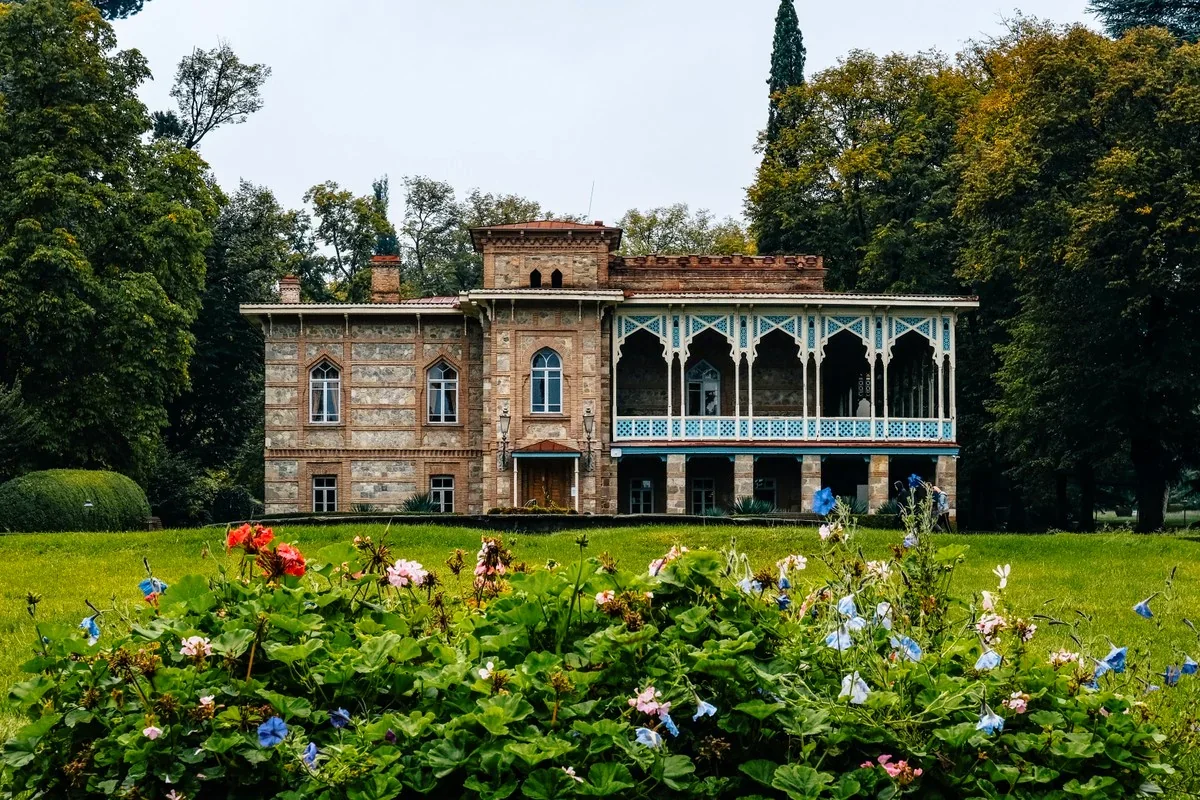
The short answer: Tsinandali, about 10 km from Telavi in Kakheti, was the country estate of Prince Alexander Chavchavadze, poet, aristocrat and the man who began bottling Georgian wine in the European way. Today it has three parts: the house-museum, a large landscaped park, and the historic winery, whose enoteca keeps bottles from 1814 onwards, the famous one an 1841 Saperavi. The museum usually opens 10:00–18:00, but sources disagree on whether it closes on Mondays, so check before a Monday visit (we do this for our guests). Allow about two hours with a tasting; it fits on a Kakheti day trip from Tbilisi.
Who was Alexander Chavchavadze?
Alexander Chavchavadze (1786–1846) inherited Tsinandali and, in the early 19th century, built an Italianate house and laid out a decorative garden there [1]. He was one of the leading Georgian Romantic poets and a well-connected figure in the Georgia of his day, and the estate became a meeting place for writers and visitors. His daughter married the Russian diplomat and playwright Alexander Griboyedov [2].
Chavchavadze also changed Georgian wine. In the 1830s he founded a winery at Tsinandali that combined European and Georgian methods, and he is credited as the first to bottle Georgian wine in the European style [1][2]. The dry white wine called Tsinandali, still made in the region, takes its name from the estate [1].
The raid of 1854
On 2 July 1854 forces of Imam Shamil, the leader of the resistance in the North Caucasus, raided the estate and took members of the family hostage, among them the wife of Alexander's son David [1]. They were exchanged in March 1855, for Shamil's son and a ransom [1]. The house was burned in the raid and rebuilt afterwards [2]. The estate became a museum in 1947 and was restored in the 2000s and 2010s [1].
What to see
The house-museum
The rooms show the family's furniture, paintings, manuscripts, photographs and decorative objects from Georgia and abroad, and tell the story of the Chavchavadzes and their guests [2]. Visits are usually guided and take 30–45 minutes.
The park
The garden, laid out in the European landscape style, was one of the first of its kind in Georgia, with trees and plants brought from as far as Asia and the Americas [1][2]. In 2019 it was recognised by the European network of historic gardens [1]. It is a pleasant place to walk before or after the museum, with shady paths in summer and good autumn colour.
The winery and enoteca
The historic cellar holds an enoteca, or wine library, of more than 16,500 bottles, dating from 1814 onwards [1]. The bottle most visitors ask about is an 1841 Saperavi, the oldest bottled Georgian wine [1]. Note that it is the bottle, not the cellar, that dates from 1841. After the visit you can taste estate wines; a degustation usually includes a Tsinandali white, a qvevri wine, Saperavi and chacha.
Practical information
- Opening hours: daily 10:00–18:00 [2]. Hours can change around holidays; we confirm them before each trip.
- Tickets: there are separate options for the museum, the park and tastings, with the price depending on what you choose. We confirm the current fees rather than quoting old prices.
- Getting there: about 10 km from Telavi, and about 2 hours from Tbilisi over the Gombori pass. In winter, when the pass is icy, drivers take the lower Sagarejo road.
- Time: about two hours for the museum, park and a tasting.
- Staying: a hotel now operates on the estate, beside the park.
- Festival: since 2019 the estate has hosted the Tsinandali classical music festival in early September [1]; in 2026 it ran from 3 to 13 September. Book rooms early if your dates overlap.
Where Tsinandali fits
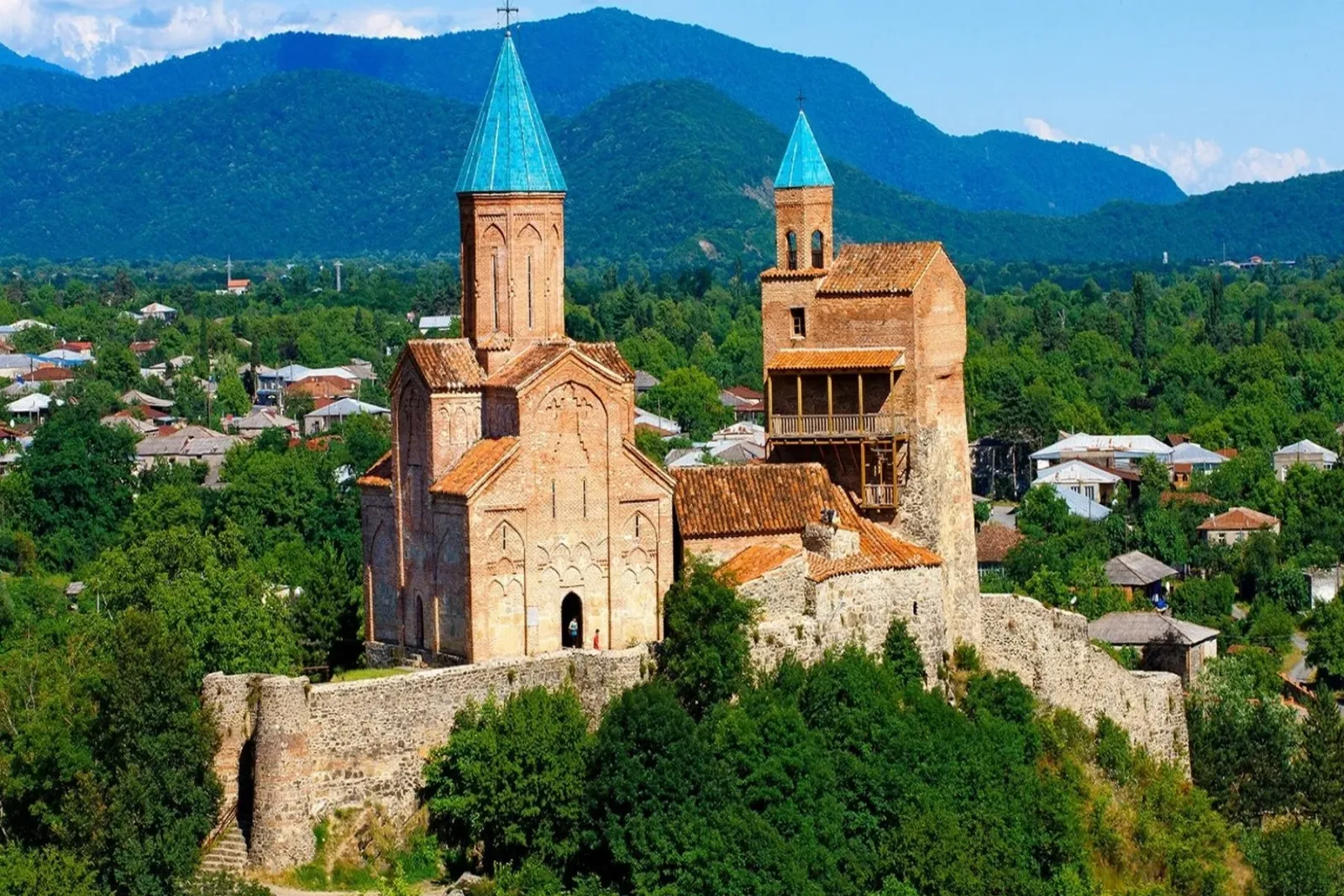
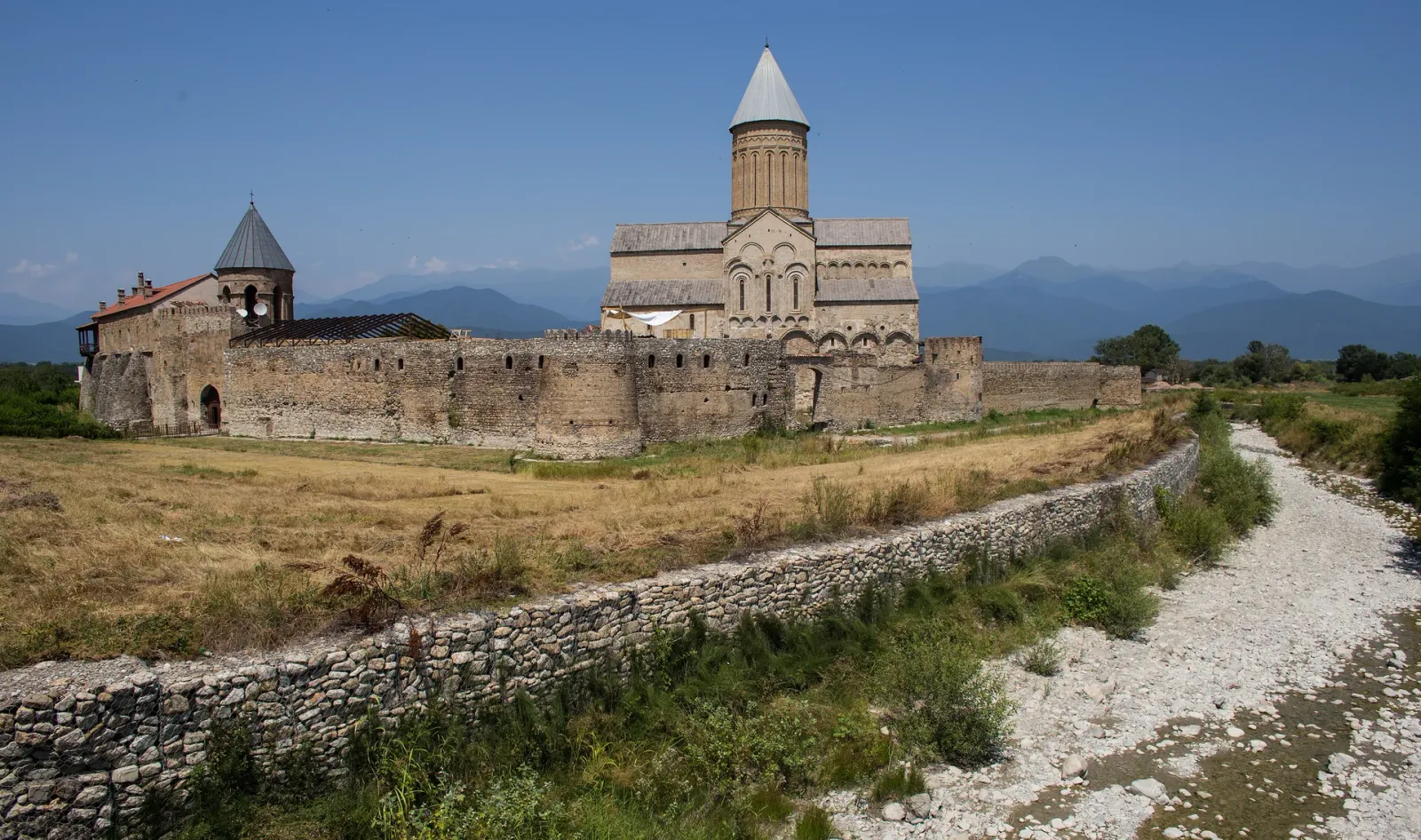
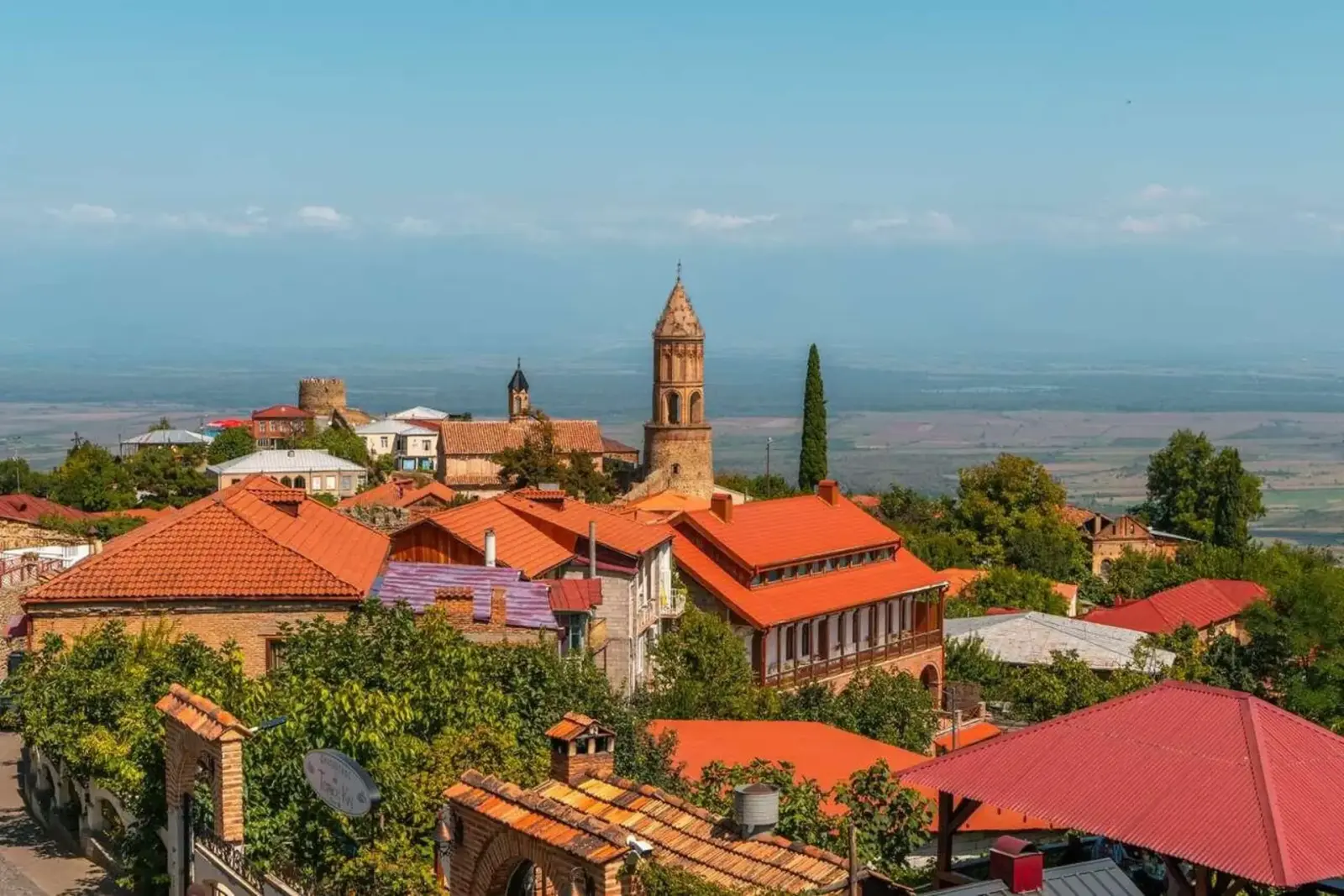
Tsinandali is on the Telavi side of Kakheti. On a day trip from Tbilisi it pairs with Sighnaghi and Bodbe, or with Telavi, Alaverdi and Gremi; with a night in Kakheti, you see it without rushing. Read Telavi, Alaverdi and Gremi for the sights around it, and Georgian wine explained for Saperavi, Rkatsiteli and qvevri wine, the method on UNESCO's Intangible Heritage list since 2013.
In September and October, at harvest time, Tsinandali and the whole of Kakheti are at their busiest, and it pays to book ahead; our guide to Rtveli, the grape harvest explains what happens in the vineyards and cellars.
Tsinandali is a museum estate with a polished tasting room. To see how wine is made at home, add a family qvevri cellar the same day: the two together give you both sides of Kakheti.
Who it suits
Tsinandali suits travellers interested in 19th-century history, gardens and literature as much as wine. Children usually enjoy the park more than the museum rooms; the tastings are for adults. If your main interest is natural wine, you may find the estate polished and prefer the family cellars, which is why our Kakheti days combine the two. The park is prettiest in spring and autumn and gives welcome shade in the heat of July and August; in winter the museum and the tasting room carry on as usual, and you will have the rooms largely to yourself.
Seeing Tsinandali with us
All our trips are private: your own car and English-speaking driver-guide, for 1–8 travellers. The private Kakheti wine day trip visits Bodbe and Sighnaghi, then the Tsinandali house-museum and degustation, and a family qvevri cellar near Telavi, with two tastings included. With more time, the 3-day private Kakheti wine tour spends a morning at Tsinandali's house-museum and enoteca, then visits a qvevri maker in Vardisubani and ends the day with a family supra. See each tour page for the current price, or build your own wine trip. Nothing to pay now.
Sources
- Wikipedia, "Tsinandali": en.wikipedia.org
- Georgian Travel Guide, "Tsinandali museum complex": georgiantravelguide.com
- Tsinandali Estate, museum information: tsinandali.ge
Last checked: September 2026. Opening hours, ticket options and festival dates change; we confirm them before each trip.