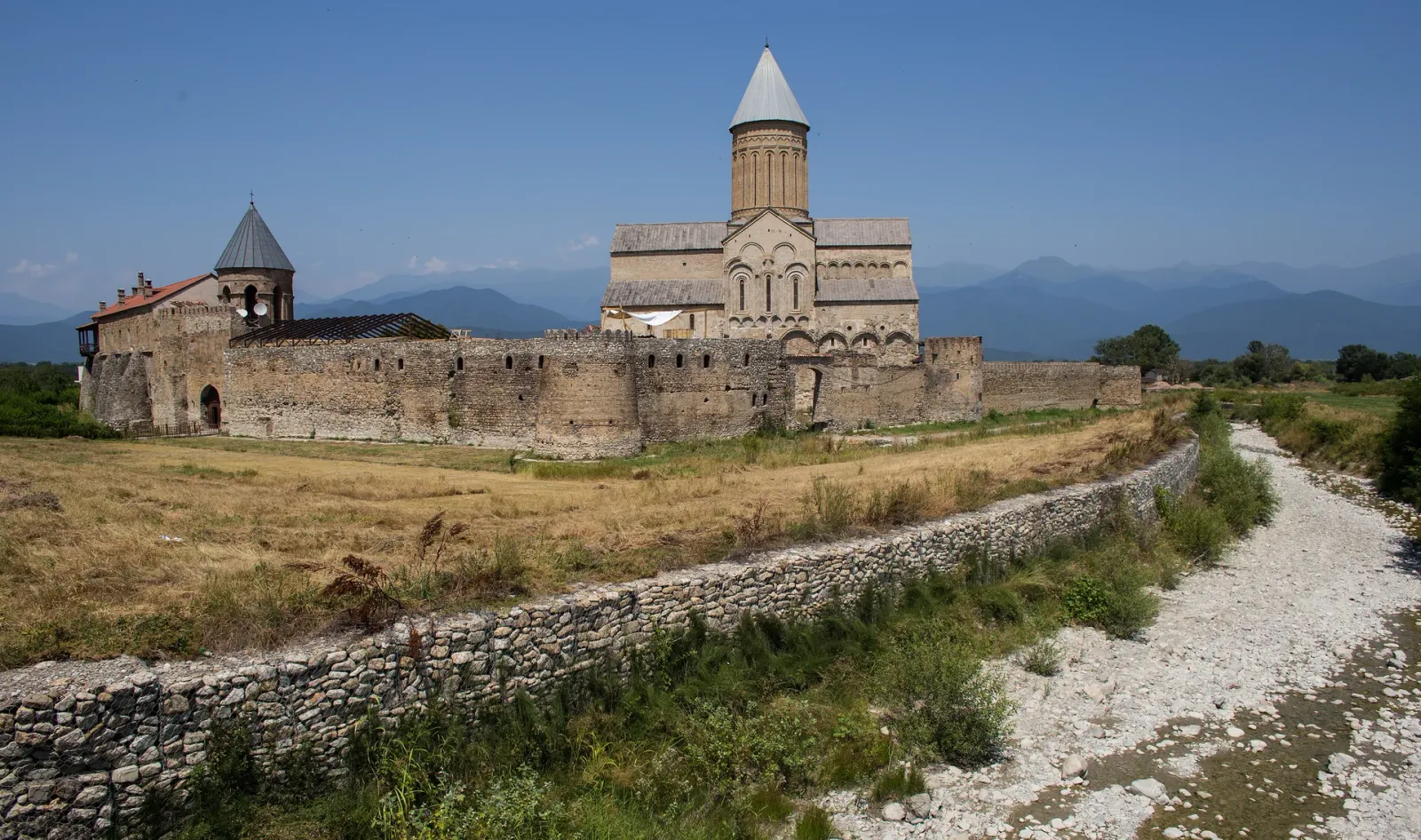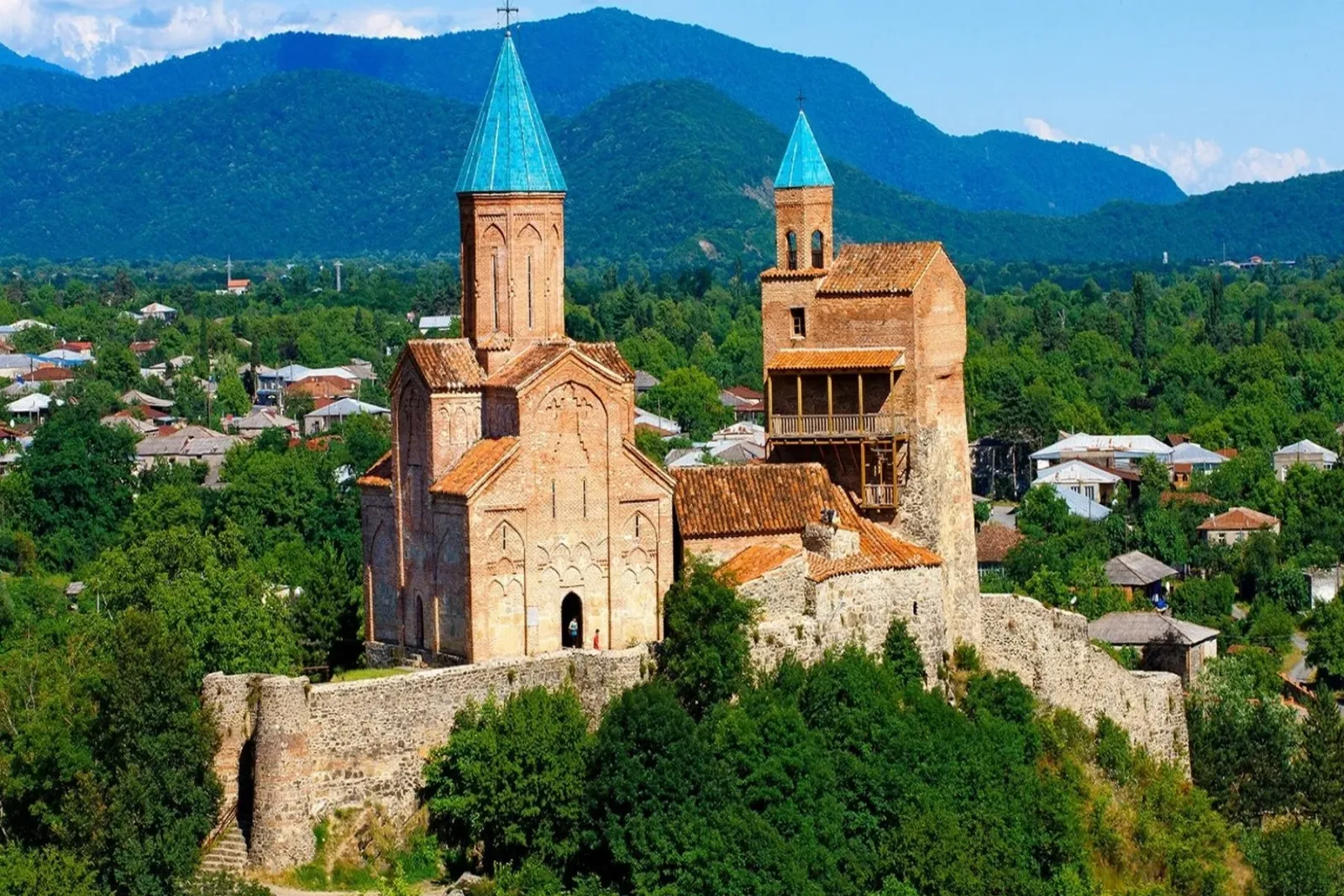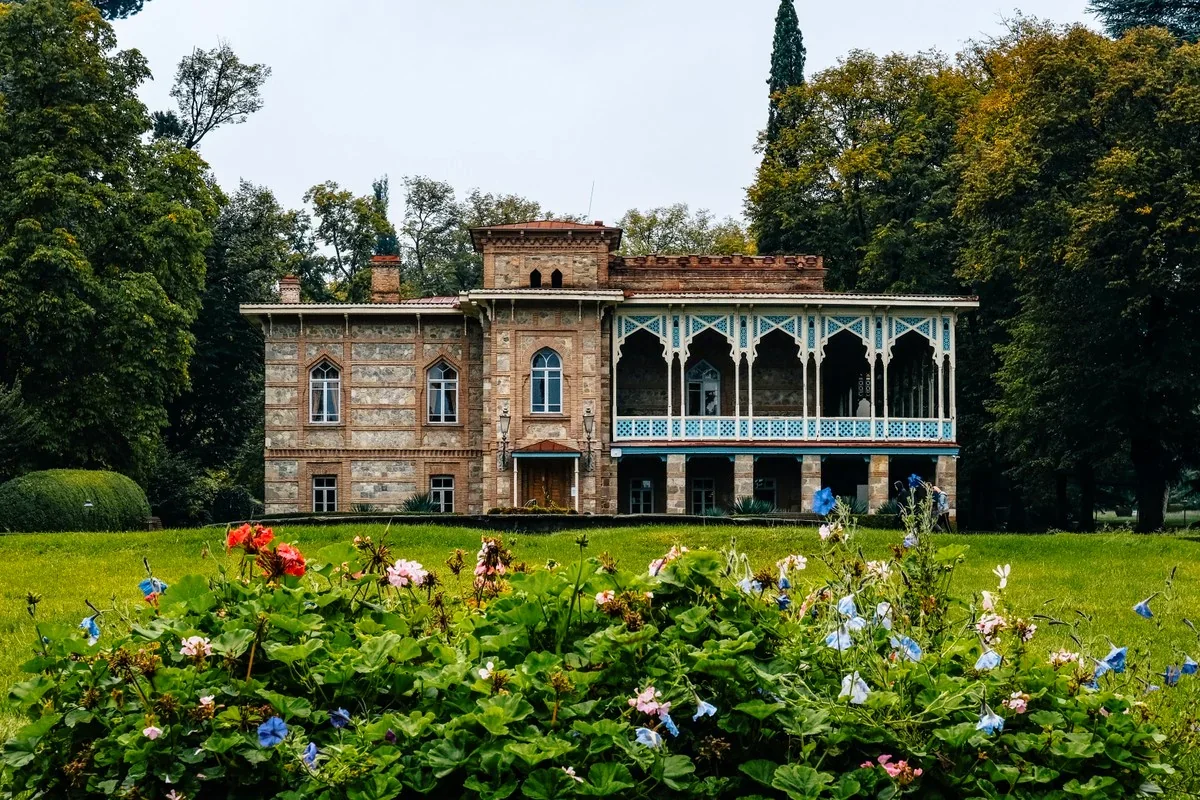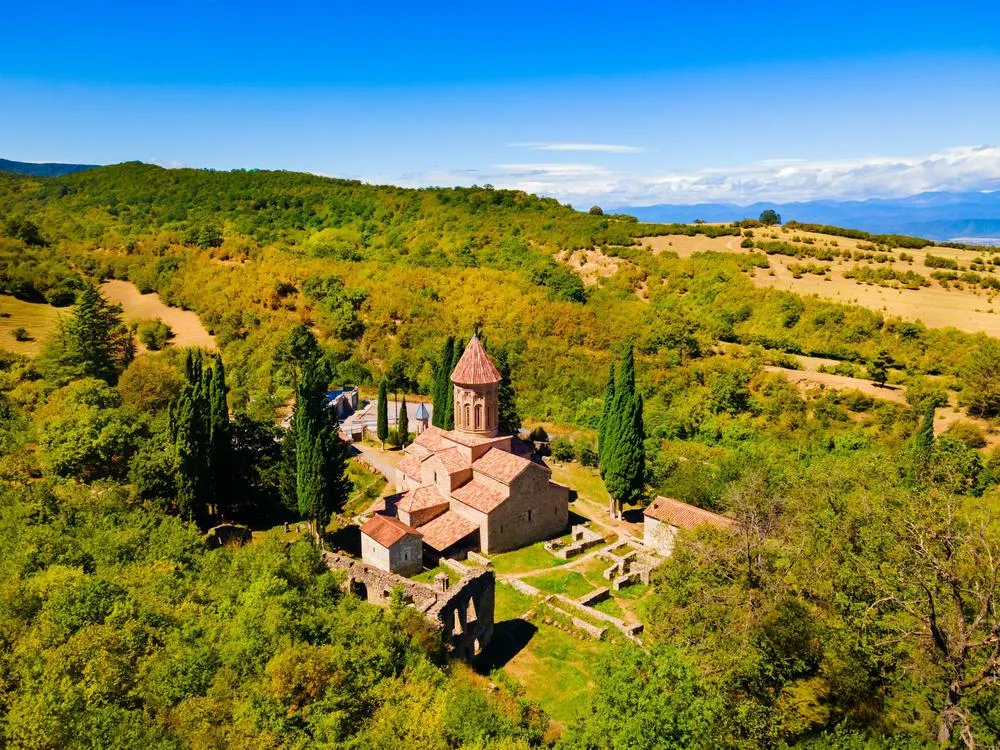
The short answer: Ikalto and Shuamta are two quiet monastery sites in the hills west of Telavi, in Kakheti, and both fit easily into a day on the Telavi side of the wine region. Ikalto, about 10 km from Telavi, was founded in the 6th century and later housed one of medieval Georgia's main academies, now a roofless ruin. Shuamta, on the Gombori road about 7 km from Telavi, is really two monasteries: Old Shuamta, with churches of the 5th and 7th centuries, and New Shuamta, a 16th-century convent founded with the help of a queen of Kakheti. Allow 30–45 minutes at each.
Ikalto monastery
The monastery was founded in the late 6th century by St Zenon, one of the Thirteen Assyrian Fathers, the monks who spread monastic life across eastern Georgia[1]. Three churches stand inside the walls[1]:
- Khvtaeba, the main church, of the 8th–9th centuries, built where Zenon was first buried.
- Kvelatsminda, a smaller church to one side.
- Sameba, the Trinity church.
The site is peaceful, with cypresses, old walls and views across the Alazani Valley. Look out for large qvevri, the clay wine jars, lying in the grass: a reminder that monasteries in Kakheti made wine as well as prayed.
The academy
In 1106, under King David the Builder, the scholar Arsen of Ikalto founded an academy at the monastery[1]. He had been David's tutor, and he became its first rector[2]. It followed the medieval pattern of the trivium and quadrivium[2], and according to the monastery's history it taught theology, rhetoric, astronomy, philosophy, geography, geometry, arithmetic, music and grammar, along with practical skills such as viticulture, metalwork and pharmacy[1]. With Gelati near Kutaisi, it was one of the two great centres of learning in the Georgian Golden Age.
In 1616 the armies of Shah Abbas I of Persia burned the academy, and it never reopened[1]. What you see today is the shell of the academy building beside the churches, with its walls standing but no roof.
Did Rustaveli study here?
You will often hear that Shota Rustaveli, the 12th-century poet of The Knight in the Panther's Skin, studied at Ikalto. It is a legend, not a documented fact[1]. Guides like to tell it, and it is part of the site's story, but treat it as tradition. For more on the poet and his age, see our guide to the Georgian Golden Age and Rustaveli.
Old Shuamta
The name Shuamta means "among the mountains", and the monastery sits in forest at the foot of the Tsiv-Gombori range[3]. Old Shuamta (Dzveli Shuamta) has three churches[3]:
- a three-nave basilica of the 5th century, the oldest building here;
- a domed church of the 7th century, similar in plan to Jvari Monastery above Mtskheta;
- a small domed church, also of the 7th century.
The monastery was abandoned in the 16th century[3]. It feels very old and very still, and on a weekday you may have it to yourself. The last stretch is a short walk through the trees.
New Shuamta
About 2 km away, New Shuamta (Akhali Shuamta) was built in the 16th century to replace the old monastery. Queen Tinatin, wife of King Levan of Kakheti, who reigned from 1520 to 1574, gave much towards its construction[3][4]. She later took the veil here, died at the convent in 1591 and, at her own request, was buried in its main church[3][4]. King Levan and the 19th-century poet Alexander Chavchavadze, owner of the Tsinandali estate, also have graves here[3].
The convent was closed by the Soviet authorities in 1926 and is again a working religious community[3]. The main church has painted interiors; be discreet, as the nuns live here.
Practical tips
- Getting there: both are near Telavi, which is about 2 hours from Tbilisi over the Gombori pass. Shuamta is right on the Gombori road, so it makes a natural first or last stop; Ikalto is a short detour west of Telavi.
- Dress code: shoulders and knees covered; women cover their hair. Wraps are not always available at these smaller sites, so bring a scarf. More in our guide to church etiquette.
- Winter: the Gombori pass can be icy, and drivers then take the lower road through Sagarejo, which does not pass Shuamta.
- Time: 30–45 minutes at Ikalto, 30 minutes at each of the Shuamtas.
- Combine with: Tsinandali, Telavi, Alaverdi and Gremi, all within a short drive. Our Telavi, Alaverdi and Gremi guide covers the rest of the area.
Who they suit
These are quiet sites rather than big sights: no ticket office, no museum and little signage in English, which is where a guide who can tell the stories earns their keep. They suit travellers who like history and old churches, and anyone who wants a break from wine cellars. If you are short of time and have already seen Alaverdi and Gremi, they are optional.
Seeing Ikalto and Shuamta with us
Our trips are private: your own car and English-speaking driver-guide, for 1–8 travellers, so you can add a stop without changing tours. The 3-day private Kakheti wine tour spends a night in Telavi, and Ikalto or Shuamta fit on the way back over the Gombori pass. On the Kakheti wine day trip Shuamta can be added on the Gombori road, time allowing. For a longer trip, the 7-day Georgia wine tour is based in Telavi for two nights. See each tour page for the current price, or build your own Kakheti route. Nothing to pay now.
Sources
- Wikipedia, "Ikalto Monastery": en.wikipedia.org
- Wikipedia, "Academy of Ikalto": en.wikipedia.org
- Georgia National Tourism Administration, "Old and New Shuamta": georgia.travel
- Wikipedia, "Tinatin Gurieli": en.wikipedia.org
Last checked: September 2026.