The short answer: the best time to visit the Georgia mountains, such as Tusheti, Svaneti and Kazbegi, is late June to September, and summer is also the season for the Georgian coast, when the Black Sea is warm. In these months the road over the Abano Pass to Tusheti is usually passable and the trails of Svaneti and Kazbegi are clear of snow, so summer is the one season when all of Georgia is open. The price is heat in the lowlands: Tbilisi's average July and August highs are about 31–32 °C[1], and Kakheti often reaches 30–35 °C. Plan the mountains for the middle of the trip, keep Tbilisi and wine country for early mornings, and book rooms early. For spring, autumn and winter, see our month-by-month guide to the best time to visit Georgia.
Best time to visit the Georgia mountains: June, July or August
- June: green valleys, snow still on the high peaks, and fewer visitors. The Abano Pass to Tusheti opens some time between late May and late June; in 2026 it opened on 20 June because of late snow. Rafting on the White Aragvi is at its biggest and coldest.
- July: the high season in the mountains. Juta and the high passes are reliably open, and Tusheti's summer festivals take place.
- August: the hottest month in Tbilisi and on the coast. Mountain weather is usually settled, but afternoon storms happen. From mid-August, raptors start to pass Batumi on their autumn migration.
Where to go: the mountains
Kazbegi
152 km and 3–3.5 hours from Tbilisi. Gergeti Trinity Church (2,170 m) is often about 10 °C cooler than the capital, with Mt Kazbek (5,054 m) behind it. Summer is the time for the Truso valley walk and for Juta under the Chaukhi peaks (July–September). Stay a night if you can: morning light on Kazbek is the reward.
Stepantsminda, the town below the church, sits at about 1,740 m. August days reach about 20 °C and nights drop to about 12 °C[6], and May to August is the wettest part of its year, so pack a waterproof. Clouds often build around Kazbek by late morning in summer, which is a good reason to go up to Gergeti, on foot or by the sealed road, early in the day.
Truso is the easier valley: a mostly flat walk, with a border police post at the entrance where you show your passport[9]. Juta is steeper, and since a collapse in June 2025 the last 2.6 km of road has been closed to cars, so you take a village taxi or walk that stretch[8]. Our comparison of Truso and Juta helps you choose. In the 2026 summer timetable, marshrutkas left Didube bus station in Tbilisi 11 times a day between 08:00 and 19:00, for 20 GEL[7]. Lorries heading for the Russian border can add 1–3 hours in queues, especially on the way back; our guide to getting from Tbilisi to Kazbegi compares the options.
Svaneti
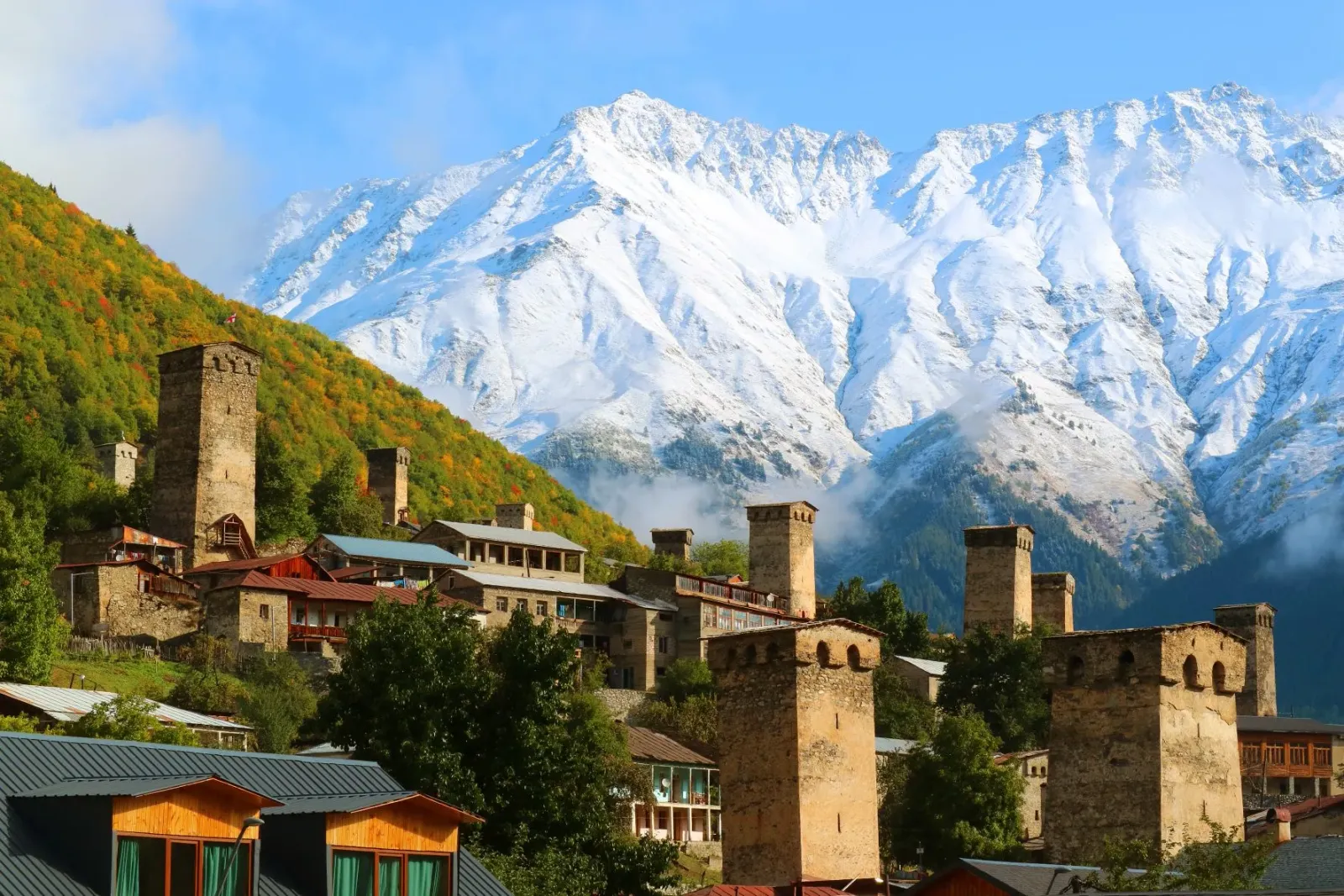
Mestia and Ushguli are at their most accessible in summer. The Koruldi lakes at 2,740 m and the Chalaadi glacier walk are June-to-September outings, and the 47 km road from Mestia to Ushguli, one of Europe's highest permanently inhabited villages, is sealed. Stay back from the Chalaadi ice: rockfall there has injured and killed people.
The road from Tbilisi to Mestia runs for about 460 km and takes 8–10 hours[10], so most people break the drive in Kutaisi, 4–5 hours (about 200 km) short of Mestia, or take the morning train to Zugdidi (about 5.5 hours) and drive the last 130 km, about 3 hours[10]. Train tickets sell out in summer, so buy them early. Allow at least three days in all: one to get there, one for Ushguli and one to get back. Our Mestia guide covers the town itself.
Four or five days leaves time for the walks. Chalaadi is the easy one, about 2–3 hours return on a forest path; carry your passport, as there may be a border-police check. Koruldi on foot from town is a hard day, about 21 km return with 1,459 m of ascent, but a 4x4 up to the Mestia Cross cuts it to 3–4 hours of walking[4]. Go early, because clouds often build in the afternoon. The drive to Ushguli takes 1.5–2 hours each way with photo stops, and more when roadworks are active[10]. Fit walkers can take the Mestia–Ushguli trek, 57 km over four days[11], which is in season from roughly June to early October.
Tusheti
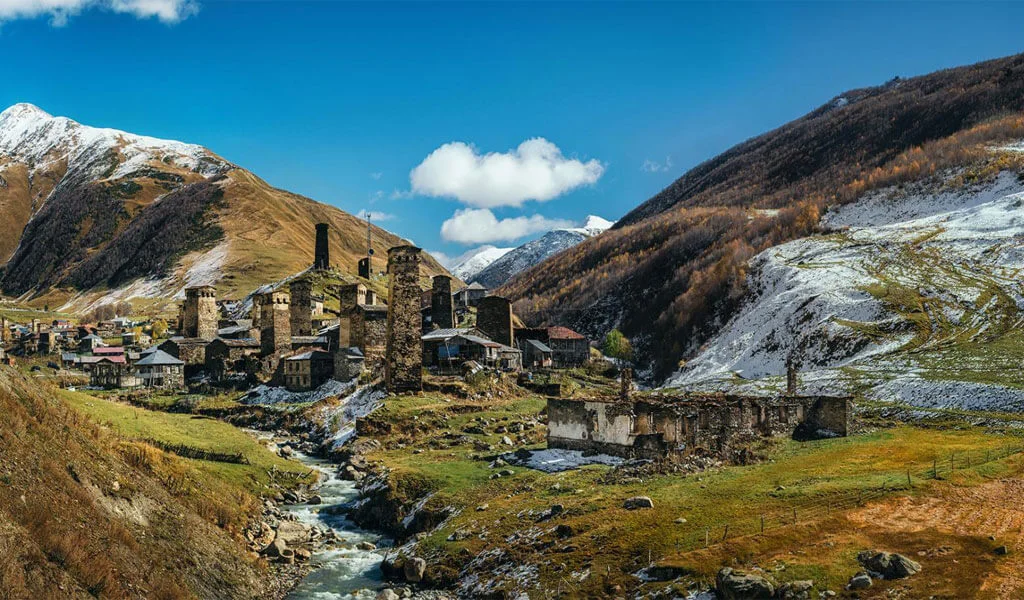
The most remote region open to visitors, reached only by 4x4 over the Abano Pass. The road is unpaved, narrow and exposed, and most guesthouses run from June to September. The most reliable window is late June to the end of September. Read our Tusheti guide before you decide.
From Tbilisi you drive about 2–2.5 hours over the Gombori pass to Kvemo Alvani and change to a local 4x4. The mountain road to Omalo then takes about 3.5–4 hours in good conditions, longer after rain or with photo stops. In all, that makes about 190 km and 5–6 hours[3]. Rain or late snow can close the road for a day, so keep a spare day before your flight home, and don't self-drive it.
Plan at least three nights. You sleep in family guesthouses, around 80–120 GEL per person a night with breakfast[3]. There is no heating and nights can be cold even in August. Bring cash: Tusheti has no ATMs, and the nearest is in Kvemo Alvani[3].
Where to go: the sea
The best time to visit Georgia's coast is July and August for swimming, within a beach season that runs from about June to September, with the warmest water in August. The beaches are full in both months. From September the rain on the coast increases, and September to November are Batumi's wettest months, with more than 300 mm each[2].
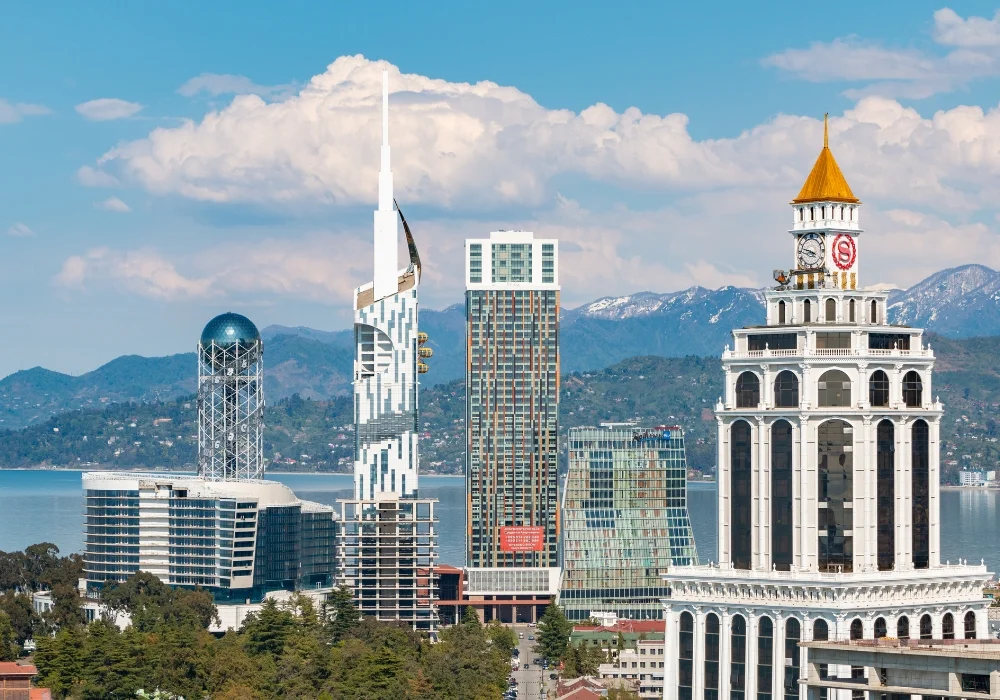
Batumi is Georgia's summer holiday city, with a long seafront boulevard, a botanical garden and pebble beaches. It is humid rather than scorching: August is its warmest month, with an average temperature of about 22 °C, and relative humidity of 70–80%[2]. Evenings on the boulevard are the pleasant part of the day. For more, see our Batumi and the Black Sea guide. Mountain Adjara, inland from Batumi, is cooler and green.
Batumi's beaches are pebble rather than sand and the sea gets deep quickly, so water shoes help. The city beach is free, beach clubs charge for loungers, and the beaches at Gonio and Sarpi, by the Turkish border, are quieter. Direct trains from Tbilisi take about 5 hours; the road takes 5–6 hours (about 370 km), or 2–2.5 hours (about 150 km) if you come from Kutaisi. Batumi airport has international flights, most of them in summer, so you can end a trip here and fly home. Two nights give you a day for the city and a day for Gonio or the hills.
In the hills, the Makhuntseti waterfall and the Queen Tamar bridge are about 45 minutes from the city, and our private Mountain Adjara day trip takes about 6.5 hours with a long family lunch. Our Mountain Adjara guide goes further up the valley, as far as the Goderdzi pass at 2,027 m, which is a summer trip.
Where the heat bites
- In Tbilisi, sightsee from 09:00 to about 13:00, rest, and go out again in the evening. On our Old Town walk in July and August we start at 09:00.
- In Kakheti the Alazani Valley is hot, so visit churches early, spend the afternoon in a cool cellar, and watch the sunset from Sighnaghi's walls.
- At David Gareja, July and August can bring 40 °C and snakes; we advise against it in midsummer.
- Uplistsikhe and Vardzia have little shade on the rock, so go first thing. Part of Vardzia's path has been closed since the rockfall of 27 May 2026.
Summer events
- Mountain feasts: Tushetoba in Omalo, Tusheti, falls in late July or early August, with horse races and wrestling, and Kvirikoba at Kala in Upper Svaneti is on 28 July.
- Mariamoba (28 August): a public holiday, with services in churches across the country.
- Raptor migration: the Batumi Raptor Count runs from 12 August, with honey buzzards peaking at the end of August and early September[5].
- The start of the harvest: in Kakheti the grape harvest can begin in late August, although most years it gets going in September.
For the whole year's events, see our Georgian festivals by month.
Who summer doesn't suit
If you dislike heat and only want Tbilisi, wine country and the cave towns, May–June or September–October will suit you better. The same goes for travellers who want quiet mountain villages: Stepantsminda and Mestia are at their busiest in July and August. And if your trip is mainly about wine, the harvest weeks of September and October are more rewarding than summer, when the vines are growing and the cellars are quiet.
A summer route
A two-week summer trip might go: Tbilisi (2 nights) and Kakheti (2 nights) at the start while you are fresh; Kazbegi (2 nights); Uplistsikhe and Borjomi; Kutaisi; three nights in Svaneti; and the last days in Batumi, flying home from there. With more time, add Tusheti (3–4 nights) from Kakheti.
Summer tips
- Book early, because Stepantsminda, Mestia and Tusheti guesthouses fill up in July and August.
- In 2026 a private room in a guesthouse costs about 80–135 GEL a night and a comfortable mid-range hotel about 120–250 GEL[12]. Tbilisi and Batumi in summer cost more than a mountain guesthouse in May. Our guide to what a trip to Georgia costs has the rest.
- Pack for two climates, with light clothes for the lowlands and a fleece and waterproof for the mountains. Our Georgia packing list has the details.
- Sun at high altitude burns quickly, even when it feels cool.
- In churches, shoulders and knees still need covering, so carry a light scarf or wrap.
- Since 1 January 2026, visitors need insurance with at least 30,000 GEL of cover; check it covers treks, rafting or paragliding if you plan them.
Summer trips with us
Our trips are private: your own car and English-speaking driver-guide, for 1–8 travellers. Georgia in 14 days covers Kakheti, Kazbegi, the west and Svaneti. The Svaneti highland expedition spends five days around Mestia and Ushguli, with Koruldi and the Chalaadi valley, and the 4-day Tusheti 4x4 trip crosses the Abano Pass in daylight and dry weather, from late June to 20 September, with a go/no-go call on the morning of departure. Our private 2-day Kazbegi trip adds a night in Stepantsminda and a walk in Truso or Juta with a local hiking guide, and Western Georgia in 6 days combines two nights in Mestia with two nights in Batumi. See each tour page for the current price, or build your own summer route. Nothing to pay now.
Sources
- Wikipedia, "Tbilisi" (climate): en.wikipedia.org
- Wikipedia, "Batumi" (climate): en.wikipedia.org
- Wander-Lush, "Tusheti travel guide": wander-lush.org
- Caucasus Trekking, "Hike to Koruldi lakes" and "Chalaadi glacier": caucasus-trekking.com
- Batumi Raptor Count: batumiraptorcount.org
- Weather and Climate, "Kazbegi weather by month": weather-and-climate.com; Wikipedia, "Stepantsminda": en.wikipedia.org
- Wander-Lush, "How to travel from Tbilisi to Kazbegi" (updated September 2026): wander-lush.org
- Wander-Lush, "Complete Guide to the Juta Valley Hike": wander-lush.org
- Georgia Spirit, "Tbilisi to Truso Valley" (border post and permits): georgia-spirit.com
- Wander-Lush, "Tbilisi to Svaneti: how to get to Mestia" (September 2026): wander-lush.org
- Caucasus Trekking, Mestia to Ushguli trek: caucasus-trekking.com
- Wander-Lush, "Georgia Travel Budget 2026" (updated 20 September 2026): wander-lush.org; Sakhva Travel, "Georgia Trip Cost 2026" (5 May 2026): sakhva-travel.com
Last checked: September 2026. Mountain pass opening dates vary with the snow each year.