The short answer: the three things visitors most often wish they had brought are flat shoes with grip for Tbilisi's steep, polished cobbles, clothes that cover shoulders and knees for churches and monasteries, and a proper warm layer for the mountains, which are cold in the evening even in midsummer. Add a Type C/F plug adapter if you come from outside continental Europe, proof of travel insurance, and clothes for the season. Everything else you can buy in Tbilisi.
The all-year basics
Shoes
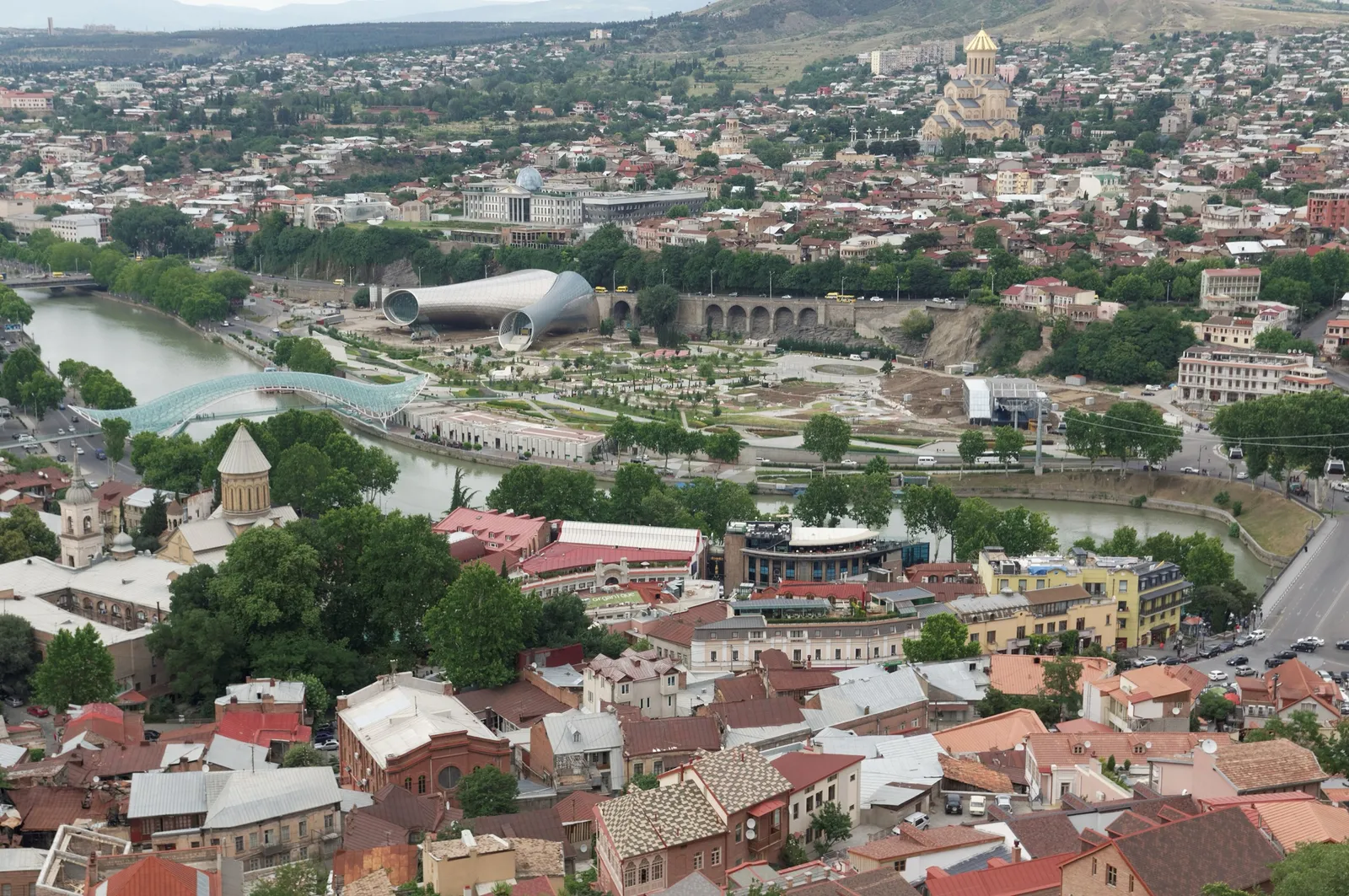
Old Tbilisi is built on hills. The streets around Narikala, Sololaki and the baths are steep cobbles and stone steps, and they are slippery after rain. Uplistsikhe, Vardzia and David Gareja are bare, uneven rock. Bring walking shoes or trainers with a good sole; leave smooth-soled shoes and heels for the evening. For mountain walks such as Gergeti, Truso or Juta, light hiking boots or trail shoes are worth the space.
Church clothing
You will visit churches almost every day. The rule for everyone is shoulders and knees covered; women also cover their hair, and some churches expect women to wear a skirt rather than trousers. Wraps and headscarves are usually available at the door of the big churches, but not always at small ones, so a light scarf and a pair of long trousers or a long skirt in your day bag solve the problem. Men should avoid shorts on church days. Our guide to church dress and etiquette has the details.
Electrics
Georgia uses Type C and Type F plugs (the two round pins used across most of continental Europe) at 220 V, 50 Hz [1]. Travellers from the UK, Ireland, North America, Australia and Israel need an adapter; North American devices that are not dual-voltage also need a converter, though most phone and laptop chargers handle 100–240 V. A small multi-socket strip helps in older guesthouses.
Documents
- Passport, valid for your whole stay. Check the entry rules for your nationality before you book.
- Travel insurance: mandatory for visitors since 1 January 2026, with at least 30,000 GEL of cover. Carry proof on your phone or on paper [2].
- Winter sports cover if you plan to ski or snowshoe; many standard policies exclude it.
Small things that help
- A reusable water bottle and sunscreen: sun at altitude burns quickly, even when it feels cool.
- A small day pack for layers, a scarf and water.
- Any prescription medicines in their original packaging, with enough for the trip.
- Some small notes for markets, church candles and toilets; cards are widely accepted in Tbilisi, less so in villages.
Spring (March to May)
Tbilisi warms up quickly, but the weather swings from sunny to wet in a day, and the mountains still hold snow into May. Pack:
- A waterproof jacket and a warm mid-layer (fleece or light down).
- Trousers and long sleeves for the day, a jumper for the evening.
- Waterproof shoes if you are going to Kazbegi, where paths are muddy with snowmelt.
Summer (June to August)
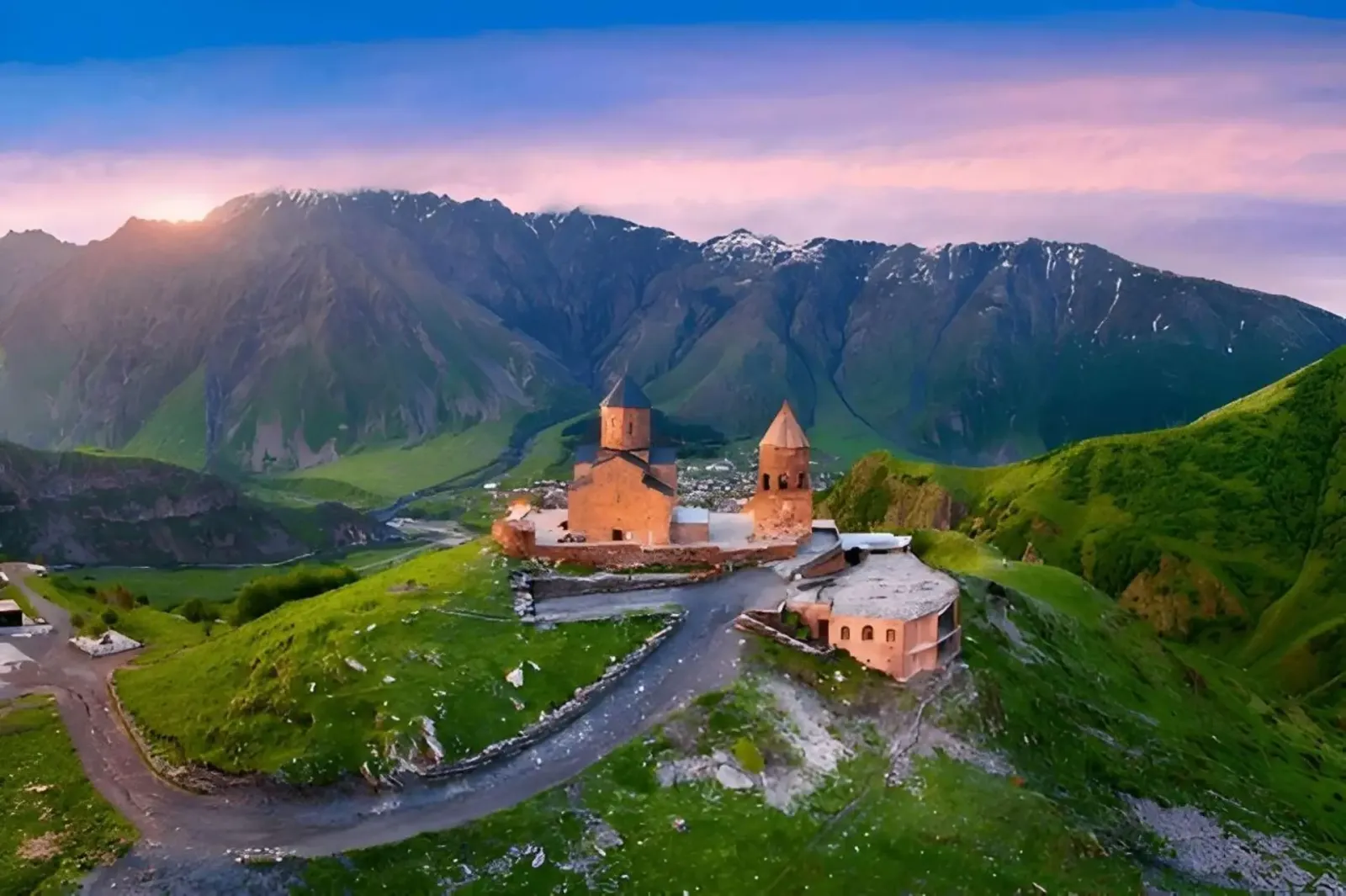
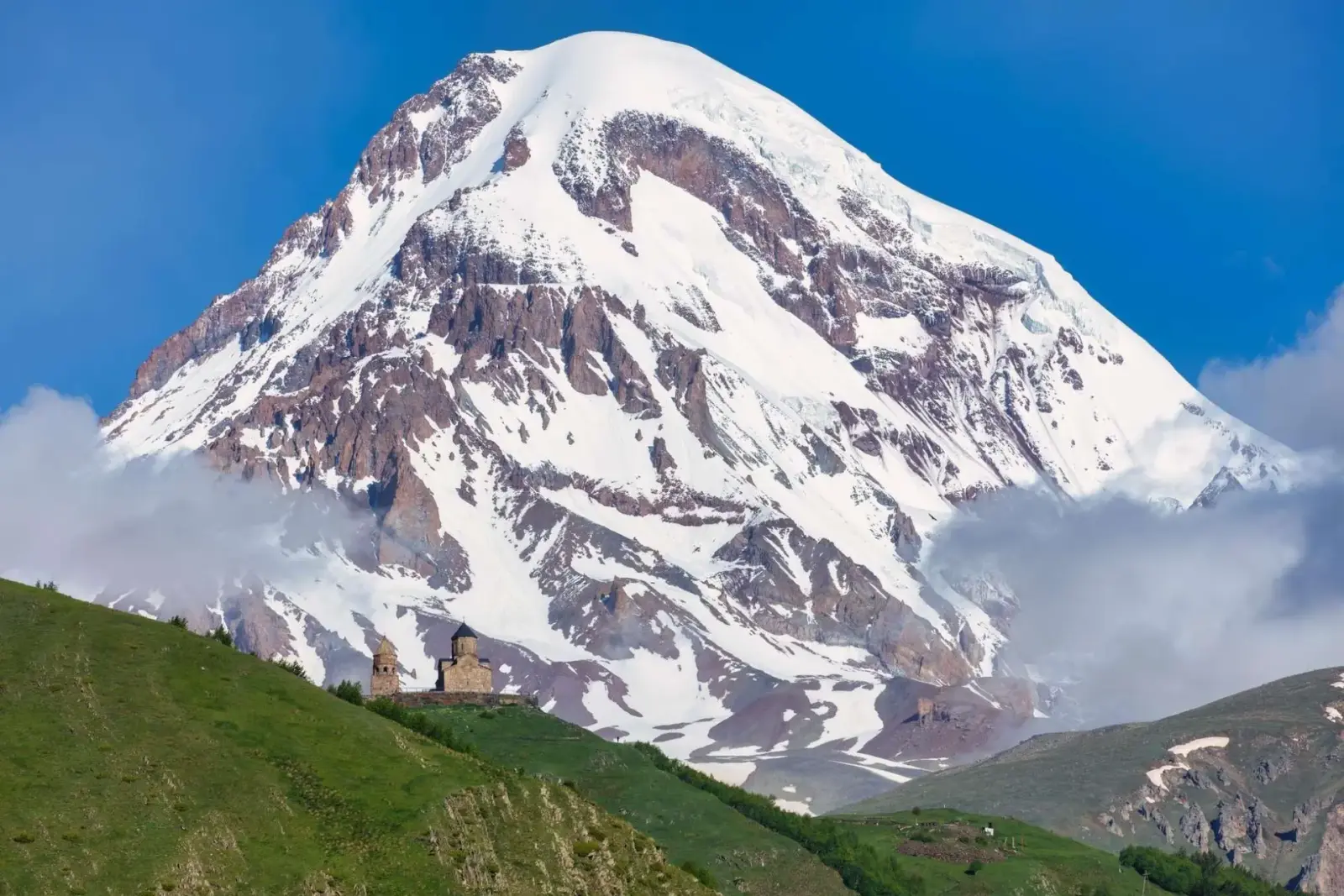
Tbilisi is hot: average highs are around 30 °C in July and August [3], and the rock sites of Uplistsikhe and David Gareja have almost no shade. The mountains are the opposite. Stepantsminda, the town below Gergeti, sits at about 1,740 m, where August days reach about 20 °C and nights drop to about 12 °C [4]; Gergeti Trinity itself is at 2,170 m. Pack:
- Light, loose clothes that still cover shoulders and knees (linen trousers, a long skirt, a shirt).
- A sun hat and sunglasses.
- A fleece and a windproof layer for Kazbegi, Svaneti and evening drives over the Jvari Pass (2,379 m).
- Swimwear if the Black Sea coast is on your route.
Autumn (September to November)
September and October are warm in the lowlands and the harvest season in Kakheti; November turns cool and wet. The first snow can fall in the high mountains in October. Pack:
- Layers: T-shirts, a warm jumper, a light down jacket for the mountains.
- A rain jacket.
- Old clothes or a dark top if you will help with the grape harvest; grape juice stains.
Winter (December to February)
Tbilisi winters are mild compared with northern Europe: January averages a little above freezing, with daytime highs around 7 °C and occasional snow [3]. The mountains are properly cold. Stepantsminda averages below freezing in January, with nights around −11 °C [4]. Pack:
- A warm coat, hat, gloves and scarf for Tbilisi.
- For Gudauri or Kazbegi: thermal base layers, a down jacket, waterproof trousers, insulated boots with a good grip for icy paths.
- Ski clothing if you plan to ski; rental gear is available at the resorts.
- Lip balm and moisturiser; mountain air is dry.
Leave a spare day between any mountain trip and your flight, because the Jvari Pass can close for hours or even 1–3 days after heavy snow. Our guide to the Kazbegi road in winter explains how closures work, and Georgia in December covers what the month is like.
What not to bring
- Lots of cash in foreign currency: exchange offices and cash machines are easy to find in towns.
- Snacks for the whole trip: markets and bakeries are everywhere, and your guide will stop.
- Space for wine: actually, do bring some. Wrap bottles in clothes in checked luggage, or ask at the cellar about shipping; liquids limits mean bottles and chacha can't go in hand luggage.
For more before-you-go advice, read Georgia travel tips for a first trip.
Travelling with us
Our tours are private, with your own car and driver-guide, so there is always somewhere to leave the extra layer or the bag of wine. On the private Tbilisi city tour you walk 5–6 km on cobbles and steps, so shoes with grip matter. The Georgia highlights tour, 5 days goes from hot Kakheti to a night in Stepantsminda, so it needs both summer clothes and a warm layer; the Kazbegi and Gergeti day trip does the same in a single day. See each tour page for the current price, or plan your own route and we send a private itinerary with a price. Nothing to pay now.
Sources
- Wise, "Plug and outlet type used in Georgia": wise.com
- U.S. Embassy in Georgia, "Georgia to require insurance for all tourists starting 1/1/2026": ge.usembassy.gov
- Climates to Travel, "Tbilisi climate": climatestotravel.com
- Weather and Climate, "Kazbegi weather by month": weather-and-climate.com; Wikipedia, "Stepantsminda": en.wikipedia.org
Last checked: September 2026. Entry and insurance rules can change; check your government's travel advice before you go.