The short answer: the things that travel home well from Georgia are wine, chacha, churchkhela, dry spice blends such as khmeli suneli and Svan salt, and crafts such as cloisonné enamel and felt. Pack bottles in your checked luggage and stay inside your home country's allowance: arriving in Great Britain that is 18 litres of still wine and 4 litres of spirits per adult[1]; arriving in the EU it is 4 litres of still wine and 1 litre of spirits[2]. Leave the cheese behind: the UK and the EU don't let travellers bring in meat or dairy products from outside the EU[3][4].
Wine
Georgian wine is the obvious present, and buying it here gives you bottles you won't find at home: qvevri-made amber wines, small family cellars and rare local grapes. Buy at the cellar door on a Kakheti tasting day, or in Tbilisi's wine shops, where staff can explain labels in English.
- Arriving in Great Britain: you may bring 18 litres of still wine (24 standard bottles) and 42 litres of beer, plus either 4 litres of spirits or 9 litres of sparkling or fortified wine, or a split of the two, duty-free[1].
- Arriving in the EU: 4 litres of still wine and 16 litres of beer, plus 1 litre of spirits over 22%, or 2 litres of sparkling or fortified wine, or a split[2].
- Elsewhere: check your own customs rules before you buy; allowances vary a lot.
The allowance is per adult, and you can't pool it with your travelling companions[1]. Above it, you declare and pay duty on the whole category, not just the extra.
Chacha
Chacha is Georgia's grape spirit, distilled from the skins and pips left after winemaking. For customs it counts as a spirit, so it comes out of the smaller allowance above. Buy commercial bottles with the strength on the label, rather than home-made chacha in a plastic bottle: it is safer to drink and simpler to explain at customs. Our chacha guide covers how it is made and drunk.
Churchkhela
Churchkhela, walnuts or hazelnuts on a string dipped again and again in thickened grape juice, is the snack you will see hanging at every market and roadside stall. It is light, keeps for weeks and packs well, which makes it the easiest edible present. Choose firm, dry pieces rather than soft, sticky ones, and wrap them in paper. Our guide to Georgian bread and sweets explains how it is made.
Spices and sauces
- Khmeli suneli: the dry herb and spice blend in many Georgian stews.
- Svan salt: salt ground with garlic and spices, from Svaneti; good on almost anything.
- Utskho suneli (blue fenugreek) and dried marigold petals, both hard to find abroad.
- Tkemali and adjika: plum sauce and chilli paste. These are liquids or pastes, so they go in checked luggage, well sealed.
At markets spices are sold loose from big sacks; ask the seller to bag and seal them twice, or buy packed spices from a shop. Some countries have rules on plant products, so check yours before you pack large amounts.
Honey
Georgian mountain honey is sold at markets and roadside stalls, sometimes still in the comb. The EU allows travellers from outside the EU to bring in a limited amount of honey[4]; rules for other countries differ. Buy it in a sealed jar and pack it in your checked bag.
What to leave behind
- Cheese: sulguni and the other Georgian cheeses are dairy, and personal imports of meat and dairy from most non-EU countries are banned in the UK[3] and from all non-EU countries in the EU, with narrow exceptions such as infant food[4]. Eat it here.
- Sausages and cured meat: the same rule.
- Antiques and old paintings: taking artworks, antiques and other cultural valuables out of Georgia needs an export licence from the Ministry of Culture[5]. Modern souvenirs and mass-produced crafts don't need one[6], but if you buy something old at the Dry Bridge market, ask the seller about the paperwork, or don't buy it.
Crafts
- Cloisonné enamel (minankari): pendants, earrings and small icons in bright enamel set between fine metal wires, a Georgian craft with medieval roots. Prices and quality vary widely; buy from a workshop or a shop that tells you who made the piece.
- Felt: hats, slippers, scarves and wall hangings in pressed wool, light and easy to pack.
- Ceramics and wood: bowls, jugs and carved boards, better as checked luggage.
- Drinking horns (kantsi): a table classic, and a talking point at home.
Where to buy
- Dezerter Bazaar, Tbilisi: the big food market by the central station, for spices, churchkhela, honey and dried fruit. Taste before you buy.
- The Dry Bridge market, Tbilisi: a flea market with Soviet memorabilia, paintings, jewellery and odds and ends.
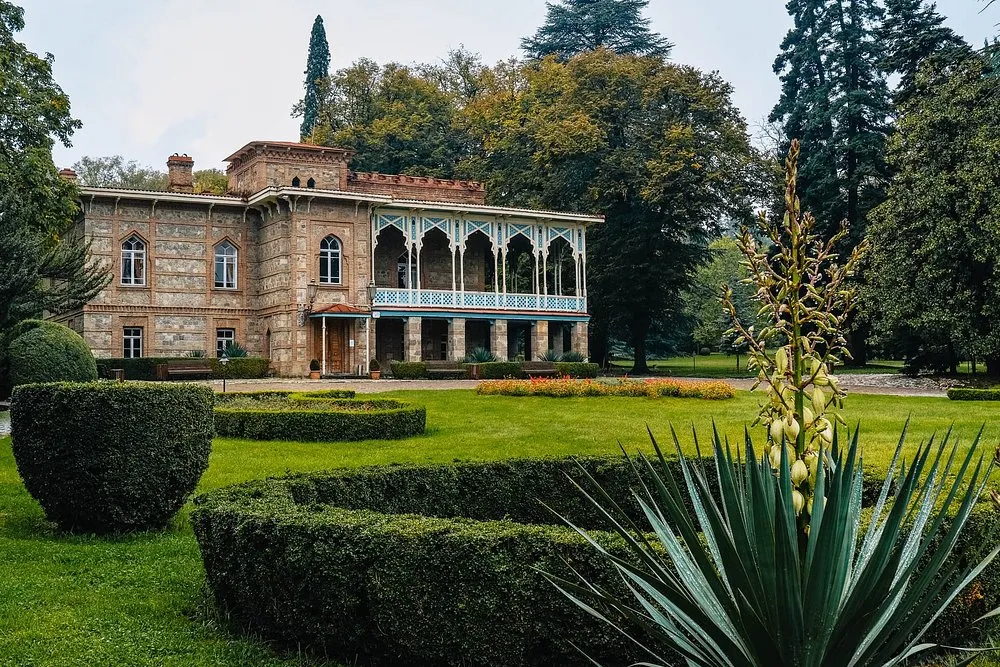
- Family cellars in Kakheti: wine and chacha at cellar-door prices, often from producers too small to export.
- Craft shops in the Old Town: enamel, felt and ceramics, with prices marked.
Packing tips
- Standard airport rules limit liquids in hand luggage to small containers, so wine, chacha, honey and sauces go in your checked bag, unless you buy them after security.
- Wrap each bottle in clothes or a padded bottle sleeve, and put it in a plastic bag in case it breaks.
- Keep receipts, especially for wine and anything that looks valuable.
- Check your airline's baggage weight before a big cellar-door shop: wine is heavy.
Shopping with us
Our trips are private: your own car and English-speaking driver-guide, for 1–8 travellers, so there is always room in the boot for a case of wine. The private Tbilisi food and wine walk starts with an hour of tasting at the Dezerter Bazaar, including cheese, spices and churchkhela, which is the easiest way to learn what to buy. On the private Kakheti wine day trip you taste at Tsinandali and at a family qvevri cellar that sells bottles and chacha, and the Georgian cooking class shows you how to use the spices once you are home. See the tour pages for the current price, or build your own trip. Nothing to pay now.
Sources
- GOV.UK, "Bringing goods into the UK for personal use: arriving in Great Britain": gov.uk
- Your Europe (European Union), "Rules for carrying alcohol and tobacco in the EU and leaving and entering the EU": europa.eu
- GOV.UK, "Bringing goods into the UK for personal use: banned and restricted goods": gov.uk
- European Commission, "About personal imports" (animal products): food.ec.europa.eu
- US International Trade Administration, "Georgia: business travel" (export of valuables): trade.gov
- Law of Georgia on the Export and Import of Cultural Property: matsne.gov.ge
Last checked: September 2026. Customs allowances change; check your own country's rules before you fly.