The short answer: Megrelian food, from the Samegrelo region of western Georgia, is the spiciest and cheesiest cooking in the country. Its signature dishes are elarji (cornmeal cooked with a great deal of stretchy cheese), Megrelian kharcho (beef in a thick walnut sauce, eaten with cornmeal), gebzhalia (cheese rolls in minty yoghurt), Megrelian khachapuri with cheese on top as well as inside, and adjika, a hot pepper paste. You can eat it in Zugdidi and Martvili, and at Megrelian restaurants in Tbilisi.
What makes it different
Samegrelo is warm, humid and green, and its kitchen is built on maize rather than wheat, on the local cheeses, especially sulguni, which comes from here, and on a lot of chilli, garlic and walnuts[1][2]. Adjika gives many dishes their kick; it is often said to have been used as a remedy against the diseases of the humid lowlands[2]. Compared with the east, you will see fewer breads and more bowls of cornmeal.
The dishes to order
Ghomi
A smooth cornmeal porridge, a little like polenta, served as the starch alongside stews and sauces, often with a slice of sulguni pressed into it so it melts[1][3]. It is the base of many Megrelian meals.
Elarji
Ghomi's richer cousin: the cornmeal is cooked together with cheese until it stretches in long strings when you lift your spoon[1][3]. It is made for guests and holidays more than everyday meals, and it is very filling[3]. Eat it hot, with kharcho or satsivi.
Megrelian kharcho
In the rest of Georgia "kharcho" can mean several things; in Samegrelo it is usually beef stewed in a thick, spiced walnut sauce, eaten with ghomi or elarji[4]. Expect it to be hot and rich.
Gebzhalia
Soft rolls of fresh cheese filled with a mixture of cheese, mint and garlic, sometimes with green chilli, served in a sauce of milk and matsoni (Georgian yoghurt) flavoured with more mint[1][4]. It is a cool, fresh dish, and a good foil to the spicier ones.
Megrelian khachapuri
A round cheese bread like the imeruli khachapuri, but with an extra layer of sulguni baked on top[3]. You will find it all over Georgia, but it is at home here.
Chvishtari
Cornmeal flatbreads or patties with grated sulguni inside, which stretches as you bite[3].
Kupati
A spicy sausage, traditionally made from pork offal and dried or smoked, and served with tkemali plum sauce and ghomi[3].
Satsivi
Poultry, usually turkey or chicken, in a cold walnut and garlic sauce with spices. It is made across Georgia, especially for New Year, but in Samegrelo it comes with ghomi[3].
Sulguni
Sulguni, the brined, stretchy cheese you meet all over Georgia, comes from Samegrelo[2]. You will find it fresh and mild, or smoked, with a darker rind and a stronger taste. It is the cheese that melts into ghomi, stretches in elarji and tops Megrelian khachapuri, so in this region you eat a great deal of it.
Adjika
Megrelian adjika is a paste of hot peppers, garlic and spices, sometimes with walnuts or herbs[1][3]. There is a red version, from red chillies, and a green one, with green chillies and coriander[1]. Locals rub it on meat, stir it into stews and spread it on bread. A jar of home-made adjika from the Dezerter Bazaar in Tbilisi makes a good present if you like heat; see our guide to Tbilisi's markets.
How hot is it?
Hotter than elsewhere in Georgia, but rarely at the level of Thai or Sichuan cooking. The heat is in the adjika and the kharcho; ghomi, elarji, gebzhalia and khachapuri are mild. If you are sensitive, ask for adjika on the side.
For vegetarians
Much of the Megrelian table is vegetarian: ghomi, elarji, gebzhalia, chvishtari and Megrelian khachapuri all contain no meat, just a lot of cheese. Vegans have a harder time here than elsewhere in Georgia.
What to drink
Samegrelo has its own red grape, Ojaleshi, though production is small[5]. You are more likely to be served wine from elsewhere in Georgia, or home-made chacha. With spicy kharcho, a cool glass of Imeretian white works well.
Ordering tips
Megrelian dishes are made for sharing. Order a bowl of ghomi or elarji for the table, a kharcho, a gebzhalia and a khachapuri, and pass them round. Elarji is very rich; one portion goes a long way between two or three people. If you want to try adjika without committing, ask for a little on the side with bread.
Where to eat it
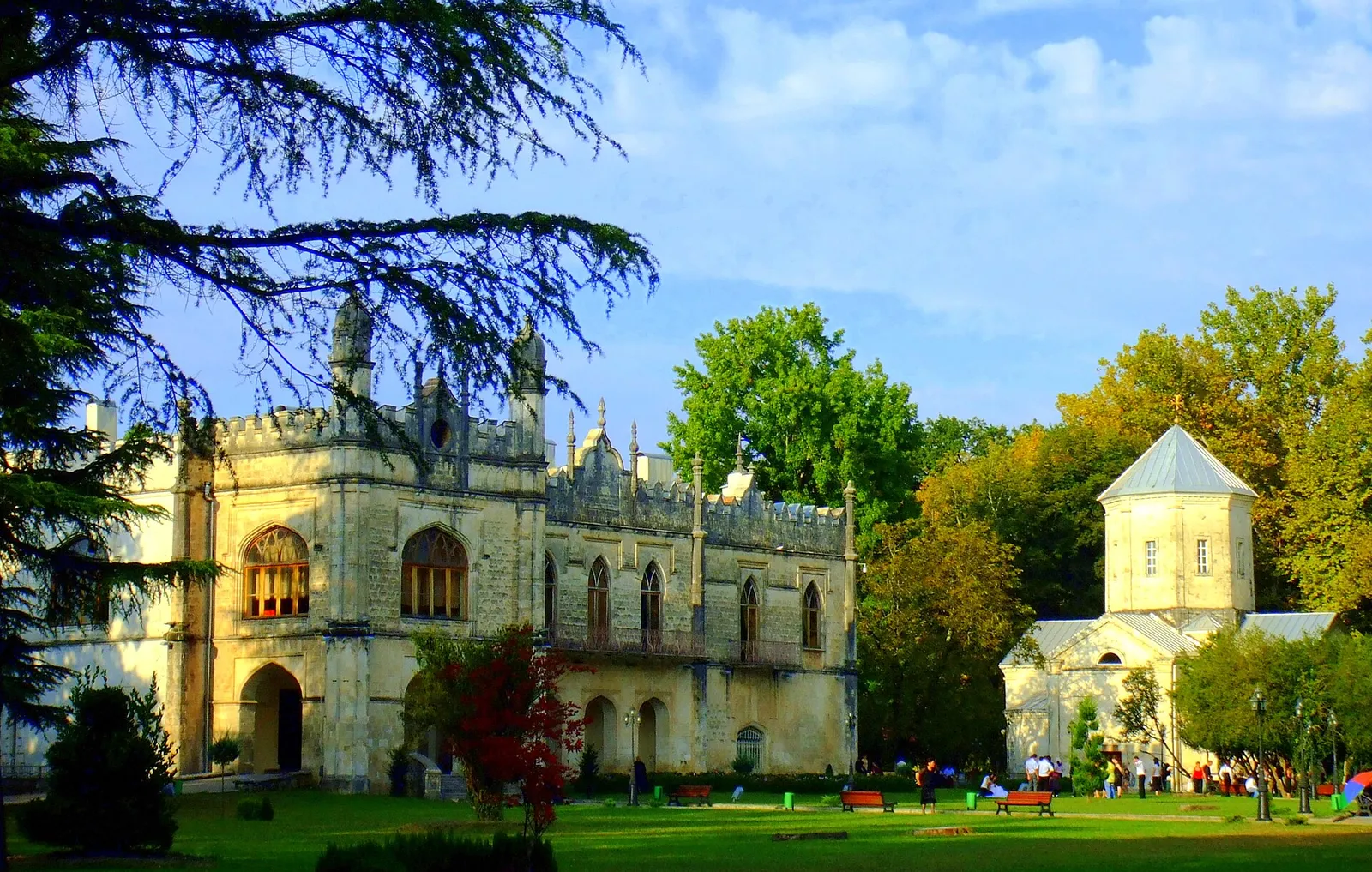
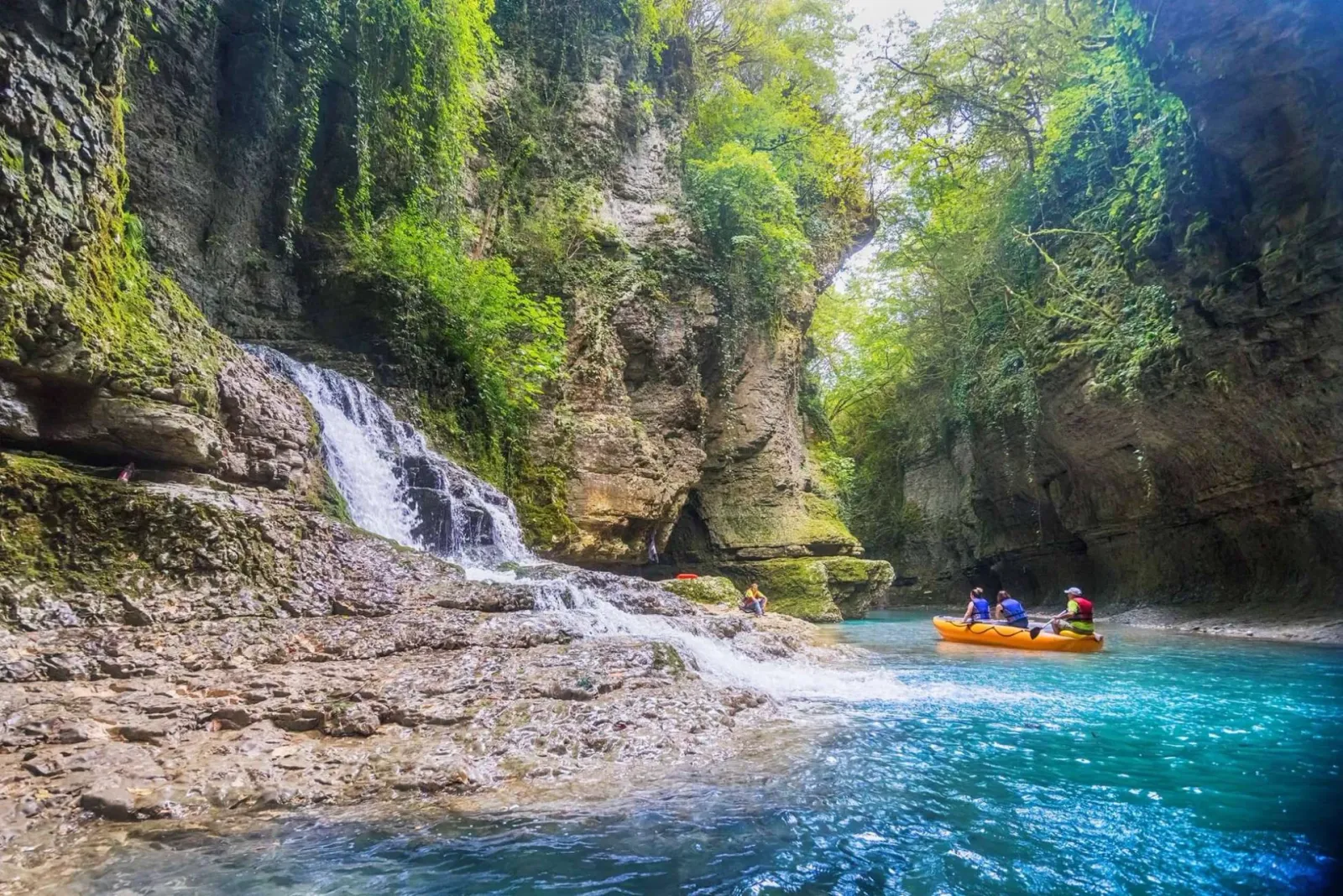
- Zugdidi and Martvili: the obvious places, on the way to Svaneti or after Martvili canyon. See our Zugdidi and Dadiani Palace guide.
- Tbilisi: the capital has several Megrelian restaurants; your guide will know the current favourites.
- A home kitchen: elarji is at its finest at a family table, where it is made in quantity and stirred for a long time.
For the whole Georgian table, start with our list of 15 dishes to try.
Eating Megrelian food with us
All our tours are private, with your own car and driver-guide who knows where to eat. The Western Georgia and Black Sea tour, 6 days passes through Martvili and Zugdidi on the way to Mestia, and we plan lunch at a Megrelian restaurant there. In Tbilisi, the Tbilisi food and wine walk starts at the Dezerter Bazaar, where you can taste sulguni and adjika, and the Georgian cooking class teaches you khachapuri and khinkali. See each tour page for the current price, or build your own trip. Nothing to pay now.
Sources
- Georgian Travel Guide, "Megrelian cuisine": georgiantravelguide.com
- Wander-Lush, "Where to eat Megrelian cuisine in Tbilisi": wander-lush.org
- Georgia Starts Here, "9 meals to try in Samegrelo": georgiastartshere.ge
- Red Fedora Diary, "Traditional Georgian food": redfedoradiary.com
- National Wine Agency of Georgia, "Viticulture and winemaking regions": wine.gov.ge
Last checked: September 2026.