The short answer: the big Georgian feast days follow the Orthodox calendar, and several are public holidays. The ones visitors are most likely to meet are Giorgoba (St George's Day, 23 November), Svetitskhovloba, also called Mtskhetoba (14 October, in Mtskheta), Mariamoba (28 August), and Easter, which falls on 2 May in 2027[1][2]. Around them are local feasts such as Lomisoba in the mountains and Alaverdoba in Kakheti. A feast day usually means a church service in the morning and a long family meal afterwards.
Why the dates look "late"
The Georgian Orthodox Church follows the old Julian calendar, which is 13 days behind the calendar most of the world uses. That is why Christmas is on 7 January and why many saints' days fall on dates that look unfamiliar. Easter moves each year and usually falls later than Western Easter.
Feast days through the year
Christmas and Epiphany (7 and 19 January)
Both are public holidays[1]. On Christmas Day, Alilo processions of singers and children walk the streets of Tbilisi and other towns. Epiphany, Natlisghebai, is the feast of the blessing of water.
Ninooba (27 January and 1 June)
St Nino, who brought Christianity to Georgia in the 4th century, is remembered twice: on 27 January, the day of her death, and on 1 June, the day of her arrival[3]. Her grave is at Bodbe convent near Sighnaghi, which draws pilgrims on both days[3]. See Bodbe and St Nino.
Easter (2 May 2027)
The biggest feast of the year. Good Friday, Holy Saturday, Easter Sunday and Easter Monday are all public holidays[1]. Churches hold services through Saturday night, eggs are dyed red, and in the days after Easter families visit the graves of relatives. In the village of Shukhuti in Guria, Easter Sunday brings Lelo Burti, a rough mass ball game between two halves of the village. Our Georgian Easter guide has more.
Giorgoba in May (6 May)
St George, Georgia's patron saint, has two feast days: 6 May and 23 November. Only the November one is a public holiday[4].
St Andrew's Day (12 May)
A public holiday for St Andrew the First-Called, who in Georgian tradition preached in the country[1].
Lomisoba (a Wednesday in early summer)
Lomisa church stands at about 2,200 m on a ridge between the Ksani and Aragvi valleys, near Mleta on the road to Kazbegi[5]. On the Wednesday after Orthodox Pentecost (Pentecost falls on 20 June in 2027), pilgrims from Mtiuleti, Khevi and Khevsureti climb up to it, some barefoot, for a feast of St George that mixes church ritual with much older customs[5]. It is a real pilgrimage, and a steep walk.
Mariamoba (28 August)
The Dormition of the Virgin, a public holiday with services in churches across the country[1].
Alaverdoba (27–28 September)
The feast of Alaverdi Cathedral in Kakheti, named after its founder, St Joseph of Alaverdi[6]. It has its roots in a harvest festival, and it falls in the middle of the grape harvest[6]. Expect pilgrims, services and stalls outside the walls.
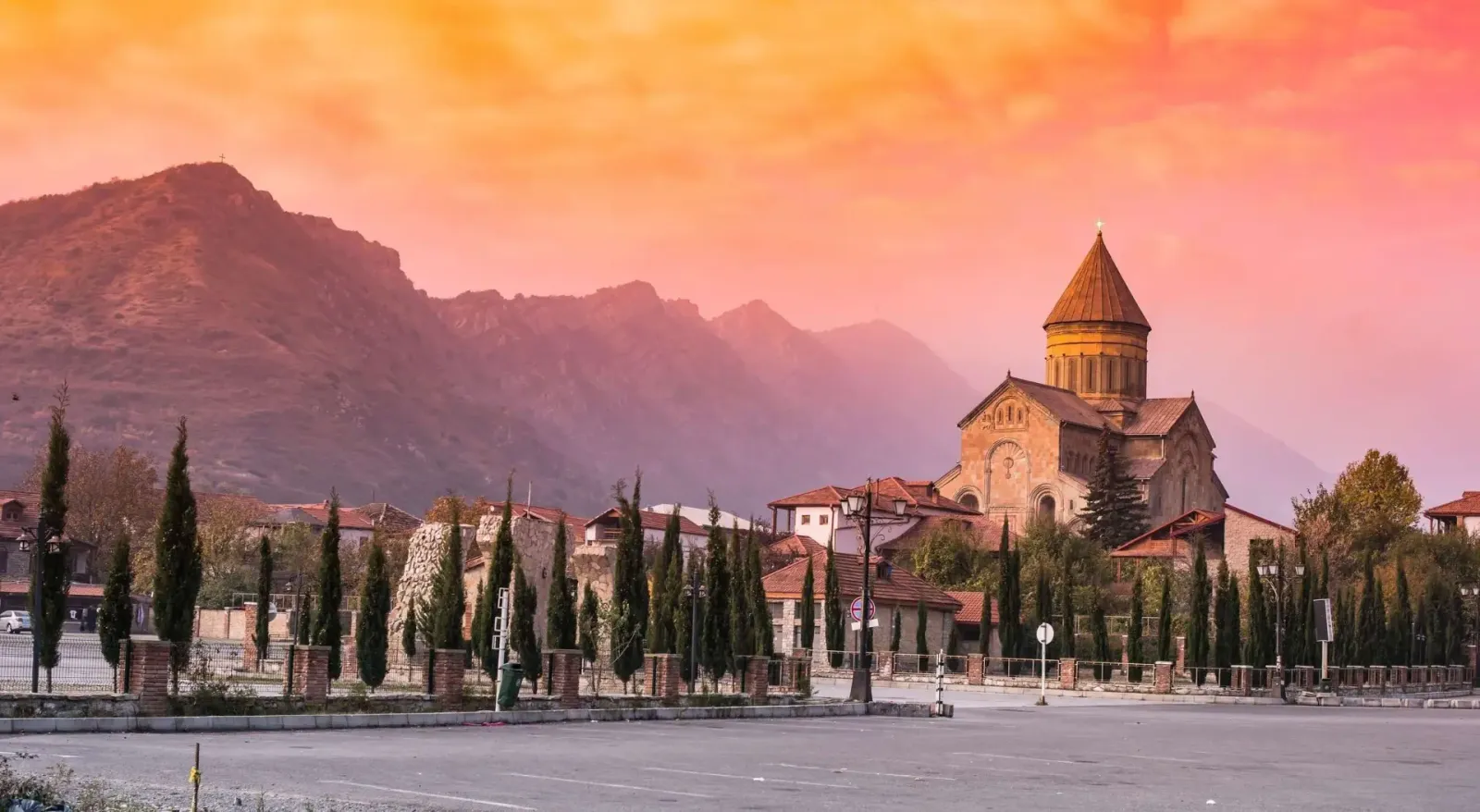
Svetitskhovloba or Mtskhetoba (14 October)
The feast of Svetitskhoveli Cathedral in Mtskheta, the country's most important church, and a public holiday[1]. The old town fills with pilgrims and families, and there is a festive mood in the streets. Go early, or visit the day before if you want to see the cathedral in peace.
Giorgoba (23 November)
St George's Day, a public holiday[1][4]. Churches dedicated to St George, which means a large share of the country's churches, hold services, and families gather for a supra.
Other public holidays to know
Georgia also has non-church public holidays: 1–2 January, 3 March (Mother's Day), 8 March, 9 April (National Unity Day), 9 May, 17 May, and 26 May (Independence Day)[1]. On these days banks and offices close and some museums change their hours. For the full list, see Georgian public holidays.
How to join in respectfully
- Dress: shoulders and knees covered; women cover their hair. On feast days, crowds make this matter more.
- Services: Georgians stand throughout, and people come and go. You can stay for a while at the back; don't photograph people praying without asking.
- Timing: on the big days, main churches are crowded and parking near them is hard. Plan to arrive early or to visit the day before.
- Traffic: roads out of Tbilisi are busy on holiday weekends, especially before Easter.
- Fasting: in Lent many Georgians eat no meat or dairy. Restaurants in cities serve everything, but a family may cook a fasting meal.
The feast after the feast
For most families the day ends at the table, often outdoors in summer and at a long table indoors in winter. A supra is led by a tamada, the toastmaster, with toasts to God, to Georgia, to the dead and to guests, and often songs between them. If you can't be in Georgia on a feast day, you can still sit down to a supra with singers.
Feast days with us
Our trips are private: your own car and English-speaking driver-guide, for 1–8 travellers. The private supra and polyphony evening in Tbilisi brings you to a family table with a tamada and a group of singers. The private Mtskheta and Château Mukhrani half day visits Svetitskhoveli, the church at the heart of Mtskhetoba, and in September the 3-day Kakheti wine tour can include Alaverdi. See each tour page for the current price, or plan a trip around a feast day. Nothing to pay now.
Sources
- Wikipedia, "Public holidays in Georgia": en.wikipedia.org
- Wikipedia, "List of dates for Easter": en.wikipedia.org
- Wikipedia, "Saint Nino": en.wikipedia.org; Report.ge, "Georgia celebrates St Nino's Day": report.ge
- Georgia Today, "Giorgoba: St George's Day celebrated in Georgia": georgiatoday.ge
- Georgian Travel Guide, "Lomisoba": georgiantravelguide.com; Wikipedia, "Lomisa church": en.wikipedia.org
- Georgian National Encyclopedia, "Alaverdoba": georgianencyclopedia.ge
Last checked: September 2026. Moveable feasts change each year; check the dates for your trip.