The short answer: Easter is the biggest religious festival in Georgia, bigger than Christmas. In 2027 Orthodox Easter falls on 2 May, and Good Friday (30 April) to Easter Monday (3 May) are public holidays[1]. Families dye eggs red and bake paska, churches hold a service from midnight on Saturday into the early hours, and on Easter Monday many Georgians visit family graves. In the village of Shukhuti in Guria, Easter Sunday ends with lelo burti, a huge, rule-free ball game. Visitors are welcome at all of it, as long as they are respectful.
Why the date moves
The Georgian Orthodox Church calculates Easter by the Julian calendar, so it usually falls later than Western Easter, somewhere between early April and early May. Before it comes Great Lent, about seven weeks of fasting, when many Georgians avoid meat, dairy and eggs. Restaurants mark fasting dishes on their menus, which makes this a good time for vegetarians; see our guide to vegetarian and vegan food in Georgia.
Red eggs and wheatgrass
Eggs are dyed red on Good Friday, traditionally with madder root or onion skins[2]. The red stands for the blood of Christ and new life. Families display them on a bed of jejili, wheatgrass grown from seeds sown about a week earlier[2]. On Easter morning, everyone picks an egg and taps it against the others' in turn; the one whose shell survives wins[3].
Paska
Paska is the Easter cake: a dense, sweet bread with raisins and spices such as cinnamon and cloves[2]. Families bake it at home, and bakeries across Tbilisi sell it in the weeks before Easter. It is eaten on Easter Sunday with the red eggs, cheese and, after the long fast, meat.
The Easter service
The main service, known as litonioba, starts around midnight on Saturday and runs until about 2–3 am[2]. People hold candles and process around the church three times[2]. At midnight the priest announces the resurrection, and greetings pass through the crowd:
- Kriste aghsdga: "Christ is risen".
- Cheshmaritad aghsdga: "He is risen indeed" (often shortened to cheshmaritad)[2].
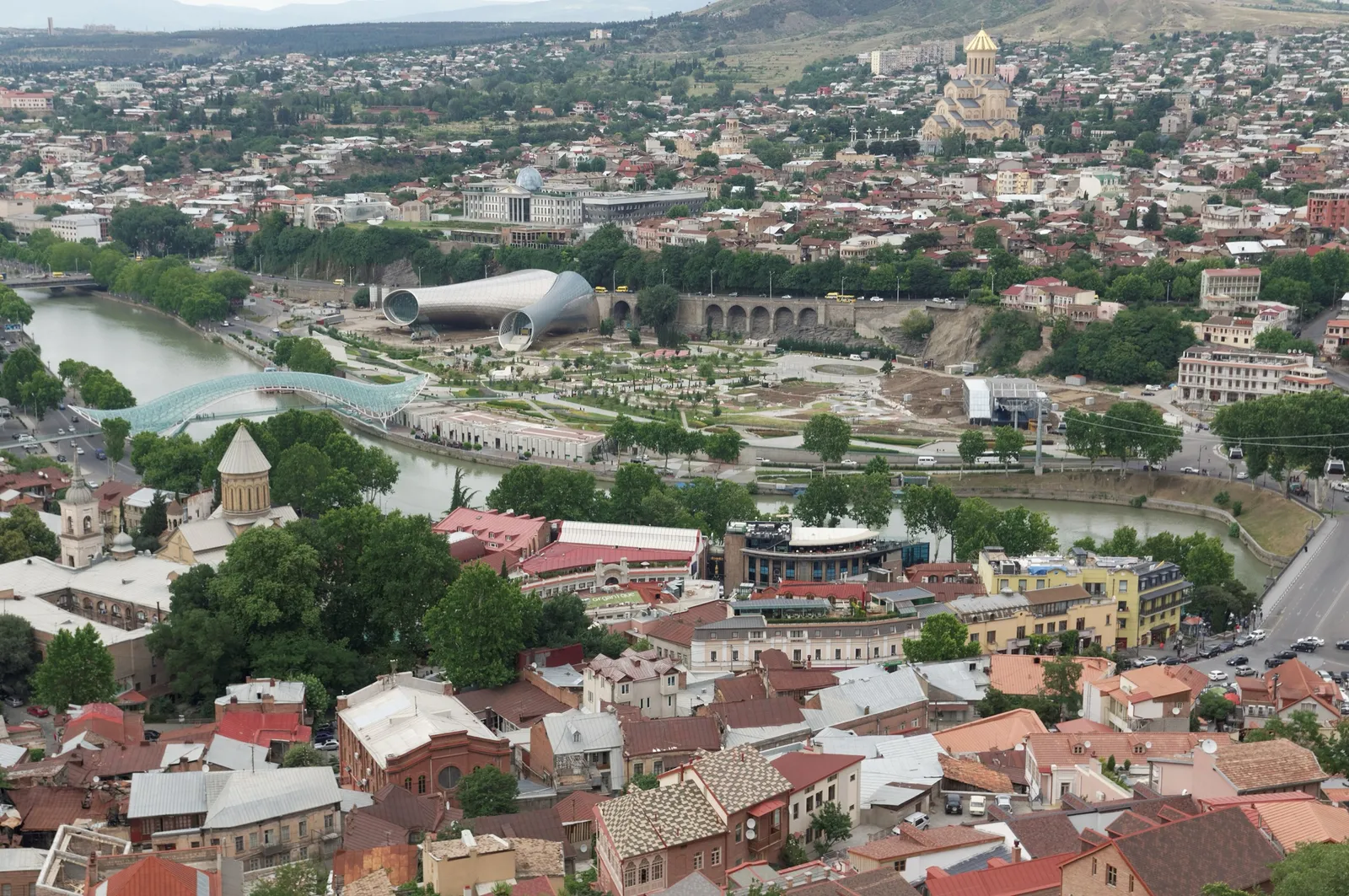
One of the biggest services in Tbilisi is at Sameba, the Holy Trinity Cathedral, which is packed. Smaller churches, such as Anchiskhati or Metekhi, are more intimate. If you go, dress modestly (women with a headscarf and a skirt), arrive early, stand at the back and don't photograph with flash. Our guide to church etiquette has the details, and Tbilisi's churches helps you pick one.
Easter Monday at the cemetery
The custom that surprises visitors most takes place on Easter Monday, when families go to the graves of their relatives[2][3]. They light candles, roll red eggs over the graves and share food and wine at the graveside[2]. It is a family occasion, and more cheerful than you might expect, but it isn't a spectacle. If you pass a cemetery, keep a respectful distance and don't take photos unless you are invited.
Lelo burti in Shukhuti
In Shukhuti, a village in Guria in western Georgia, Easter Sunday ends with lelo burti, a mass ball game between the men of Upper and Lower Shukhuti[4]. The ball is made of leather stuffed with sawdust, earth and sand, and weighs about 16 kg; it is sewn up and blessed by the priest before the match[4][5]. There are no real rules or time limits: each side tries to push the ball across a stream that serves as its goal, and play usually lasts around two hours[4][5]. The winners carry the ball to the cemetery and lay it on the grave of a villager who has died during the past year[5].
- When: Easter Sunday afternoon; the 2027 game is on 2 May, with the start usually at 17:00[5].
- Where: Shukhuti is about 70 km, an hour's drive, from Kutaisi, and about 90 km from Batumi[5].
- Safety: the scrum moves suddenly, and spectators can be knocked over[5]. Stand well back and keep children out of the way.
Travelling over Easter: what to expect
- What closes: banks and many state museums close over the four holidays, and some family restaurants and small shops close or shorten hours. Most restaurants in tourist areas stay open[2].
- Traffic: many Tbilisi families leave for their home villages before Easter and come back on the Tuesday, so the roads are busy[2].
- Bookings: guesthouses in popular regions fill up, particularly because Easter 2027 falls a week before the 9 and 12 May holidays. See our list of Georgian public holidays.
- Weather: early May is warm and green in the lowlands, but snow still lies high in the mountains; Kazbegi is at the start of its season.
Who Easter suits
Easter is a rewarding time to visit if you're interested in how Georgians live their faith and don't mind crowds at the big churches. It's a less good choice if you want quiet roads or have your heart set on museums, some of which close. Lelo burti suits adults who don't mind a boisterous crowd.
Easter in Georgia with us
All our trips are private, with your own car and English-speaking driver-guide. The Classic Georgia 8-day private tour runs from April, so an Easter departure takes in Tbilisi, Mtskheta, Kazbegi, Uplistsikhe, Borjomi, Vardzia (partly closed since the 27 May 2026 rockfall) and Kakheti, and we plan the days around the holiday. In Tbilisi, our private city tour visits Metekhi, Sioni and Anchiskhati. If you'd like to see lelo burti, the Western Georgia 6-day tour passes through the region, and we can shape a western route around Easter Sunday. See each tour page for the current price, or build your own Easter route. Nothing to pay now.
Sources
- Office Holidays, "Public holidays in Georgia, 2027": officeholidays.com
- Wander-Lush, "Easter in Georgia: essential travel tips and traditions": wander-lush.org
- Georgia Travel (Georgian National Tourism Administration), "Easter traditions": georgia.travel
- Wikipedia, "Lelo burti": en.wikipedia.org
- Wander-Lush, "How to attend Lelo Burti in Guria": wander-lush.org
Last checked: September 2026. Service times and the lelo burti start time can change; check locally in the week before Easter.