The short answer: Gelati Monastery, about 10 km north-east of Kutaisi, was founded in 1106 by King David IV "the Builder" as a monastery and an academy, and it is Kutaisi's only UNESCO World Heritage site. Its main church holds a famous 12th-century mosaic of the Virgin and Child and walls of medieval frescoes. In 2026 the main church is under conservation, with a temporary roof and scaffolding inside and out, so you will see part of the interior rather than all of it. Allow about an hour, and pair it with the small monastery of Motsameta nearby.
Why Gelati matters
David IV, the king who reunited Georgia and pushed back the Seljuks, founded Gelati in 1106 [1]. He meant it to be more than a monastery: it was also an academy. Scholars such as Ioane Petritsi, known for his commentaries on the philosopher Proclus, and Arsen Ikaltoeli worked and taught here [1]. For a century and more it was one of the intellectual centres of the Christian East.
David asked to be buried in the gateway, so that everyone entering would walk over him; his tomb is there under the south gate. Several later kings of Georgia and of Imereti were buried at Gelati too [1].
UNESCO listed Gelati in 1994 [2]. It was placed on the List of World Heritage in Danger in 2010 and taken off it in 2017, while remaining on the World Heritage List [1][2].
What to see
The Church of the Virgin
The main church, completed in 1130, is the reason to come [1]. In the apse is the mosaic of the Virgin and Child flanked by archangels, made in the 12th century and one of the finest medieval mosaics in Georgia [1]. The walls are covered in frescoes from the 12th century onwards, many added in the 16th century, including rows of saints and portraits of kings, David among them [1].
St George and St Nicholas
Two smaller churches, both from the 13th century, stand beside the main one: the Church of St George, and the two-storey Church of St Nicholas, raised on arches [1].
The academy and the gates of Ganja
The academy building survives as a roofless hall near the main church. By David's tomb hangs one leaf of the iron gates of Ganja, carried off as a trophy by his son King Demetrius I in 1138 [1].
Conservation and scaffolding in 2026
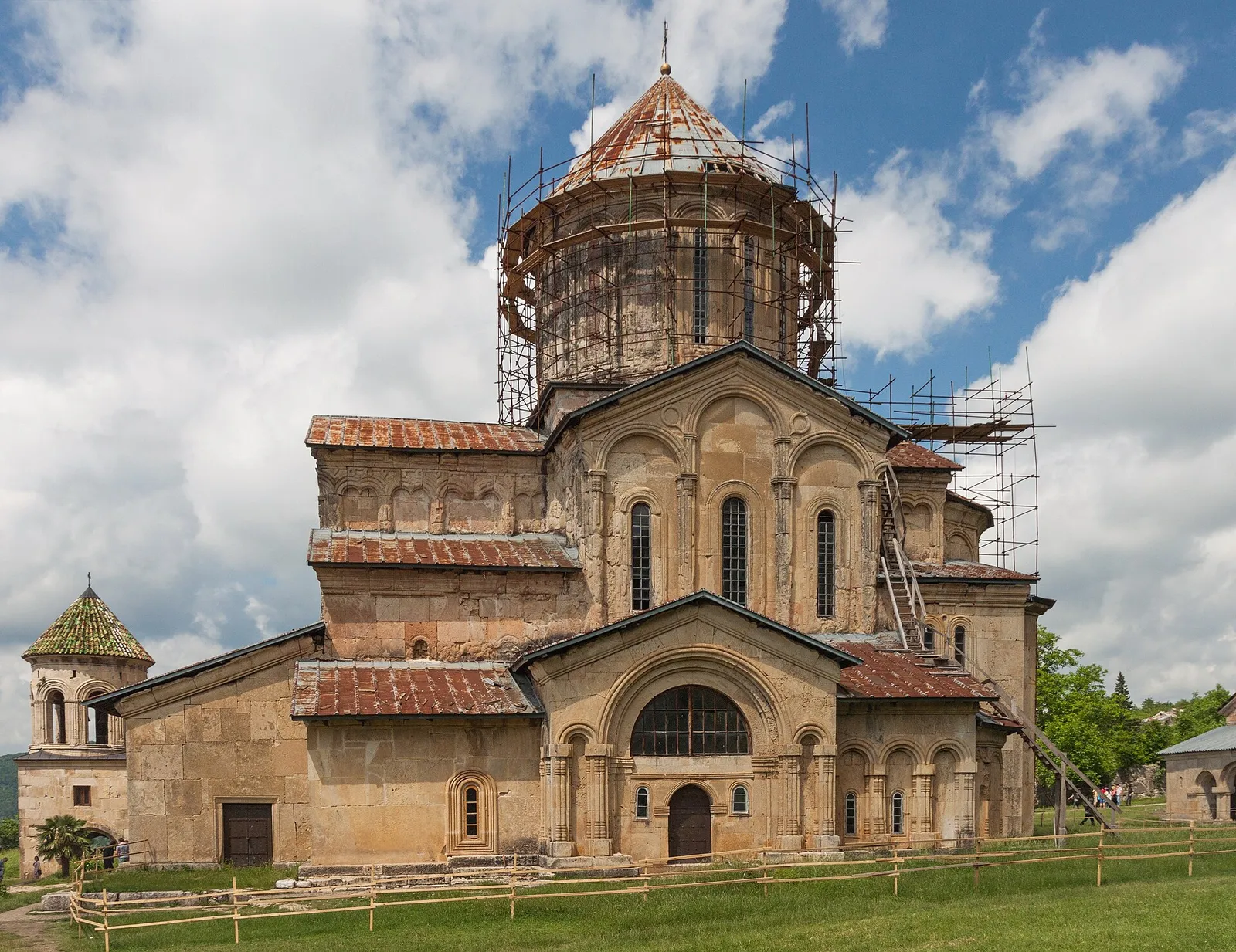
Gelati's roofs leaked for years, and water damaged the frescoes. A rehabilitation committee has been working on the main church; in 2026 a temporary roof covers the main church and its dome while long-term restoration is planned [3]. Visitors report scaffolding on the facades and inside the church, where it can hide parts of the frescoes [3]. The mosaic in the apse may be partly visible or partly screened on the day; we can't promise either. Go knowing you are visiting a working conservation site, and it is still well worth it.
Motsameta, 20 minutes away
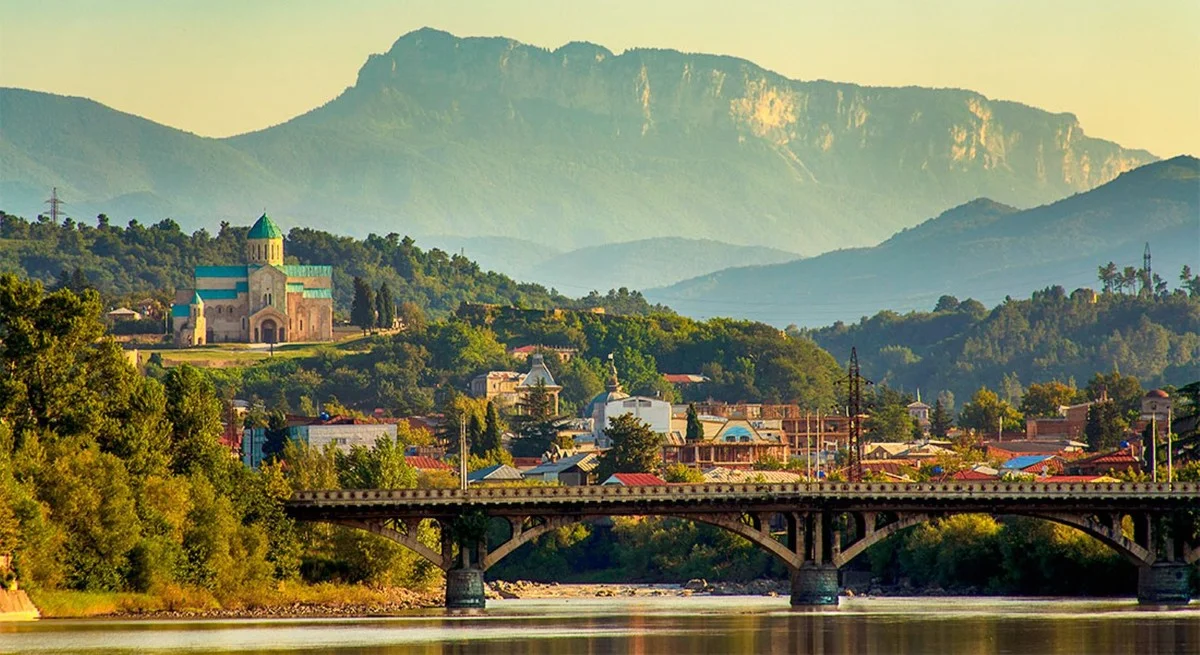
A few kilometres from Gelati, the little monastery of Motsameta stands on a wooded cliff above a bend in the river. It honours two brothers, the princes David and Constantine, martyred in the 8th century [4]. It is small and quiet, and the setting is the point. Many people combine Gelati, Motsameta and Bagrati Cathedral in Kutaisi as a half day. Bagrati, restored in 2012, is no longer on the World Heritage List: it was removed in 2017 because of that reconstruction [2].
Who Gelati suits
Gelati is for anyone with an interest in history, art or architecture, and it is an easy visit: the walk from the car park is short, though sloping and uneven in places, and there are steps into the churches. Children usually enjoy the iron gates and the story of the king buried under the threshold more than the frescoes. If medieval churches are not really your thing, one monastery is enough, and in western Georgia Gelati is the one to choose. With the scaffolding in 2026, photographers will have to frame around it; the views of the whole complex from the slope above the churches are less affected than the interior.
Practical information
- Getting there: about 20 minutes by car from central Kutaisi. Kutaisi is 3–3.5 hours from Tbilisi on the Rikoti highway.
- Time: about an hour at Gelati; 30 minutes at Motsameta.
- Dress code: it is an active monastery. Shoulders and knees covered; women cover their hair. Wraps are usually available at the gate.
- Photos: ask before photographing inside the churches, and never photograph during services.
- Weather: Gelati sits on a hillside; the paths are fine in any season, but bring a layer in winter.
Where Gelati fits in a trip
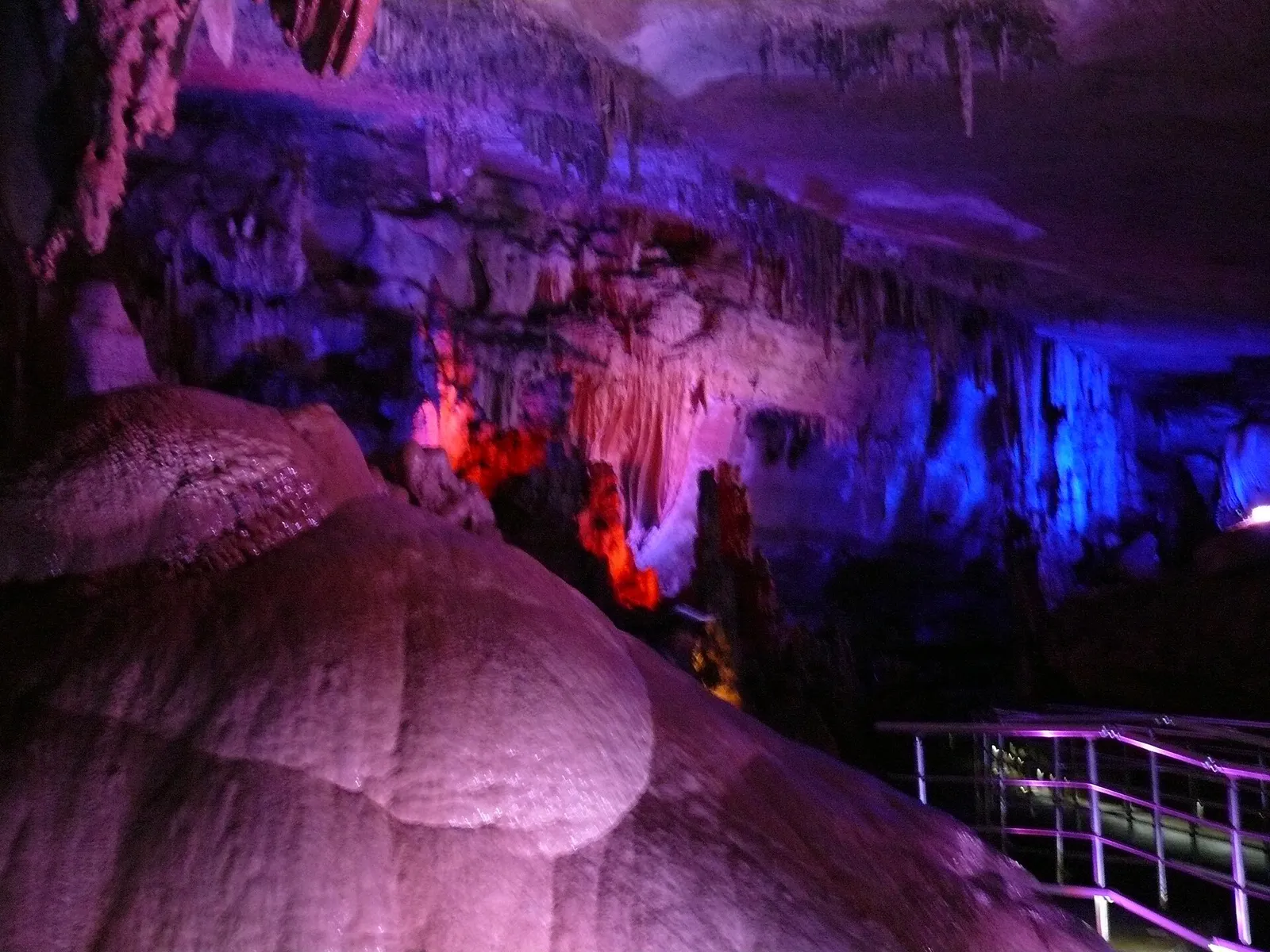
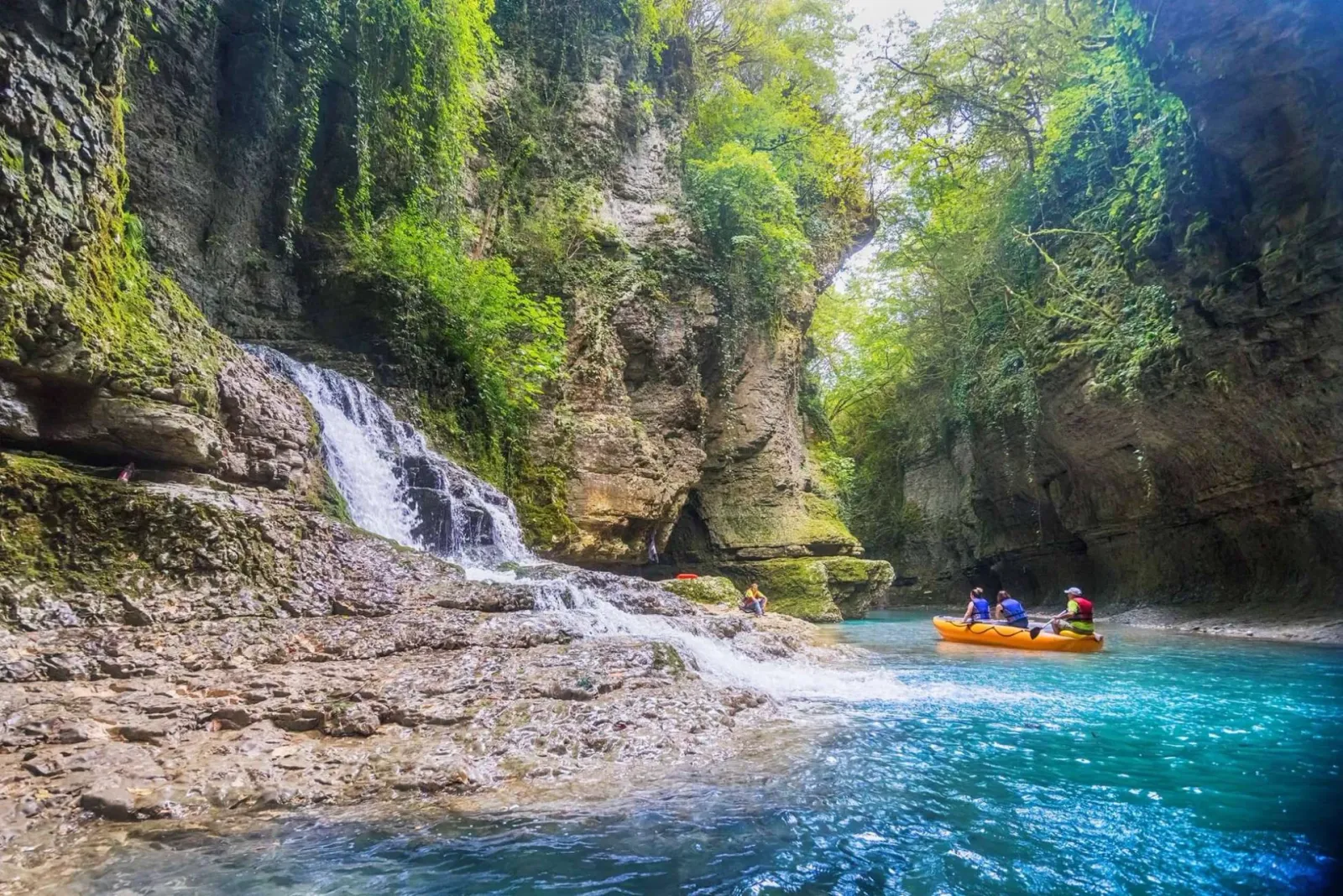
Gelati is an easy half day from Kutaisi, so it fits on the morning of a Kutaisi day, before or after the caves and canyons. See our Kutaisi day trip guide to Prometheus Cave and Martvili and Okatse canyons. On a longer route west, it sits naturally between Tbilisi and the Black Sea; see the western variant of our 7-day Georgia itinerary.
Seeing Gelati with us
Our tours are private: your own car and English-speaking driver-guide, for 1–8 travellers. The Heart of Georgia heritage tour, 5 days spends a morning at Gelati, Motsameta and Bagrati after a night in Kutaisi. If you are staying in Kutaisi, pair Gelati with the private Prometheus Cave and Martvili Canyon day trip from Kutaisi. For a longer route through western Georgia to Svaneti and Batumi, see Western Georgia and the Black Sea in 6 days, which we can adjust to include Gelati. See each tour page for the current price, or build your own route. Nothing to pay now.
Sources
- Wikipedia, "Gelati Monastery": en.wikipedia.org
- UNESCO World Heritage Centre, "Gelati Monastery": whc.unesco.org
- Georgia Today, "Gelati Rehabilitation Committee nears completion of temporary roofing at Gelati Monastery": georgiatoday.ge
- Wikipedia, "Kutaisi": en.wikipedia.org
Last checked: September 2026. Conservation work at Gelati is ongoing, and what is visible inside the main church changes as it progresses.