The short answer: in Georgia the big night is New Year's Eve, 31 December, celebrated at home with a long supper and fireworks at midnight. Christmas follows on 7 January, because the Georgian Orthodox Church keeps the Julian calendar, and on Christmas Day the Alilo processions walk through Tbilisi and other towns. Many families also mark Old New Year on 14 January. The official public holidays are 1–2 January, 7 January and Epiphany on 19 January [1][2].
The dates at a glance
- 31 December: New Year's Eve, the main family celebration.
- 1–2 January: New Year public holidays [1].
- 7 January: Orthodox Christmas (Kristeshoba), a public holiday, with Alilo processions [1][3].
- 14 January: Old New Year, or Basiloba, after St Basil. Widely celebrated, but not a public holiday [1][4].
- 19 January: Orthodox Epiphany (Natlisgheba), a public holiday [1].
New Year's Eve: the supra, the first guest and the fireworks
New Year is when Georgians gather with their families. The table is laid for a long supra, and the evening builds towards midnight, when fireworks go up across Tbilisi and in every town and village. Two customs are worth knowing if you are invited to a Georgian home.
Mekvle, the first guest
The first person to step across the threshold after midnight is the mekvle (in some regions mperkhavi). Families believe this guest brings the luck for the year ahead, so they choose someone cheerful and kind, and give them a special welcome [4][5]. If you are asked to be the first through the door, it is a compliment.
Gozinaki and the New Year table
Gozinaki is walnuts cooked in honey, set into a slab and cut into diamonds. It is made for New Year and Christmas and is a fixture of the table: sharing it with guests is a wish for a sweet, prosperous year [5][6]. You will also see satsivi, poultry in a walnut sauce, on many New Year tables [7], along with the usual khachapuri, pkhali and wine. For how the toasts work, read our guide to the Georgian supra and the tamada.
The chichilaki
Alongside, or instead of, a fir tree, many Georgian homes put up a chichilaki: a small "tree" made from a dried hazelnut or walnut branch, shaved into long curling strips so it looks white and feathery. People say it resembles the beard of St Basil. It is decorated with fruit, berries and sweets, and is most at home in western Georgia, in Guria and Samegrelo, though you can buy them in Tbilisi markets before the holidays. Traditionally it is burned on the eve of Epiphany, 18 January, to leave the old year's troubles behind [4][8].
Christmas on 7 January and the Alilo processions
Georgian Christmas is a church and family feast rather than a shopping one. Many people attend the night-time liturgy on Christmas Eve, and the Patriarch leads a service at Holy Trinity (Sameba) Cathedral in Tbilisi.
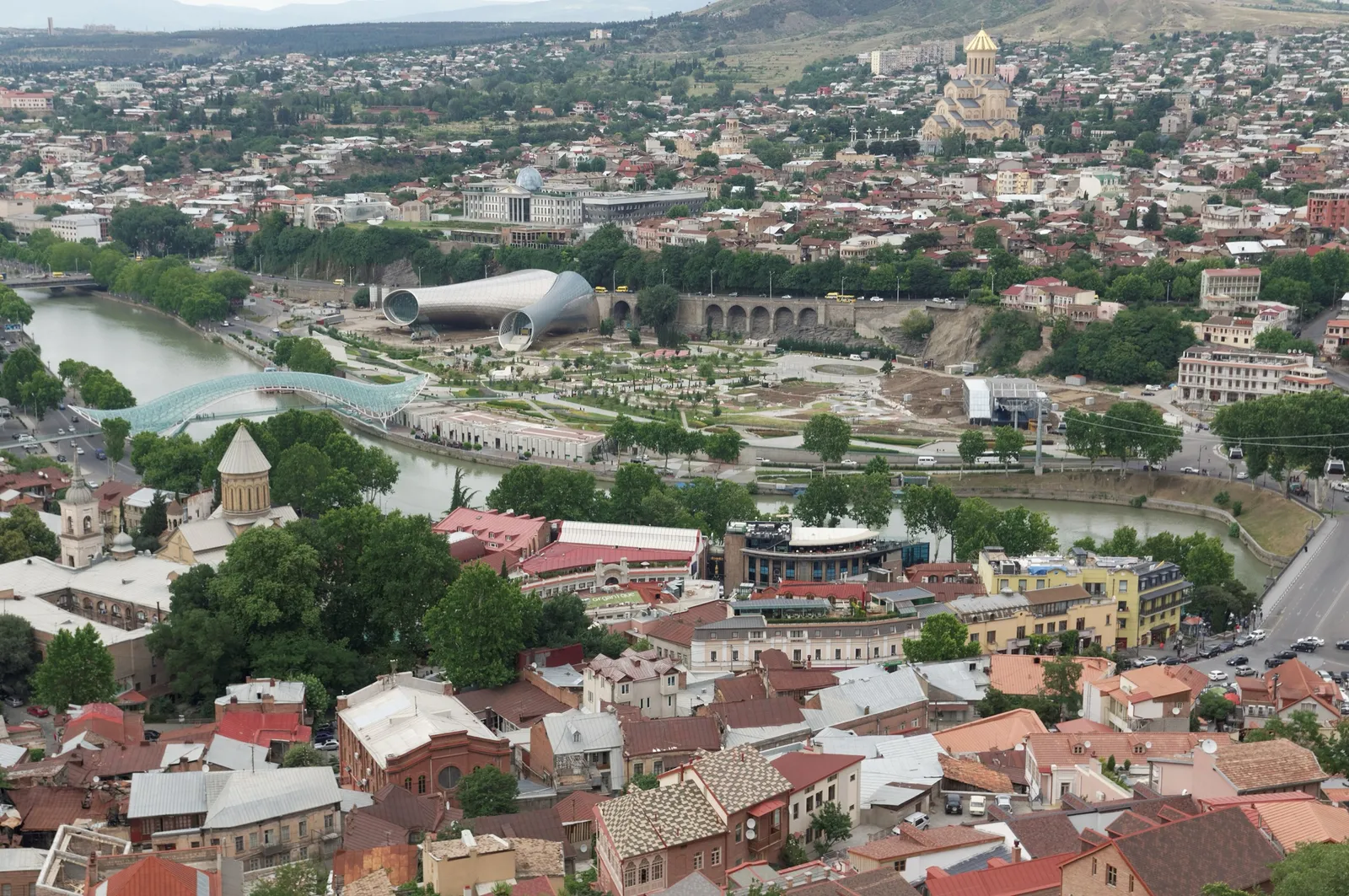
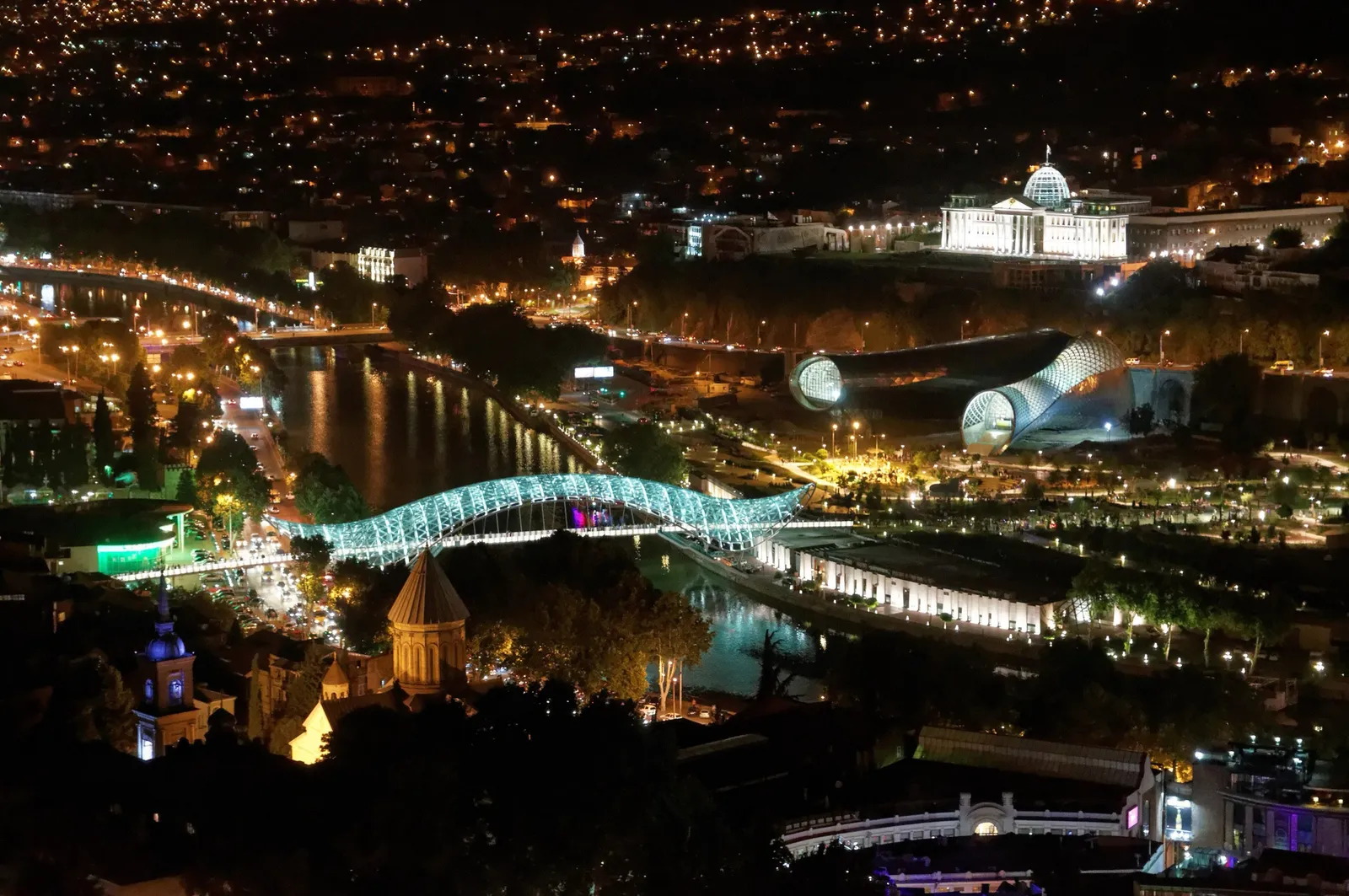
On Christmas Day comes Alilo, named after the carol sung along the way. In Tbilisi the procession sets off from Republic Square, goes along Rustaveli Avenue and through Freedom Square, crosses the Baratashvili Bridge and ends at Sameba Cathedral. Clergy, choirs, families and children walk together, many dressed as shepherds, wise men and angels, singing Georgian polyphonic carols and collecting food, clothes and money for orphanages, shelters and families in need [3]. The modern Tbilisi procession was formally organised in 2000, but carolling from house to house at Christmas is much older [3]. Anyone can watch from the pavement, and it is free. Georgian polyphony has been UNESCO-recognised since 2001.
Old New Year, 14 January
Because the old Julian calendar runs 13 days behind, many Georgians celebrate the New Year a second time on the night of 13–14 January. It is quieter than 31 December: a family supper, sometimes a cake with a coin baked inside for luck, and in some regions local customs such as Kalanda in Guria [4]. It is an ordinary working day, so shops and sights keep normal hours.
What's open over the holidays
- 1–2 January and 7 January: expect some shops, offices and smaller restaurants to close, and banks to be shut. Hotels, many restaurants in central Tbilisi and the sulphur baths carry on, but book dinner ahead.
- Museums: some close on 1 January; the Stalin Museum in Gori, for example, is closed that day [9]. Check each one before you go.
- Churches: open, and busy around Christmas services. Visitors are welcome but should dress modestly: shoulders and knees covered, and women cover their hair.
- Ski resorts: Gudauri and Bakuriani are at their busiest from Christmas to mid-January, so book rooms and ski hire early [10].
Travelling in Georgia at this time
Late December and January are a good time for a city-and-wine trip with a festive feel: the lights on Rustaveli Avenue, the markets, a Kakheti cellar and a long supper. The things to plan around are the weather and the holidays themselves.
- Short days: it gets dark by late afternoon, so long day trips need an early start.
- Mountain roads: the Jvari Pass (2,379 m) on the way to Kazbegi can close for hours, or for 1–3 days, after heavy snow. Keep a mountain day flexible, and never the day before your flight.
- Flights and rooms: many Georgians living abroad come home for New Year and Christmas, so book early.
- Insurance: travel insurance with at least 30,000 GEL of cover has been mandatory for visitors to Georgia since 1 January 2026.
For everything else about the cold months, including skiing and what closes in the mountains, read Georgia in winter.
Seeing the holidays with us
All our trips are private: your own car and English-speaking driver-guide, for 1–8 travellers. The Georgia in Winter, 6-day private tour runs in January and February (December and March on request) and combines Tbilisi, a Kakheti cellar with dinner, and two nights at Gudauri. If you are in Tbilisi for the holidays, the private Tbilisi Old Town walk covers Sioni Cathedral, Narikala and the cable car, and the private supra and polyphonic singing evening gives you a family feast with a tamada and singers; book it at least 3 days ahead, and earlier around the holidays. See each tour page for the current price, or build your own winter trip. Nothing to pay now.
Sources
- Wikipedia, "Public holidays in Georgia": en.wikipedia.org
- Georgian National Tourism Administration, "Two New Year's Eves and more": georgia.travel
- Georgia Today, "Alilo: the living tradition of Christmas in Georgia": georgiatoday.ge
- Georgian National Tourism Administration, New Year traditions (Basiloba, mekvle, chichilaki): georgia.travel
- Georgian Holidays, "Chichilaki, Mekvle and Gozinaki": georgianholidays.com
- Wikipedia, "Gozinaki": en.wikipedia.org
- RFE/RL, "Holiday greetings from Georgia": rferl.org
- Wikipedia, "Chichilaki": en.wikipedia.org
- Wander-Lush, "Visiting the Stalin Museum in Gori": wander-lush.org
- Friendly.ge, "Bakuriani ski resort guide": friendly.ge
Last checked: September 2026. Opening hours over the holidays vary from year to year; check before you go.