Heart of Georgia — 5-Day Private Heritage Tour
Tbilisi · Jvari Monastery · Mtskheta · Gori Stalin Museum · Uplistsikhe Cave Town · Kutaisi · Gelati Monastery · Alaverdi · Tsinandali · Sighnaghi · Bodbe
Overview
A five-day private heritage tour from Tbilisi that follows Georgian history from the Georgian National Museum to the UNESCO-listed churches of Mtskheta and Gelati, Stalin's Gori, the rock-cut town of Uplistsikhe and the wine estates of Kakheti. There are no high-mountain roads, so it runs all year. After a day in Tbilisi you drive west through Mtskheta, Uplistsikhe and Gori to Kutaisi. There you see Gelati Monastery, founded in 1106 by King David the Builder, the cliff-top Motsameta monastery and Bagrati Cathedral. You return to Tbilisi rather than face the long Kutaisi–Kakheti drive, then spend the last two days in Kakheti: Alaverdi Cathedral, the Tsinandali estate of the Chavchavadze family, a family cellar and a night in Sighnaghi. Day two is the long one, with about 4–4.5 hours of driving. It suits first-time visitors who prefer churches, museums and wine to hiking. Four hotel nights, breakfasts, one dinner, a cellar tasting and the listed entry fees are included.
Itinerary
11 stops: Tbilisi, Jvari Monastery, Mtskheta, Gori Stalin Museum, Uplistsikhe Cave Town, Kutaisi, Gelati Monastery, Alaverdi, Tsinandali, Sighnaghi, Bodbe
1Day 1Tbilisi: National Museum and Old Town
A museum and walking day in Tbilisi.
Pickup at your Tbilisi hotel or the airport
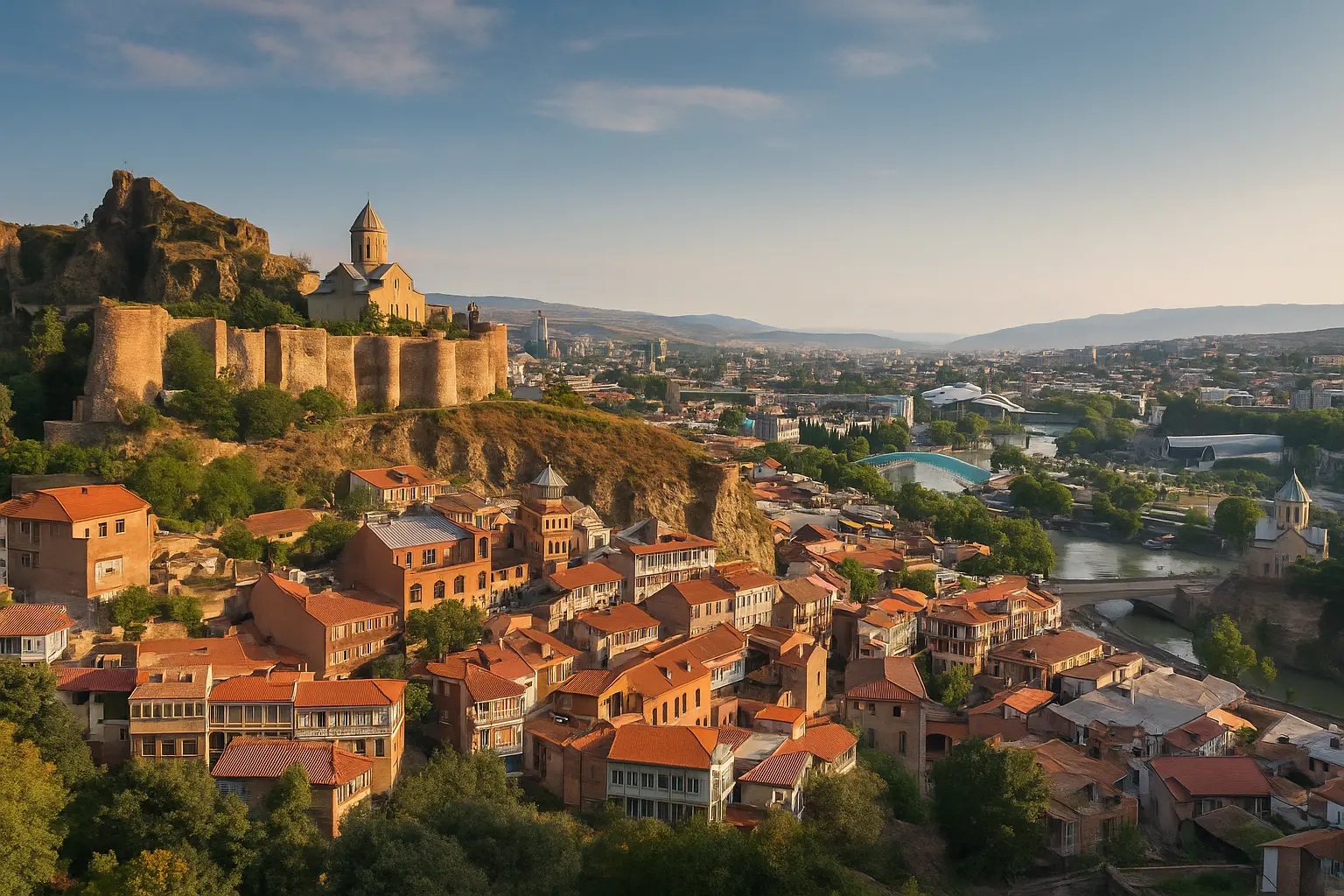
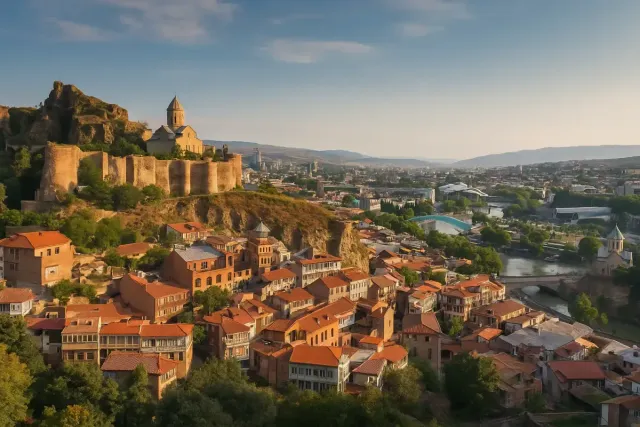 TbilisiDay 1: the Georgian National Museum and an afternoon Old Town walk with the cable car to Narikala. Nights 1 and 3 in Tbilisi.
Day 1: the Georgian National Museum and an afternoon Old Town walk with the cable car to Narikala. Nights 1 and 3 in Tbilisi.
Tbilisi, Georgia's capital, spreads along the Mtkvari river gorge between Narikala fortress and the Mtatsminda ridge. It is where most trips begin and end, and it deserves 2–3 days of its own. Walk the Old Town from the domed sulphur baths of Abanotubani up to Narikala, cross the Bridge of Peace, spend a morning with the gold of the Georgian National Museum and eat your way through the city's wine bars and khinkali houses. Every day trip in this area starts from here.
View destination details
Georgian National Museum (the Treasury is optional)
Lunch (not included)
Old Town walk and the cable car to Narikala
Overnight: Tbilisi (hotel, breakfast)
2Day 2Mtskheta, Uplistsikhe and Gori to Kutaisi
⚠ Long day: about 270 km and 4–4.5 hours of driving.
Jvari Monastery, then Svetitskhoveli Cathedral
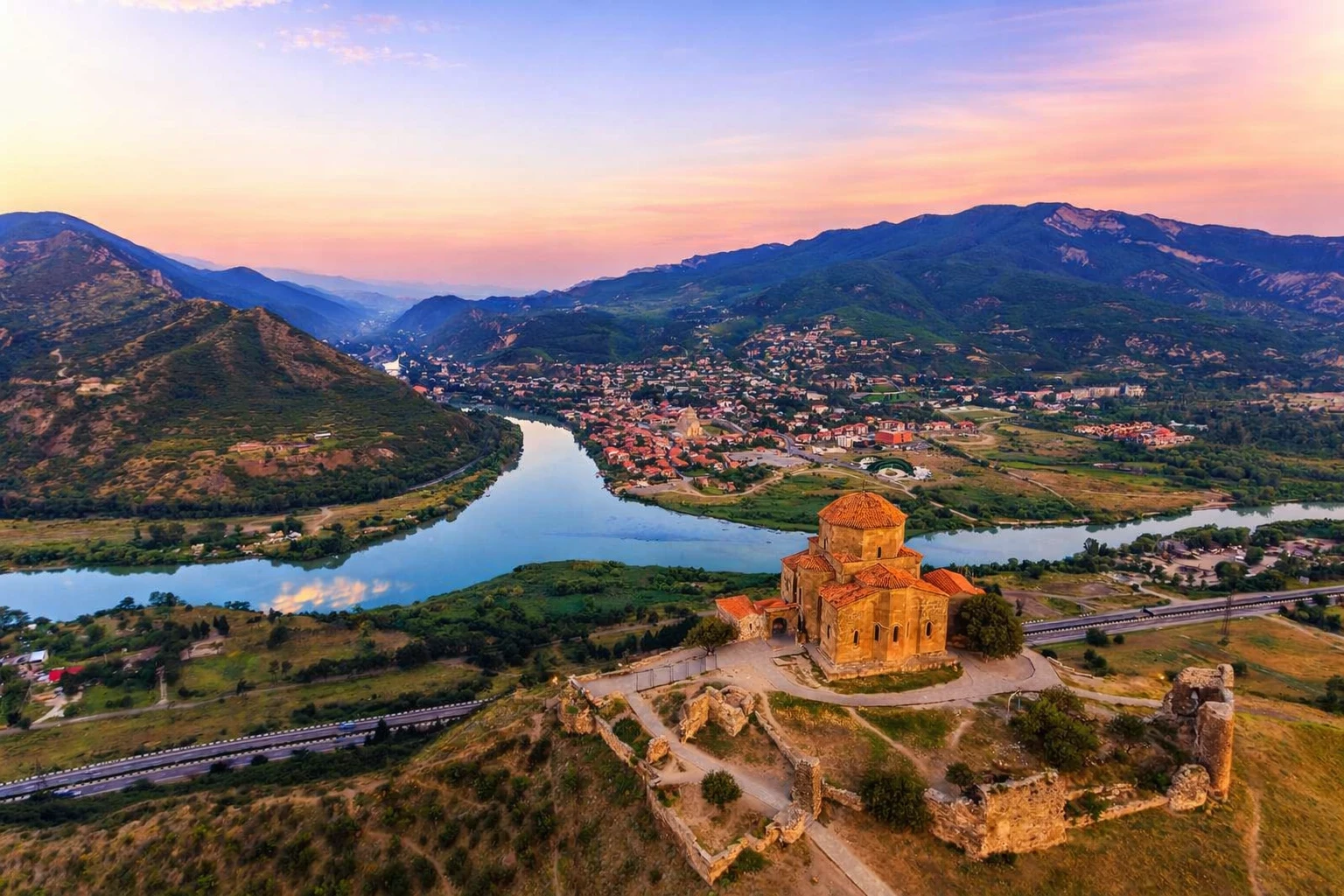
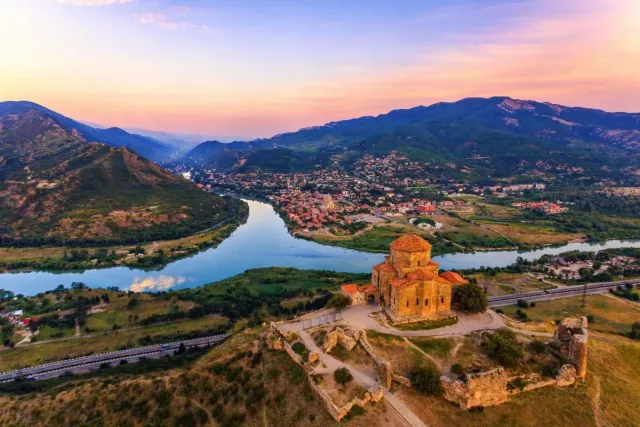 Jvari MonasteryDay 2: Jvari Monastery (c. 590–605), on the hill above the meeting of the Aragvi and Mtkvari rivers.
Day 2: Jvari Monastery (c. 590–605), on the hill above the meeting of the Aragvi and Mtkvari rivers.
Jvari Monastery stands on a rocky hilltop above Mtskheta, about 20 km north of Tbilisi, where the Aragvi river flows into the Mtkvari. The church, built around 590–605 on the spot where a wooden cross (jvari) was raised after Georgia's conversion to Christianity, is part of the UNESCO-listed Historical Monuments of Mtskheta. Inside you see the base of the cross; outside, carved donor reliefs and the classic view down to Mtskheta and Svetitskhoveli Cathedral. A 30–45 minute visit, usually combined with Mtskheta itself.
View destination details
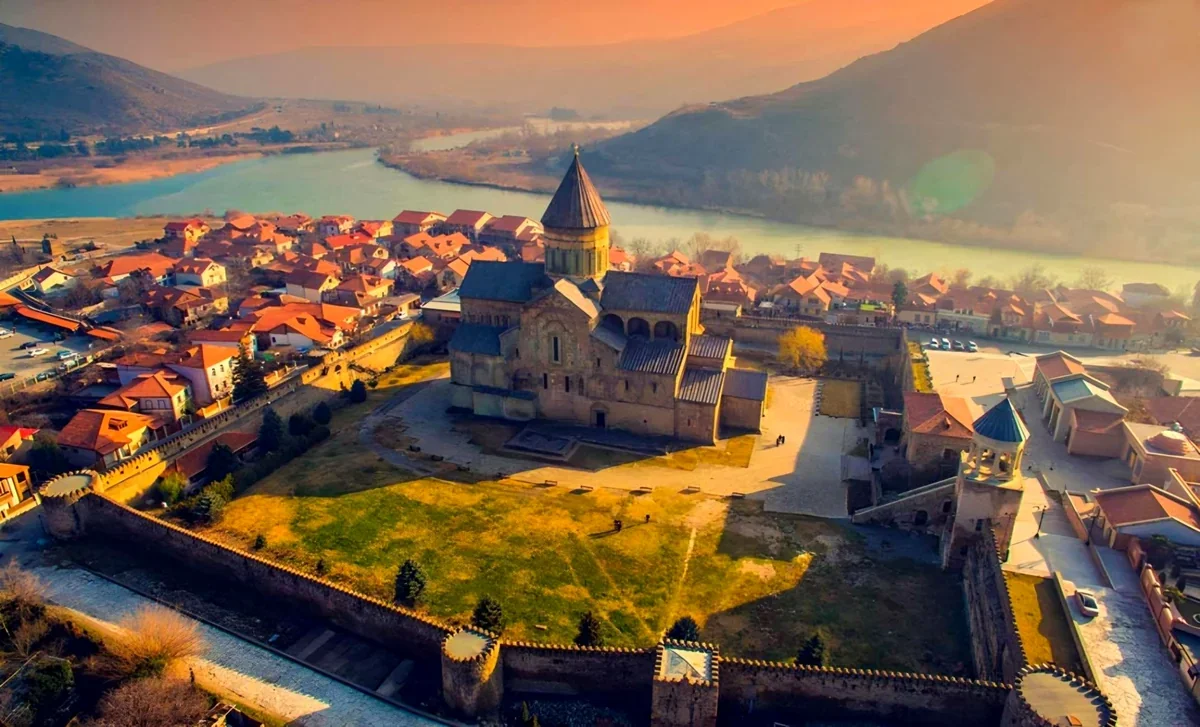
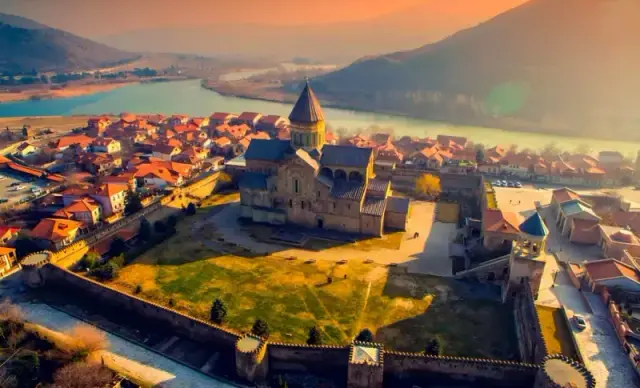 MtskhetaDay 2: Svetitskhoveli Cathedral in Mtskheta, the old capital, part of a UNESCO World Heritage site with Jvari.
Day 2: Svetitskhoveli Cathedral in Mtskheta, the old capital, part of a UNESCO World Heritage site with Jvari.
Mtskheta, about 25 km (30 min) north of Tbilisi where the Aragvi meets the Mtkvari, was the capital of the ancient kingdom of Kartli (Iberia) and the place where Georgia adopted Christianity in the 4th century. Its churches are a UNESCO World Heritage Site: Svetitskhoveli Cathedral in the old town, Jvari Monastery on the hill opposite with the classic view over the river confluence, and the Samtavro convent. Allow half a day, or combine it with Gori and Uplistsikhe or a Mukhrani winery.
View destination details
Uplistsikhe (1.5 h)
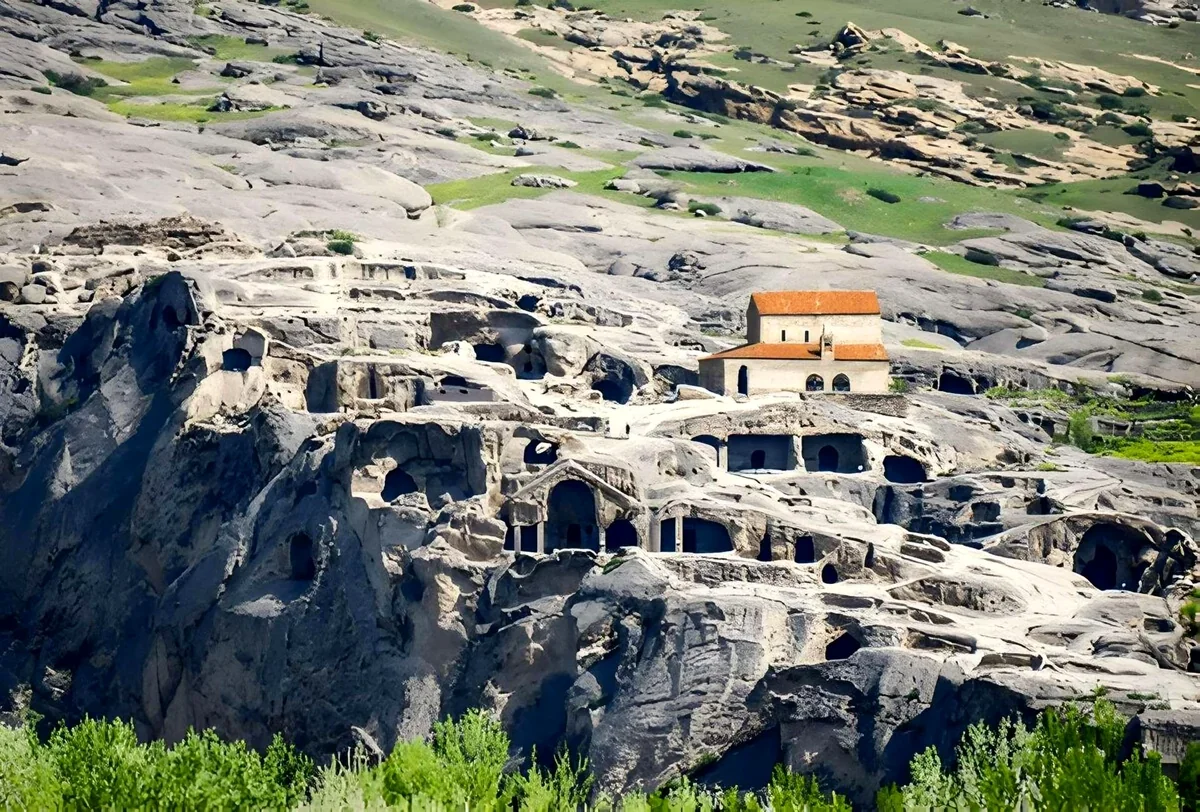
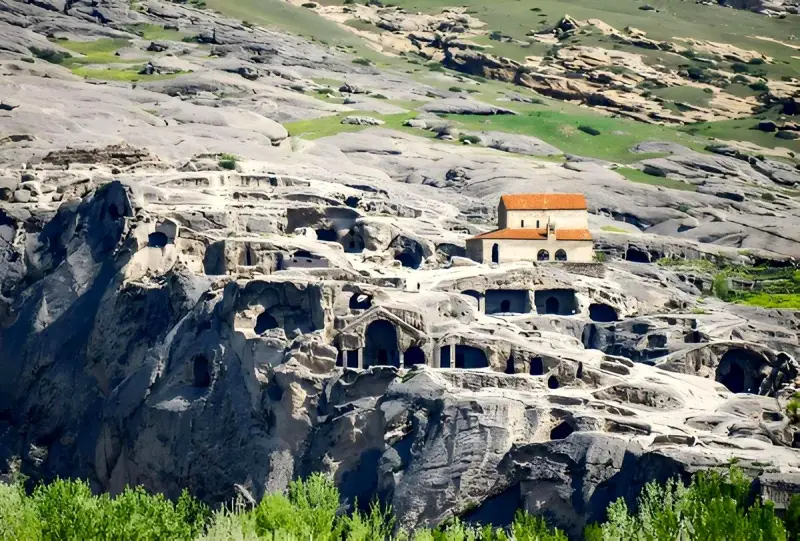
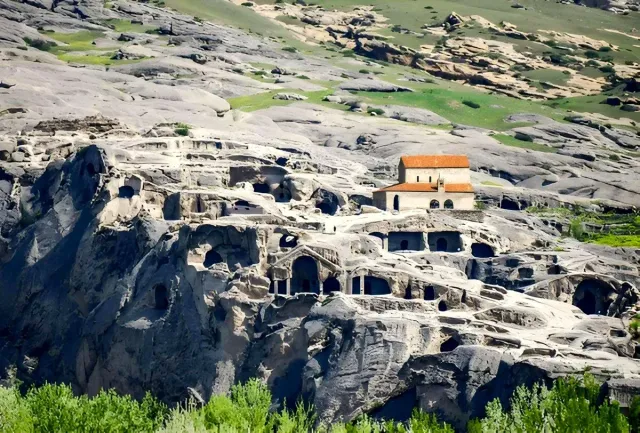 Uplistsikhe Cave TownDay 2: 1.5 hours in Uplistsikhe, a rock-cut town above the Mtkvari used from the Early Iron Age to the Middle Ages.
Day 2: 1.5 hours in Uplistsikhe, a rock-cut town above the Mtkvari used from the Early Iron Age to the Middle Ages.
Uplistsikhe is a rock-cut town on a sandstone ridge above the Mtkvari river, about 12–15 km east of Gori and 1.25–1.5 h west of Tbilisi. Over roughly 2,000 years people carved halls, houses, temples, wine presses and streets into the rock here. You walk up the ancient main street past the cave halls to the 9th–10th-century brick basilica on the summit, then leave through a tunnel toward the river. Most visitors spend 1–1.5 hours, often combined with Mtskheta and the Stalin Museum in Gori.
View destination details
Lunch in Gori (not included); Stalin Museum
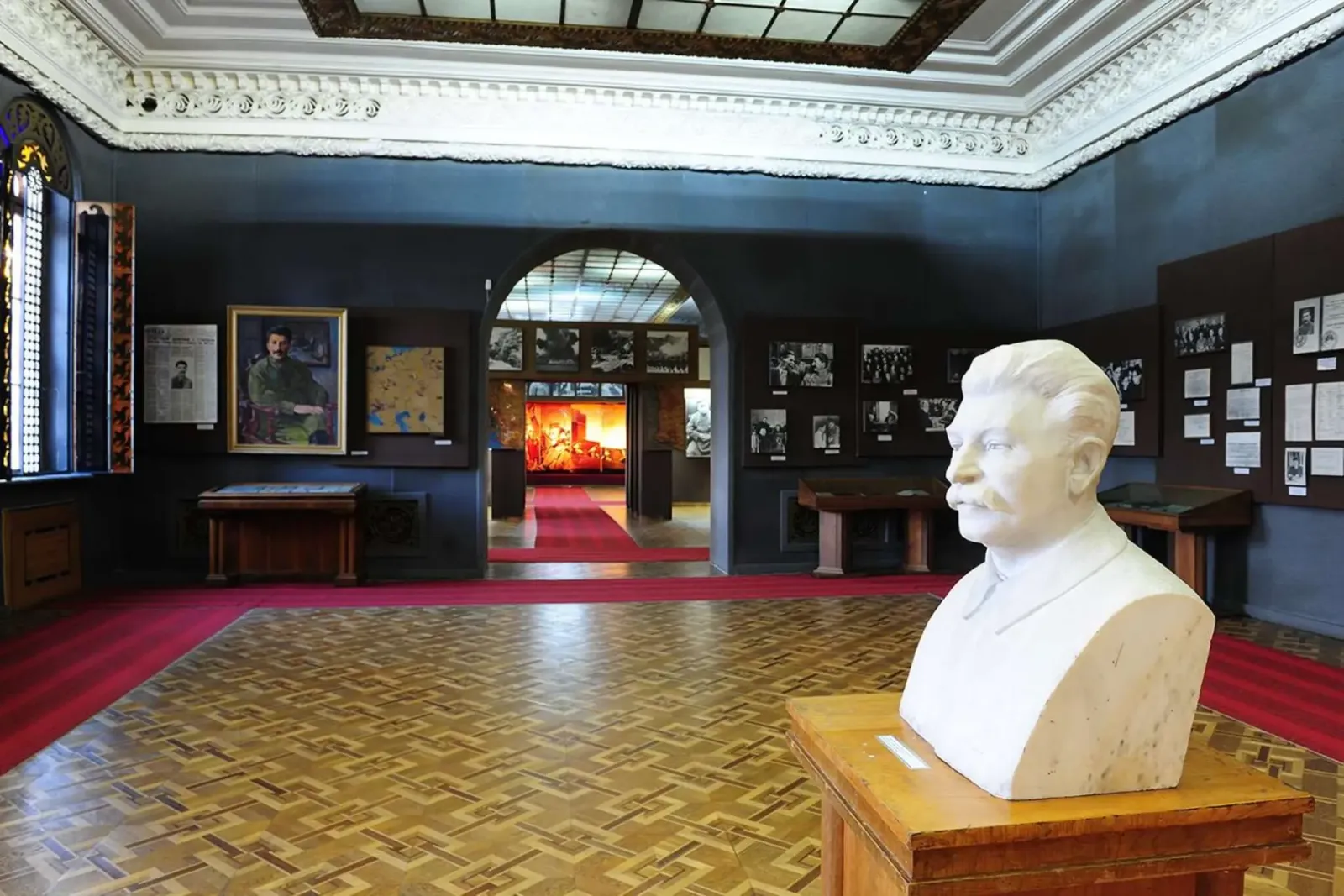
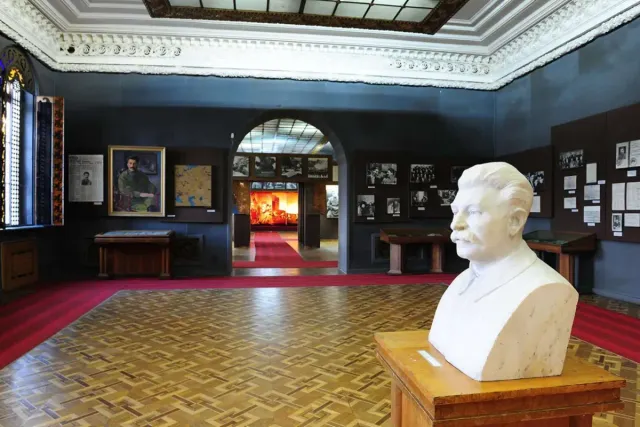 Gori Stalin MuseumDay 2: the Stalin Museum in Gori, with his birth house and his railway carriage (included in the ticket); about 1 hour.
Day 2: the Stalin Museum in Gori, with his birth house and his railway carriage (included in the ticket); about 1 hour.
Gori, in Shida Kartli about 86 km west of Tbilisi, is the town where Joseph Stalin was born in 1878, and its Stalin Museum is the main reason travellers stop. The museum complex keeps the small house where he spent his first years under a marble pavilion, a Soviet-era exhibition that still presents him largely uncritically, and his green armoured railway carriage. Above the town stands the medieval Gori Fortress. Allow 1–1.5 hours for the museum and fortress, and combine it with Uplistsikhe cave town, 12 km away.
View destination details
Drive to Kutaisi on the Rikoti highway (about 2 h)
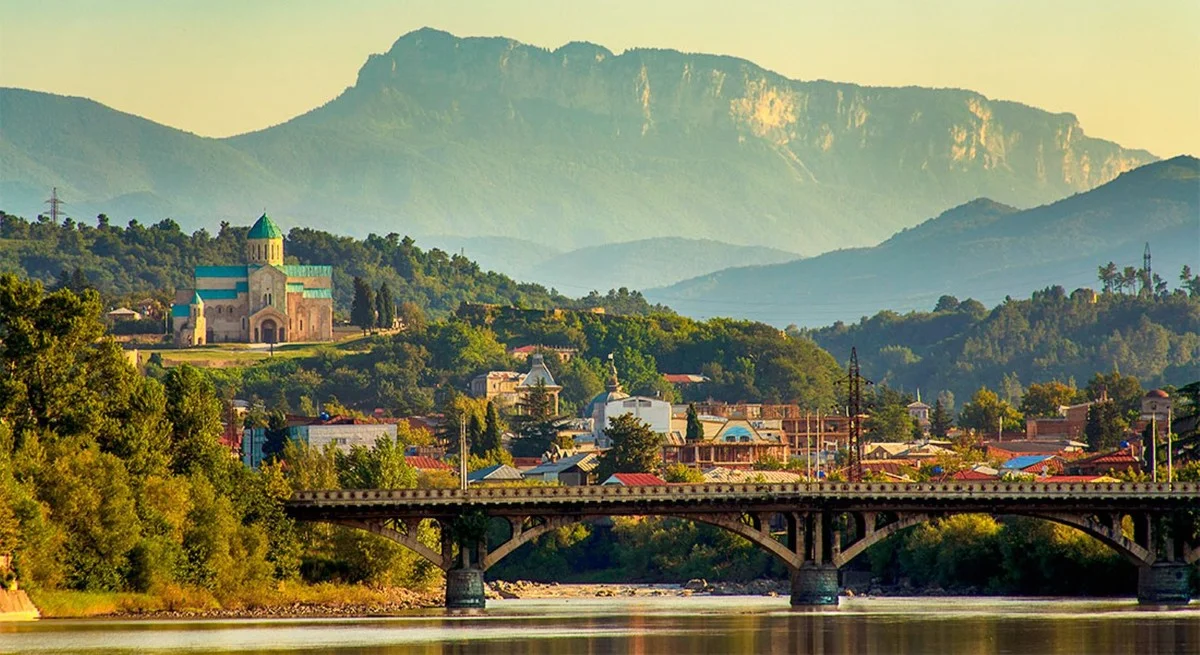
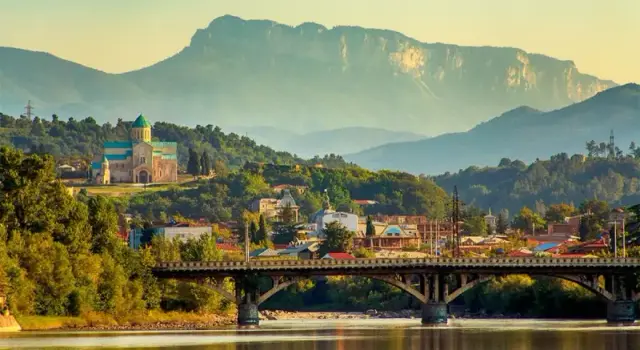 KutaisiNight 2 in Kutaisi; on day 3, Bagrati Cathedral (11th century, removed from the UNESCO list in 2017 after its reconstruction) and Motsameta monastery above the Tskaltsitela gorge.
Night 2 in Kutaisi; on day 3, Bagrati Cathedral (11th century, removed from the UNESCO list in 2017 after its reconstruction) and Motsameta monastery above the Tskaltsitela gorge.
Kutaisi, Georgia's third-largest city, sits on the Rioni river in Imereti, about 230 km west of Tbilisi. It is the natural base for western Georgia: UNESCO-listed Gelati Monastery and the hilltop Bagrati Cathedral are on its edge, and Prometheus Cave, Sataplia, and the Martvili and Okatse canyons are within an hour. In town, walk the Green Bazaar, the White Bridge and the old Jewish quarter, then eat Imeretian khachapuri with a glass of local Tsitska or Tsolikouri white wine.
View destination details
Overnight: Kutaisi (hotel, breakfast)
3Day 3Gelati, Motsameta and Bagrati, back to Tbilisi
Kutaisi to Tbilisi 220–230 km (about 3–3.5 h).
Gelati Monastery
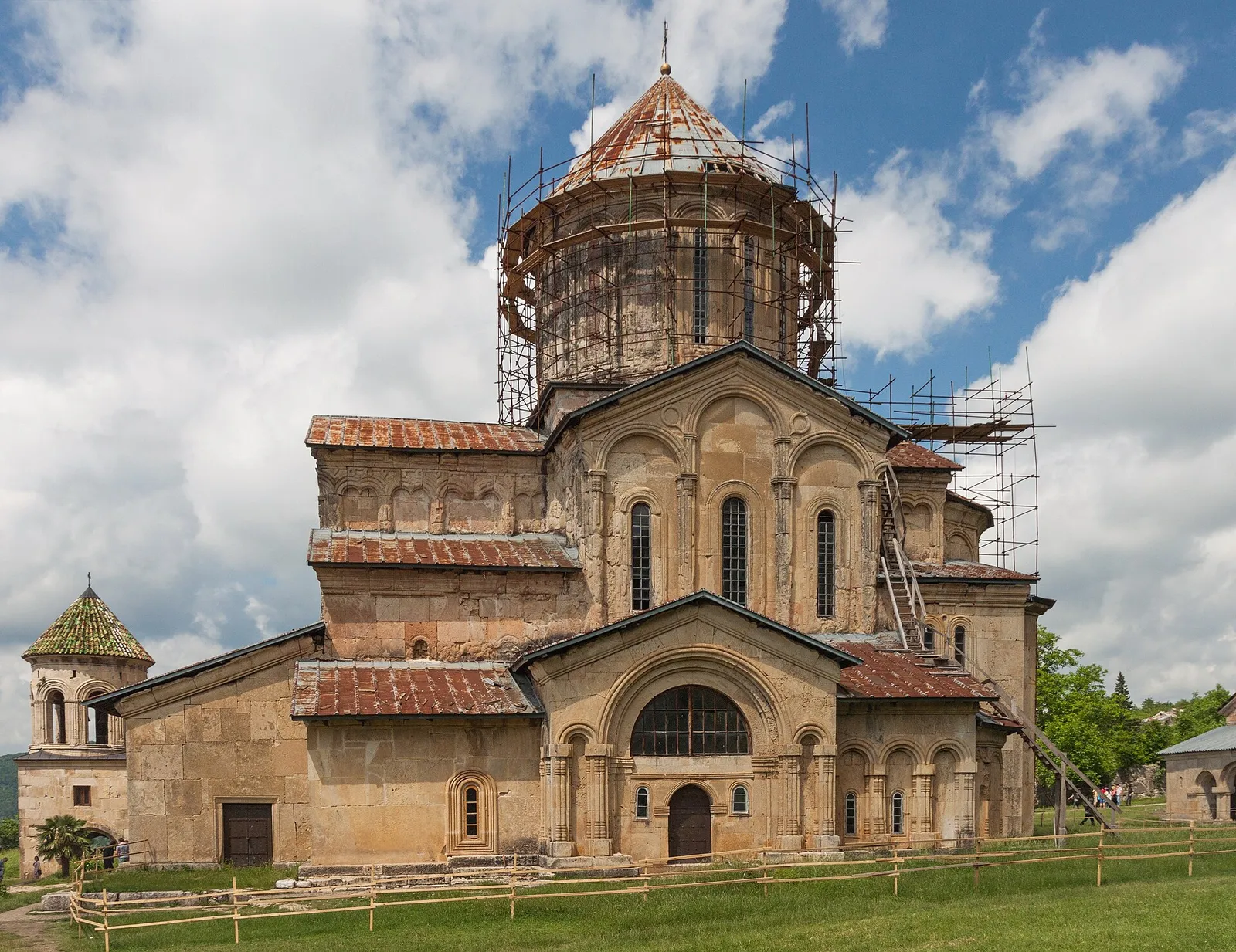
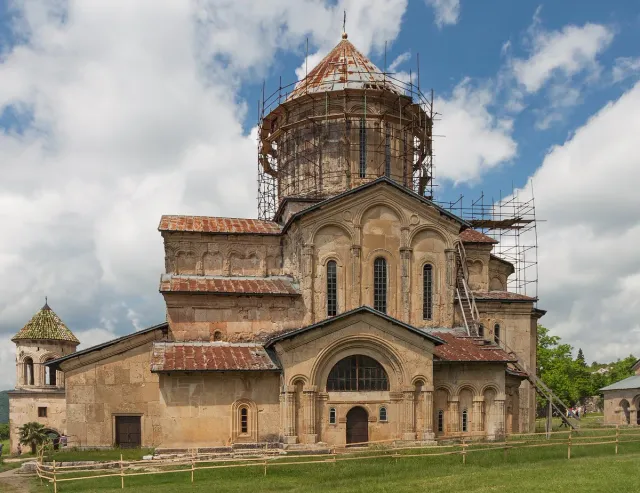 Gelati MonasteryDay 3: Gelati Monastery, founded in 1106 and a UNESCO World Heritage site, known for its 12th-century mosaic of the Virgin; the main church may be partly under scaffolding for conservation.
Day 3: Gelati Monastery, founded in 1106 and a UNESCO World Heritage site, known for its 12th-century mosaic of the Virgin; the main church may be partly under scaffolding for conservation.
Gelati Monastery, on a wooded hillside about 11 km north-east of Kutaisi in Imereti, was founded by King David the Builder in 1106 and is a UNESCO World Heritage Site. Inside the main Church of the Virgin you see a 12th-century gold mosaic of the Virgin and Child in the apse and walls of frescoes painted from the 12th to the 18th centuries, including portraits of Georgian kings. Outside are King David's grave, the ruined academy and two smaller churches. It is a 1-hour visit, often combined with Motsameta and Kutaisi.
View destination details
Motsameta monastery above the river
Bagrati Cathedral
Lunch (not included)
Drive back; 17:30 in Tbilisi
Overnight: Tbilisi (hotel, breakfast)
4Day 4Alaverdi, Tsinandali and Sighnaghi
About 4 hours of driving via the Gombori Pass (Sagarejo road in winter).
Over the Gombori Pass to Alaverdi Cathedral
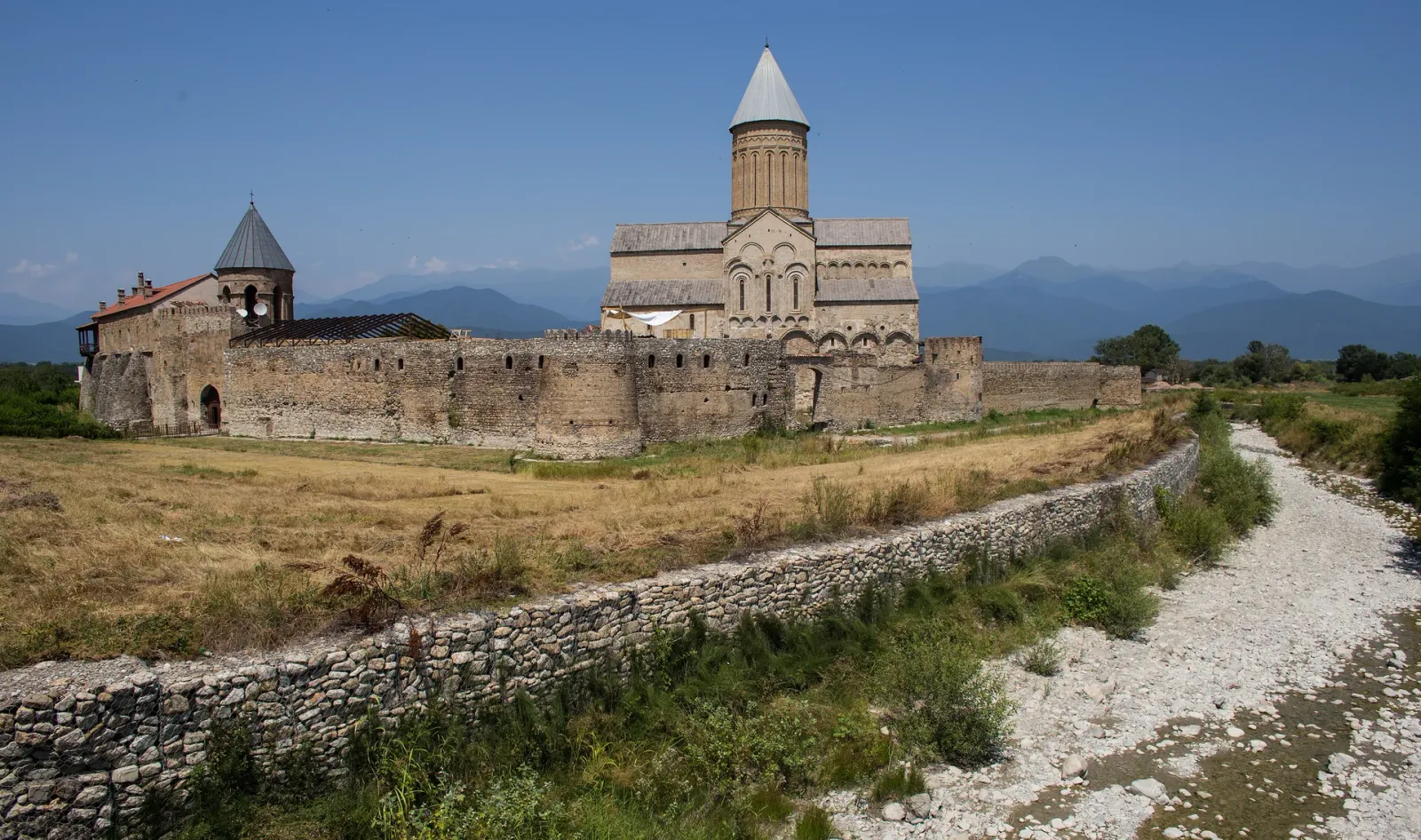
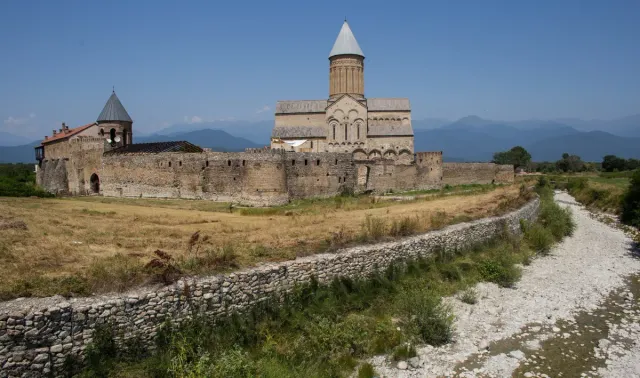 AlaverdiDay 4: Alaverdi Cathedral, built in the early 11th century and about 50 m tall, with the Caucasus behind it.
Day 4: Alaverdi Cathedral, built in the early 11th century and about 50 m tall, with the Caucasus behind it.
Alaverdi Cathedral rises over the vineyards of the Alazani valley in Kakheti, about 20 km north-west of Telavi and 2–2.5 hours from Tbilisi. The 11th-century church of St George, about 50 m tall, was the tallest church in Georgia until Tbilisi's Sameba Cathedral in 2004, and the monks still make wine in qvevri clay jars. Visitors walk the walled grounds, see the frescoed interior and can buy the monastery's own qvevri wine; it combines easily with Telavi and Tsinandali.
View destination details
Tsinandali house-museum and park
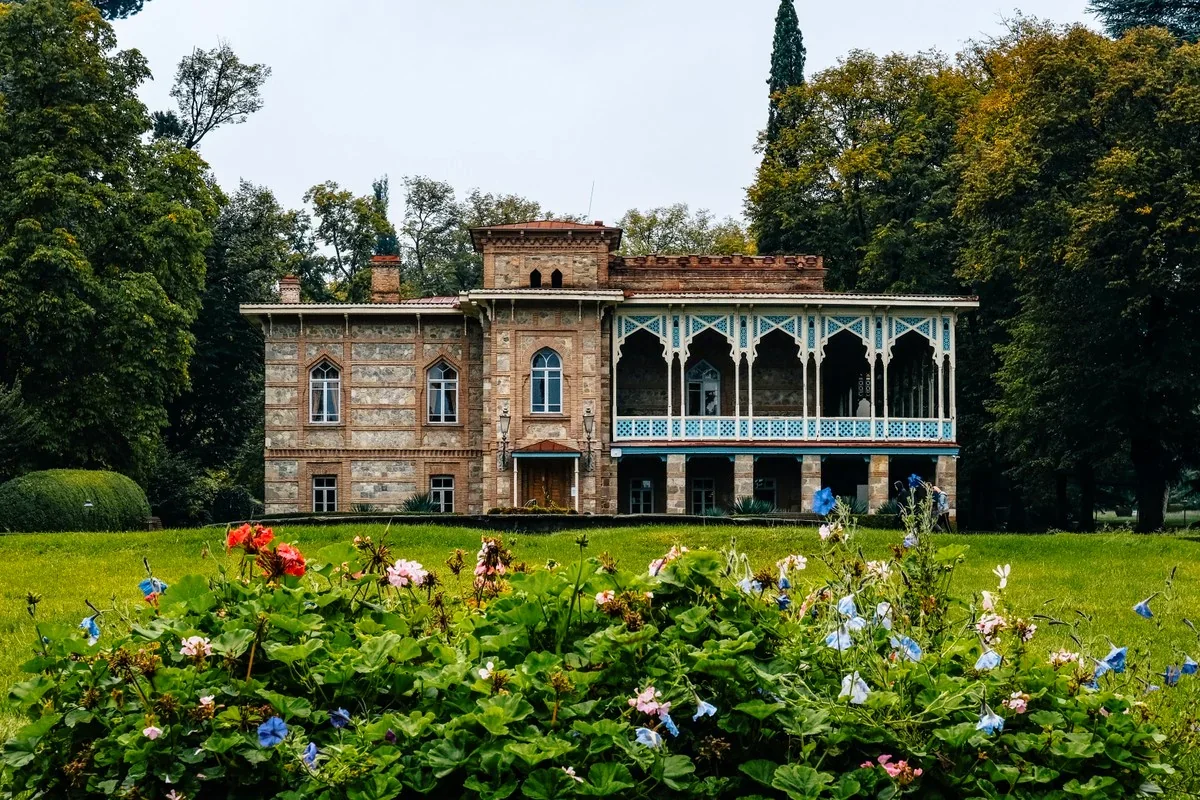
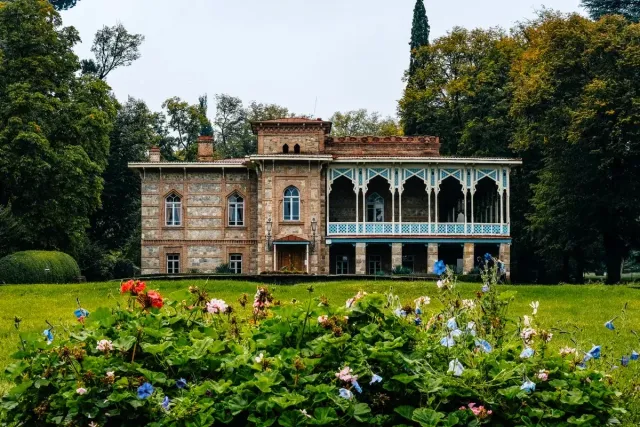 TsinandaliDay 4: the Tsinandali house-museum and park of the poet-prince Alexander Chavchavadze, then a family-cellar tasting nearby.
Day 4: the Tsinandali house-museum and park of the poet-prince Alexander Chavchavadze, then a family-cellar tasting nearby.
Tsinandali is the 19th-century country estate of Prince Alexander Chavchavadze, about 10 km south-east of Telavi in Kakheti, with a house museum, a large landscaped park and one of Georgia's oldest wineries. A visit takes 1.5–2 hours: tour the family house, walk the park under old plane trees and cedars, go down to the enoteca, whose collection starts in 1814, and taste the estate's wines. In early September the estate hosts the Tsinandali Festival of classical music.
View destination details
Lunch and tasting at a family cellar (tasting included)
Sighnaghi; sunset from the walls
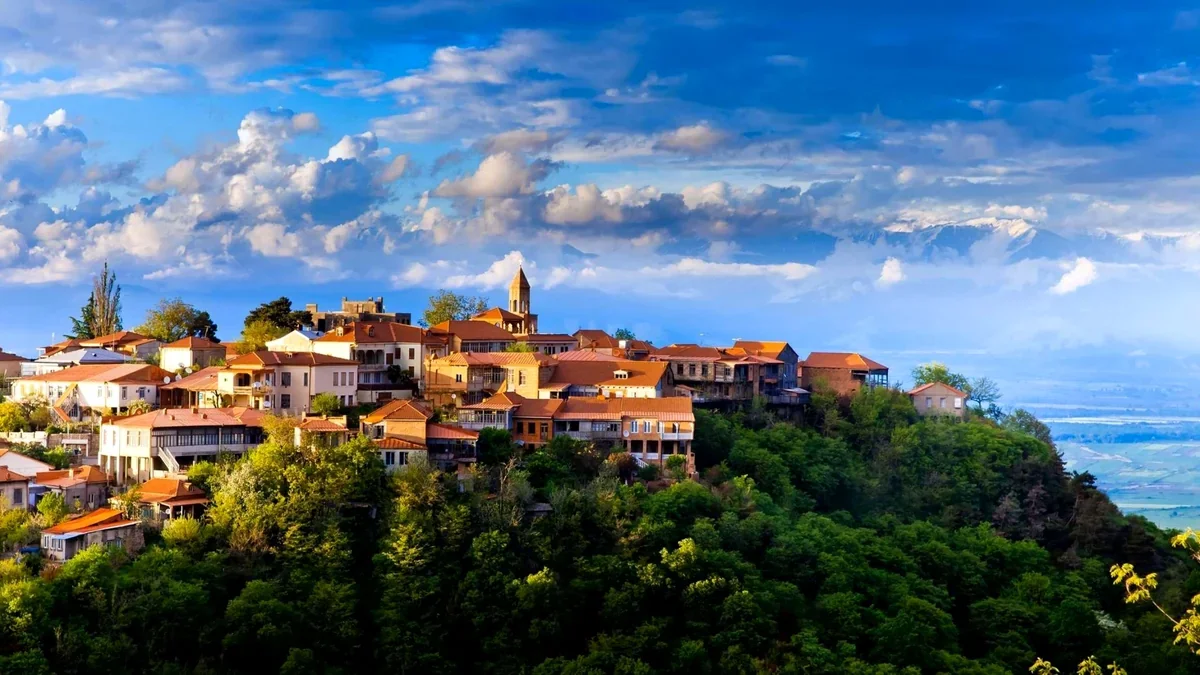
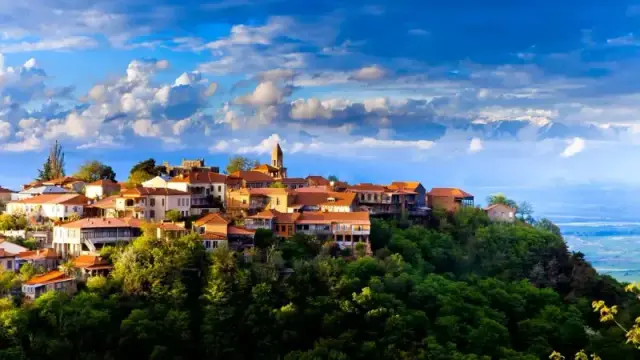 SighnaghiNight 4 in Sighnaghi: a sunset walk on the town walls above the Alazani Valley, then dinner (included).
Night 4 in Sighnaghi: a sunset walk on the town walls above the Alazani Valley, then dinner (included).
Sighnaghi is a small walled town at about 790 m on a ridge above the Alazani Valley in Kakheti, about 113 km (2 h) east of Tbilisi. Its 18th-century defensive wall with towers looks across the vineyards to the Greater Caucasus. You walk a section of the wall, see Niko Pirosmani's paintings in the Sighnaghi Museum, taste qvevri wine in the town's cellars, and visit Bodbe convent, the burial place of St Nino, 2 km away. It works as a half-day stop or a relaxed overnight in wine country.
View destination details
Dinner (included)
Overnight: Sighnaghi (hotel, breakfast and dinner)
5Day 5Bodbe and back to Tbilisi
About 1.5–2 hours to Tbilisi.
Bodbe convent
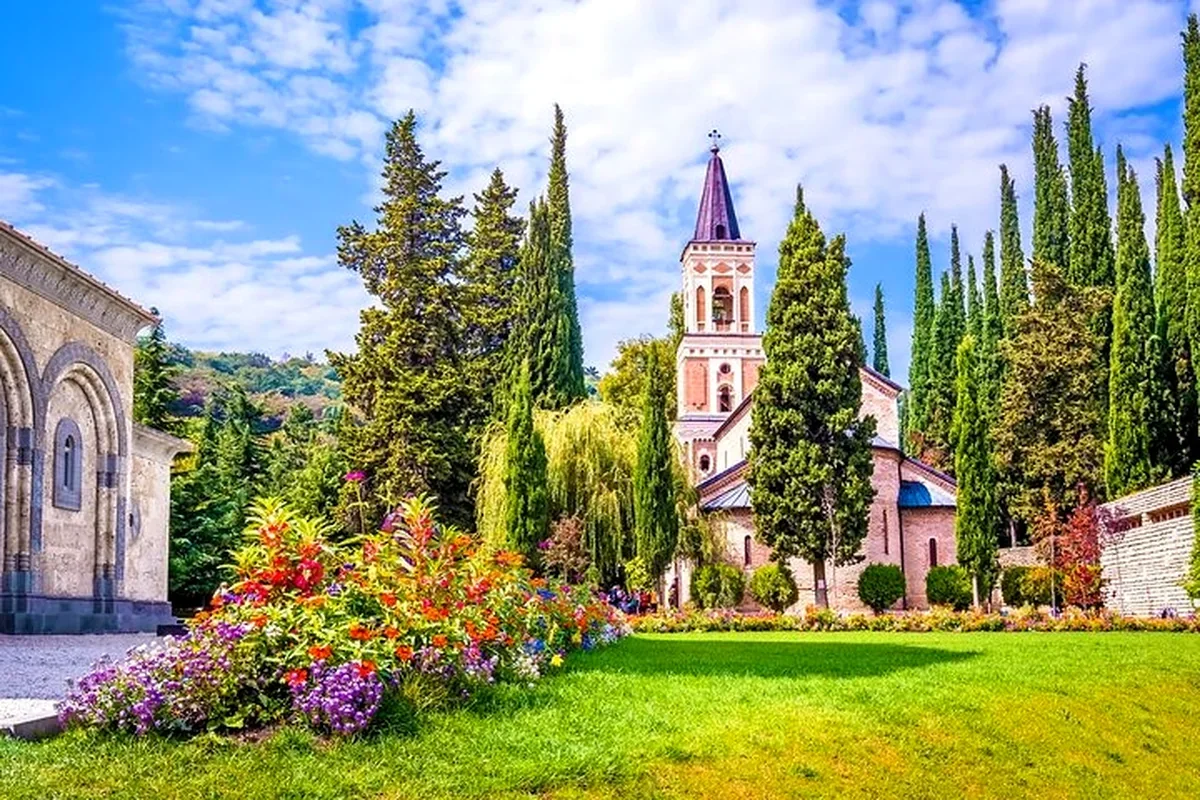
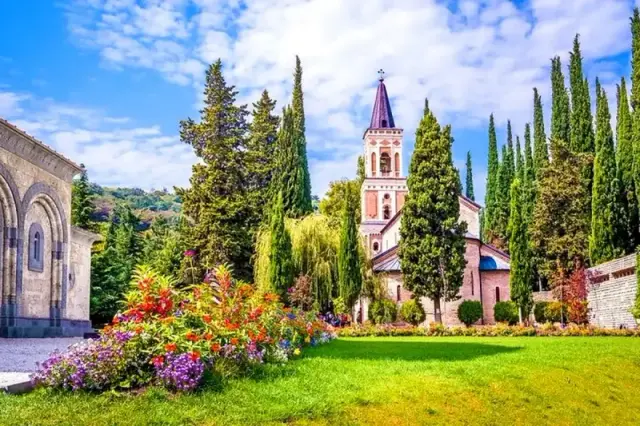 BodbeDay 5: Bodbe convent, burial place of St Nino, 2 km from Sighnaghi, before the drive back to Tbilisi.
Day 5: Bodbe convent, burial place of St Nino, 2 km from Sighnaghi, before the drive back to Tbilisi.
Bodbe is a working convent 2 km from Sighnaghi in Kakheti, about 115 km (2 h) from Tbilisi, and the burial place of St Nino, who brought Christianity to Georgia in the 4th century. Her tomb lies in a small basilica first built between the 9th and 11th centuries, set among cypress trees and flower gardens with a wide view over the Alazani valley to the Caucasus. From the convent a long, steep path of steps leads down to St Nino's Spring, where pilgrims collect water and bathe.
View destination details
Drive back to Tbilisi
Drop-off at your Tbilisi hotel or the airport
Make this tour your own:Build your own tour
What's Included
Included
- Private car or minivan with fuel and parking (sedan for 1–3 travellers, minivan for 4–8)
- English-speaking driver-guide throughout (Russian-speaking on request)
- Hotel or airport pickup and drop-off in Tbilisi
- 4 nights in standard hotels (Tbilisi 2, Kutaisi 1, Sighnaghi 1), twin/double rooms, breakfast included
- One dinner in Sighnaghi
- A family-cellar tasting
- Entry fees: Georgian National Museum, Uplistsikhe, Stalin Museum, Tsinandali
- Bottled water
Not included
- Lunch and the dinners on days 1–3 (about 25–40 GEL per person for lunch)
- Drinks
- National Museum Treasury, if you add it (separate ticket)
- Single room supplement
- Tips (optional)
- Travel insurance (mandatory for visitors to Georgia from 1 January 2026)
- Flights
Map
Good to know
- Best Time to Visit
- Year-round (in winter we take the Sagarejo road instead of the Gombori Pass)
- Physical Requirements
- Suitable for most fitness levels. Involves some walking on mostly flat terrain with minimal elevation changes.
- Cancellation Policy
- Nothing to pay now. Your quote includes the cancellation terms before you pay anything.
- Pace
- day 2 is long, about 270 km with three sites; the other days have 3–4 hours of driving at most.
- Museum hours
- museum opening hours vary by day; we plan the order of visits around them.
- Walking
- mostly short walks; Uplistsikhe has uneven rock and steps, and Sighnaghi and Motsameta have steep lanes.
- Dress code
- shoulders and knees covered in churches and monasteries; headscarves are provided for women at Gelati, Alaverdi and Bodbe.
- Gelati
- conservation work on the main church may leave parts of the interior covered; we confirm what is visible when you book.
Categories:
Short trip (2–5 days)
History & culture
You Might Also Like
Georgia Archaeology Tour — 5 Days, Private: Cave Cities & Dmanisi
Private · 5 days
$670/person · 4 travellers
Vardzia, Rabati & Borjomi — 2-Day Private Tour from Tbilisi
Private · 2 days
$220/person · 4 travellers
Guides for planning your trip
All travel guides- Gori and the Stalin Museum: What to ExpectThe Stalin Museum in Gori, about 1–1.25 hours west of Tbilisi, has three parts: the main hall, Stalin's birth house and his railway…
- Narikala Fortress and the Tbilisi Cable CarNarikala is the 4th-century fortress on the ridge above Tbilisi's Old Town. The easiest way up is the cable car from Rike Park…
- Gelati Monastery: Visiting Kutaisi's UNESCO SiteGelati, founded in 1106 by King David the Builder, is Kutaisi's only UNESCO World Heritage site: a monastery and medieval academy with a…