Georgian wine guide

Georgian wine: qvevri, amber wine and the names to know

How qvevri wine is made, what amber wine is, and the five Georgian wines every visitor should know, with tastings on tour and boxes to take home.

c. 6000 BC

Wine residue in clay jars from villages in southern Georgia, the oldest known grape wine.

2013

UNESCO lists Georgian qvevri winemaking as intangible cultural heritage.

500+

Native grape varieties grown in Georgia. Two of them, Rkatsiteli and Saperavi, fill most of the vineyards.

Qvevri wine

How Georgian wine is made in the qvevri

A qvevri is a large egg-shaped clay jar, lined with beeswax and buried up to its neck in the floor of the marani, the wine cellar. Georgian families have made wine in it for thousands of years, and many still do.

  1. Into the clay

    After the harvest in September the grapes are crushed and poured into the qvevri with their juice, skins, seeds and often stems. Georgians call this mass chacha, like the spirit later distilled from it.

  2. Fermenting underground

    The earth around the jar keeps the wine at a steady, cool temperature. While it ferments, the cap of skins is pushed down several times a day.

  3. Sealed until spring

    When fermentation ends, the qvevri is closed with a lid and sealed. In Kakheti the wine stays on its skins for five to six months; in Imereti only part of the skins goes in, so the wine is lighter.

  4. Drawn off and cleaned

    In spring the wine is drawn off into clean qvevri or bottles. The empty jar is scrubbed with lime and a brush of cherry bark, ready for the next harvest.

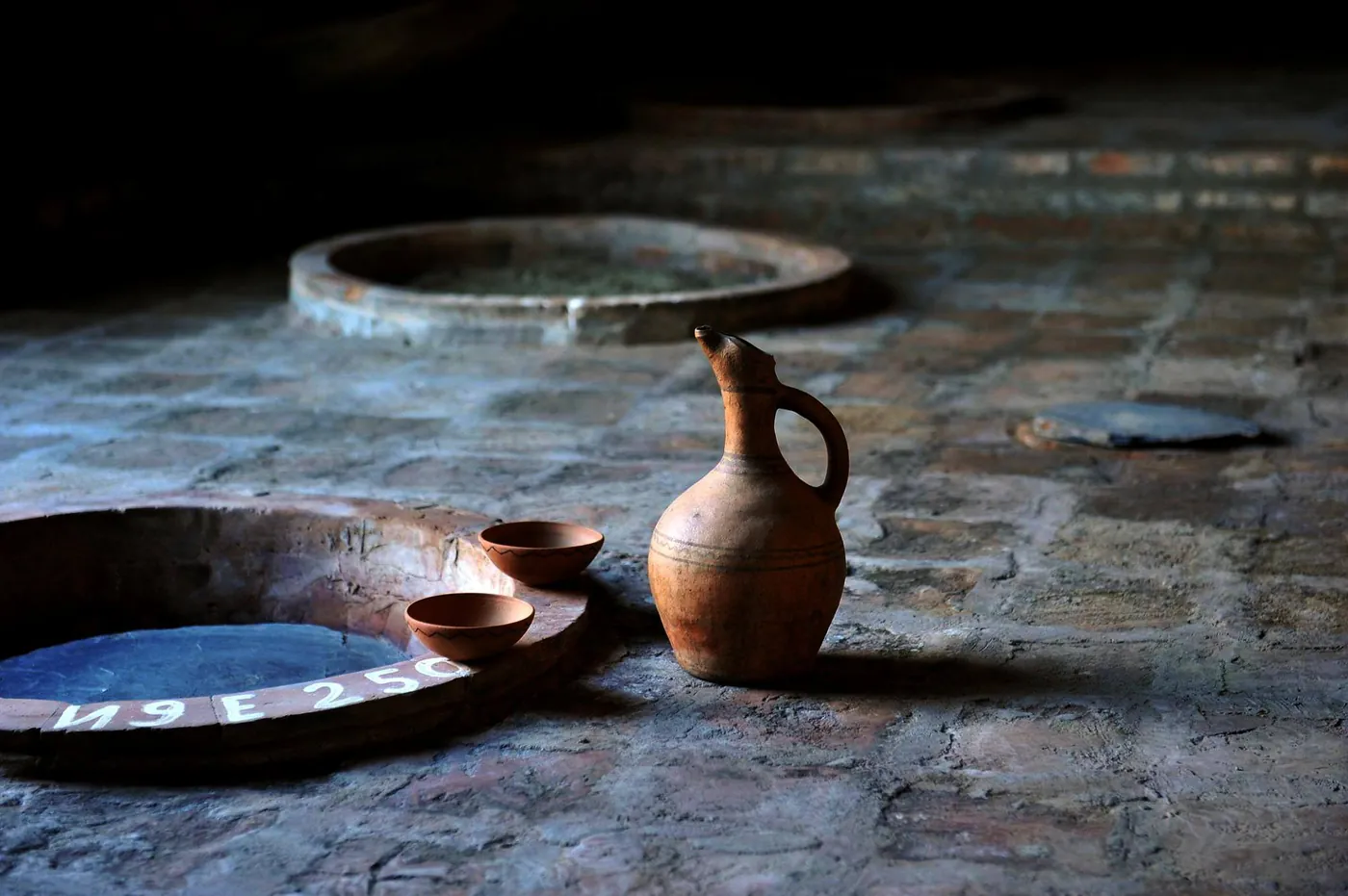
A clay wine jug and cups beside the open mouth of a qvevri in a cellar floor
A marani, the family wine cellar, in Gurjaani, Kakheti
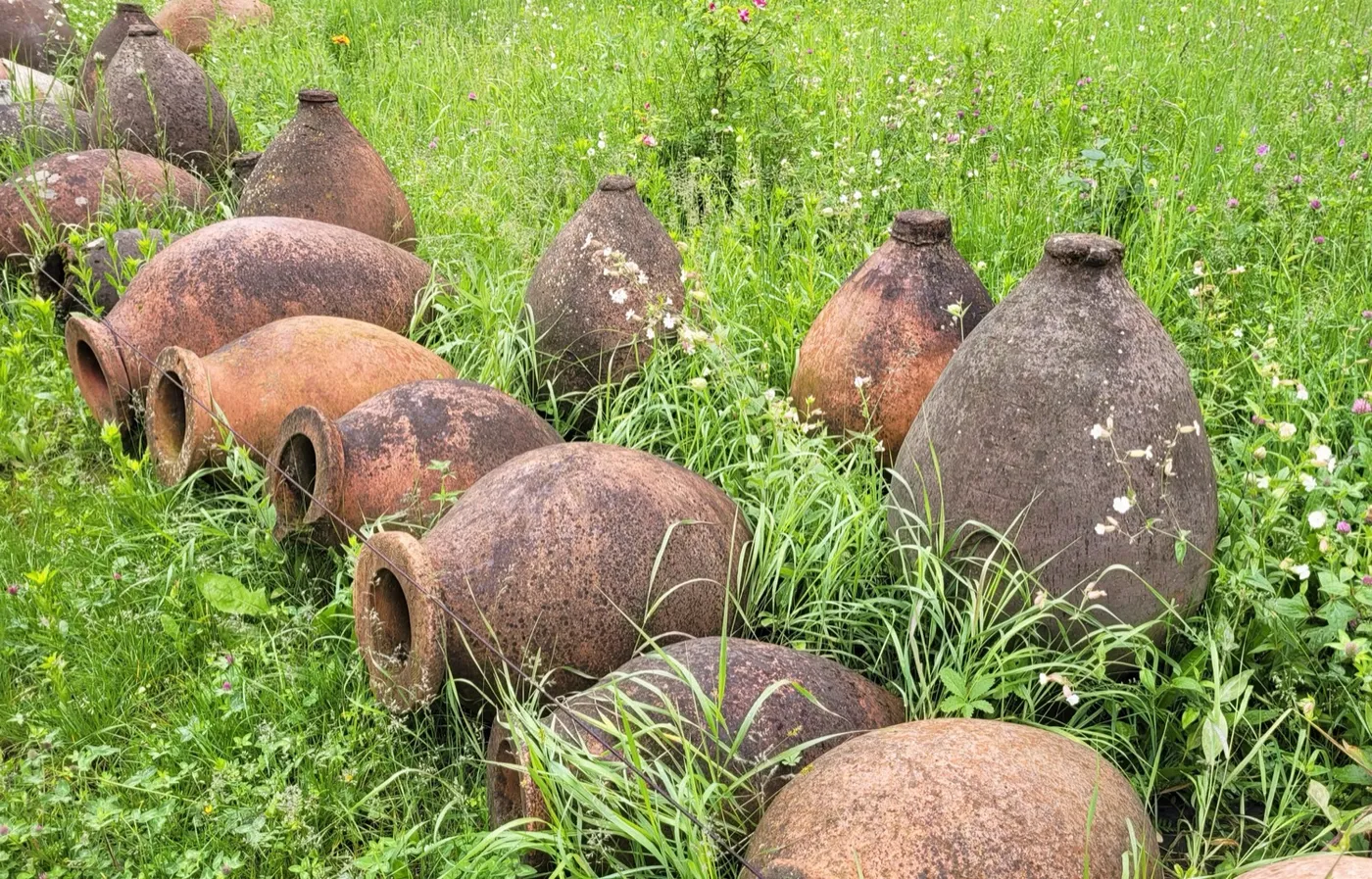
Rows of old qvevri jars in long grass at Ikalto Monastery
Old qvevri at Ikalto Monastery, Kakheti
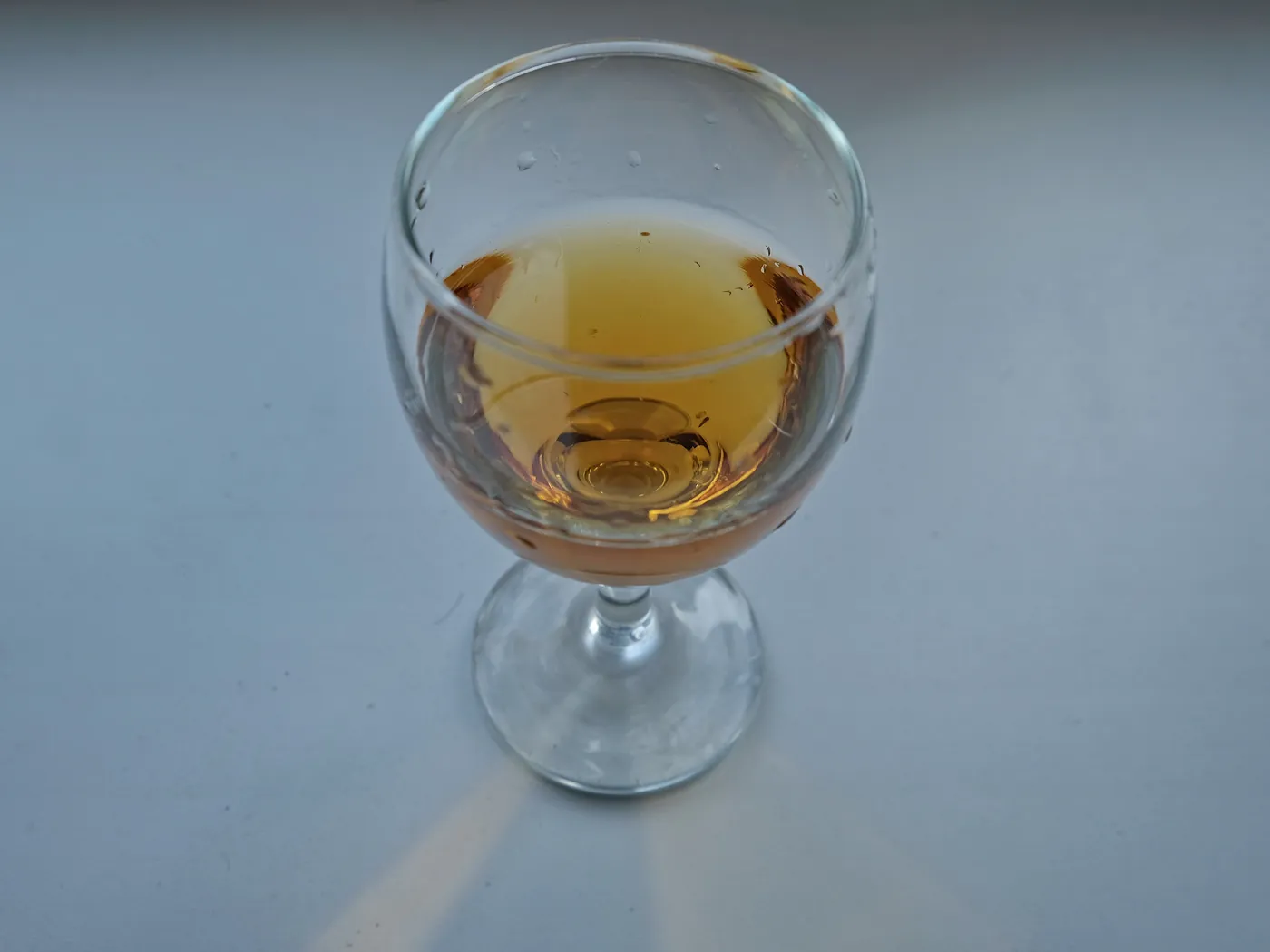
A glass of amber wine from Rkatsiteli grapes, the colour of dark honey
Amber Rkatsiteli from the qvevri

Amber wine or orange wine?

The same thing. When white grapes ferment on their skins in the qvevri, the wine turns the colour of dark honey and takes on some tannin. Georgians call it amber, karvisperi; the wine trade began calling skin-contact whites orange wine in the 2000s. Georgian amber wine is usually dry, with notes of dried apricot, tea and walnut, and drinks like a light red with food.

Types of Georgian wine

Five Georgian wines to know

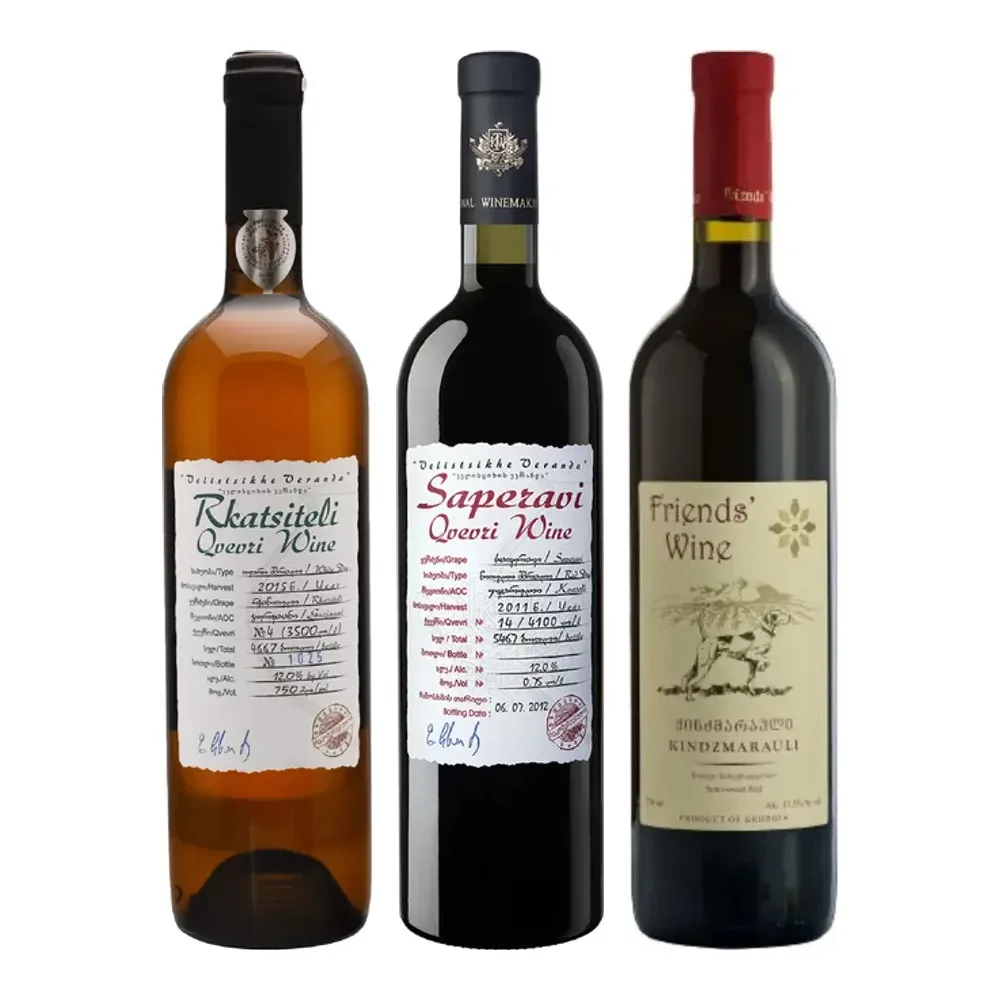
Georgians name a wine after its grape, its village or a protected zone, not a brand. These five cover the main styles: amber, dry red, semi-sweet red and dry white. Each is a bottle you can order from our shop.

ქარვისფერი რქაწითელი

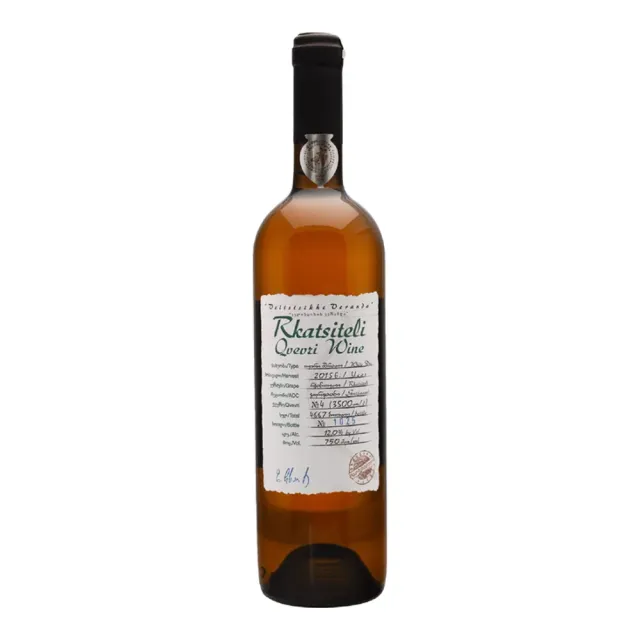
Kakheti Amber, Rkatsiteli from the qvevri

Velistsikhe village, Alazani Valley · Kakheti, eastern Georgia

AmberDryQvevri

This is how Kakheti made white wine long before anyone called it orange wine. The skins give it the colour of dark honey and a light grip of tannin, so it sits at the table like a red. Every family marani in the region keeps at least one qvevri of it.

Taste: Dried apricot, black tea, walnut skin. With mtsvadi, walnut dishes and hard cheese.

$22/bottle

See the bottle
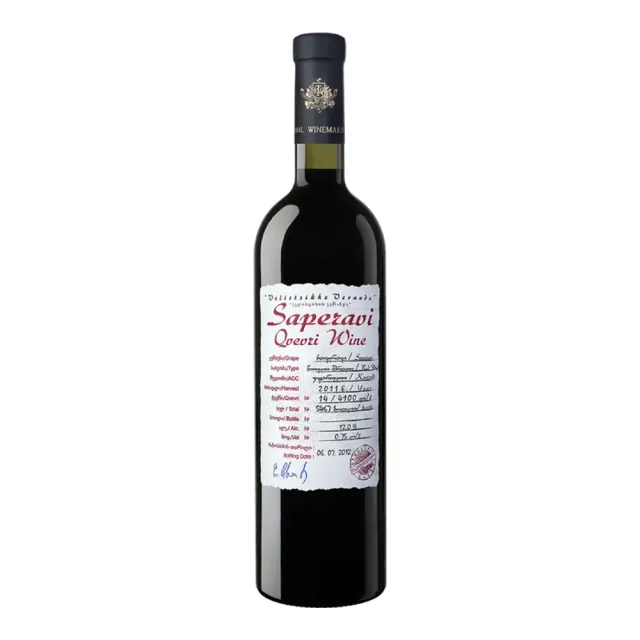
ქვევრის საფერავი

Saperavi from the qvevri

Alazani Valley · Kakheti, eastern Georgia

RedDryQvevri

Saperavi is one of the few grapes in the world whose juice is red, not only its skin. Made in the qvevri, it comes out more rustic and earthy than the oak-aged Saperavi in supermarkets: the red Kakhetian families pour at home.

Taste: Black cherry, plum, wild herbs, firm tannin. With roast lamb, kharcho and grilled meat.

$22/bottle

See the bottle

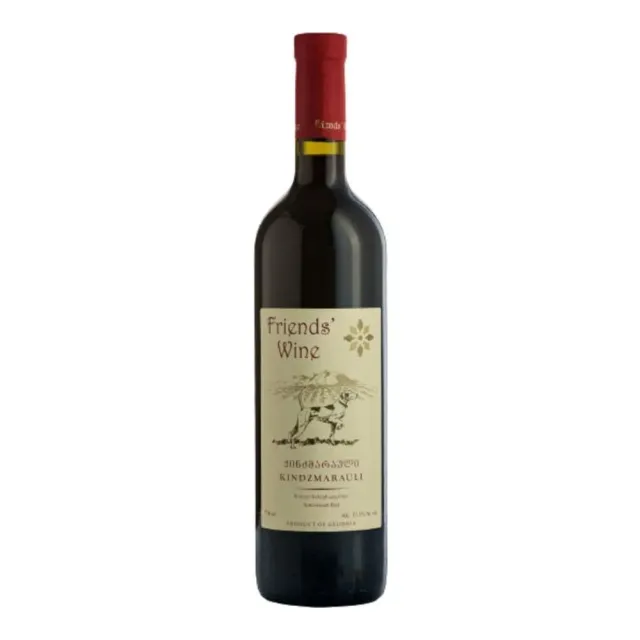
ქინძმარაული

Kindzmarauli

Kvareli, on the slopes of the Greater Caucasus · Kakheti

RedSemi-sweetProtected name

Kindzmarauli is the wine Georgians bring to a supra when someone at the table prefers sweet. The name is protected: only Saperavi from the Kvareli zone can carry it, which is why it is the one gift almost every visitor recognises.

Taste: Blackberry, pomegranate, a soft finish. With desserts, churchkhela, or on its own.

$20/bottle

See the bottle

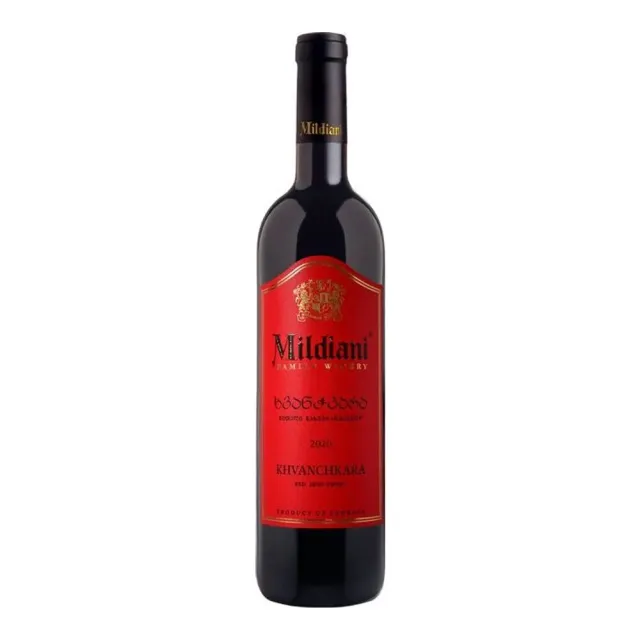
ხვანჭკარა

Khvanchkara from Racha

Khvanchkara village, Rioni gorge · Racha, western Georgia

RedSemi-sweetRare

Racha is a small mountain region of steep vineyards above the Rioni river, and the Khvanchkara zone is tiny. Little of it is made and less is exported, so many people only taste it in Georgia.

Taste: Raspberry, violet, wild strawberry, very soft tannin. With cheese, fruit and nuts.

$32/bottle

See the bottle

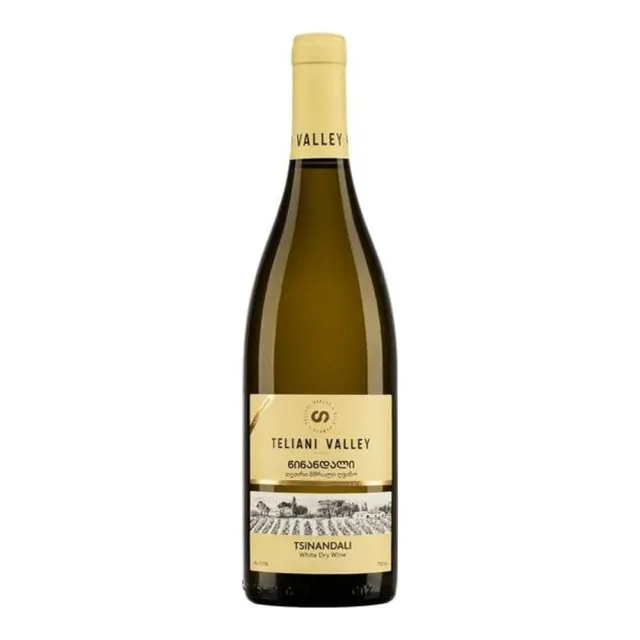
წინანდალი

Tsinandali

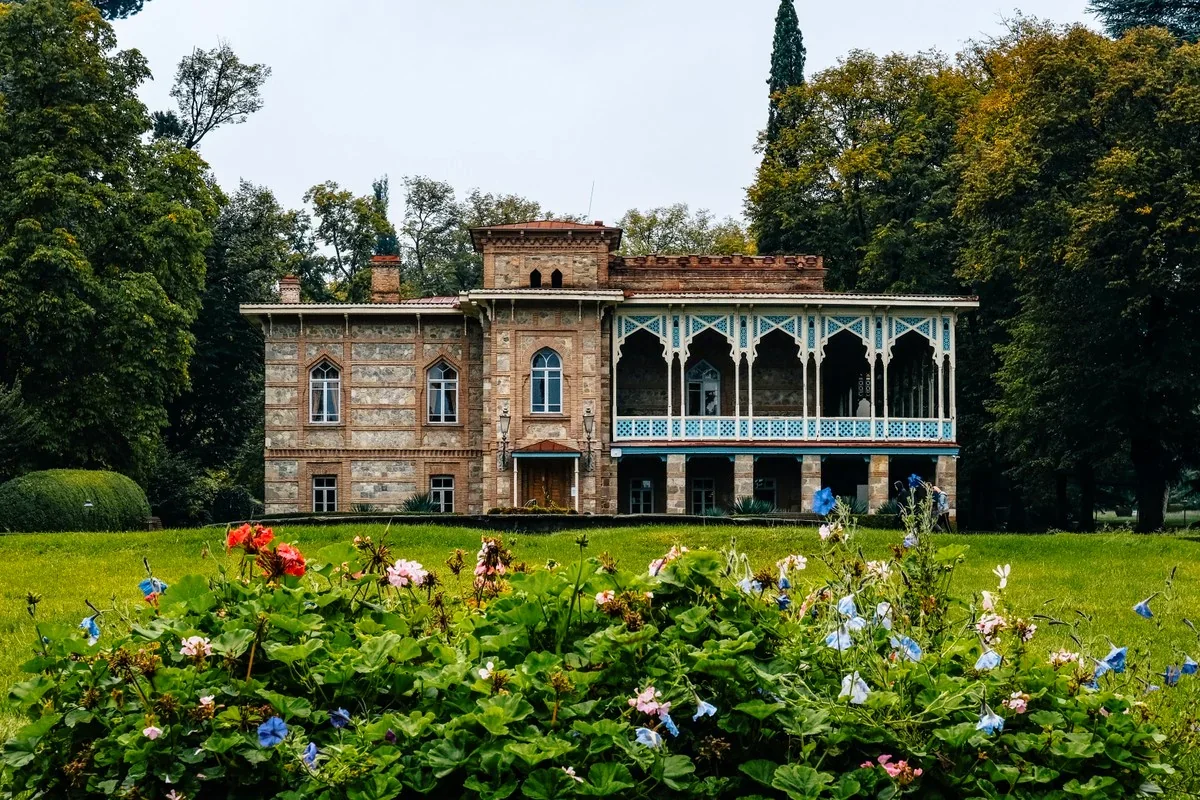
Tsinandali, near Telavi · Kakheti

WhiteDryProtected name

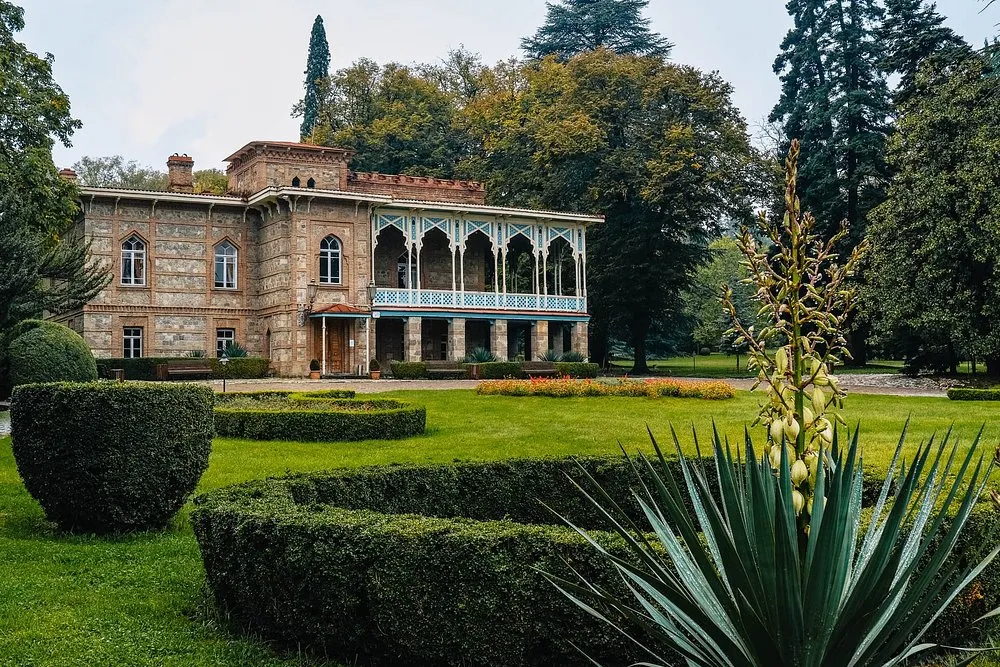
Prince Alexander Chavchavadze brought European winemaking to his estate here in the 19th century. Tsinandali is the fresh, bright side of Kakheti: the same Rkatsiteli as the amber wine, made a different way. Tasting the two together explains Georgian wine better than any lecture.

Taste: Quince, citrus, white flowers, crisp acidity. With trout, salads, pkhali and khachapuri.

$18/bottle

See the bottle
More guides

Go deeper into Georgian wine

Take it home

Georgian wine boxes for your suitcase

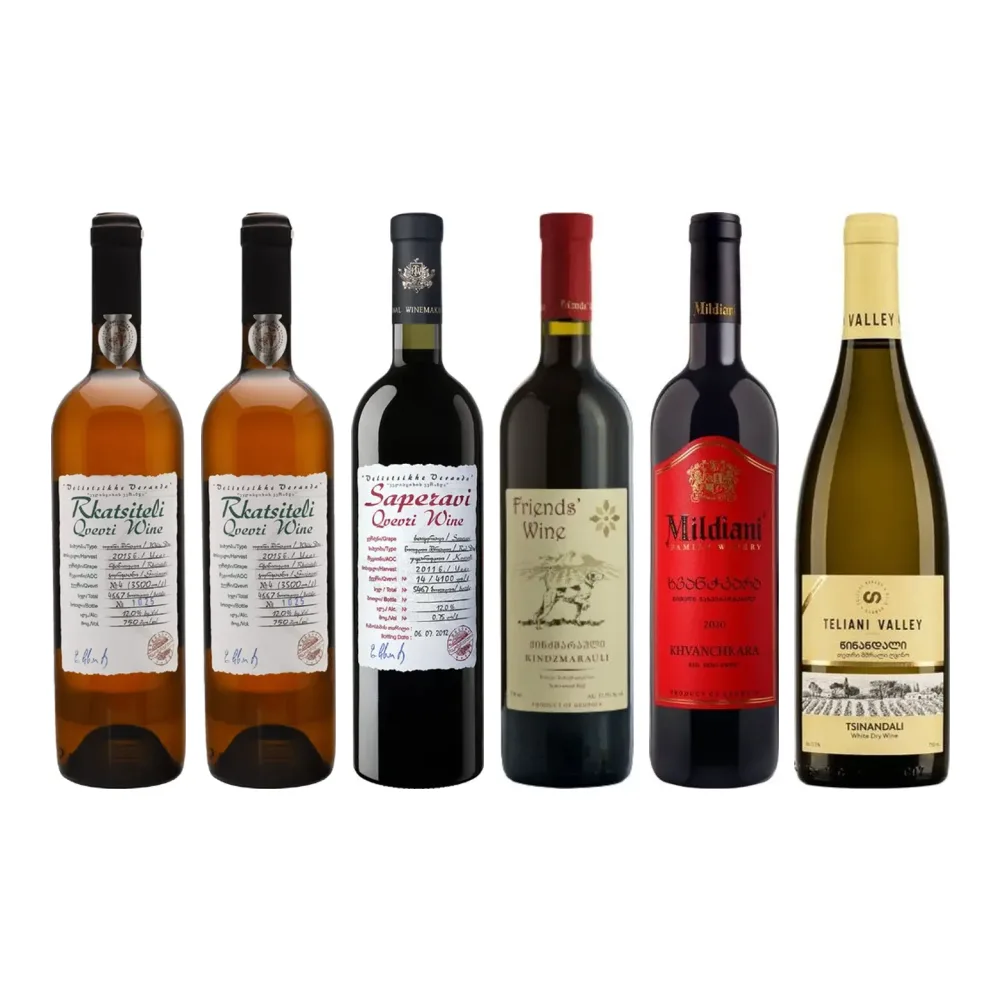
Two boxes of the wines above, priced below the same bottles bought one by one. Order online or add one to your tour; we hand it over on your last day, packed for the flight.

Georgia in Six Bottles

2 × Kakheti Amber, Rkatsiteli from the qvevri · Saperavi from the qvevri · Kindzmarauli · Khvanchkara from Racha · Tsinandali

$115/box of 6

Can you take wine home from Georgia?

Yes, in checked luggage: liquids over 100 ml are not allowed through airport security in hand luggage. Our boxes come in padded sleeves made for that. Georgia sets no limit on wine you take out for yourself, but your home country sets a duty-free allowance.

Arriving inDuty-free still wine
European Union4 litres (about 5 bottles)
United Kingdom18 litres
United States1 litre, more with duty

Allowances change. Check your own customs site before you fly.

Photos: Gurjaani (CC BY-SA 4.0) · Bernard Gagnon (CC BY 4.0) · Ghirlandajo (CC BY-SA 4.0) · Wikimedia Commons

Wine and chacha are sold only to adults and handed over in Georgia, packed for checked luggage. Pay by card when you order.