The short answer: the easiest rafting from Tbilisi is on the White Aragvi, run from Pasanauri on the Georgian Military Highway, about 90 km north of the capital [1]. The usual stretch is about 12 km to Meneso. In May and June the river is full of snowmelt, grade III (sometimes III–IV) and cold; from July it drops to grade II and becomes a family trip [2]. The season runs roughly May to September, with some operators starting in late April and running into October [1][3]. For serious whitewater, the Rioni in western Georgia is much harder.
Where you raft on the Aragvi
The White Aragvi flows down from the Gudauri side of the Caucasus and meets the Black Aragvi near Pasanauri. Rafting bases sit around Pasanauri and Zemo Amirni, about 1.5–2 hours' drive from Tbilisi [1]. The standard run, Pasanauri to Meneso, is about 12 km; depending on the water level you spend roughly 25–60 minutes on the river, a little more with stops [2].
Some online guides place Aragvi rafting "below the Zhinvali dam". That is not where the operators we know go; the lively water is upstream, on the White Aragvi.
The season, month by month
- Late April–June: big water. Snowmelt raises the river. Expect grade III, sometimes more, fast and very cold. Wetsuits are standard. This is for adults who are confident in water [2].
- July–August: warm and lively. The river drops to grade II. Fewer waves, more splashing, and fine for beginners and families [1][2].
- September–October: low and calm. Gentle water and a slower trip; some operators stop running after September [1][3].
Water levels depend on how much snow fell and how warm the spring is, so the grade in a given week can differ from the average. Operators set the route on the day.
Safety
- Kit: helmet and life jacket always; a wetsuit in the colder months. Wear the helmet and jacket done up for the whole run.
- Briefing: every trip starts with a safety talk on land: how to sit, how to paddle on command, and what to do if you fall in.
- Guide: each raft has a professional guide at the back steering. Choose a company with an established base and its own equipment.
- Swimming: you should be comfortable in water, especially in May–June.
- Insurance: visitors to Georgia must have insurance with at least 30,000 GEL of cover since 1 January 2026, and many basic policies exclude rafting. Check that yours covers it.
Who can go
Minimum ages vary by operator and by month. One Aragvi operator welcomes families from age 5 in the calmer summer water [1]; on our trips we take children from about 7, from July. In May and June it is an adult trip. Whatever the age, the rafting crew has the final say on the day. If someone in your group is nervous, July or August is the time to go.
What to bring
- Swimwear to wear under the wetsuit.
- Shoes that can get wet and stay on (no flip-flops).
- A towel and a full change of clothes, including underwear.
- A waterproof pouch if you must bring a phone; otherwise leave it in the car.
Combining rafting with Ananuri
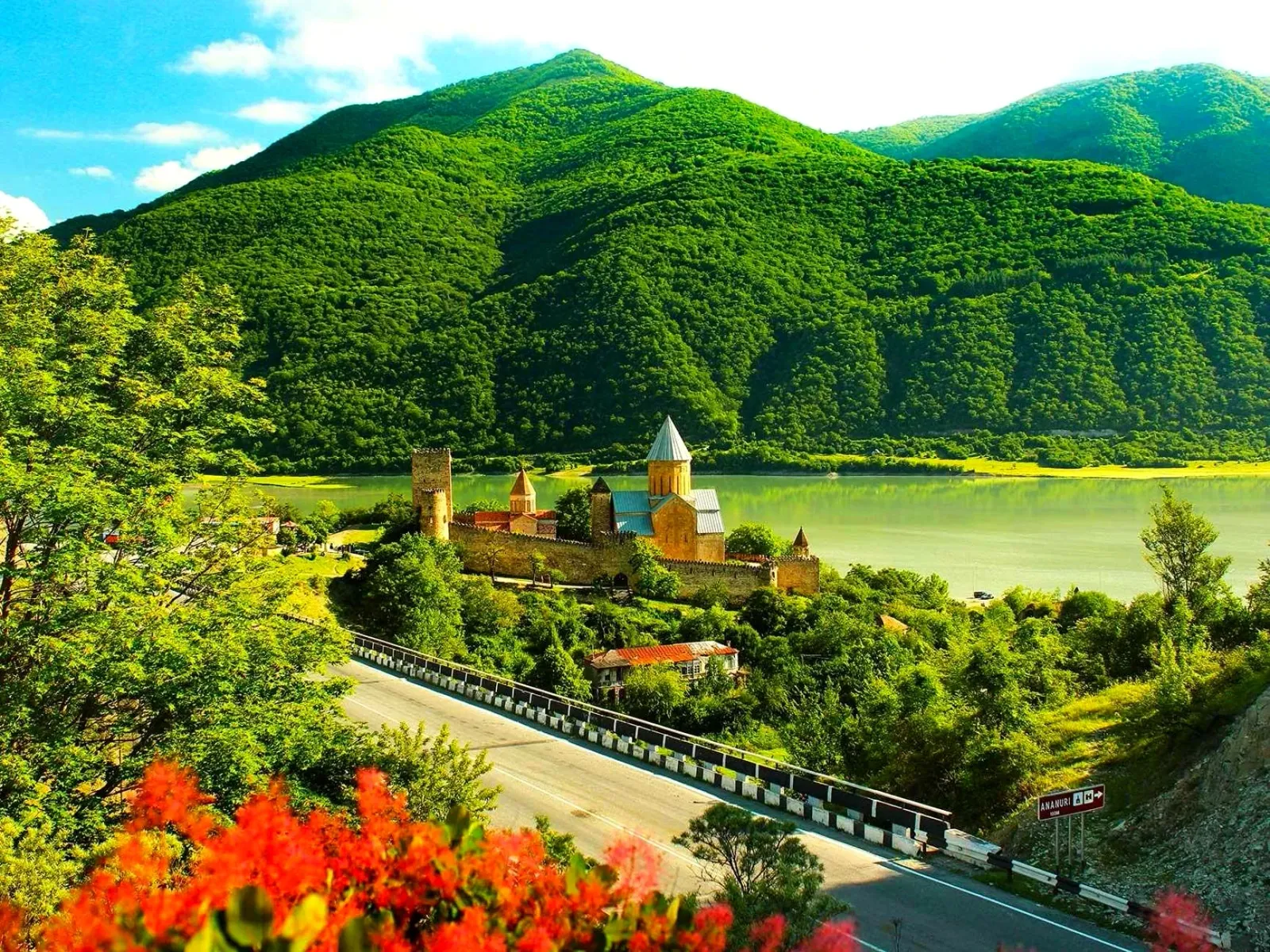
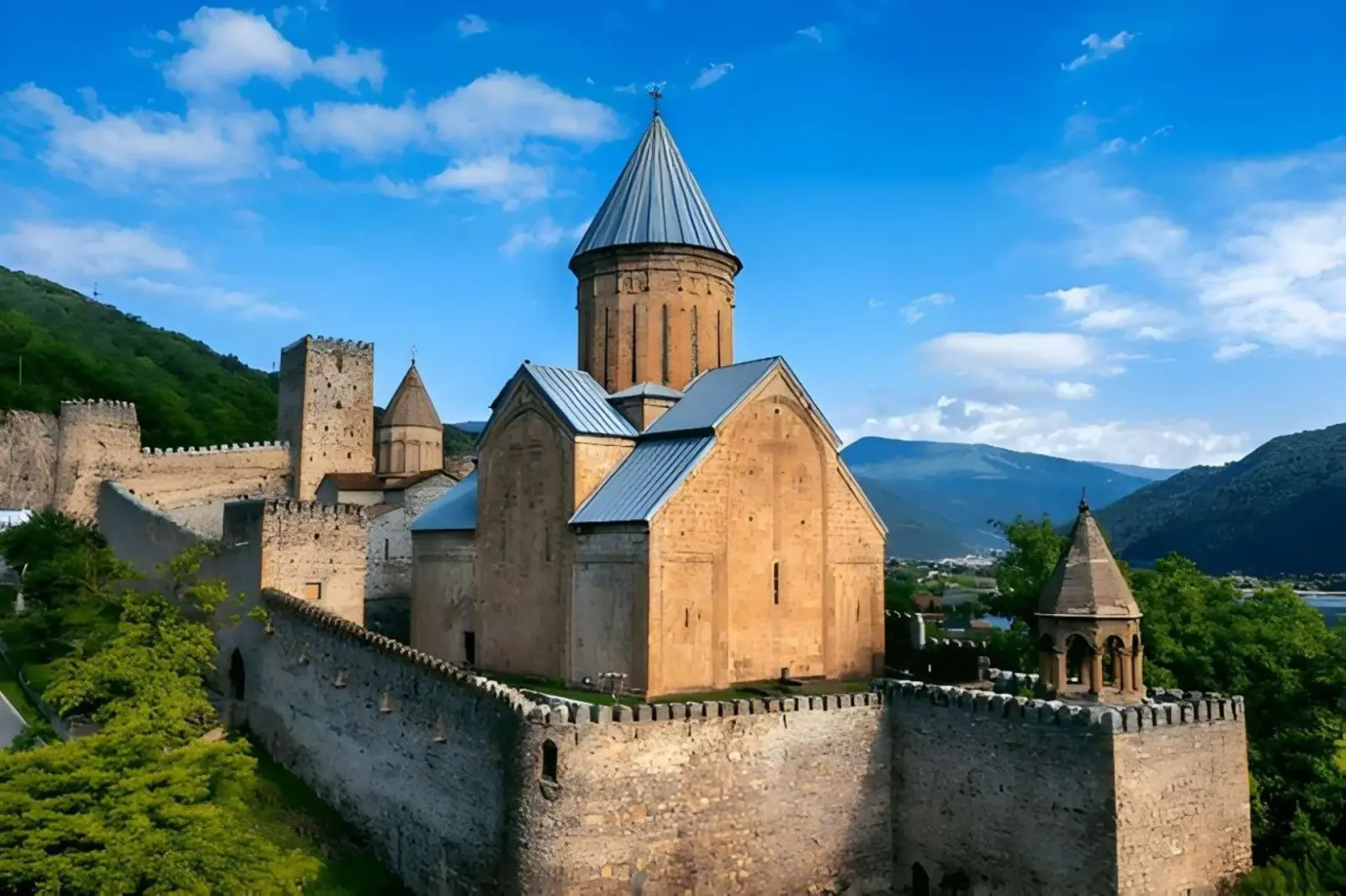
The Aragvi rafting base is on the road to Kazbegi, so it fits easily into a day on the Military Highway. Ananuri fortress, on the Zhinvali reservoir about 25 km before Pasanauri, is the natural stop on the way; Pasanauri itself is known for khinkali, so lunch after rafting is easy. With a longer day you can add a tandem paragliding flight at Gudauri, weather permitting. For all the stops on this road, see our guide to the Georgian Military Highway.
A typical rafting day from Tbilisi
- 08:30 leave Tbilisi, with a short stop at the Zhinvali reservoir viewpoint.
- 09:45 Ananuri fortress, about 45 minutes.
- 11:15 safety briefing and kit at the rafting base near Pasanauri.
- 11:45 on the water, Pasanauri to Meneso.
- 13:30 khinkali lunch in Pasanauri.
- Afternoon drive back (1.5–2 hours), or on to Gudauri for a paragliding flight if the wind allows.
That makes about nine hours door to door, longer with paragliding.
Other rivers in Georgia
Rioni: the hardest
The Rioni rises in Racha and flows through Kutaisi to the Black Sea. Its upper section from Gvardia to Tvishi, in Racha–Lechkhumi, is about 23 km (16 km in summer) and grade III–IV+, depending on the season; the operator describes it as the most extreme rafting in Georgia [4]. It is most intense from April to July. The minimum age is 18, everyone must be able to swim, and it is not recommended without previous rafting experience [4]. Lower sections of the Rioni near Kutaisi are much easier [3]. See our Racha guide for the region.
Tskhenistskali
Further west in Lechkhumi, the lower Tskhenistskali offers middle-grade rafting, generally from March to August; its upper reaches are for professionals [3].
Adjara and the south
Near Batumi, the Chorokhi and Adjaristskali are mostly simple, family-friendly runs, with the most water from March to mid-July and again from mid-October [3]. The Mtkvari near Vardzia in the south is lively in spring (about April–June) and calm in summer [3].
Rafting with us
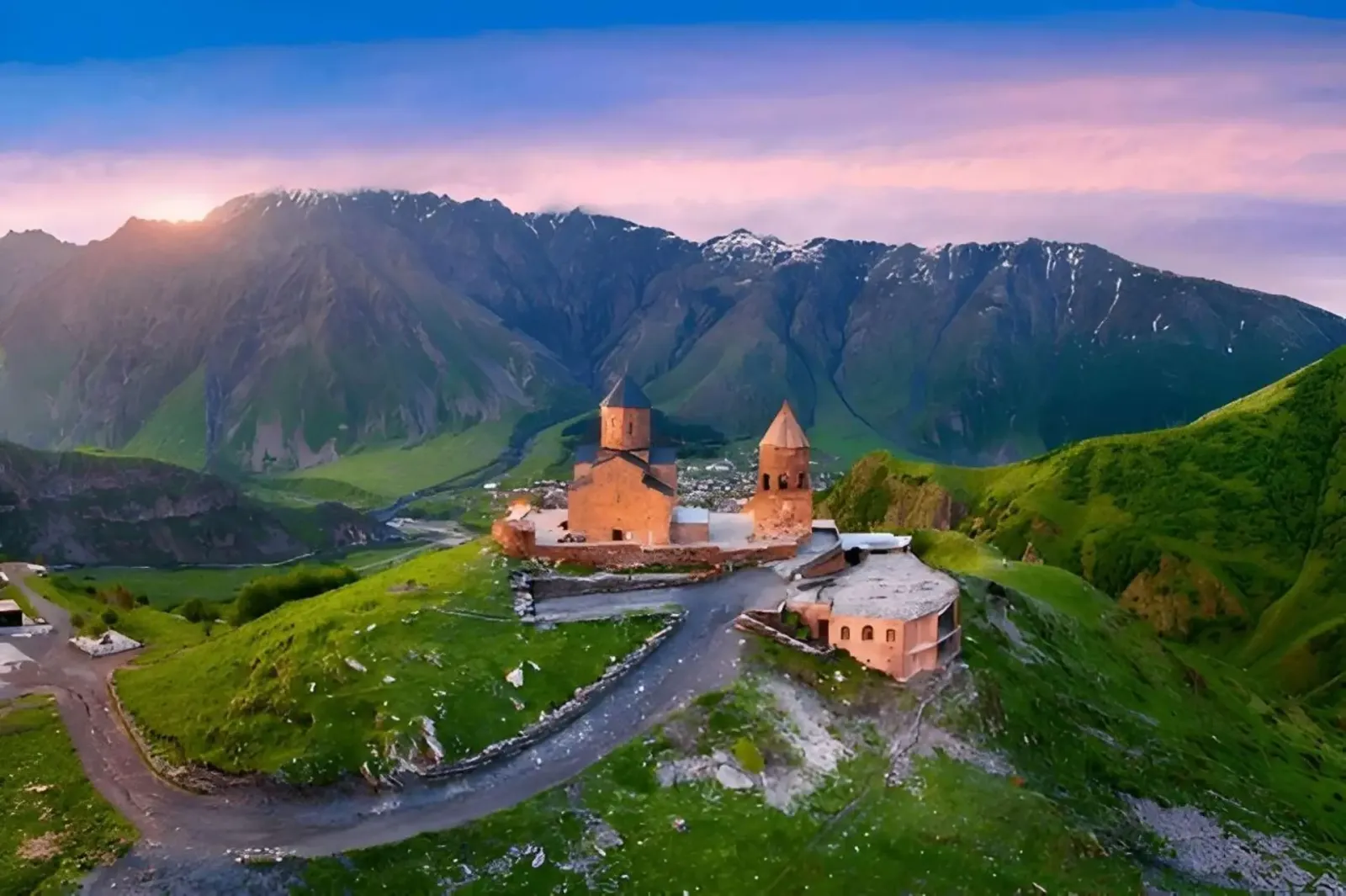
The private White Aragvi rafting and Ananuri day trip leaves Tbilisi at 08:30, stops at Ananuri, and rafts Pasanauri to Meneso with a local rafting company, with optional paragliding at Gudauri; it runs May–September. For a longer break, the private 3-day Kazbegi adventure weekend combines Aragvi rafting, a guided valley hike, Gergeti at sunrise and two chances at a paragliding flight. See each tour page for the current price, or build a trip around the mountains. Nothing to pay now.
Sources
- Raft in Georgia, "White Aragvi river rafting": raftingeorgia.ge
- Reinis Fischer, "Rafting in Georgia: Aragvi": reinisfischer.com
- Getur, "Rafting in Georgia" (rivers and seasons): getur.ge
- Rafting in Kutaisi, "The most extreme rafting in Georgia" (Rioni, Gvardia–Tvishi): raftinginkutaisi.com
Last checked: September 2026. River levels change with snow and rain; operators confirm the route on the day.