The short answer: Batumi has plenty to do when you're not on the beach, and most of it is within 30 minutes of the seafront. The two main sights are the Batumi Botanical Garden, on a green headland 9 km north of the city, and Gonio fortress, a Roman fort about 15 km south. Add the Argo cable car for the view, an evening in the old town and on the boulevard, and a half day inland at the Makhuntseti waterfall and medieval stone bridge, and you have two full days. Here is what each involves, and how rain changes the plan.
Batumi Botanical Garden (Mtsvane Kontskhi)
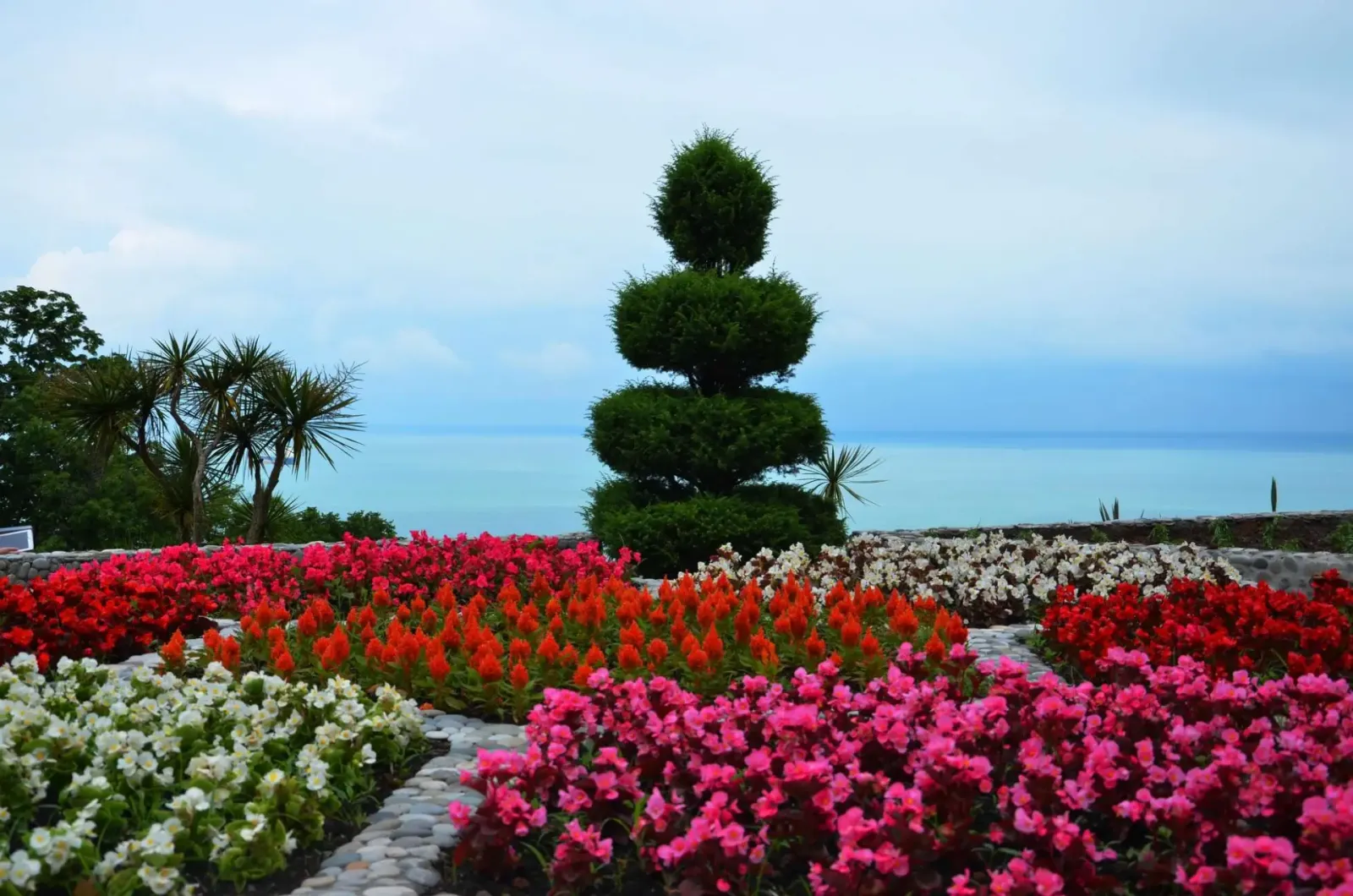
The garden sits on the Green Cape, Mtsvane Kontskhi, a steep headland above the sea north of Batumi. It was founded in 1912 by the Russian botanist Andrey Krasnov and covers over 100 hectares of hillside, planted by region: the humid subtropics of the Caucasus, East Asia, the Himalayas, New Zealand, Australia, the Mediterranean and the Americas. There are more than 2,000 kinds of woody plants, and the collection is one of the largest of its kind in the former Soviet Union.
- Time: allow 2–3 hours. The paths climb and drop steeply between the sea and the upper gate, so wear comfortable shoes.
- Entry: 20 GEL for foreign adults at the last check.
- Getting there: about 20 minutes by car from the centre; the coastal railway also has a Mtsvane Kontskhi station below the garden.
- Tip: the viewpoints over the sea are at their clearest in the morning. In summer, go early to avoid the humid midday heat.
Gonio fortress
Gonio stands near the mouth of the Chorokhi river, about 15 km south of Batumi and a few kilometres from the Turkish border. In antiquity it was Apsaros (or Apsarus), a Roman fort; Pliny the Elder mentions it in the 1st century AD. The rectangular walls had four gates and 22 towers, and 18 of the towers still stand. Inside are excavated foundations and a small museum. Tradition holds that the Apostle Matthias is buried within the walls, though the site has never been excavated.
- Time: an hour is enough; you can walk along part of the walls.
- Entry: about 10 GEL (2025 reports).
- Combine with: the quieter beaches of Gonio and Sarpi on the way back, or lunch by the sea.
Old Batumi and the boulevard
Behind the seafront towers, the 19th-century old town around Europe Square and Piazza is compact and good for an evening walk. The city's mixed past shows in its buildings: a Catholic-built cathedral from around 1900, the Orta Jame mosque and the 1904 synagogue are all a few blocks apart. The Batumi Boulevard runs for several kilometres along the sea, with cycle paths and cafés. At its northern end are the Alphabetic Tower and Ali and Nino, the moving steel sculpture of two lovers that glides together and apart each evening. Our Batumi and Black Sea guide has more on the seafront and the beaches.
The Argo cable car
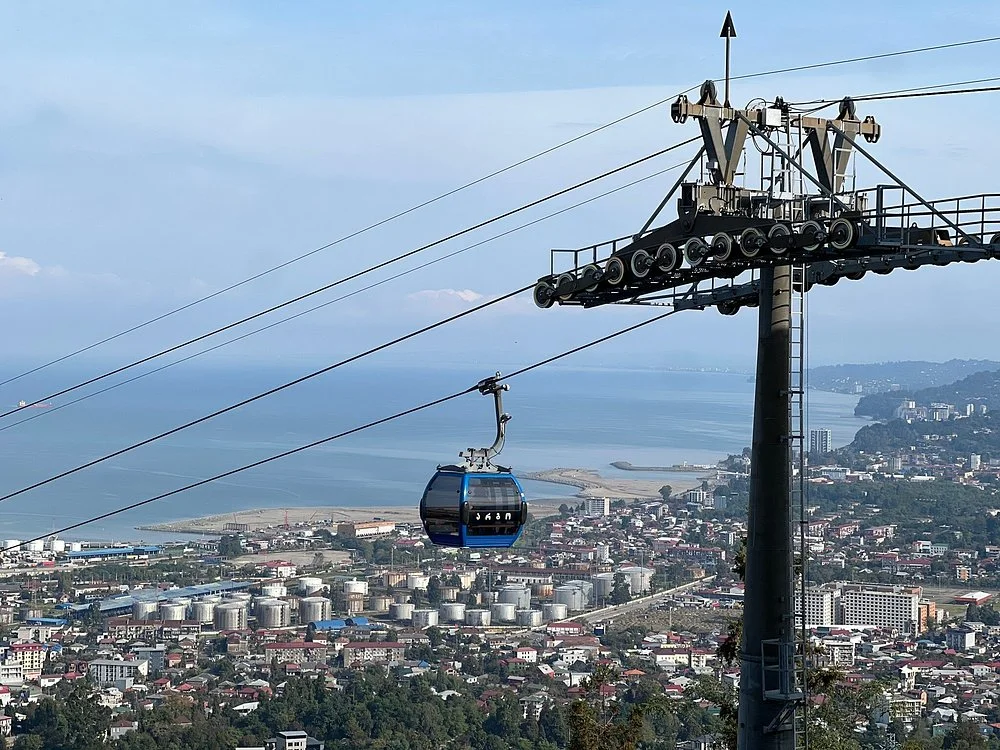
The Argo cable car, opened in 2013, runs 2,586 m from the city centre up to Mount Anuria, about 250 m above the sea. The ride takes about 15 minutes each way. At the top are a viewing deck over the city, the port and the coast, a small restaurant and a church. It works on a clear evening, and on a cloudy day it's often pointless, so check the sky before you queue.
Makhuntseti: a half day in the hills
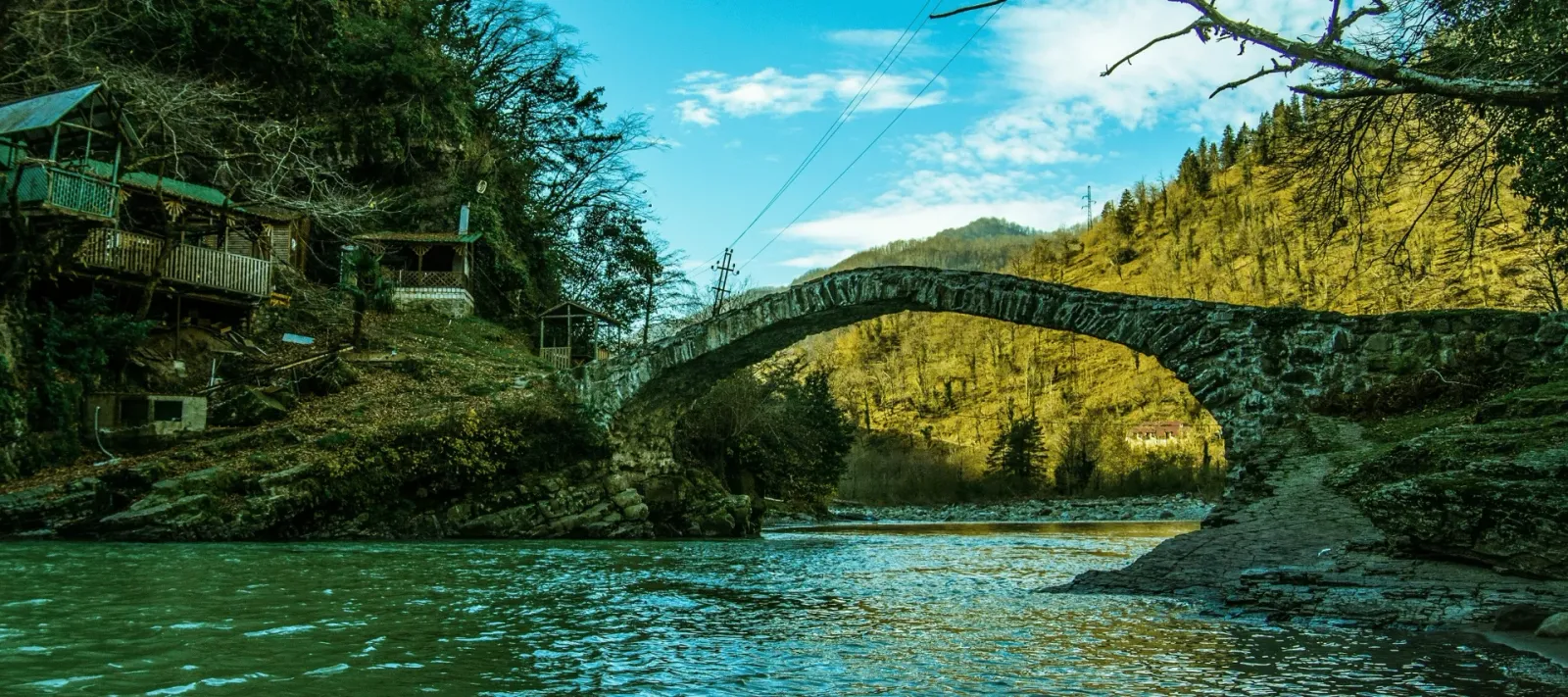
About 30 km inland, in the Acharistskali valley, the Makhuntseti waterfall drops in a white ribbon down a cliff beside the road, and a short walk away is the Queen Tamar bridge, an arched stone bridge over the river traditionally dated to the 12th century. It's about 45 minutes from Batumi. On the way, a viewpoint shows the green Chorokhi and Acharistskali rivers meeting. Further up the valley are the swaying iron footbridge and waterfall at Mirveti, and the Machakhela valley, known for family restaurants and Adjarian food. Beyond them, the valley climbs towards Keda's wine villages, Khulo and the Goderdzi pass.
Season and rain
- June to September: beach season, hot and humid. Do the Botanical Garden and Gonio early in the day.
- Late August to early October: the autumn raptor migration passes over the hills above the city; see our Batumi birdwatching guide.
- October to May: Batumi is one of the wettest cities in Georgia, with long rainy spells in autumn and winter. The garden is lush but slippery; waterfalls are at their fullest after rain.
On a wet day, Gonio's museum, the old town's cafés and churches, and a longer lunch make a reasonable plan. The cable car and the garden's viewpoints are better saved for a clear spell.
How to fit it in
- Day 1: Gonio in the morning, the Botanical Garden at midday, the old town and boulevard in the evening.
- Day 2: Makhuntseti and Mountain Adjara, with lunch in the Machakhela valley; the Argo cable car at sunset if the sky is clear.
Batumi is about 370 km from Tbilisi, 5–6 hours by road, so it works better at the end of a route through western Georgia rather than as a detour from the capital.
Seeing Batumi with us
Our Western Georgia and Black Sea private tour, 6 days runs from Kutaisi's caves and canyons up to Svaneti and down to the coast, with a day for Gonio and the Botanical Garden before the train back to Tbilisi or a flight home from Batumi. Already in Batumi? The Mountain Adjara private day trip takes about 6.5 hours, with Makhuntseti, the Queen Tamar bridge, Mirveti and a family lunch with wine in the Machakhela valley. Both come with your own car and English-speaking driver-guide. See each tour page for the current price, or plan your own route. Nothing to pay now.
Sources
- Wikipedia, "Batumi Botanical Garden": en.wikipedia.org; entrance price: bbg.ge
- Wikipedia, "Gonio Fortress": en.wikipedia.org; Visit Ajara, "Gonio Apsaros Fortress": visitajara.com
- Visit Batumi, "Cable car Argo": visitbatumi.com
- Visit Batumi, "Makhuntseti ancient arched bridge": visitbatumi.com
- Georgia Travel, "Makhuntseti Waterfall": georgia.travel
Last checked: September 2026. Entry fees change; we confirm them before your visit.