The short answer: Svan families built their stone towers as refuges. Each tower stood beside the family house, and when raiders came, or when a feud with another family turned violent, people retreated inside, pulled up the ladder and defended themselves from the top. Most were built between the 9th and 12th centuries, though the tradition is older. Today they are the reason Upper Svaneti has been on the UNESCO World Heritage List since 1996, and you can see them in Mestia, in the villages of the upper valley and, most famously, in Ushguli.
A valley that looked after itself
Upper Svaneti is a high valley in Georgia's north-west, closed in by the main ridge of the Caucasus. For much of its history it was hard to reach and loosely governed, and the Svans, who have their own language alongside Georgian, ran their own affairs through family and village councils. Without a strong outside power to keep order, a family had to protect itself.
That protection took two forms. One was defence against outside raids from across the mountains. The other was against neighbours. Svaneti was known for blood revenge, litsvri: when a grave insult or killing took place, the victim's family was expected to take revenge on the offender or a male relative, and feuds could run for generations[3]. A tower gave a family somewhere to hold out.
How a tower worked
A typical tower is square, built of stone, and has three to five storeys, its walls tapering slightly as they rise[1]. The top floor has openings and projecting parapets from which defenders could drop stones or shoot at attackers[1][3].
- A high entrance. There was no door at ground level. You reached the tower from the upper floor of the family house, or by a ladder that could be pulled up[1][3].
- Wooden floors and ladders connected the storeys inside[1].
- Stores and valuables. Towers held food, weapons and the family's most precious objects, and churches' icons and manuscripts were often hidden in them during troubles[3].
The house beside it: the machubi
The tower was only half of the home. Next to it stood the machubi, a stone house of two floors. On the ground floor, people and animals lived under one roof in winter, separated by carved wooden partitions, with a hearth in the middle; the upper floor, the darbazi, was for summer living and storing hay[1]. The warmth of the livestock helped the family through long winters. The Margiani house in Mestia is the place to see this arrangement for yourself.
When they were built
Most of the towers you see date from the 9th to the 12th centuries, a time that overlaps with Georgia's medieval golden age, though the building tradition probably goes back much further[1]. Dating individual towers is difficult, and many were repaired and rebuilt over the centuries. Families went on living in them, and the defensive role only faded in more recent times, as the state reached into the valley.
Where to see them
Mestia
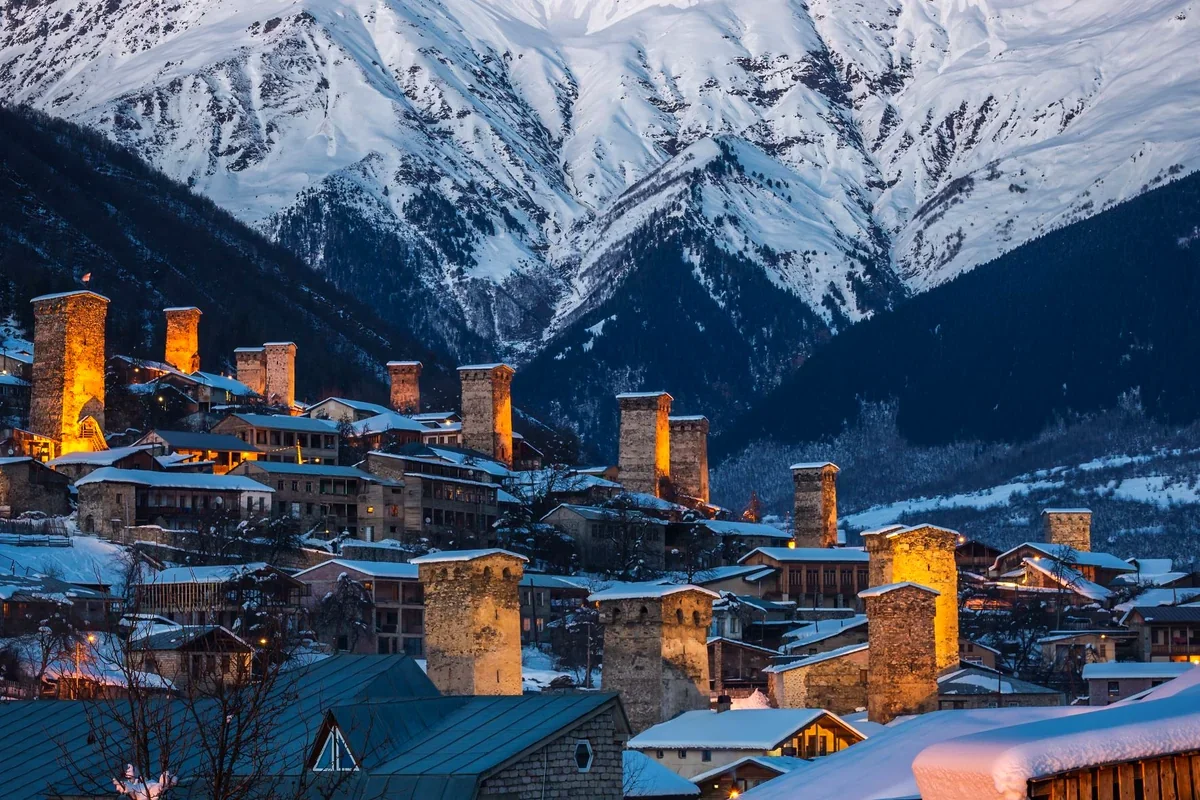
Svaneti's main town still has its towers standing among modern houses and guesthouses, especially in the older quarters such as Lanchvali. Two places help you understand them:
- The Margiani house, a family tower house you can go inside, including climbing the tower by its narrow ladders.
- The Svaneti Museum of History and Ethnography, which holds the icons, manuscripts and church treasures that Svan families kept safe for centuries. It is closed on Mondays.
For everything else in town, read our Mestia guide.
The villages of the upper valley
Between Mestia and Ushguli, villages such as those of the Mulakhi valley have their own clusters of towers, some restored, some half-ruined. Walkers on the Mestia to Ushguli trek pass through them.
Ushguli
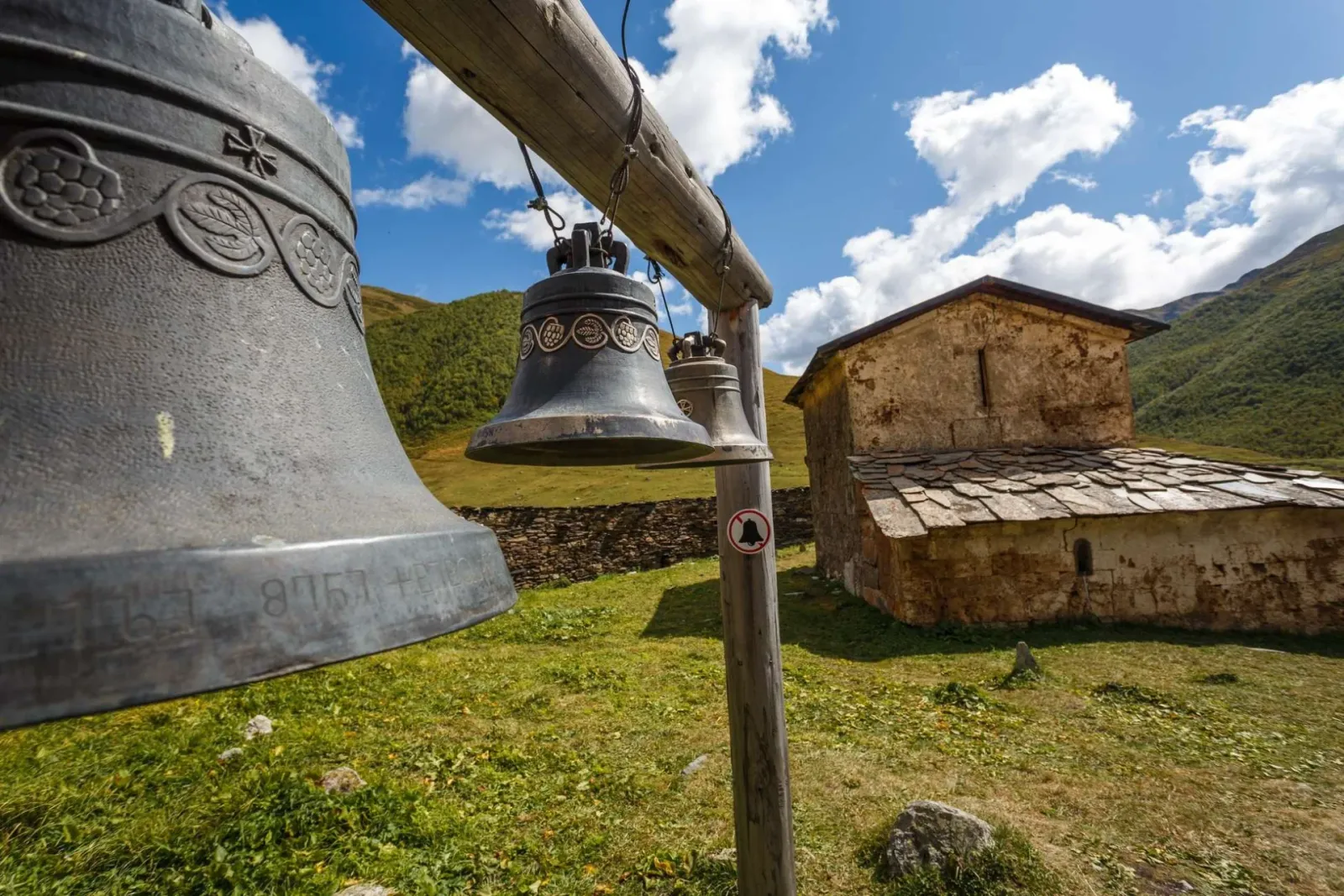
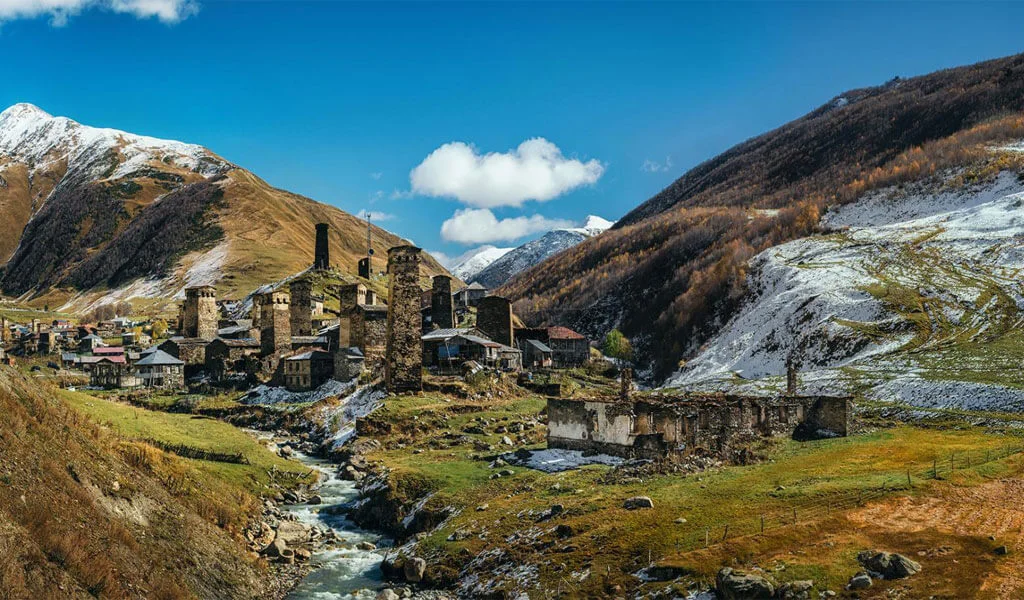
Ushguli, 47 km from Mestia under Mt Shkhara, is one of Europe's highest villages and the place most people picture when they think of Svaneti. It is a group of four small communities; Chazhashi, with the densest cluster of towers, forms the core of the UNESCO site. The 12th-century Lamaria church stands above the village.
Visiting: a few practical points
- Most towers are private. They belong to families, and you can't simply walk in. Admire them from outside unless you are invited or visiting a museum tower.
- Climbing is steep. Tower ladders are narrow and near-vertical, and there is little light inside. Not ideal with small children or bad knees.
- Getting there: Mestia is about 460 km from Tbilisi by road, 7.5–10 hours, so most people break the journey or take the train to Zugdidi. Mestia to Ushguli takes 1.5–2 hours; a local 4x4 is used when the road is wet or snowy.
- Season: June to September is easiest. In winter the towers under snow are spectacular, but the Ushguli road can close after heavy snowfalls.
- Insurance: since 1 January 2026, travel insurance with at least 30,000 GEL of cover is mandatory for visitors to Georgia.
Seeing the towers with us
The Svaneti: Mestia and Ushguli 5-day private tour gives you time for the Margiani tower house and the Svaneti Museum in Mestia, a walk to the Koruldi lakes, and a night in Ushguli among the towers. With less time, Svaneti by train, a 3-day private trip, covers Mestia, a day in Ushguli and the museum. Both are private, with an English-speaking driver-guide based in Mestia; see the tour page for the current price. Or build your own Svaneti route. Nothing to pay now.
Sources
- Wikipedia, "Svan towers": en.wikipedia.org
- UNESCO World Heritage Centre, "Upper Svaneti" (inscribed 1996): whc.unesco.org
- HeritageDaily, "The Svan Blood Revenge Towers": heritagedaily.com
- Wikipedia, "Upper Svaneti": en.wikipedia.org
Last checked: September 2026. Museum hours and the Mestia–Ushguli road can change with the season.