The short answer: Sapara is an active monastery on a cliff edge in a forested gorge about 10–12 km from Akhaltsikhe, in southern Georgia. It has a 10th-century church, the domed church of St Saba with fine 14th-century frescoes, a bell tower and the ruins of a fortress above. It is much quieter than Vardzia or Rabati Castle, and it fits easily into an afternoon or an early morning if you spend a night in Akhaltsikhe. The road is short but winding, so allow more time than the distance suggests.
A monastery of the Jakeli family
A monastery existed at Sapara by the 9th century, and its oldest standing church, the Dormition of the Virgin, dates to around the 10th[1][3]. Its golden age came in the late 13th and 14th centuries, when Sapara became a possession of the Jakeli family, the rulers of Samtskhe, whose seat was the fortress at Akhaltsikhe.
The family's leader Sargis Jakeli managed to stay on good terms with the Mongols, who then dominated the region. In old age he became a monk and took the name Saba. His son Beka built the largest church at Sapara and dedicated it to St Saba, the saint whose name his father had taken[2][4]. The Jakelis also used Sapara as a residence, and the remains of their palace and walls survive[1][4].
Ottoman expansion emptied the monastery in the late 16th and early 17th centuries[1]. Under Russian rule it was revived as a hermitage in the 1890s, then closed in the Soviet period. Monks returned around the end of the 1980s, and it is a working monastery again today[3][4].
What you see
The church of St Saba
The domed church of St Saba, built in the 13th and 14th centuries, sits on a rock and is the largest of the churches in the complex[1][4]. Its interior holds the reason most people come: 14th-century wall paintings of high quality, with biblical scenes, saints and the Ascension[1]. Parts of them were uncovered during restoration work in the 1990s[4]. The light inside is dim, and your eyes need a minute to adjust.
The Dormition church
The older, simpler hall church of the Dormition of the Virgin dates from around the 10th century, with fragments of early 14th-century frescoes[1].
The setting
Sapara means "sheltered", and the site lives up to it: pink and yellow stone buildings against pale cliffs, surrounded by forest[3]. A two-storey bell tower, chapels and the ruins of the Jakeli palace sit around the main church, and fortress ruins stand on the height above[4]. Some of Sapara's finest carved stones, including its stone iconostasis, are now kept in museums in Tbilisi[4].
The road up
Sapara lies near the village of Ghreli, south-east of Akhaltsikhe[4]. From town it is roughly 10–12 km, but the road climbs and winds through the hills, so the drive is slower than the distance suggests. Travellers' reports on its condition have varied over the years, from rough dirt to improved surface; after heavy rain or in snow, check before you set off. Some energetic visitors walk up for the views[3].
There is no entrance fee; a donation in the church is welcome.
Visiting a working monastery
- Dress: cover shoulders and knees. Women usually cover their hair and wear a skirt; wraps are often available at the entrance.
- Quiet: monks live here. Keep voices low, and don't wander into areas marked as private.
- Photos: ask before photographing inside the churches, and never photograph the monks without permission.
- Services: if a service is under way, stand quietly at the back or come back later.
- Shoes: wear something with grip if you plan to climb to the fortress ruins above the monastery; the path is steep and uneven.
How to fit Sapara in
Sapara works well with a night in Akhaltsikhe, which is also the base for Vardzia, 60–70 km (1–1.5 hours) to the south. Some ways to use it:
- Afternoon of day one: Borjomi, Rabati Castle, then Sapara in the late afternoon, when the colours of the stone are warm.
- Morning of day two: Sapara first thing, then back to Tbilisi via Borjomi, if you saw Vardzia the day before.
- On a longer southern loop: with Vardzia, Khertvisi and Rabati over two nights.
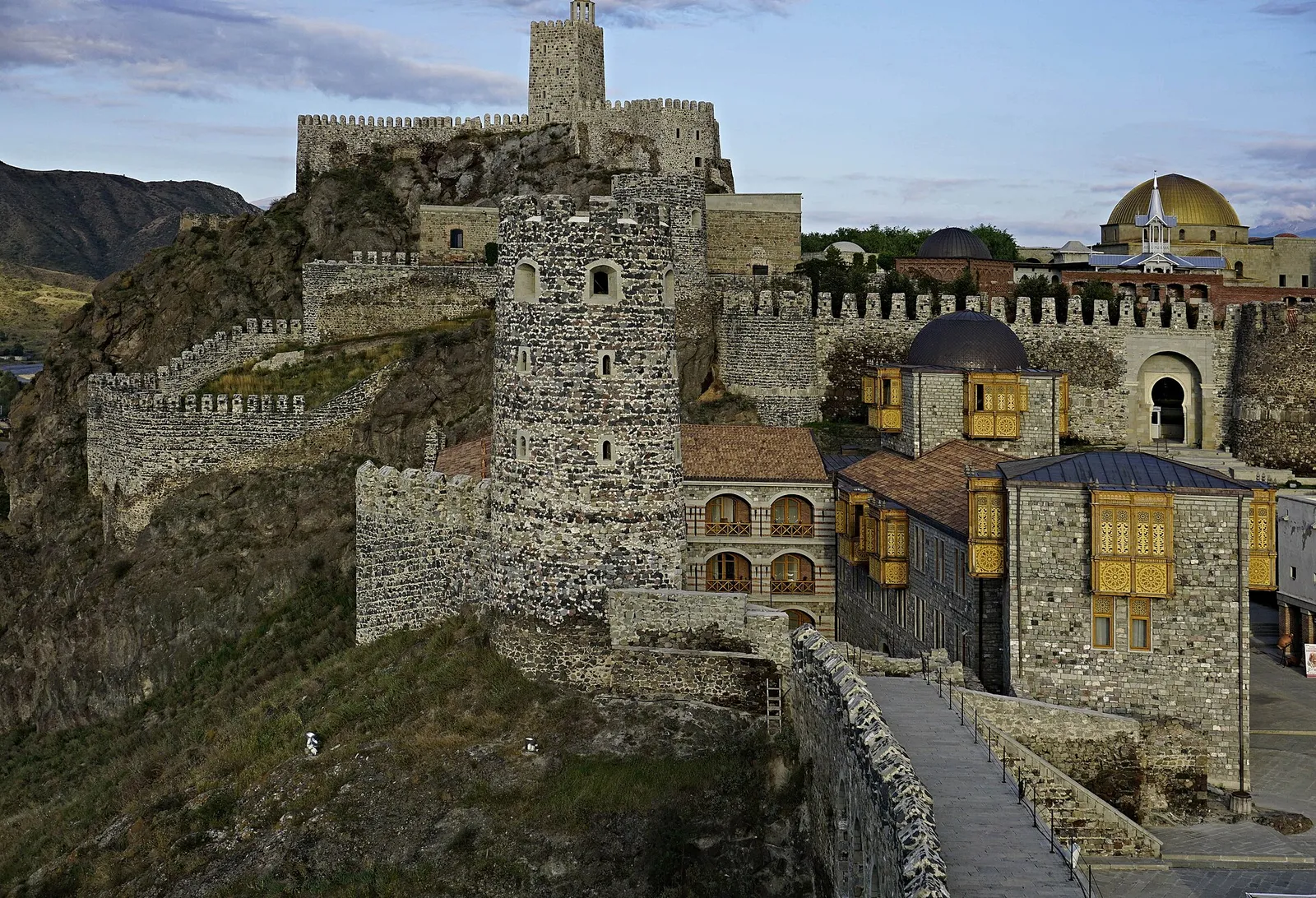
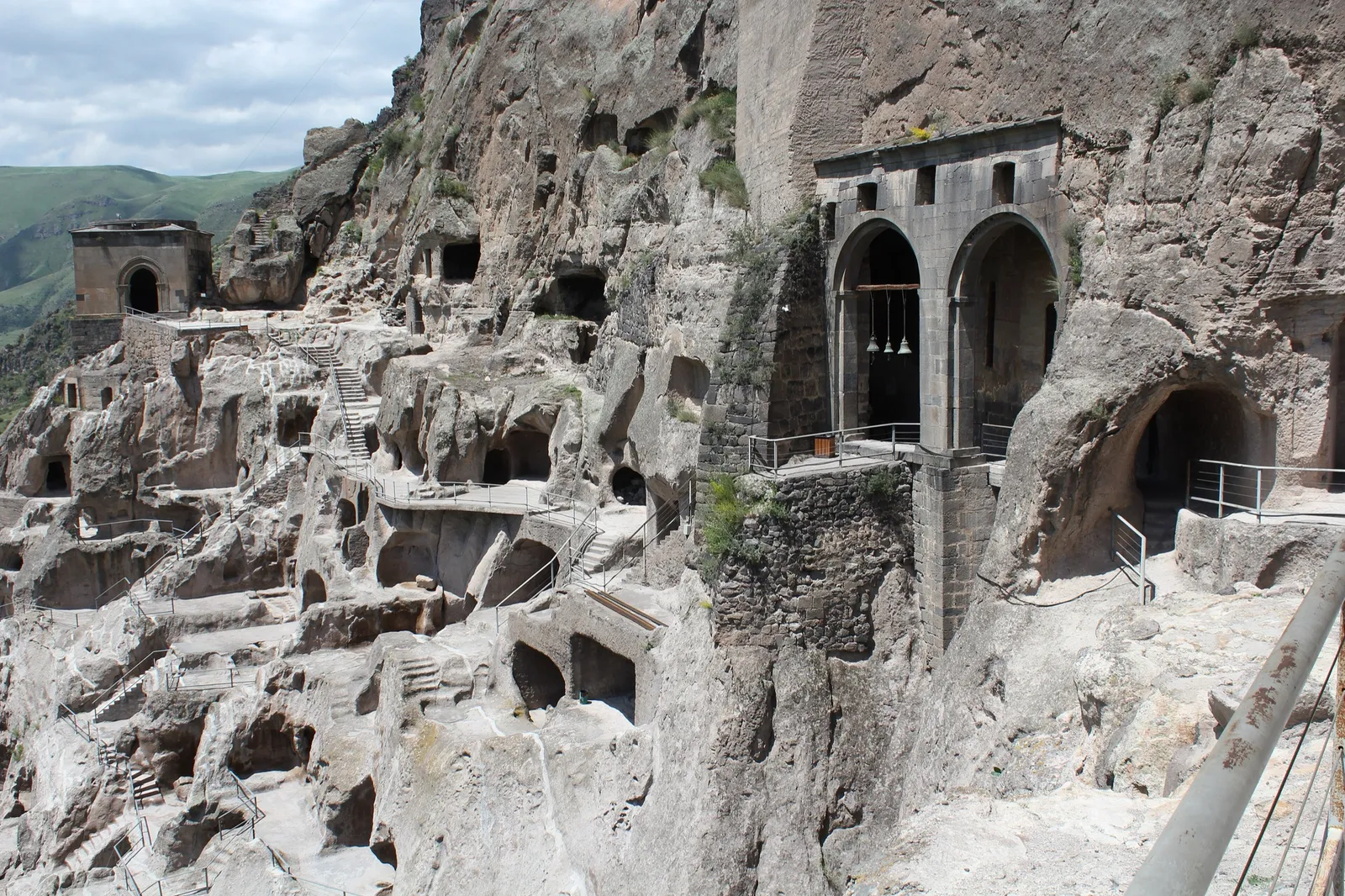
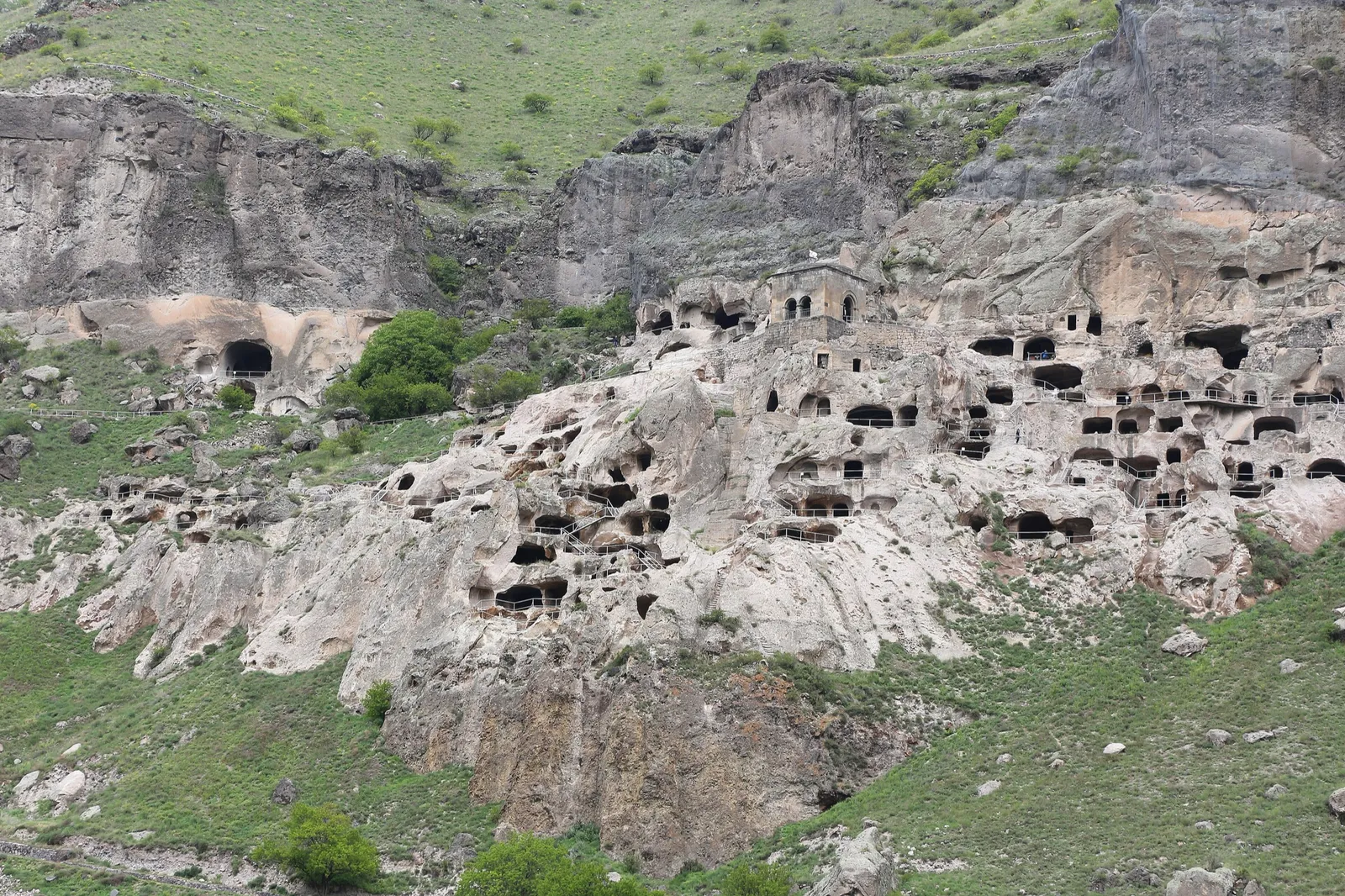
It doesn't fit a one-day trip from Tbilisi: that day is already 13.5–14 hours with Borjomi, Rabati and Vardzia. At Vardzia itself, part of the path has been closed since the rockfall of 27 May 2026; see what is open at Vardzia in 2026. For the castle in town, read our guide to Rabati Castle in Akhaltsikhe.
Who Sapara suits
It suits travellers who enjoy medieval church painting, quiet places and a bit of landscape. It suits less well if you only have one day in the region, or if you have already seen several monasteries and would rather spend the time in Borjomi's park. With children, the setting is more of a draw than the frescoes.
Seeing Sapara with us
Our Vardzia, Rabati and Borjomi 2-day private trip includes a night in Akhaltsikhe or near Vardzia, and if you stay in Akhaltsikhe we can add Sapara on the first afternoon or the second morning; just tell us when you enquire. The one-day Vardzia and Borjomi private day trip has no room for Sapara, so choose the two days if the monastery matters to you. Both are private, with your own car and English-speaking driver-guide; see the tour page for the current price. Or build your own route through the south. Nothing to pay now.
Sources
- Wikipedia, "Sapara Monastery": en.wikipedia.org
- Lonely Planet, "Sapara Monastery": lonelyplanet.com
- Georgia.to, "Sapara Monastery": georgia.to
- Advantour, "Sapara Monastery near Akhaltsikhe": advantour.com
Last checked: September 2026. Mountain road conditions change with the weather; check after rain or snow.