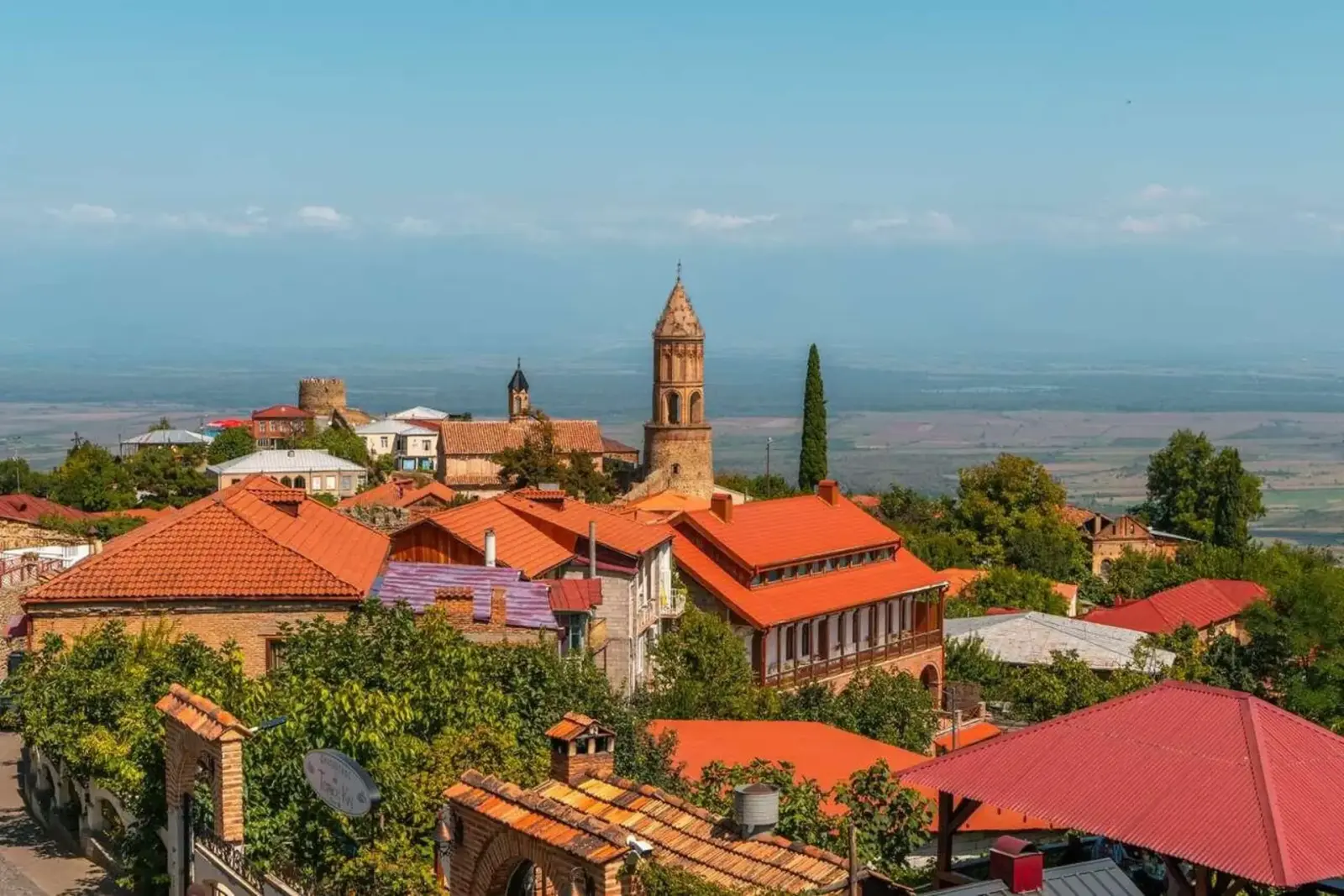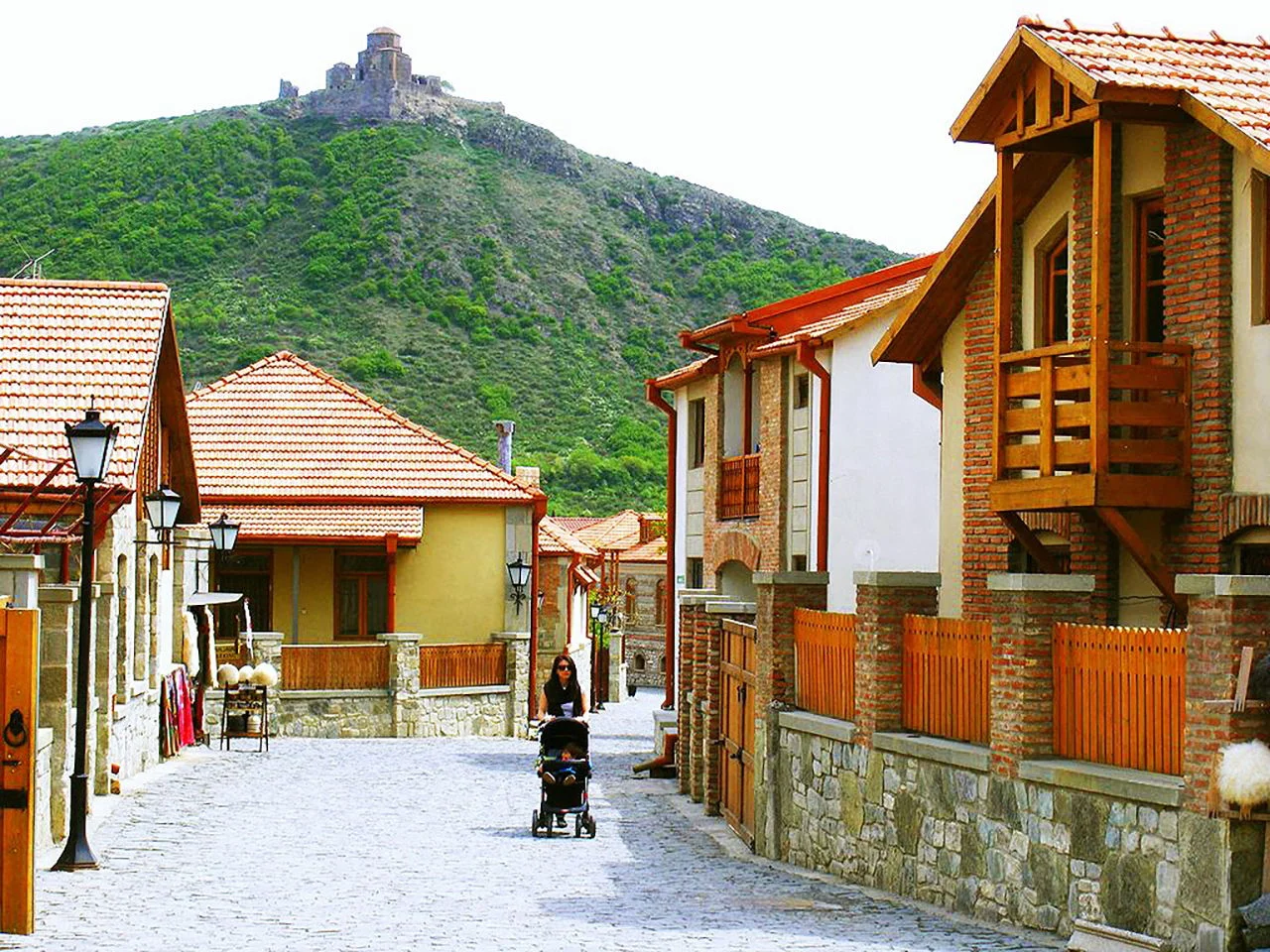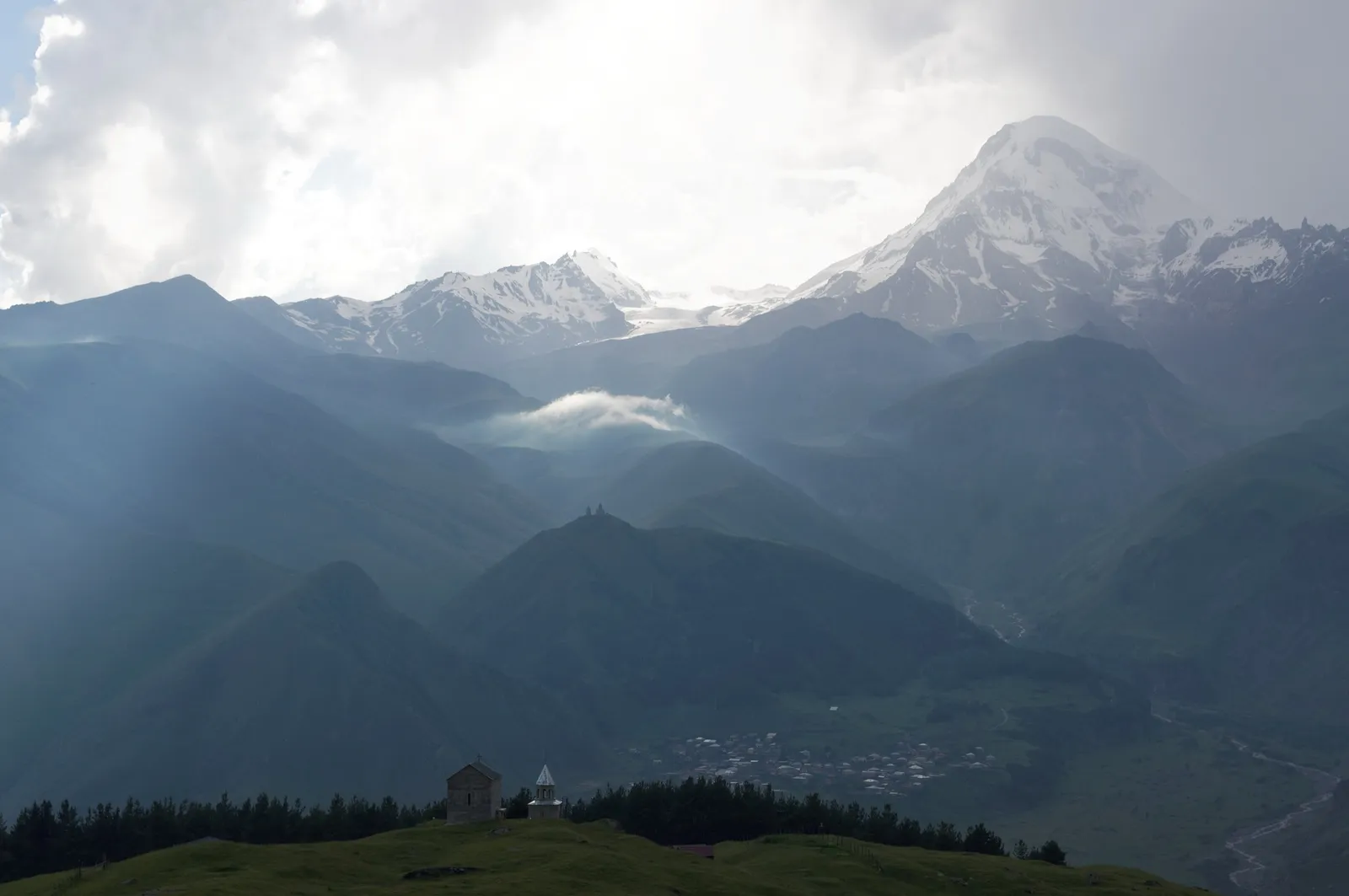
The short answer: the best time to visit Georgia, the country in the Caucasus, is mid-May to June or September to mid-October. Tbilisi is warm rather than hot, the road to Kazbegi is open and the valleys of Svaneti are green, and in September the grape harvest begins in Kakheti. July and August are the months for the remote highlands such as Tusheti, and late December to March is for skiing and quiet city breaks. Georgia has several climates, so the right month depends on where you want to go.
The best time to visit Georgia for each kind of trip
- A first trip (Tbilisi, Kakheti, Kazbegi): mid-May to June, or September to mid-October. May and June are the wettest weeks in Tbilisi and Kazbegi, so expect some showers[1][2].
- Hiking in the high mountains: July to mid-September, when the trails of Svaneti, Kazbegi and Tusheti are clear of snow.
- Tusheti and Khevsureti by 4x4: July to mid-September, while the Abano and Datvisjvari passes are open.
- Wine and the grape harvest (rtveli): mid-September to October in Kakheti. In 2026 the harvest there began on 10 September[8].
- Skiing: late December to March at Bakuriani, and into April at Gudauri[9].
- Swimming in the Black Sea: July and August. From September the rain on the coast increases.
- Fewer people: November, and mid-January to March away from the ski resorts, when Tbilisi and Kakheti are quiet and the mountains need a flexible plan.
- Blossom and green hills: April and May, which are also the best months for David Gareja and Vashlovani before the heat.
What is the best month to visit Georgia?
The best time of year to visit Georgia changes with the route, but for a first trip that takes in Tbilisi, Kakheti and Kazbegi we would pick September: warm days in the capital, the harvest under way and the mountains still clear of snow. June is the alternative if green valleys matter more to you than wine, although Tbilisi can be wet. If you can only travel in July or August, build the trip around the mountains. In winter, build it around Tbilisi, the cellars and the ski resorts.
How the season changes the cost of a trip
In 2026 a private room in a guesthouse costs about 80–135 GEL a night, and a 3-star or comfortable mid-range hotel about 120–250 GEL[15][16]. Some times of year sit higher or lower than others:
- More expensive: a room in Tbilisi or Batumi in summer, or in Kakheti at harvest time in September and October, costs more than a mountain guesthouse in May.
- Cheaper: November is one of the cheaper months for hotels, since the harvest premium in Kakheti is over and Batumi is out of season[17]. Hotels are quiet in the first half of December too.
- Holiday weeks: Gudauri and Bakuriani are at their busiest from Christmas to mid-January[9], and central Tbilisi fills up from about Christmas week, so book rooms and ski hire early for those dates.
Rooms also run short outside the holidays. Book ahead for Stepantsminda at weekends from July to September, and for Sighnaghi and Telavi in the harvest weeks. Most guesthouses in Tusheti open only from June to September[18], and seasonal guesthouses elsewhere in the mountains shut for the winter. Our guide to what a trip to Georgia costs breaks down food, transport and entrance fees.
Weather by region
- Tbilisi and the east (Kakheti, Mtskheta): average highs from about 7 °C (45 °F) in January to about 32 °C (90 °F) in July and August. May and June are the wettest months, and winter is the driest season[1].
- Kazbegi (Stepantsminda, about 1,740 m): much colder. Highs are around freezing in midwinter, and even in October nights drop to about 0 °C (32 °F). In July and August highs reach only about 20 °C (68 °F), and May to August is the wettest part of the year, so pack a waterproof[2].
- Batumi and the Black Sea coast: humid subtropical and wet, with about 2,500 mm (98 in) of rain a year, around five times Tbilisi's 510 mm. September to November are the wettest months, with more than 300 mm each[1][3].
- Kutaisi and Imereti, in the west: milder winters than Tbilisi (January highs about 10 °C) and much wetter, with about 1,360 mm of rain a year[13].
- Svaneti, Tusheti and the high mountains: under snow from about November to April. The highest passes open only in summer.
When the mountain roads open
Snow, not the calendar, decides when you can reach the highest valleys. These are the usual windows; the exact dates change every year.
- Jvari Pass (2,379 m), Tbilisi to Kazbegi: open all year, but it can close for a few hours or one to three days after heavy snow, most often from December to March[4]. Our guide to the Kazbegi road in winter explains how we plan around it.
- Abano Pass (2,826 m), to Tusheti: a 4x4-only road that opens between late May and late June (on 20 June in 2026, after late snow) and closes between late September and late October[5]. Our Tusheti guide has the details.
- Datvisjvari Pass (about 2,600 m), to Shatili in Khevsureti: usually opens between mid-May and mid-June and closes for the winter in autumn[6].
- Zagari Pass (2,620 m), from Ushguli to Lentekhi and Kutaisi: open from about late May or June to mid-October. Outside that window you return from Ushguli via Mestia[7].
- Mestia, the main town of Svaneti: reachable all year on the main road from Zugdidi, with winter tyres in snow.
Getting around in each season
- All year: Mtskheta (30–40 minutes from Tbilisi) and Uplistsikhe and Gori (1.25–1.5 hours west) are low enough to be unaffected by snow on the high passes, so they make a Plan B when the Kazbegi road is shut. Sighnaghi is about 2 hours from Tbilisi; when the Gombori Pass is icy, drivers take the lower Sagarejo road.
- Spring to autumn: Tbilisi to Stepantsminda is 152 km and 3–3.5 hours each way. Marshrutkas (shared minibuses) cost roughly 15–40 GEL a seat on that road but don't stop at sights on the way, and a driver-only car starts at about 150–200 GEL[4][15][16]. An ordinary car is fine for the highways, Kakheti, Borjomi and Kazbegi in summer. Tickets for the morning train from Tbilisi to Zugdidi, a common way towards Mestia, sell out in summer, so book early.
- Winter: winter tyres are compulsory on the road to Kazbegi and chains are sometimes required[4]. The road up to Gergeti needs a 4x4 in snow, and on some days it is impassable. Gudauri is about 120 km and 2–2.5 hours from Tbilisi, Bakuriani about 180 km and 2.5–3 hours. Keep Kazbegi on a flexible day, never the day before a flight.
Short days matter too: it is dark by early evening in November and by late afternoon in December, so long day trips need an early start. We compare the transport options in how to get from Tbilisi to Kazbegi and our guide to hiring a private driver-guide.
Month by month
January
Cold and often grey in Tbilisi (highs about 7 °C, lows just below freezing), and the driest month[1]. The ski season is in full swing at Gudauri and Bakuriani. New Year (1–2 January) is the biggest family holiday, and Orthodox Christmas on 7 January brings Alilo processions through the streets[10]. Epiphany on 19 January is also a public holiday[11]. Sulphur baths and wine cellars work all winter. Our guide to Georgia in winter covers December to March, and Georgia in January looks at this month alone.
February
Still winter, and still ski season. February is one of the driest months in Tbilisi, with average highs of about 8 °C and around 18 mm of precipitation[1]. Tbilisi and Kakheti are quiet, and there are no fixed public holidays[11]. In Upper Svaneti, Lamproba, a torchlit feast of St George, falls in late winter on a date set by Easter[10].
March
Changeable: Tbilisi highs about 13 °C, about 29 mm of rain[1] and the first blossom late in the month. Kazbegi is still wintry, with highs of about 3 °C[2]. The ski season ends in Bakuriani (on 29 March in 2026) and continues at Gudauri[9].
April
Green hills, blossom and highs of about 19 °C in Tbilisi, with about 64 mm of rain[1]. This is prime time for David Gareja and Vashlovani before the heat. Stepantsminda reaches only about 9 °C[2]. Late snow is possible on the Jvari Pass, and Gudauri's lifts close in mid-April (19 April in 2026)[9]. The Day of National Unity on 9 April is a public holiday[11]. Orthodox Easter falls in April or early May; in 2027 it is on 2 May, with public holidays from Good Friday (30 April) to Easter Monday (3 May)[19]. Georgia in spring covers March to May in more detail.
May
Warm in the lowlands (Tbilisi highs about 24 °C) and one of the wettest months (about 83 mm of rain)[1]. Stepantsminda reaches about 14 °C[2]. Kazbegi's main season starts, the Truso valley walk usually becomes possible, and the Aragvi runs high for rafting. Independence Day on 26 May is a public holiday[11], as are 9 and 12 May[19].
June
Early summer: highs about 28 °C in Tbilisi, and the wettest month of the year there[1]. The mountains are at their greenest, the Abano Pass to Tusheti usually opens during June[5], and the Zagari Pass road above Ushguli is open. A good month for Svaneti.
July
Hot in Tbilisi and Kakheti, with average highs of about 32 °C and many days hotter[1]. Head for the mountains: Kazbegi, Svaneti, Tusheti and Khevsureti are all open, the Juta valley is clear of snow, and the Mestia–Ushguli trek is in season. Kvirikoba, the feast at Kala in Upper Svaneti, is on 28 July[10]. The Black Sea is warm and the beaches are full.
August
Like July, and the busiest month on the coast and in the mountains. Tushetoba, with horse races in Omalo, falls in late July or early August[10]. Mariamoba, the feast of the Dormition on 28 August, is a public holiday[11]. Uplistsikhe and David Gareja are uncomfortable in the midday heat, so go early. At the end of the month the raptor migration over Batumi begins; see our Batumi birdwatching guide.
September
One of the best months: highs of about 26 °C in Tbilisi and less rain[1]. The harvest starts in Kakheti, the mountains are still open and clear, and the sea is still warm, though rain on the coast increases. The Abano Pass can start to close from late September[5]. Each family picks when its grapes are ready, so harvest days are fixed at short notice; keep a spare day if you want to join one, and read our guide to Rtveli, the grape harvest.
October
Tbilisi highs of about 20 °C and about 46 mm of rain in the month[1], autumn colour in Kazbegi, Borjomi and Svaneti, and the end of the harvest. Early to mid-October is the safest window for colour in several regions on one trip[20]. Kazbegi highs are about 11 °C, so bring a warm layer[2]. Tbilisoba, the city festival, has been held on the first weekend of October in recent years[10], and Svetitskhovloba on 14 October is a public holiday that fills Mtskheta[11]. The Zagari Pass closes around mid-October, and Batumi is wet. See Georgia in October for more.
November
Cool and mostly dry in Tbilisi (highs about 13 °C, around 34 mm of rain), and frosty in Kazbegi (highs about 4 °C, lows about −4 °C)[1][2]. The first closures of the Jvari Pass are possible and the remote regions are shut. It is low season, with lower hotel prices and new wine in Kakheti's cellars. Giorgoba, St George's Day, is a public holiday on 23 November[11]. See our guide to Georgia in November.
December
Winter returns. Tbilisi averages highs of about 8 °C with only around 21 mm of rain[1], Kazbegi highs are around 0 °C[2], and Batumi gets close to 280 mm[3]. The ski resorts open in late December (Bakuriani on 20 December and Gudauri on 27 December in the 2025/26 season)[9], Tbilisi has Christmas markets and lights from mid-December[10], and Kazbegi is snowy when the road is open. To choose a resort, read Gudauri or Bakuriani; for the month itself, see Georgia in December.
When is the worst time to visit Georgia?
- July and August in the lowlands: Tbilisi, Kakheti and the cave towns are often above 30 °C. Plan early starts, and spend the middle of the trip in the mountains.
- September to November on the coast: Batumi gets its heaviest rain in these months, more than 300 mm in each[3].
- November to April in the high mountains: Tusheti, Khevsureti and the Zagari Pass are closed, and the Jvari Pass can close after snow. Keep a spare day.
- Easter week and New Year: many Georgians travel to their home villages, roads out of Tbilisi are busy, and some small businesses close.
What should you pack for Georgia's climates?
Even in July you need a warm layer and a waterproof for Kazbegi and Gergeti Trinity Church (2,170 m), while Tbilisi can be over 35 °C (95 °F). In any season, bring shoes with grip for the Old Town cobbles and a scarf or cover-up for churches. Since 1 January 2026, travel health insurance with at least 30,000 GEL of cover is mandatory for visitors to Georgia[12][14].
Tours by season
All our tours are private, so we plan each one around the month. Georgia Highlights in 5 days runs all year: Tbilisi, Mtskheta, Kakheti, Kazbegi and Uplistsikhe, with the days reordered around the Jvari Pass in winter. From April to October, Classic Georgia in 8 days adds Borjomi and Vardzia. In summer, Svaneti in 5 days and Tusheti by 4x4 reach the high valleys. In harvest season, the Kakheti grape harvest day takes you to a family vineyard, and from late December Georgia in Winter in 6 days combines Tbilisi, Kakheti and the snow at Gudauri. See each tour page for the current price, or plan your own dates and we send you a private route with a price. Nothing to pay now.
Sources
- Wikipedia, "Tbilisi" (climate normals 1991–2020): en.wikipedia.org
- Wikipedia, "Stepantsminda" (climate data): en.wikipedia.org
- Wikipedia, "Batumi" (climate data): en.wikipedia.org
- Wander-Lush, "How to Travel From Tbilisi to Kazbegi in 2026": wander-lush.org; Roads Department of Georgia, road conditions: georoad.ge
- Wander-Lush, "Tusheti travel guide": wander-lush.org
- Wander-Lush, "How to get from Tbilisi to Shatili": wander-lush.org
- Wander-Lush, "Ushguli to Kutaisi Road: Guide to the Zagari Pass": wander-lush.org
- Wander-Lush, "Where to Go for the 2026 Rtveli": wander-lush.org
- Friendly.ge, "Gudauri ski resort guide 2025/26": friendly.ge; "Bakuriani ski resort guide": friendly.ge
- Wander-Lush, "2026 Georgia Calendar: List of Events and Festivals in Georgia": wander-lush.org
- Wikipedia, "Public holidays in Georgia": en.wikipedia.org
- Consular Department of the Ministry of Foreign Affairs of Georgia, "Entering Georgia": geoconsul.gov.ge
- Wikipedia, "Kutaisi" (climate normals 1991–2020): en.wikipedia.org
- Government of Georgia, Ordinance No. 602 of 26 December 2025 on mandatory insurance for foreign tourists (in Georgian): matsne.gov.ge
- Sakhva Travel, "Georgia Trip Cost 2026" (5 May 2026): sakhva-travel.com
- Wander-Lush, "Georgia Travel Budget 2026" (updated 20 September 2026): wander-lush.org
- Georgia Spirit, "Georgia in November: the quiet season begins": georgia-spirit.com
- My Georgia Stay, "Tusheti's driving window" (May 2026): mygeorgiastay.com
- Office Holidays, "Public holidays in Georgia, 2027": officeholidays.com
- Wander-Lush, "Places to See Autumn Colours in Georgia": wander-lush.org
Last checked: October 2026. Temperatures are long-term averages; mountain roads and ski seasons open and close with the weather each year.