The short answer: Ureki is a small resort in Guria, about an hour north of Batumi, known for its dark, magnetic sand. The sand is real: it contains magnetite, and a magnet will pick it up. The health claims made for it are not well supported, but the beach itself is a good one: soft sand instead of Batumi's pebbles, and shallow, calm water that suits children. It runs north through Shekvetili and Grigoleti. Go in June or September to avoid the August crowds.
Where it is
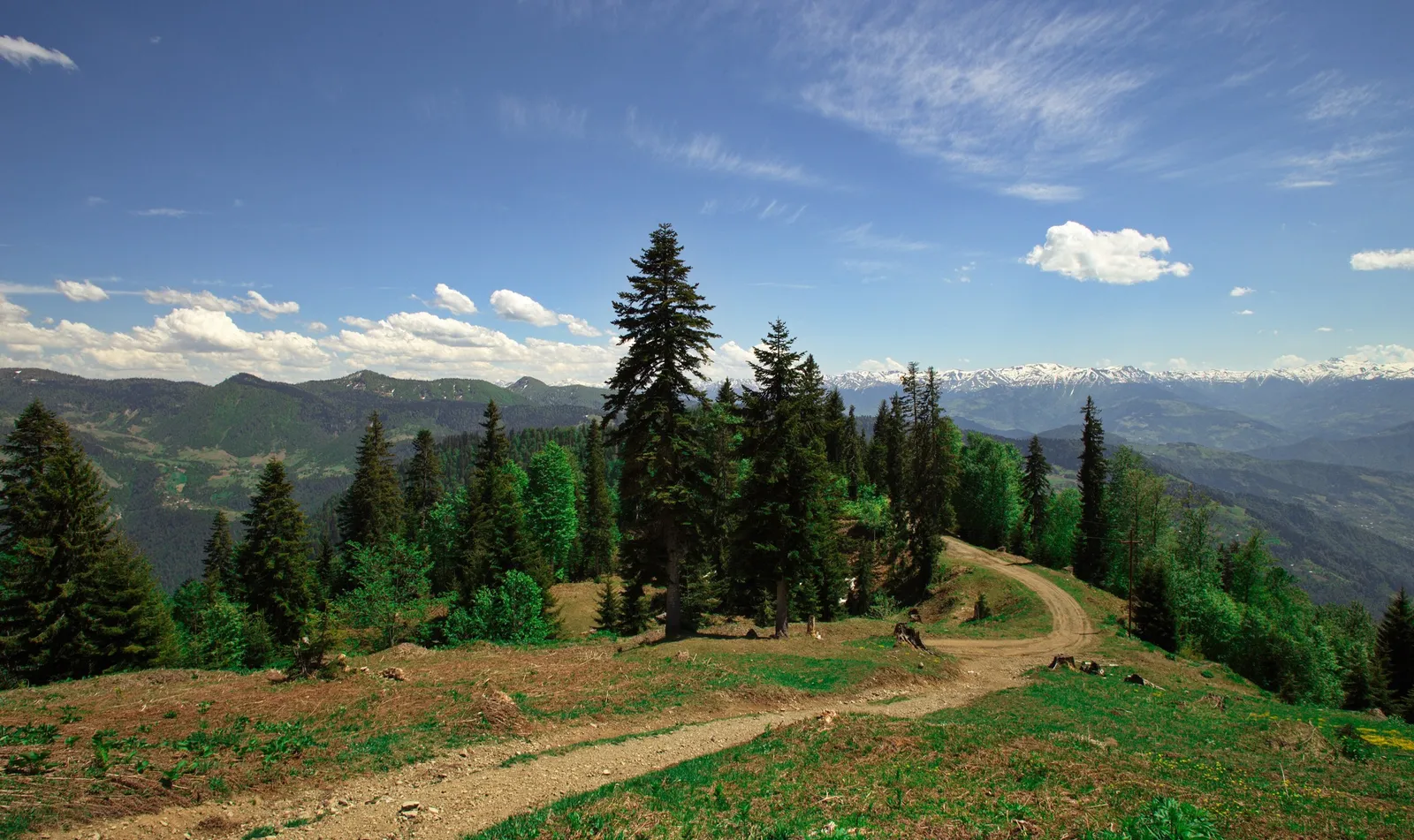
Guria is the small region between Adjara and Samegrelo, with a short stretch of Black Sea coast and green hills of tea, citrus and hazelnut inland. Ureki sits on the coast about 50–60 km north of Batumi and about 35 km south of Poti[1]. The sandy beach continues north for several kilometres through Shekvetili to Grigoleti, with pine woods behind it[1][2].
The magnetic sand
What it is
The dark colour comes from magnetite, an iron oxide, together with other heavy minerals. They are eroded from volcanic rock in the mountains, carried down by the rivers and sorted by the waves, which leave the heavier dark grains on the beach[1]. Estimates of how much magnetite the sand contains vary from spot to spot[1]. Bring a fridge magnet to the beach and you will see it collect a beard of black grains.
What about the health claims?
Local hotels and sanatoriums have long promoted the sand for joints, circulation and more, and you will read these claims on many travel sites. The honest answer is that the scientific evidence is thin. The magnetic field of the sand is weak, far below anything used in medicine[1]. What is certain is that dark sand gets warm in the sun, and lying in warm sand is pleasant. Enjoy it for that, and if you have a medical condition, ask your own doctor, not a brochure.
The beach
- Sand, not pebbles. Most of the Adjarian coast, including Batumi, is pebbly. Ureki and Shekvetili are soft sand.
- Shallow water. The sea floor slopes very gently, so the water stays shallow a long way out and warms quickly[1][3]. That's why Georgian families love it.
- Water temperature. Roughly 21–28 °C from June to September[1].
- Crowds. July and August, the Georgian school holidays, are busy; late May–June and September are calmer[3].
Ureki is a simple resort: guesthouses, small hotels, beach cafés and a lot of inflatable toys in season. Out of season, from October to May, much of it closes.
Shekvetili and Grigoleti
Just north of Ureki, Shekvetili has newer hotels, the Black Sea Arena (a large open-air concert venue opened in 2016) and Tsitsinatela, an amusement park whose name means "firefly"[2][4]. There is also a dendrological park of large transplanted trees[1]. Grigoleti, further north, is the quietest stretch[1]. If you want a beach day with children, Shekvetili gives you the most to do; if you want peace, Grigoleti.
Guria beyond the beach
Food
Guria has its own dishes. The famous one is the Gurian khachapuri, or gvezeli: a crescent-shaped pie filled with cheese and boiled egg, traditionally baked for Christmas[5]. In summer you will find it in bakeries along the coast too. The coast is also where to eat Black Sea fish: red mullet, anchovy and turbot in season. Our guide to khachapuri compares the regional versions.
Song
Guria is famous across Georgia for its polyphonic singing, especially the krimanchuli, a yodelling top voice that leaps above the other parts[6]. Georgian polyphony has been on UNESCO's intangible heritage list since 2001. You are more likely to hear a Gurian song at a supra than on a stage; see our post on Georgian polyphonic singing.
Tea and the hills
Inland, around Ozurgeti, Guria's hills were once covered in tea plantations. Some are being revived by small producers. In summer, the mountain resort of Bakhmaro, at about 2,050 m, is a cool escape reached by a long mountain road[7].
A day out from Batumi
Ureki is roughly an hour's drive north of Batumi along the coast road, so it makes an easy beach day. A realistic plan: leave Batumi mid-morning, stop at the Kobuleti or Tsikhisdziri stretch of coast on the way if you like, spend the middle of the day on the sand at Ureki or Shekvetili, eat Gurian khachapuri and grilled fish for lunch, and drive back for sunset on the Batumi boulevard. Bring a sun umbrella in July and August: the dark sand gets hot, and shade on the beach itself is limited to what the cafés rent out. Lifeguards and beach services run only in the summer season; outside it, the beach is yours but so is the responsibility, and the Black Sea can be rough in spring and autumn storms.
Who Ureki suits
Ureki suits families with young children, travellers who want a sandy beach, and anyone who finds Batumi too big. It doesn't suit those looking for nightlife, smart restaurants or historic sights: there are none to speak of. As a day out from Batumi it works well; as a base, a couple of nights is plenty for most people.
Guria and the coast with us
Our private Western Georgia and the Black Sea, 6 days drives from Svaneti down to the coast and ends with two days in Batumi; the drive south or the free afternoon can include a stop at Ureki and a Gurian khachapuri. If you want more beach time, we can add a night in Ureki or Shekvetili, or combine the coast with Kutaisi's canyons on a Prometheus cave and Martvili canyon day. See each tour page for the current price, or plan your own coast trip and we send you a private itinerary with a price. Nothing to pay now.
Sources
- Georgia Spirit, "Ureki's magnetic black sands: the science and the spa": georgia-spirit.com
- Culture Trip, "Great Georgian Resorts by the Black Sea Besides Batumi": theculturetrip.com
- Wikivoyage, "Ureki": en.wikivoyage.org
- Tour Guide Georgia, "Shekvetili Sea Resort": tourguide.ge
- Food Perestroika, "Gurian Khachapuri": foodperestroika.com
- Zenodo, "Krimanchuli: A yodeling phenomenon in Georgian traditional polyphonic music": zenodo.org
- Wikipedia, "Bakhmaro": en.wikipedia.org
Last checked: September 2026. Many beach businesses in Ureki are seasonal and close from autumn to late spring.