Photos: Marcin Konsek (CC BY-SA 4.0) · Wikimedia Commons
Akhtala Monastery
Armenia · Religion
About Akhtala Monastery
Tours Including Akhtala Monastery
See the tour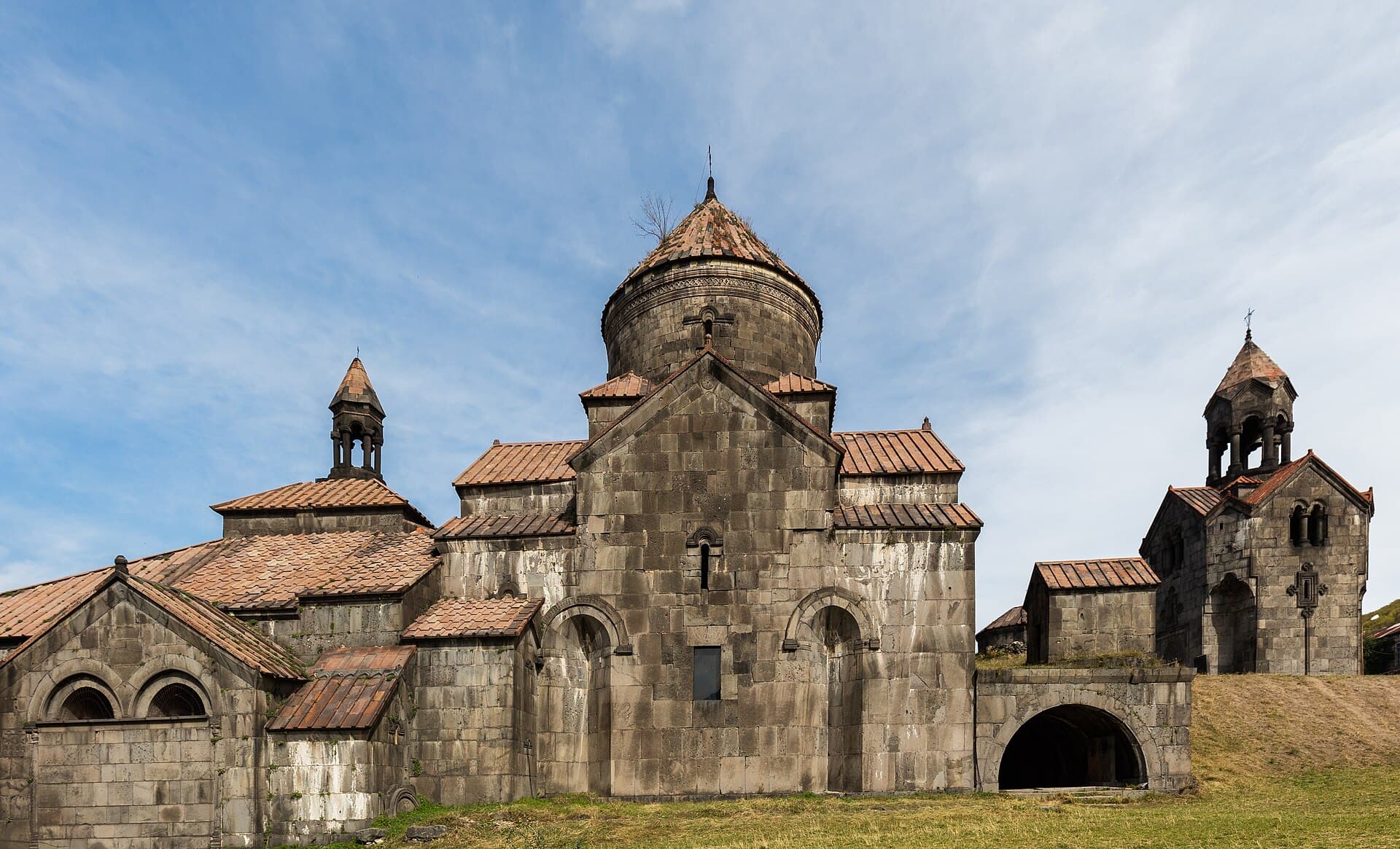 Easy
Armenia Day Trip from Tbilisi — Haghpat & Sanahin Monasteries, Private
Private · 1 day
$89/person · 4 travellers
Must-See Attractions
Church of the Holy Mother of God
The main church, its walls covered by early-13th-century frescoes, with the Virgin holding the Christ Child in the dome area and a Communion of the Apostles below.
Fortress walls and gate
The 10th-century walls and towers follow the edge of the cliff and give views down into the canyon.
Canyon viewpoint
From the terrace beside the church you look over the Debed gorge and the old mining town of Akhtala.
Nearby
Haghpat Monastery
10th–13th-century monastery on a plateau, part of a UNESCO World Heritage site, about 20 km (30 min) south.
Sanahin Monastery
Haghpat's neighbour, known for its vaulted halls and gravestones set into the floor, about 25 km (35 min) south near Alaverdi.
Sadakhlo–Bagratashen border
The crossing back into Georgia, about 30 km (40 min) north.
Good to know
- Getting there
About 1.5 h (70 km) from Tbilisi to the Sadakhlo–Bagratashen border, crossed on foot, then about 30 km (40 min) on a paved canyon road.
- Best time
April–October
- Best time
From spring to autumn the canyon is green and the road is clear, and October brings autumn colours, while winter visits are possible but snow can slow the drive.
- Recommended stay
About 1 hour
- Documents
- Bring your passport; you leave Georgia and enter Armenia on foot at Sadakhlo–Bagratashen. Citizens of the EU, UK and US need no visa for Armenia; some other nationalities need an e-visa, and a single-entry Georgian visa does not allow you back in.
- Currency
Armenia uses the dram (AMD); bring a little cash in dram or US dollars, as lari are rarely accepted.
- Language
Armenian is the local language, and Russian is widely understood.
- Fees
Entry to the monastery is free.
- Transport
A Georgian car needs Armenian insurance, so on the Armenian side we usually continue with our Armenian partner's vehicle and guide.
- What to wear
Shoulders and knees covered in the church.