图片: Moahim (CC BY-SA 4.0) · Wikimedia Commons
Mutso
Mtskheta-Mtianeti · 历史
关于Mutso
包含Mutso的旅游线路
查看全部 2 条线路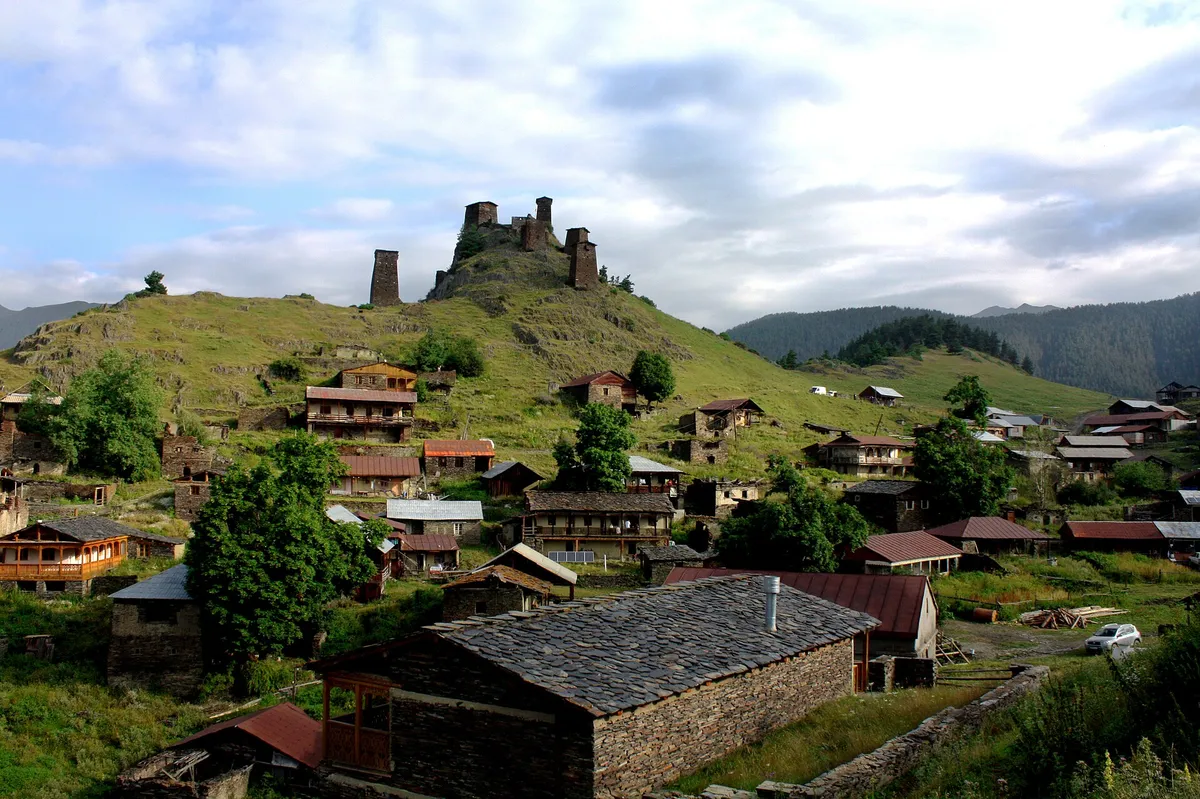 适中
 适中
必看景点
Tower village
About 30 fortified houses and four towers on three terraces up the ridge, rebuilt in dry stone.
Shrines
Khevsur shrines near the village; view them from outside.
Ridge viewpoint
From the top towers you look down the Ardoti valley towards the Argun and the border.
附近
Shatili
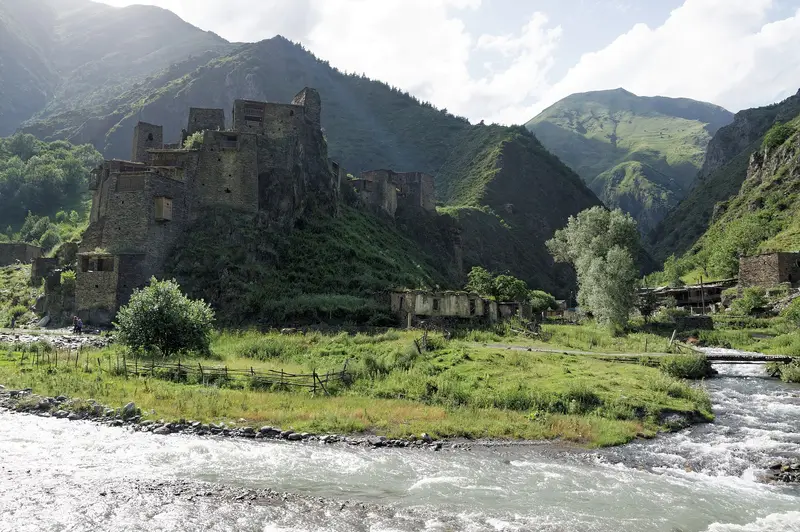
Fortress village of joined slate towers above the Argun, about 11–12 km (40 min by 4x4).
Anatori crypts
Medieval stone burial houses above the Argun, on the road between Shatili and Mutso.
Ardoti
Small village with a few guesthouses, a short drive further up the valley from Mutso.
出行须知
- 交通方式
About 11–12 km from Shatili by 4x4 on a dirt road, then a 20–30 min steep walk; Shatili is about 150 km (4.5–5 h) from Tbilisi over the Datvisjvari Pass.
- 最佳时间
The pass road and the Shatili–Mutso track are most reliable in high summer and early autumn; June can bring late snow and muddy tracks, and from October snow closes the region.
- 建议停留
Half a day
- Getting there
By 4x4 on the dirt road from Shatili (about 40 min), then a steep walk of 20–30 minutes up to the towers.
- Season/Access
The road to Khevsureti crosses the Datvisjvari Pass and is usually open only from about June to October, depending on snow.
- Documents
Carry your passport; the valley is in the border zone and border police may check documents.
- Walking
The path is steep, narrow and loose in places; wear boots and avoid it in rain.
- Fees
Free.
历史与文化
文化
历史
住宿
附近目的地
- KazbegiStepantsminda, still widely called Kazbegi, is the mountain town at about 1,740 m on the Georgian Military Highway, 152 km north of Tbilisi…
- Ananuri FortressAnanuri is a 17th-century fortress of the Dukes of Aragvi above the turquoise Zhinvali reservoir, about 70 km (1–1.25 h) north of Tbilisi…
- Trinity Church GergetiGergeti Trinity Church (Tsminda Sameba) stands alone on a grassy ridge at 2,170 m above Stepantsminda, about 152 km north of Tbilisi…
- MtskhetaMtskheta, about 25 km (30 min) north of Tbilisi where the Aragvi meets the Mtkvari, was the capital of the ancient kingdom of Kartli…
- Gudauri Ski ResortGudauri ski resort, the largest in Georgia, is on the Georgian Military Highway about 120 km north of Tbilisi, just below the Jvari Pass.
- JutaJuta is a small mountain village at about 2,200 m at the head of the Sno valley, south-east of Stepantsminda (Kazbegi), under the jagged…
帮您规划行程的指南
全部旅行指南本页的其他语言版本