Kutaisi
Imereti · Città
Scopri Kutaisi
Tour che includono Kutaisi
Vedi tutti i 7 tour Facile
 Impegnativo
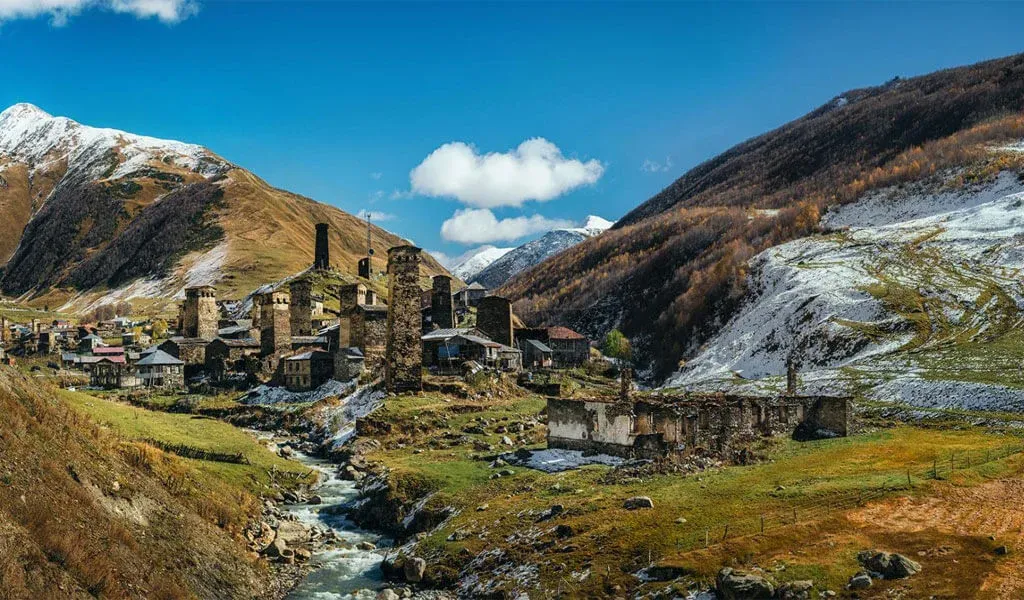
Svaneti Trekking Tour: Mestia–Ushguli — 7-Day Supported Private Hike
Privato · 7 giorni
685 $/persona · 4 viaggiatori Facile
 Moderato
Georgia in 14 Days — Private Tour incl. Svaneti & Batumi
Privato · 14 giorni
2025 $/persona · 4 viaggiatori Moderato
Grand Tour of Georgia — 10-Day Private Tour, Mountains to the Black Sea
Privato · 10 giorni
1365 $/persona · 4 viaggiatori Moderato
Western Georgia in 6 Days — Canyons, Svaneti & Batumi, Private
Privato · 6 giorni
875 $/persona · 4 viaggiatori Moderato
Attrazioni imperdibili
Gelati Monastery
Founded in 1106 by David the Builder and a UNESCO World Heritage Site, with 12th-century mosaics and frescoes; in 2026 parts of the main church are under scaffolding for conservation.
Bagrati Cathedral
Built in 1003 under King Bagrat III, blown up in 1692 and heavily rebuilt in 2012; the reconstruction led UNESCO to remove it from the World Heritage List in 2017.
Motsameta Monastery
Small church on a cliff above a bend of the Tskaltsitela river, about 6 km from the centre.
Green Bazaar
Covered market for cheese, spices, churchkhela and seasonal fruit.
Great Synagogue
Neo-Romanesque synagogue of 1886 on Boris Gaponov Street, still in use.
Nelle vicinanze
Prometheus Cave
Show cave with lit halls and an underground boat ride, about 20 km north-west (30–40 min).
Sataplia Nature Reserve
Dinosaur footprints under a protective pavilion, a small cave and a glass viewpoint, about 10 km north (20 min).
Tskaltubo
Former Soviet spa town with abandoned sanatoriums, about 20 km (25 min).
Martvili Canyon
Boat trips in a limestone gorge, about 45 km (1 h).
Chiatura
Manganese town with cable cars rebuilt in 2021, about 70 km east (1.5 h).
Da sapere
- Come arrivare
About 230 km (3–3.5 h) from Tbilisi on the E60 highway via the Rikoti Pass; trains also run from Tbilisi, and Kutaisi International Airport is 20 km from the city.
- Periodo migliore
Spring and autumn are mild and green; July and August in Imereti are hot and humid, which makes cool caves and canyon boat trips a good plan, and winters are wet but rarely freezing.
- Soggiorno consigliato
1–2 days
- Getting there
About 230 km (3–3.5 h) from Tbilisi by car (trains are slower), about 150 km (2–2.5 h) from Batumi.
- Airport
Kutaisi International Airport, about 20 km west of the city, is served by low-cost flights from Europe.
- Heads-up
Conservation work at Gelati puts parts of the main church under scaffolding in 2026; we plan the visit around what is open.
- Time needed
One day for the city, Gelati and Bagrati; add a second day for the caves and canyons.
Transfer privati:Da Tbilisi a KutaisiDa Batumi a KutaisiDa Kutaisi a MestiaDa Kutaisi a BatumiDa Kutaisi a BakurianiDa Kutaisi a Borjomi
Storia e cultura
Cultura
Storia
Cucina locale
Alloggio
FAQ
Vale la pena visitare Kutaisi?
Sì, per uno o due giorni, soprattutto se atterri all'aeroporto di Kutaisi o ti sposti tra Tbilisi e il Mar Nero. La città ha il monastero di Gelati, sito Patrimonio dell'Umanità UNESCO, la cattedrale di Bagrati e un vivace Green Bazaar, e la grotta di Prometeo, Sataplia e il canyon di Martvili sono tutti a meno di un'ora di auto.
Cosa vedere a Kutaisi in un giorno?
Parti dal monastero di Gelati e da Motsameta, entrambi appena fuori città, poi la cattedrale di Bagrati sulla sua collina sopra il fiume e il Green Bazaar in centro. Con un'auto nel pomeriggio puoi aggiungere Sataplia, a circa 10 km a nord, o la grotta di Prometeo, a circa 20 km a nord-ovest.
Per cosa è famosa Kutaisi?
È una delle città più antiche della Georgia e la terza per dimensioni: secondo la leggenda greca il re Eeta e il Vello d'Oro si trovavano in Colchide, e Kutaisi è uno dei luoghi legati a quel mito. Fu capitale della Georgia fino al 1122, e qui re Davide il Costruttore fondò nel 1106 il monastero di Gelati e la sua accademia.
Quanto dista Kutaisi da Tbilisi?
Circa 235 km dall'aeroporto di Tbilisi, ovvero 3–3,5 ore in auto sull'autostrada E60; i treni da Tbilisi sono più lenti. L'aeroporto internazionale di Kutaisi si trova a circa 20 km a ovest della città.
Transfer privato da Tbilisi a KutaisiDestinazioni vicine
- Okatse CanyonOkatse Canyon is a deep limestone gorge of the Okatse river near the village of Gordi in Imereti, about 45 km (1 h) north of Kutaisi.
- Gelati MonasteryGelati Monastery, on a wooded hillside about 11 km north-east of Kutaisi in Imereti, was founded by King David the Builder in 1106 and is a…
- Prometheus CavePrometheus Cave is a large show cave at the village of Kumistavi, about 20 km (30–40 min) north-west of Kutaisi.
- Kinchkha WaterfallKinchkha (also called Okatse Waterfall) is a three-step waterfall near the village of Kinchkha in Imereti, about 50 km north of Kutaisi and…
- Sataplia Nature ReserveSataplia is a small protected area on a forested limestone hill about 10 km north-west of Kutaisi, in Imereti.
- TskaltuboTskaltubo is a spa town in Imereti, about 9 km from Kutaisi and roughly 15 minutes by car, built around warm radon-carbonate springs.
Guide per pianificare il tuo viaggio
Tutte le guide di viaggio- Prometheus Cave: Visiting Georgia's Show CavePrometheus Cave, at Kumistavi 20 km from Kutaisi, is a guided 1.4 km walk through six lit halls, with an optional boat ride out on an…
- Batumi to Martvili Canyon: Boat Ride and the Dadiani BathGetting from Batumi to Martvili Canyon means about 150 km to Kutaisi, then about an hour more by road.
- Imereti Wine: Qvevri, Tsolikouri and Family CellarsImereti, around Kutaisi, makes lighter wines than Kakheti: whites from Tsolikouri, Tsitska and Krakhuna, fermented in clay churi with only…
Questa pagina in altre lingue