图片: Kober (CC BY-SA 4.0) · Wikimedia Commons
Grakliani Hill
Shida Kartli · 考古
关于Grakliani Hill
包含Grakliani Hill的旅游线路
查看全部 1 条线路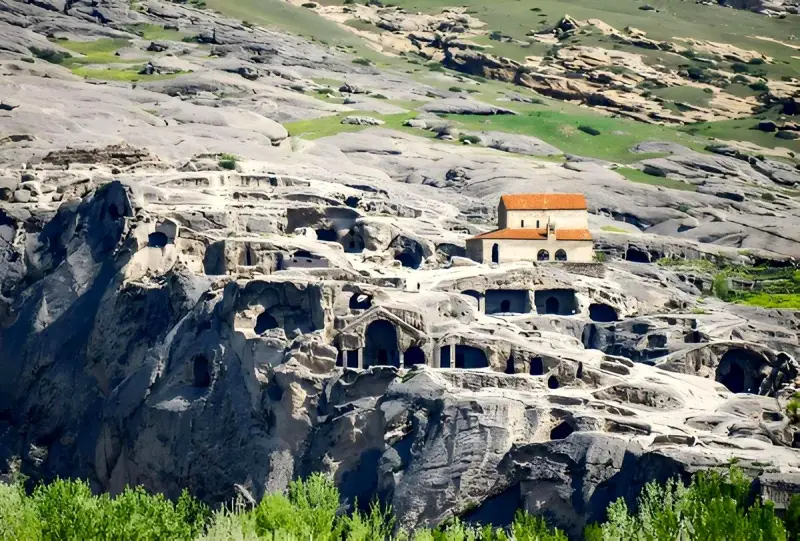 适中
必看景点
Temple altars
The clay altars of the 7th-century BC temple, where the disputed 2015 inscription was found.
Excavation terraces
Stepped trenches down the hillside showing layers from different periods.
Protective canopy
The covered section with exposed stone foundations and clay structures.
Hilltop view
Views over the Mtkvari valley and the highway to Gori.
附近
Samtavisi Cathedral
An 11th-century cathedral with carved facades near Igoeti, about 5 km (10 min).
Uplistsikhe
The rock-cut town above the Mtkvari, about 35 km west (35 min).
Mtskheta
Jvari Monastery and Svetitskhoveli Cathedral, about 35 km east (35 min).
出行须知
- 交通方式
About 50 km (50 min) west of Tbilisi, a short walk up from the Tbilisi–Gori highway near the Kaspi turn-off.
- 最佳时间
Spring and autumn are comfortable on the open hill; summer is hot but is the digging season, and winter visits are possible though muddy.
- 建议停留
1–2 hours
- Fees
No ticket; it is an open excavation rather than a museum, with little signage.
- Guide
The site means much more with an archaeology-minded guide; excavation happens mainly in summer, when you may see the team at work.
- What to bring
A hat, water and sturdy shoes; there is little shade and the paths are dusty and uneven.
- Time needed
1–2 hours.
历史与文化
历史
附近目的地
- Gori Stalin MuseumGori, in Shida Kartli about 86 km west of Tbilisi, is the town where Joseph Stalin was born in 1878, and its Stalin Museum is the main…
- Uplistsikhe Cave TownUplistsikhe is a rock-cut town on a sandstone ridge above the Mtkvari river, about 12–15 km east of Gori and 1.25–1.5 h west of Tbilisi.
本页的其他语言版本