David Gareja
Kakheti · 宗教
关于David Gareja
包含David Gareja的旅游线路
查看全部 1 条线路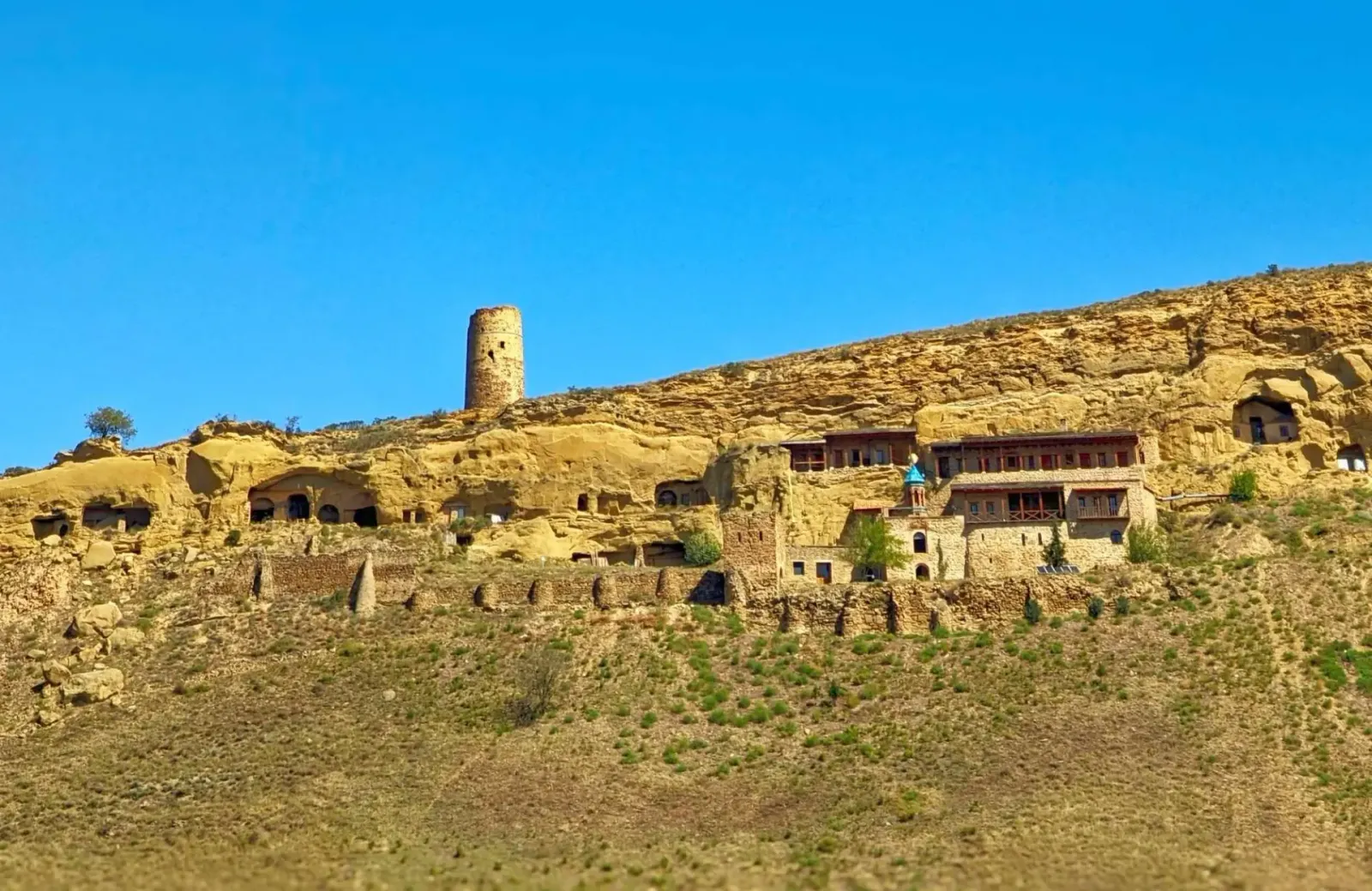 适中
必看景点
Lavra Monastery
The 6th-century monastery with cave cells, rock-cut churches and the tomb of St David; it is the part always open to visitors.
Udabno caves
Along the ridge above the Lavra, caves with frescoes of the 10th–13th centuries, including scenes from the life of St David; open only when border access allows.
Ridge viewpoint
From the top of the ridge you look south over the Azerbaijani steppe; the path is steep and exposed.
Semi-desert landscape
Striped red, ochre and green hills, steppe and, in spring, wild flowers.
附近
Udabno village
A small village on the road in, about 15 minutes away, with a well-known café for lunch.
Sighnaghi
The walled town above the Alazani valley, about 2 hours north-east via Sagarejo.
Tbilisi
About 100 km (2 h) north-west by road.
出行须知
- 交通方式
About 100 km (2 h) south-east of Tbilisi by road via Sagarejo and Udabno; the last stretch is narrow and rough in places.
- 最佳时间
Spring brings green hills and wild flowers and autumn is mild and clear, while July and August are very hot on the exposed ridge and winter can be cold and windy.
- 建议停留
2–4 hours
- Heads-up
The Udabno caves sit on an undelimited section of the Azerbaijan border and have been closed periodically; treat them as 'if open', and we check on the day.
- Walking
The Udabno loop is about 3 km with a steep climb of about 150–200 m on rocky, exposed paths; wear closed shoes with good grip.
- Season
July and August are very hot, with little shade; start early and carry at least 2 litres of water each. Vipers are active from May to September, so stay on the paths.
- What to wear
Shoulders and knees covered at the Lavra; women cover their hair.
- Fees
Entry is free.
- Cash
No ATM or shop at the site.
历史与文化
文化
历史
附近目的地
- SighnaghiSighnaghi is a small walled town at about 790 m on a ridge above the Alazani Valley in Kakheti, about 113 km (2 h) east of Tbilisi.
- BodbeBodbe is a working convent 2 km from Sighnaghi in Kakheti, about 115 km (2 h) from Tbilisi, and the burial place of St Nino…
- TsinandaliTsinandali is the 19th-century country estate of Prince Alexander Chavchavadze, about 10 km south-east of Telavi in Kakheti…
- TelaviTelavi is the main town of Kakheti, Georgia's wine region, on the slopes of the Gombori range above the Alazani Valley, about 95 km (2 h)…
- AlaverdiAlaverdi Cathedral rises over the vineyards of the Alazani valley in Kakheti, about 20 km north-west of Telavi and 2–2.5 hours from…
- Gombori PassThe Gombori Pass (1,620 m) carries the shortest road from Tbilisi to Telavi over the forested Gombori range, about 95 km and 2 hours in…
帮您规划行程的指南
全部旅行指南- Georgia in March: Early Spring and Fewer CrowdsGeorgia in March is changeable: Tbilisi highs around 13 °C, blossom in the last weeks, snow still deep in Kazbegi and skiing in Gudauri.
- David Gareja Tour: Visiting the Monastery in 2026A David Gareja tour in 2026 reaches the Lavra monastery, which is open and free, but the Udabno caves and ridge walk on the Azerbaijani…
本页的其他语言版本