Fotoğraflar: Boris Kuznetsov (CC BY 2.0) · Boris Kuznetsov (CC BY 2.0) · Yasuhiro Kojima (CC BY-SA 4.0) · Boris Kuznetsov (CC BY 2.0) · ლაშა ზუბიაშვილი (CC BY-SA 4.0) · Krzysztof Ziarnek, Kenraiz (CC BY-SA 4.0) · Wikimedia Commons
Mountainous Adjara (Makhuntseti)
Adjara · Dağlar
Mountainous Adjara (Makhuntseti) hakkında
Mountainous Adjara (Makhuntseti) içeren turlar
Turu gör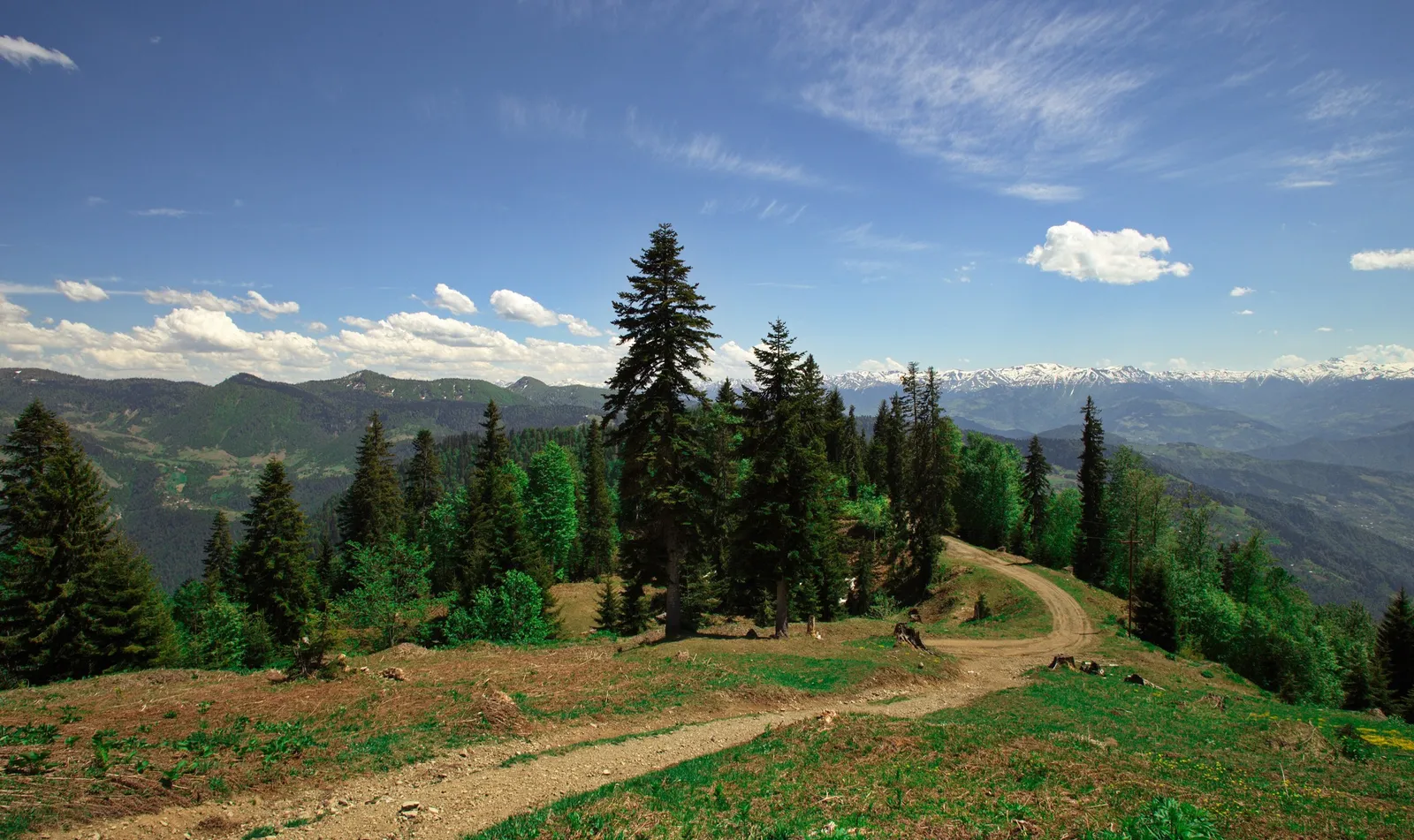 Kolay
Mountain Adjara Waterfalls & Old Bridges — Private Day Trip from Batumi
Özel · 1 gün
$79/kişi · 4 yolcu
Mutlaka görülmesi gerekenler
Makhuntseti Waterfall
A tall waterfall over dark rock, a short walk from the road.
Queen Tamar's Bridge
A single-arched medieval stone bridge over the Acharistskali at Makhuntseti.
Mirveti Waterfall
A waterfall in a narrow side gorge near Mirveti village, about 19 km from Batumi, reached on a short path.
Mirveti arched bridge
A second medieval stone bridge close to the waterfall.
Yakınlarda
Keda
Adjara's wine district with family cellars making Tsolikouri and Chkhaveri wines, about 45 km from Batumi (1 h).
Machakhela National Park
Forested valley by the Turkish border with village trails, about 35 km from Batumi (50 min).
Batumi
The coast, about 30 km (40 min).
Bilmekte fayda var
- Nasıl gidilir
About 30 km (40 min) from Batumi on the paved road up the Acharistskali valley; Mirveti is about 19 km from Batumi via Khelvachauri.
- En iyi zaman
Late spring brings the fullest waterfalls, and summer and early autumn give the most stable weather; the region is green all year, but winter and early spring are very wet.
- Önerilen kalış süresi
Half a day to 1 day
- Getting there
About 30 km (40 min) from Batumi on the paved Batumi–Akhaltsikhe road.
- Fees
The waterfalls and bridges are free.
- Walking
Paths to the waterfalls are short but wet and slippery.
- What to bring
A rain jacket; Adjara is one of the wettest parts of Georgia.
- Heads-up
Summer weekends are busy at Makhuntseti; mornings are quieter.
Tarih ve kültür
Kültür
Tarih
Yerel mutfak
Konaklama
Yakındaki yerler
- BatumiBatumi is Georgia's main Black Sea city and the capital of Adjara. Tourist places in Batumi include the seafront Boulevard…
- Batumi Botanical GardenBatumi Botanical Garden covers 111 hectares of coastal hills at Mtsvane Kontskhi (Green Cape), about 9 km north of Batumi.
- Gonio FortressGonio (Apsaros) Fortress stands near the mouth of the Chorokhi river, about 12 km south of Batumi and a few minutes from the Black Sea…
- Batumi Raptor Count (Sakhalvasho)The hills behind Batumi form one of the world's great bottlenecks for migrating birds of prey: squeezed between the Black Sea and the…
- Chorokhi DeltaThe Chorokhi Delta is the mouth of the Chorokhi river on the Black Sea, about 5 km south of Batumi just past the airport…
- Mtirala National ParkMtirala National Park protects Colchic rainforest in the hills behind Chakvi, about 30 km (40 min) north-east of Batumi.
Bu sayfa diğer dillerde